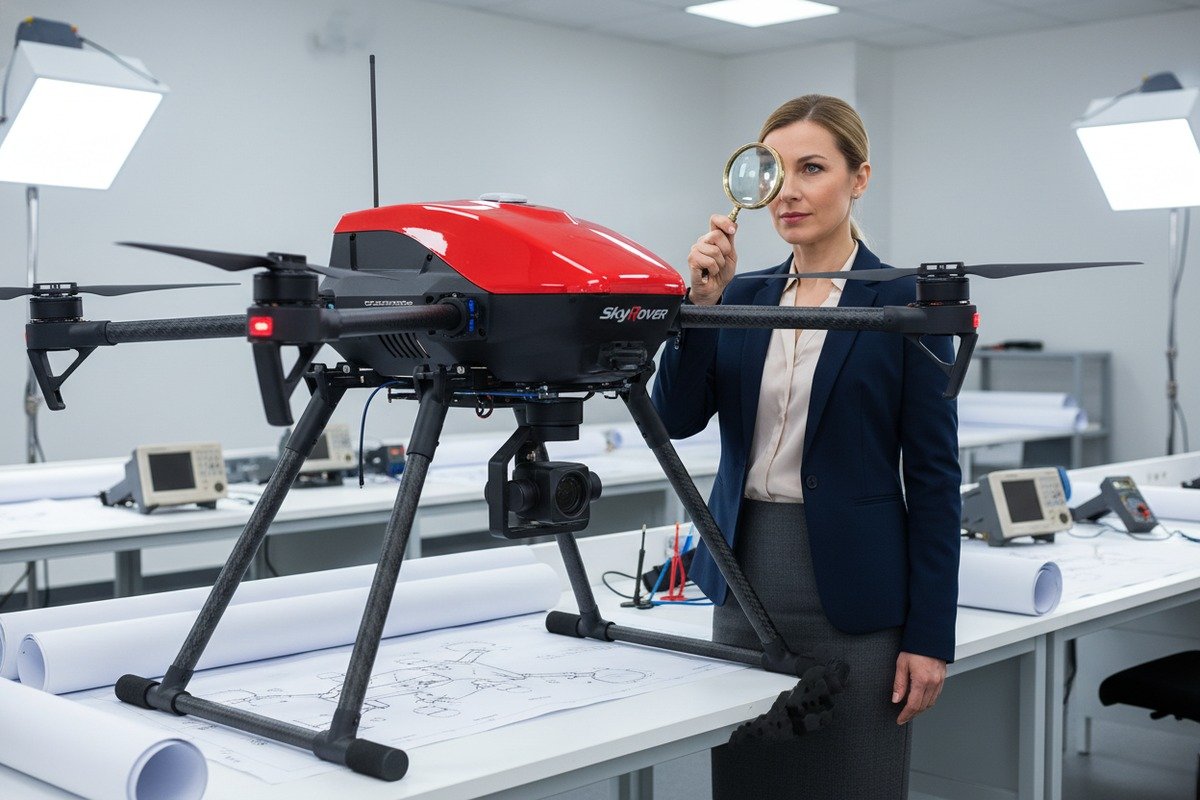
Every month, our production line receives inquiries from buyers who purchased drones that failed within weeks of deployment IP55 water and dust resistance 1. The frames cracked under heat exposure. The cameras fogged up in smoke. This happens because many suppliers disguise consumer-grade components behind industrial-looking shells.
To judge industrial-grade standards for firefighting drones, verify IP55+ environmental ratings, examine magnesium-aluminum or carbon-fiber frame construction, confirm payload capacity exceeds mission requirements, review thermal imaging sensor specifications, and demand documented certifications including FAA compliance and NDAA approval for government procurement.
This guide walks you through exactly what to look for woven carbon fiber 2. We will cover build quality indicators, flight specifications, OEM capabilities, and documentation requirements. Let us start with the most visible factor: how a drone looks versus how it actually performs.
How can I distinguish true industrial-grade build quality from consumer-level aesthetics?
When we assemble drones at our facility, we see firsthand how easy it is to make a consumer drone look professional thermal imaging sensor specifications 3. A matte black finish and red accents mean nothing if the internal components cannot survive real firefighting conditions.
True industrial-grade build quality shows in IP55+ water and dust resistance ratings, reinforced magnesium-aluminum frames, sealed electronics compartments, thermal shielding around sensitive components, and modular designs that allow field repairs. Consumer drones typically feature plastic housings, exposed ports, and IP43 or lower ratings unsuitable for direct water or heat exposure.
Visual Indicators of Industrial Construction
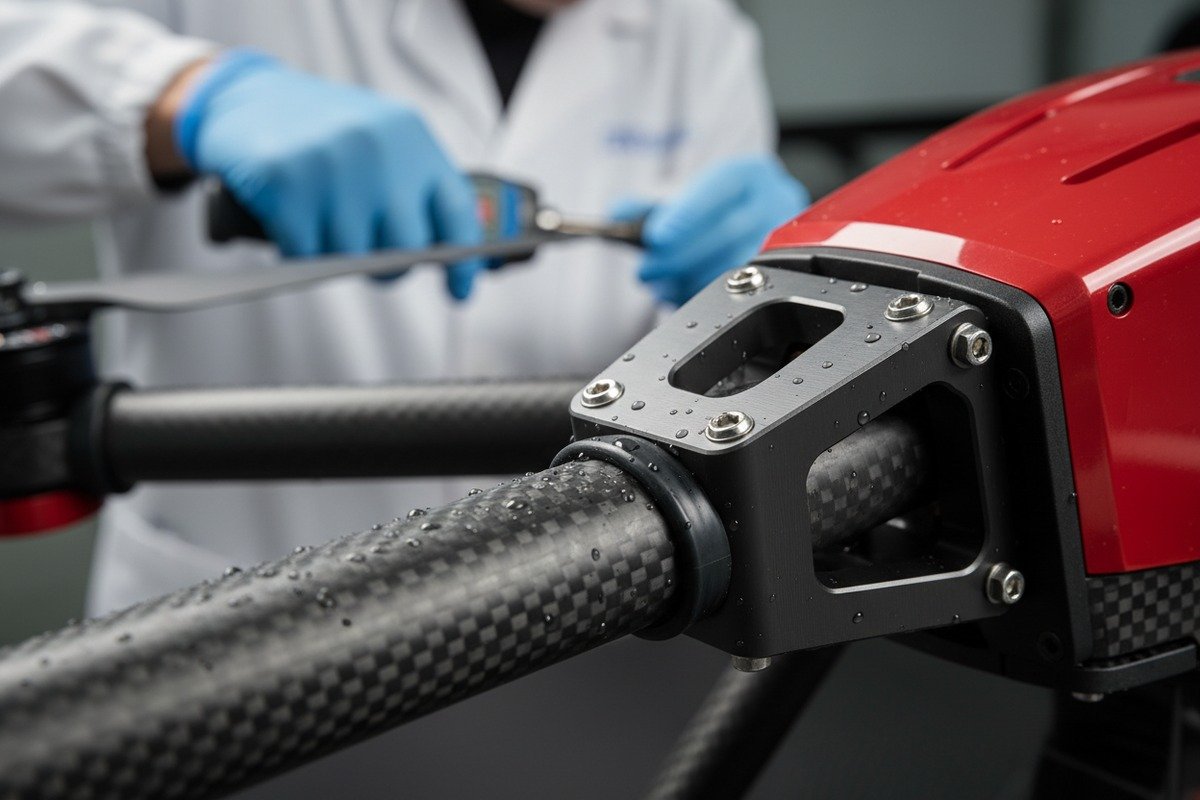
The first thing we check on any firefighting drone is the frame material Cumplimiento de la Parte 107 de la FAA 4. Industrial-grade units use magnesium-aluminum alloy 5 or woven carbon fiber. These materials resist warping under temperature extremes from 10°F to 104°F. Consumer frames use injection-molded plastic that softens near heat sources.
Look at the motor mounts. Industrial drones have CNC-machined aluminum motor mounts with visible heat sinks. Consumer models use plastic clips that vibrate loose over time. The propellers on professional units display distinct carbon fiber weave patterns, often with reinforced tips.
Sealed electronics housings matter enormously. On our octocopter models, every wire entry point uses rubber grommets and silicone sealing. Consumer drones leave USB ports and SD card slots exposed. These openings let smoke particles and water vapor destroy internal circuits.
IP Rating Reality Check
IP ratings confuse many buyers. Here is what each level actually means for firefighting applications:
| Clasificación IP | Dust Protection | Water Protection | Firefighting Suitability |
|---|---|---|---|
| IP43 | Protected from objects >1mm | Protected from spraying water | Inadequate – fails in active suppression |
| IP54 | Protected from limited dust | Protected from splashing water | Minimum for reconnaissance only |
| IP55 | Protected from limited dust | Protected from water jets | Acceptable for most operations |
| IP67 | Dust tight | Protected from immersion up to 1m | Excessive for aerial use – adds cost |
Some suppliers claim IP67 ratings as a selling point. In our engineering tests, IP55 provides sufficient protection for aerial firefighting. Higher ratings add weight and cost without practical benefit since drones do not submerge during operations.
Red Flags in Aesthetic Quality
Watch for these warning signs during supplier evaluation:
- Visible gaps between housing panels
- Loose battery compartment latches
- Exposed wiring near propeller arms
- Paint overspray on functional components
- Misaligned camera gimbals
- Flimsy landing gear attachments
Professional assembly shows in tight panel fits, consistent surface finishes, and organized internal wiring. When we complete quality control, every screw receives thread-locking compound. Every connector gets strain relief. These details separate industrial equipment from dressed-up consumer products.
What technical flight specifications should I prioritize for mission-critical firefighting operations?
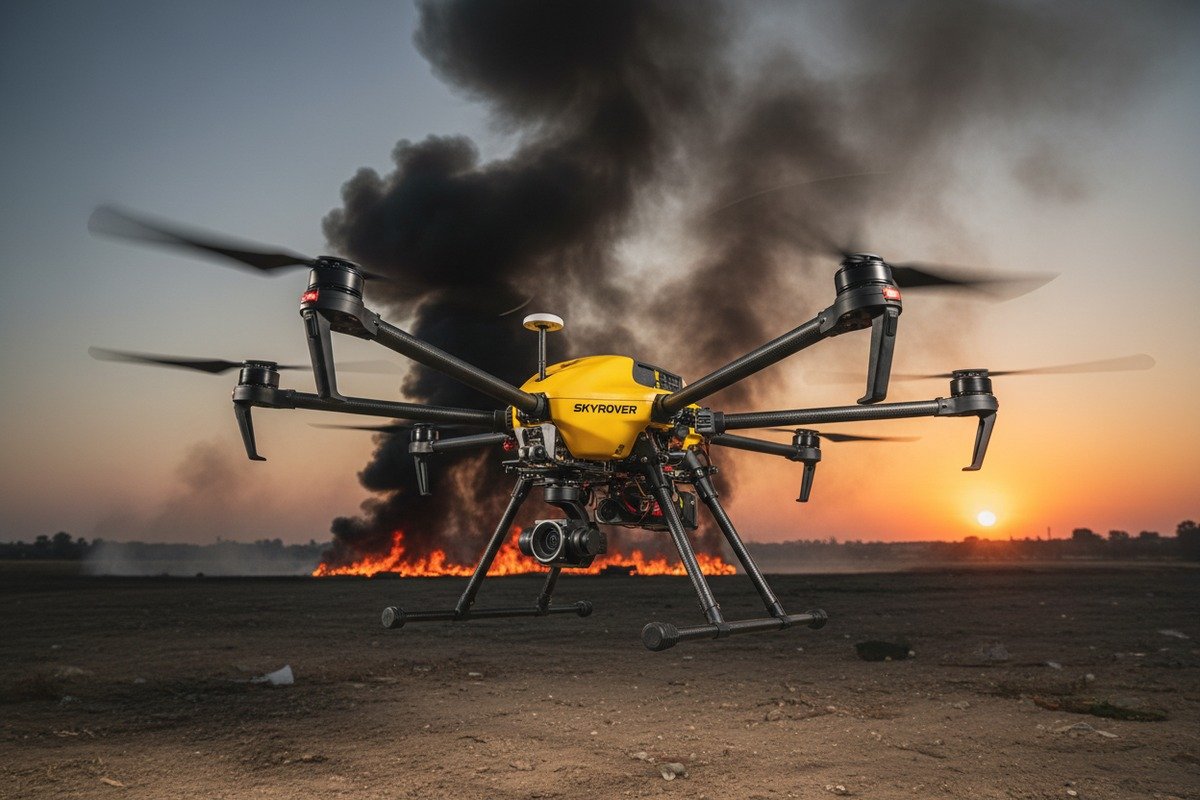
Our engineering team has calibrated flight controllers for operations across three continents. We learned that buyers often fixate on maximum payload numbers while ignoring the specifications that actually determine mission success.
Prioritize flight endurance of 45-63 minutes, payload capacity matching your extinguishing agent weight plus safety margin, operating altitude of at least 500 meters, wind resistance exceeding 25mph, hot-swappable batteries for continuous operations, and thermal imaging with minimum 640×512 resolution for reliable hotspot detection in smoke-filled environments.
Payload Capacity and Flight Time Trade-offs
Every kilogram of payload reduces flight time. This relationship is not linear. Our testing shows that doubling payload cuts flight time by approximately 40%, not 50%. Understanding this helps you select the right drone for your mission profile.
| Drone Class | Maximum Payload | Flight Time (No Payload) | Flight Time (Full Payload) | Typical Use Case |
|---|---|---|---|---|
| Medium Quadcopter | 2.7kg | 55 minutes | 35 minutes | Reconnaissance, thermal mapping |
| Heavy Quadcopter | 15kg | 45 minutes | 28 minutes | Small extinguisher deployment |
| Industrial Octocopter | 35kg | 40 minutes | 22 minutes | Multi-agent suppression |
| Heavy-Lift Platform | 150kg | 63 minutes | 38 minutes | Industrial fire direct attack |
For ABC dry chemical deployment, we configure extinguisher modules at 23kg per deployment cycle. This provides coverage of at least 50 square meters with a safety radius exceeding 20 meters. Smaller drones cannot carry effective suppression payloads.
Sensor Specifications That Matter
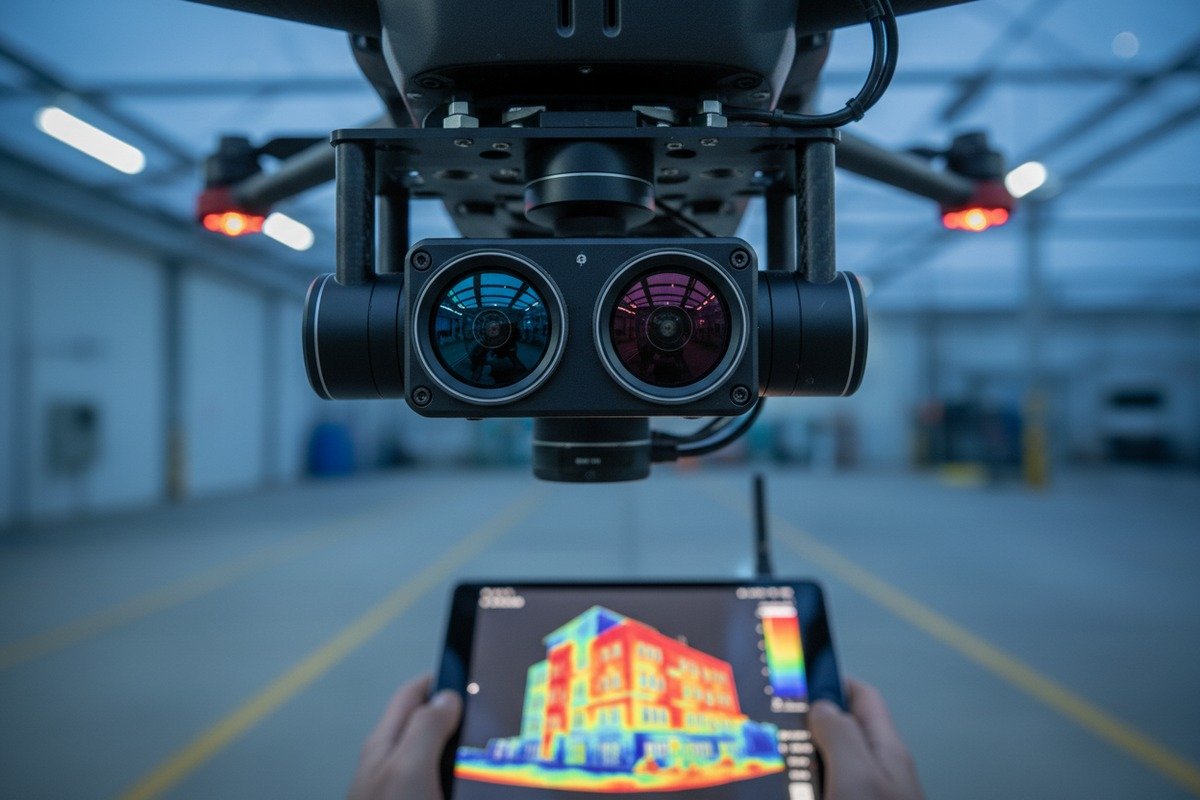
Thermal imaging separates useful firefighting drones from expensive toys. The sensor resolution directly affects hotspot detection accuracy. We install 640×512 resolution thermal cameras as our standard. Lower resolutions miss small ignition points that reignite fires.
Key sensor specifications include:
- Thermal sensitivity: Below 50mK for detecting temperature differentials through smoke
- Temperature range: -40°C to 550°C minimum for active fire assessment
- Optical zoom: 30x or higher for safe stand-off distance operations
- Frame rate: 30fps minimum for real-time situational awareness
Multi-spectral sensors add gas detection capabilities. Carbon monoxide detection 6 protects firefighters from invisible hazards. Our VT300-Z payload integrates thermal, optical, and gas sensing in a single gimbal-stabilized unit.
Communication and Control Systems
Range specifications often mislead buyers. A 15km maximum range means nothing if the video feed drops at 2km. We prioritize reliable data links over maximum distance.
Dynamic channel switching prevents interference in urban environments with crowded radio spectrum. Our control systems automatically hop between frequencies when signal quality degrades. This feature prevents flyaways during critical operations.
For industrial firefighting, we disable geofencing entirely. Consumer drones restrict flight near airports and infrastructure. Emergency responders need unrestricted access to fire sites regardless of location.
Autonomy Features for Hazardous Environments
Obstacle avoidance becomes critical in smoke-filled conditions where pilots cannot see hazards. Our AI-driven systems use radar and LiDAR fusion 7 to detect obstacles invisible to optical sensors.
NightSense technology enables zero-light operations. Fires often occur at night, and flames create harsh lighting contrasts that blind standard cameras. Our low-light systems maintain situational awareness regardless of ambient conditions.
Altitude hold and position lock maintain stable hovering during suppression agent deployment. Without these features, wind gusts push drones off target, wasting extinguishing materials and reducing effectiveness.
How do I assess if a supplier can handle my custom OEM branding and engineering requirements?
When we discuss OEM projects with distributors, we always ask about their previous experiences. Many have stories of suppliers who promised customization but delivered generic products with logo stickers.
Assess OEM capability by requesting examples of previous custom projects, verifying in-house engineering staff credentials, confirming software development capacity for custom flight modes, reviewing minimum order quantities for custom work, and establishing clear intellectual property agreements before sharing design specifications.
Evaluating Engineering Depth
True customization requires engineering capability beyond assembly. Ask potential suppliers these specific questions:
- Do you employ licensed electrical engineers?
- Can you modify flight controller firmware for specific behaviors?
- What CAD software does your design team use?
- How do you test custom configurations before production?
We maintain a team of 70 people including dedicated software developers. This allows us to create custom flight modes, integrate third-party sensors, and develop specialized control interfaces. Suppliers without software capability can only offer cosmetic changes.
Minimum Order Quantities and Lead Times
Custom work requires tooling, programming, and testing investments. Expect higher MOQs for genuinely custom products versus standard items with logo changes.
| Customization Level | Typical MOQ | Lead Time | Example Modifications |
|---|---|---|---|
| Logo/color only | 10-50 units | 2-4 semanas | Paint scheme, decals, packaging |
| Hardware modification | 50-200 units | 6-12 weeks | Different camera, battery, motors |
| Software customization | 100-500 units | 12-20 weeks | Custom flight modes, interfaces |
| Full custom development | 500+ units | 6-12 months | New airframe, integrated systems |
Suppliers offering low MOQs for complex customization are likely cutting corners. Either they will deliver substandard modifications or charge hidden fees during production.
Intellectual Property Protections
Before sharing your design requirements, establish clear IP agreements. We provide non-disclosure agreements 8 and manufacturing exclusivity contracts for OEM partners. This protects your investment in custom development.
Key contract elements include:
- Ownership of custom designs and tooling
- Restrictions on selling similar products to competitors
- Quality standards and acceptance testing procedures
- Warranty terms for custom components
- Technical documentation delivery requirements
Communication and Support Infrastructure
OEM relationships require ongoing communication. Assess how suppliers handle technical discussions:
- Response time to engineering questions
- Availability of English-speaking technical staff
- Video conference capability for design reviews
- Project management tools for tracking progress
Our team maintains dedicated project managers for OEM accounts. This ensures consistent communication and prevents misunderstandings that delay production.
What documentation and support must I verify to ensure the drone meets my import standards?
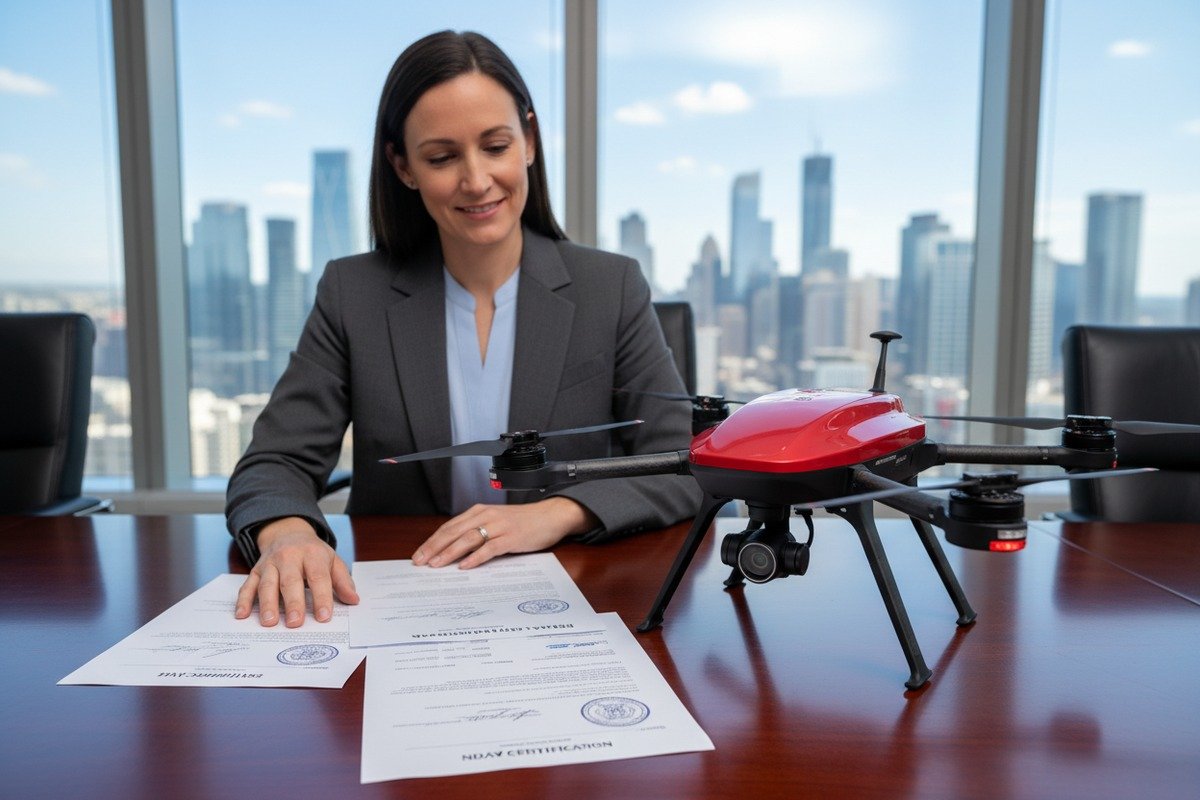
In our experience exporting to the US and Europe, documentation failures cause more shipment delays than product defects. Buyers often discover missing certifications after goods arrive at customs.
Verify FAA Part 107 compliance documentation, FCC radio frequency certifications, CE marking for European markets, NDAA compliance statements for government procurement, detailed technical specifications, user manuals in required languages, warranty terms, and confirmed availability of spare parts with documented pricing and delivery timelines.
Regulatory Compliance Documentation
Different markets require different certifications. Request these documents before placing orders:
| Mercado | Certificaciones requeridas | Objetivo | Método de verificación |
|---|---|---|---|
| Estados Unidos | FCC ID, FAA compliance statement | Radio emissions, airworthiness | FCC database search |
| Unión Europea | CE marking, DoC | Product safety, EMC | Request Declaration of Conformity |
| Government (US) | NDAA compliance 9, Blue sUAS listing | Supply chain security | GSA approved products list |
| International | ASTM F38/F32 compliance | Safety standards | Test reports from accredited labs |
For government sales, NDAA compliance is mandatory. This means no components from prohibited countries in critical systems. We provide detailed component sourcing documentation showing full supply chain compliance.
Technical Documentation Requirements
Complete technical packages include:
- Detailed specifications with test data supporting claims
- Wiring diagrams for maintenance purposes
- Exploded view parts diagrams
- Software version documentation
- Calibration procedures
- Preventive maintenance schedules
Ask for sample documentation before ordering. Suppliers who cannot provide complete technical packages will not support you after sale.
Spare Parts and Repair Support
Drone downtime costs money during emergencies. Evaluate spare parts programs carefully:
- Are common wear items stocked and available?
- What are lead times for replacement parts?
- Are prices published or negotiated per order?
- Can you purchase repair parts without buying complete assemblies?
We maintain inventory of all critical components with published pricing. Standard parts ship within 48 hours. This transparency prevents surprises when equipment needs service.
Training and Technical Support
FAA Part 107 certification is minimum requirement for operators. Beyond pilot licensing, mission-specific training ensures effective deployment.
Evaluate supplier training offerings:
- Remote video training availability
- On-site training options and costs
- Training material languages
- Certification programs for maintenance technicians
- Simulation software for practice without flight risk
Our support team provides remote technical assistance in multiple time zones. For complex integrations, we offer on-site engineering support to ensure successful deployment.
Post-Sale Support Verification
Ask existing customers about their support experiences. Key questions include:
- How quickly does the supplier respond to technical problems?
- Are replacement parts shipped promptly?
- Does the supplier provide firmware updates?
- Can you reach technical staff directly or only sales representatives?
We provide direct contact with engineering staff for technical issues. This bypasses communication delays that leave customers waiting during critical situations.
Conclusión
Sourcing industrial firefighting drones requires examining build quality, verifying technical specifications, confirming OEM capabilities, and demanding complete documentation. Taking shortcuts on any step risks equipment failure when lives depend on performance. Start your evaluation with the criteria we covered, and contact qualified manufacturers who can answer detailed technical questions.
Notas al pie
1. Replaced with an authoritative Wikipedia page explaining IP Code ratings, which includes IP55. ↩︎
2. Comprehensive guide on properties, manufacturing, and applications of woven carbon fiber fabrics. ↩︎
3. Replaced with an authoritative article from FLIR, a leading thermal imaging company, detailing key thermal camera specifications. ↩︎
4. Official FAA summary of regulations for commercial small unmanned aircraft systems (Part 107). ↩︎
5. Details the composition, properties, and applications of magnesium-aluminum alloys. ↩︎
6. Replaced with an authoritative Wikipedia page explaining carbon monoxide detectors and their function. ↩︎
7. Discusses how radar and LiDAR fusion enhances perception for advanced driver assistance systems. ↩︎
8. Provides a legal overview of non-disclosure agreements, their purpose, and enforcement. ↩︎
9. Department of the Interior guidance on National Defense Authorization Act compliance for UAS procurement. ↩︎

 English
  Spanish
  German
  French
  Dutch
Dutch  Arabic
