
When our engineering team tests agricultural drones before shipping, we see firsthand how crash data reveals hidden problems flight data recorder specifications 1. Many buyers overlook black box inquiries 2. They focus on spray capacity or flight time. Then a crash happens, and they have no way to find the root cause.
When purchasing agricultural drones, ask vendors about flight data recorder specifications, recorded parameters like GPS and acceleration, data export methods, sample crash analysis reports, and integration options with your fleet management software. These inquiries help you evaluate drone reliability, vendor support quality, and post-incident diagnostic capabilities before making a purchase decision.
This guide walks you through the essential questions to ask. We will cover sample reports, technical support processes, recorded parameters, and software integration. Each section gives you practical knowledge to make informed decisions.
Can I request a sample report of how your engineering team analyzes black box data after a crash?
Our production facility processes dozens of crash investigations each quarter. Buyers often assume all manufacturers handle data analysis the same way. They do not. Some vendors provide detailed forensic reports. Others offer only basic summaries that hide critical failure patterns.
Yes, you should request a sample crash analysis report before purchasing. A quality report includes timestamped flight parameters, acceleration peaks, motor output graphs, GPS trajectory maps, and root cause conclusions. Reviewing sample reports reveals the vendor's diagnostic capabilities and transparency level, helping you assess their post-crash support quality.

What a Quality Crash Report Contains
A professional crash analysis report goes beyond simple statements like "pilot error" or "motor failure." Our engineers break down every second before impact. They examine multiple data streams simultaneously.
The report should show raw telemetry data 3 in visual formats. Graphs help you spot anomalies quickly. For example, a sudden 22% spike in RMS acceleration 4 often indicates structural damage from a previous incident. We compare healthy drone baselines against crash data to identify deviations.
Key Sections in a Sample Report
| Report Section | What It Shows | Por qué es importante |
|---|---|---|
| Flight Timeline | Second-by-second events | Pinpoints exact failure moment |
| Acceleration Data | G-force readings (RMS/MAX) | Reveals structural stress levels |
| Motor Output Logs | RPM and power consumption | Identifies motor failures early |
| GPS Trajectory | Flight path visualization | Shows if drone deviated from plan |
| Environmental Data | Wind speed, temperature | Rules out weather factors |
| Root Cause Summary | Engineering conclusion | Guides prevention strategies |
Red Flags in Vendor Responses
Some manufacturers refuse sample reports. They cite proprietary algorithms or intellectual property concerns. This response deserves scrutiny. While protecting trade secrets is legitimate, complete opacity suggests weak diagnostic processes.
Ask specifically: "Can you redact sensitive information but still show report structure and depth?" A confident vendor will accommodate this request. They understand buyers need proof of analytical capability.
Comparing Report Quality Across Vendors
When evaluating multiple suppliers, create a comparison matrix. Rate each vendor on report completeness, visual clarity, technical depth, and actionable recommendations. The best reports include prevention suggestions, not just failure explanations.
Some vendors charge for detailed analysis—typically $200 to $500 per hour. Others include basic analysis in warranty coverage. Clarify these costs upfront. A cheap drone with expensive post-crash support may cost more long-term than a premium unit with inclusive diagnostics.
How will your technical support team help me retrieve and interpret flight logs for my local clients?
When we ship drones to distributors in the United States and Europe, we know support matters as much as hardware. Your local clients will face crashes. They will call you first. You need a clear support pathway from your supplier.
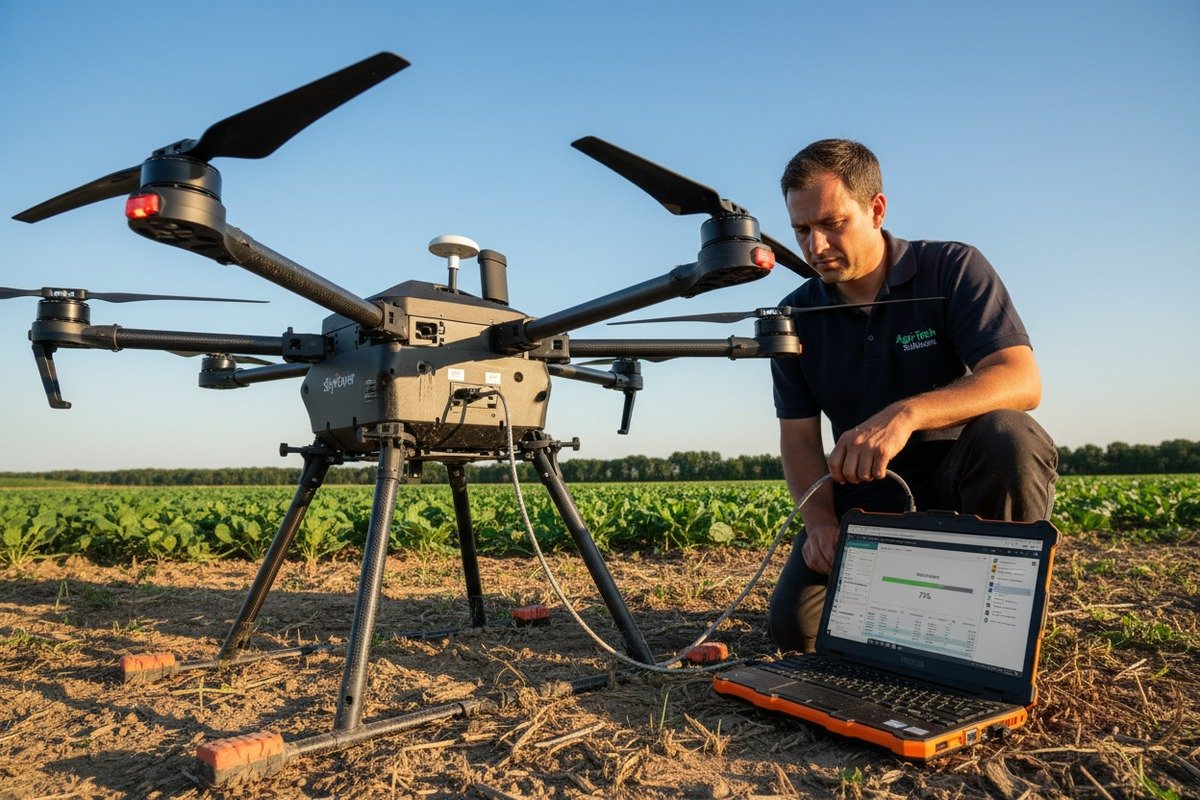
Technical support should include remote log retrieval guidance, interpretation training, dedicated engineering contacts, and escalation procedures. Quality vendors provide companion apps for data export, cloud upload options, multilingual documentation, and response time guarantees. Clarify these support elements before purchase to ensure you can serve your local clients effectively.
Remote Support Capabilities
Distance creates challenges. Our team uses screen-sharing sessions to walk distributors through log extraction. We provide video tutorials in multiple languages. These resources reduce back-and-forth emails significantly.
Ask potential vendors: "Do you offer live remote support for log retrieval?" Some only provide email support with 48-hour response times. For agricultural operations during peak season, this delay causes real financial losses.
Log Retrieval Methods
Different drones use different storage systems. Understanding these methods helps you support clients efficiently.
| Retrieval Method | Cómo funciona | Pros | Cons |
|---|---|---|---|
| SD Card Export | Remove card, transfer files | No internet needed | Physical access required |
| Companion App | Connect via mobile device | Quick and convenient | Requires compatible phone |
| Cloud Upload | Automatic sync during flight | Real-time access | Internet dependency |
| USB Direct | Connect drone to computer | Large file transfers | Need specific cables |
Training for Your Team
Smart vendors offer training programs. These teach your technicians to interpret basic logs independently. Our distributors complete a two-day certification course. They learn to identify common failure patterns without escalating every case.
Ask about training availability, format, and cost. Some manufacturers include basic training with purchases over certain thresholds. Others charge separately but offer ongoing support credits.
Escalation Pathways
Complex crashes require engineering expertise. You need a clear escalation pathway. When your team cannot diagnose an issue, who do they contact? What information must they provide? What is the typical resolution time?
We assign dedicated account engineers to volume distributors. These engineers know your fleet history. They spot recurring issues faster than rotating support staff. This relationship model works better than anonymous ticket systems.
Language and Timezone Considerations
Support accessibility matters. If your local clients operate in Central Time, but the manufacturer's engineers work Beijing hours, real-time communication becomes difficult. Ask about support hours, language capabilities, and after-hours emergency contacts.
Many Chinese manufacturers now offer English-speaking support during US business hours. This investment signals commitment to international distributors. Prioritize vendors who make this effort.
What specific flight parameters are recorded in the black box to help me identify the root cause of a failure?
Our flight controllers log over 50 distinct parameters every second. When testing new agricultural drone models, we discovered that parameter coverage varies widely across the industry. Some budget drones record only basic GPS and altitude. Premium units capture vibration signatures 5, motor temperatures, and spray system status.
Agricultural drone black boxes typically record GPS coordinates, altitude, acceleration (3-axis), gyroscope data, motor RPM, battery voltage, stick inputs, heading, ground speed, and spray flow rates. Advanced systems add vibration analysis, motor temperature, and environmental sensors. These parameters help identify failures ranging from structural damage to electrical malfunctions.

Core Flight Parameters
Every quality agricultural drone should log these fundamental parameters:
| Parameter Category | Specific Data Points | Diagnostic Use |
|---|---|---|
| Position | GPS coordinates, altitude, heading | Track flight path deviations |
| Motion | Acceleration (X/Y/Z), angular velocity | Detect impacts and instability |
| Propulsion | Motor RPM, ESC temperature, power draw | Identify motor failures |
| Power | Battery voltage, current, cell balance | Diagnose electrical issues |
| Control | Stick inputs, flight mode, commands | Separate pilot error from malfunction |
| Agriculture | Spray flow rate, tank level, nozzle status | Verify application accuracy |
Understanding Acceleration Data
Acceleration readings reveal structural health. Research shows crashed drone frames exhibit 22% higher maximum RMS acceleration compared to healthy units. Our quality control tests flag frames exceeding 95 m/s² during standard maneuvers.
This data helps predict failures before they happen. If acceleration readings trend upward over multiple flights, the frame may have hidden damage. Early detection prevents catastrophic crashes in the field.
Vibration Analysis for Predictive Maintenance
Advanced black boxes capture vibration signatures across frequency ranges. Resonances appearing between 20,000 and 26,800 RPM often indicate propeller imbalance or motor bearing wear. Our engineers identified this pattern after analyzing hundreds of crash cases.
Ask vendors: "Does your system log vibration data at specific frequency bands?" Basic systems miss these subtle indicators. Premium systems catch problems weeks before failure occurs.
Agricultural-Specific Parameters
For crop spraying and monitoring, additional parameters matter. Spray system data shows whether application rates matched settings. Tank level logs verify coverage estimates. Nozzle status confirms all outputs functioned correctly.
These agricultural parameters also have crash relevance. A clogged nozzle creates asymmetric weight distribution. This imbalance stresses motors unevenly. Over time, it causes premature bearing failure. Comprehensive logging connects these dots.
Data Resolution and Sampling Rates
Parameter quality depends on sampling frequency. GPS at 10 Hz captures detailed trajectories. GPS at 1 Hz misses crucial maneuvering details. Ask specifically about sampling rates for motion data.
Our controllers sample acceleration at 400 Hz. This high frequency captures brief impact events that lower rates would miss. When evaluating vendors, request specifications for each parameter category.
Can I integrate my own fleet management software with your drone's black box data recording system?
When we collaborate with distributors on custom solutions, integration requests come up frequently. Fleet operators want unified dashboards. They resist switching between multiple software platforms. Compatibility with existing systems often determines purchase decisions.
Yes, integration is possible with vendors offering open data formats and API access. Request documentation on supported export formats (CSV, JSON), API specifications, and third-party compatibility. Some manufacturers restrict raw data access, offering only proprietary software. Prioritize vendors supporting standard formats and providing integration documentation to ensure your fleet management software works seamlessly.

Data Format Standards
Integration success depends on data format compatibility. Standard formats enable easy parsing by third-party software.
| Format | Descripción | Integration Ease | Common Uses |
|---|---|---|---|
| CSV | Comma-separated values | Alto | Spreadsheet analysis, basic tools |
| JSON | JavaScript Object Notation | Alto | Web applications, APIs |
| MAVLink | Drone communication protocol | Medio | Autopilot systems, ground stations |
| Proprietary Binary | Manufacturer-specific | Bajo | Vendor software only |
Ask vendors: "What file formats does your system export?" Proprietary binary formats lock you into vendor tools. Open formats give flexibility.
API Access and Documentation
Application Programming Interfaces enable real-time data streaming. Advanced fleet management requires live telemetry, not just post-flight logs. Our drones support MAVLink protocol 6, allowing integration with popular ground control stations.
Request API documentation before purchase. Review it with your software team. Identify potential compatibility issues early. Some vendors charge extra for API access or limit it to enterprise customers.
Cloud Platform Integration
Many agricultural drone systems now upload data to cloud platforms. This enables remote access but raises integration questions. Can your fleet software pull data from the vendor's cloud? What authentication methods are supported? Are there API rate limits?
Cloud access also introduces cybersecurity considerations 7. GPS spoofing and data injection attacks can falsify logs. Evaluate the vendor's security measures. Ask about encryption, access controls, and audit logging.
Building a Unified Dashboard
Fleet operators typically want one screen showing all drones, all data, all alerts. Achieving this requires either vendor cooperation or data extraction capabilities.
Our development team has collaborated with distributors to build custom integrations. We provide technical specifications and sometimes dedicated engineering support. This collaborative approach creates solutions matching specific operational needs.
Third-Party Analytics Tools
Some operators prefer specialized analytics platforms like Dewesoft for vibration analysis or agricultural mapping services for coverage verification. These tools often accept standard data formats.
Confirm that your chosen drone exports data these platforms can read. Test the workflow before committing to large purchases. A smooth data pipeline saves hours of manual conversion work.
Conclusión
Black box inquiries protect your investment and your reputation with local clients. Ask about sample reports, support processes, recorded parameters, and integration options. These questions reveal vendor quality beyond marketing claims. Your due diligence today prevents costly surprises tomorrow.
Notas al pie
1. Discusses the need for and challenges in defining flight data recorder requirements for UAS. ↩︎
2. Explains the purpose and importance of flight data recorders in aviation safety. ↩︎
3. Explains drone telemetry, its features, and importance for real-time monitoring and analysis. ↩︎
4. Explains how RMS acceleration is used in structural testing of drone frames to detect damage. ↩︎
5. Discusses capturing and analyzing vibration data for structural health monitoring in drones. ↩︎
6. Official documentation for MAVLink, a lightweight messaging protocol for drones. ↩︎
7. Provides guidance on privacy and data protection for drones from a government cybersecurity agency. ↩︎
8. Explains various open data formats used for drone mapping and their importance for compatibility. ↩︎

 English
  Spanish
  German
  French
  Dutch
Dutch  Arabic
