
When our engineering team first developed automated reporting features for drones agrícolas 1, we noticed a gap. Many buyers did not know what questions to ask about post-operation reports. This created frustration after purchase when reports failed to meet their actual needs.
To inquire about automated post-operation report formats, ask vendors about supported data export types (PDF, CSV, KML, TIFF, SHP), FAA Part 137 compliance features, integration with farm management software, customization options for branding, and technical support for future regulatory updates. Request sample reports before purchasing.
The following sections will guide you through specific questions to ask your drone supplier FAA Part 137 compliance features 2. Each question targets a critical aspect of post-operation reporting that affects your daily operations and client relationships.
Can I customize the automated report templates to feature my own brand and specific regional data requirements?
Our export team frequently receives this question from distributors in the United States and Europe data export types 3. They want their reports to reflect their company identity, not the drone manufacturer's branding. This matters because professional reports build trust with agricultural clients white-label reports 4.
Yes, most quality agricultural drone systems allow template customization including logo placement, company headers, color schemes, and regional data fields. Ask vendors if their software supports white-label reports, metric/imperial unit switching, local language options, and custom field additions for regional compliance standards.

Why Branding Matters in Agricultural Reports
When you deliver a spray report to a farming client, the document represents your business. Generic reports with another company's logo undermine your professional image. Our customers tell us that branded reports help them justify premium service pricing.
Regional data requirements vary significantly. California almond growers need different metrics than Iowa corn farmers. European clients must comply with different regulations than American operators. Your reporting system should adapt to these differences.
Key Customization Features to Request
Before signing any purchase agreement, ask your supplier to demonstrate these capabilities:
| Customization Feature | Por qué es importante | Preguntas que hay que hacer |
|---|---|---|
| Logo and Header Placement | Reinforces your brand identity | Can I upload my company logo? Where will it appear? |
| Unit System Toggle | Different regions use metric or imperial | Can reports switch between kilometers/miles, liters/gallons? |
| Custom Data Fields | Regional compliance varies | Can I add fields for local pesticide regulations? |
| Language Options | Serves diverse client bases | Does the software support Spanish, French, or German? |
| Color Scheme Editing | Matches brand guidelines | Can I change chart colors and fonts? |
Testing Customization Before Purchase
Request a demo account or trial period. Create a sample report with your actual branding. Send it to a trusted colleague and ask for honest feedback. Does it look professional? Does it contain all necessary regional data?
Our technical support team has helped many distributors set up their custom templates. The process typically takes 2-3 hours when the software is flexible. If a vendor says customization requires weeks of programming work, consider this a warning sign.
How do I confirm that the post-operation data is compatible with my current farm management software?
During our product development process, we learned that data compatibility problems cause major headaches for agricultural service providers. A beautiful report is worthless if it cannot communicate with your existing systems.
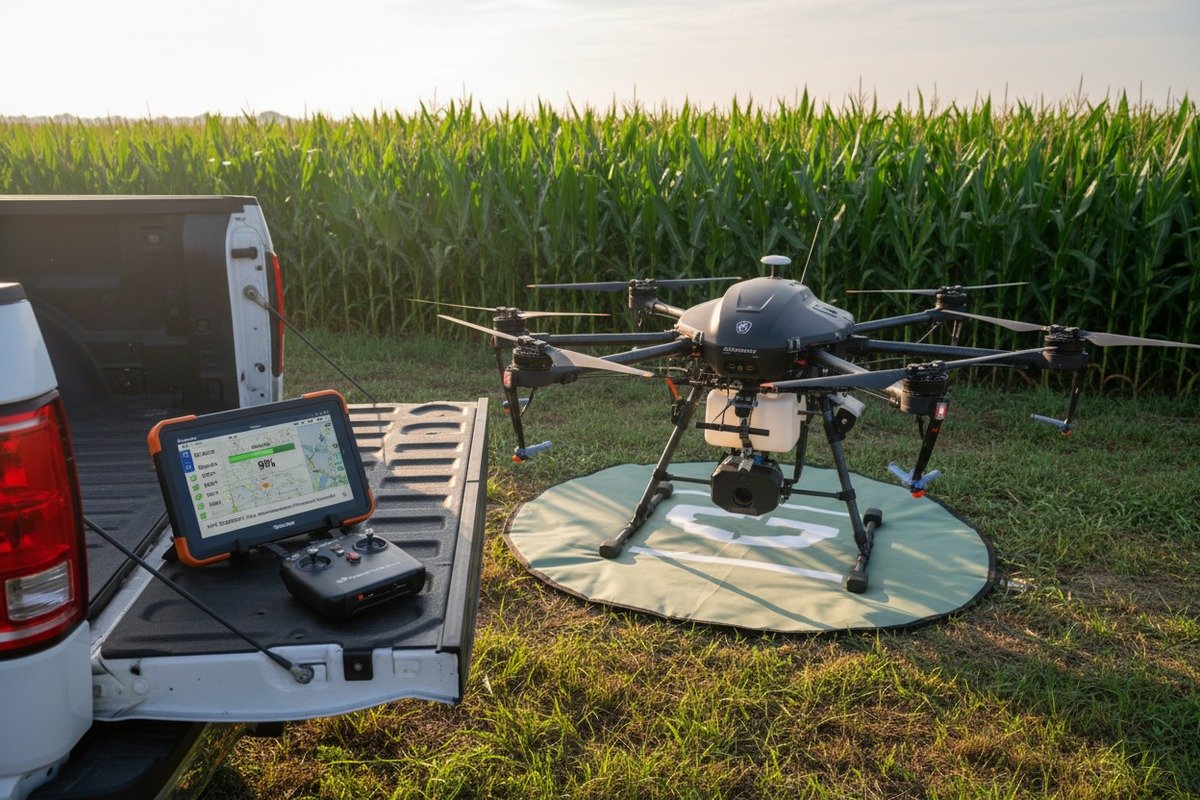
Confirm compatibility by requesting the complete list of export formats (CSV, KML, SHP, GeoTIFF, PDF), verifying API availability for direct software integration, testing sample data imports into your current system before purchase, and asking about cloud platform partnerships with major farm management providers like John Deere Operations Center or Climate FieldView.
Understanding Data Export Formats
Agricultural drone data comes in many formats. Each serves different purposes. Understanding these formats helps you ask better questions.
| Format | Primary Use | Compatible With |
|---|---|---|
| CSV | Raw numerical data, flight logs | Excel, most farm software, databases |
| KML/KMZ | Geographic boundaries, flight paths | Google Earth, mapping platforms |
| SHP (Shapefile) | GIS analysis, field boundaries | ArcGIS, QGIS, precision ag tools |
| GeoTIFF | Georeferenced imagery, NDVI 5 maps | GIS software, agronomic platforms |
| Client reports, documentation | Universal viewing, printing | |
| JSON | API data exchange, automation | Custom software, web applications |
Direct Integration vs. Manual Import
There are two ways to move drone data into farm management software 6. Direct integration uses APIs to transfer data automatically. Manual import requires you to download files and upload them separately.
Direct integration saves time but requires both systems to support compatible APIs. When we design our ground station software, we prioritize API compatibility 7 with popular platforms. Ask your vendor which platforms they directly integrate with.
Manual import works with almost any system but adds labor to your workflow. If you process hundreds of reports monthly, those extra minutes multiply quickly.
Testing Compatibility Before Commitment
Never trust a vendor's compatibility claim without testing. Follow this process:
- Request sample data files in all available formats
- Import these files into your current farm management software
- Verify that coordinates, measurements, and timestamps transfer correctly
- Check if vegetation indices 8 display properly on your existing maps
- Confirm that the data populates your standard client reports
Our engineering team has seen cases where data appeared compatible but contained subtle formatting differences. These differences caused calculation errors in downstream software. Only real-world testing reveals these problems.
Cloud Platform Considerations
Many modern farm management systems operate in the cloud. Your drone data may need to travel from the aircraft, through processing software, into cloud storage, and finally into your management platform.
Ask these questions about cloud workflows:
- Does the drone system connect directly to cloud platforms?
- What is the typical upload time for a standard field scan?
- Can processing happen at the edge (on the drone or ground station) for faster results?
- What happens if internet connectivity fails during data upload?
What key performance metrics will be included in my reports to help me prove value to my agricultural clients?
When our sales team visits agricultural expos, this question comes up repeatedly. Service providers need to demonstrate clear ROI to their farming clients. The right metrics make that demonstration easy. The wrong metrics leave clients confused.
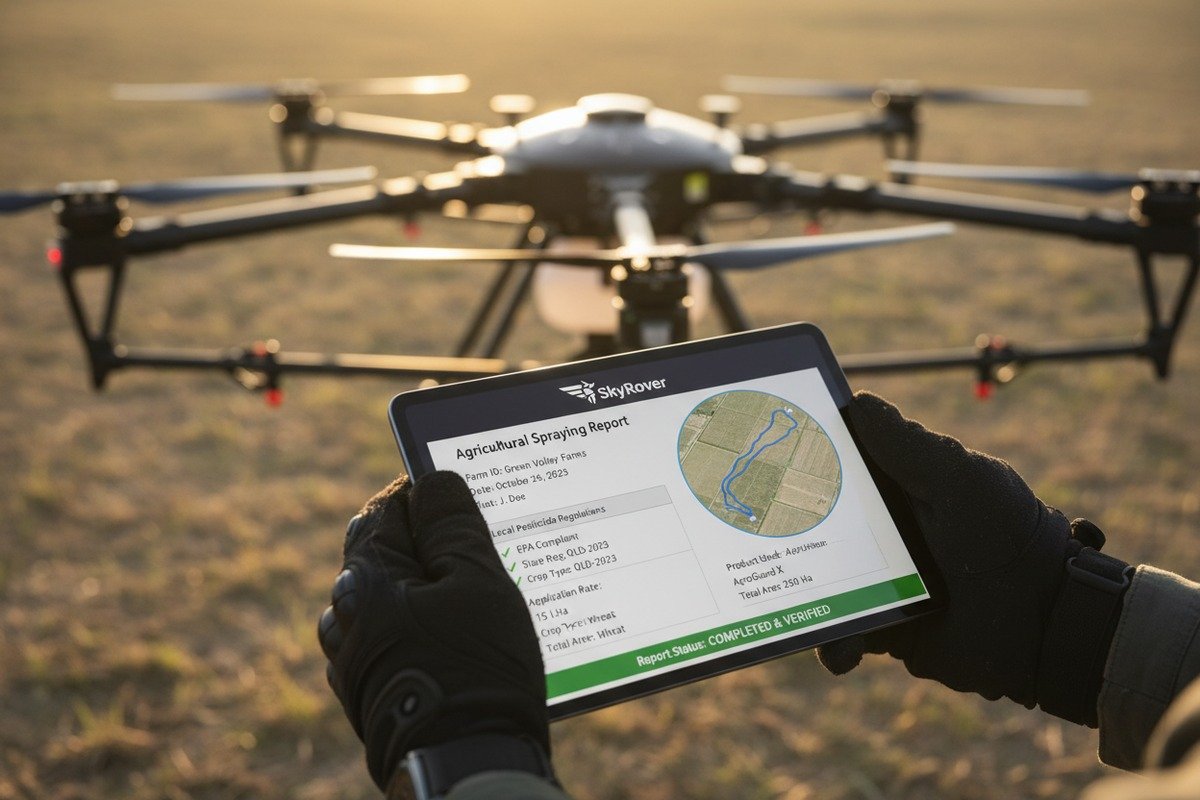
Key performance metrics in agricultural drone reports should include coverage area (acres/hectares sprayed or mapped), application rates (gallons or liters per acre), flight efficiency percentages, NDVI and other vegetation indices, spray uniformity data, GPS coordinates of treated areas, and timestamps for regulatory compliance documentation.
Metrics That Prove Spray Operation Value
For spray drone operations, clients want to know their fields received proper coverage. They need documentation for regulatory compliance. They want evidence that they paid for complete service.
| Metric Category | Specific Measurements | Client Benefit |
|---|---|---|
| Coverage Data | Total acres, overlap percentage, missed areas | Confirms complete treatment |
| Application Rates | Volume per acre, total product used | Verifies correct chemical dosing |
| Flight Parameters | Speed, altitude, swath width | Demonstrates professional technique |
| Time Records | Start time, end time, duration | Supports labor cost justification |
| Environmental Conditions | Wind speed, temperature, humidity | Explains any application adjustments |
Metrics That Prove Mapping and Scouting Value
Mapping operations deliver different value propositions. Clients pay for actionable intelligence about their crops. Reports must translate raw data into decisions.
Vegetation indices form the foundation of crop health reporting. NDVI (Normalized Difference Vegetation Index) shows overall plant vigor. NDRE (Normalized Difference Red Edge) detects stress earlier than NDVI. Chlorophyll maps indicate nutrient status.
Beyond indices, advanced reports include:
- Plant counts and population estimates
- Weed pressure maps showing infestation locations
- Water stress indicators for irrigation planning
- Disease detection zones requiring treatment
- Yield prediction models based on growth stage analysis
Connecting Metrics to Client Decisions
Raw numbers without context confuse clients. The best reports explain what metrics mean and what actions they suggest.
For example, an NDVI map showing a yellow zone in a corn field tells the farmer something is wrong. But the report should go further. It should note the zone coordinates, calculate the affected acreage, and suggest possible causes based on the pattern.
When we train our dealer partners on report interpretation, we emphasize storytelling. Each report tells the story of that field on that day. The metrics are evidence supporting the story.
Customizing Metrics for Different Crops
Different crops require different metrics. Vineyard clients care about canopy density and grape cluster counts. Orchard managers need tree health assessments and fruit sizing estimates. Row crop farmers focus on stand counts and growth uniformity.
Ask your drone supplier if their reporting software includes crop-specific templates. A system designed only for corn will disappoint your almond or citrus clients.
Does the supplier offer technical support if I need to modify the report formats for future regulatory compliance?
Regulations change constantly. In our experience exporting to the United States, we have seen FAA requirements evolve significantly over the past five years. Buyers who choose suppliers without ongoing support find themselves stuck with outdated systems.
Yes, reputable suppliers should offer technical support for report modifications including software updates for new FAA Part 137 requirements, template adjustments for state-level agricultural regulations, custom field additions for emerging compliance standards, and training on new reporting features. Confirm support terms, response times, and update costs in writing before purchase.

Why Regulatory Compliance Support Matters
FAA requirements for agricultural drone operations continue developing. Monthly flight reports under certain exemptions must include specific data fields. These fields change as regulations mature.
State-level requirements add complexity. California has different pesticide documentation requirements than Texas. Environmental agencies may request new data categories. Without supplier support, you must figure out compliance modifications alone.
What to Include in Support Agreements
Before purchasing, negotiate clear support terms. Put everything in writing. Verbal promises disappear when problems arise.
| Support Element | What to Confirm | Por qué es importante |
|---|---|---|
| Frecuencia de actualización | How often does software receive updates? | Ensures system stays current |
| Compliance Updates | Are regulatory changes included free? | Avoids surprise costs |
| Tiempo de respuesta | What is the guaranteed response window? | Affects your operational continuity |
| Canales de soporte | Phone, email, video call, on-site? | Matches your communication preferences |
| Training Inclusion | Is training on new features provided? | Reduces learning curve |
| Support Duration | How long does support coverage last? | Plans for future budget |
Remote vs. On-Site Support Options
Most report format modifications can happen remotely. Screen sharing allows technicians to guide you through software settings. Video calls demonstrate new features effectively.
However, some situations require on-site support. Complex integrations with existing farm systems may need hands-on configuration. Training sessions for large teams work better in person.
Our company maintains a network of trained service partners in major markets. This allows us to offer on-site support without international travel delays. Ask your supplier about their local support infrastructure.
Planning for Future Regulations
Nobody knows exactly what regulations will require next year. But we can predict general trends.
Real-time data sharing requirements are expanding. Automated compliance reporting is replacing manual submissions. Environmental documentation is becoming more detailed. Traceability from product application to final report is tightening.
Choose a supplier whose reporting platform can grow with these trends. Proprietary systems locked into rigid formats will become liabilities. Open platforms with flexible architecture adapt more easily.
Ask vendors about their product roadmap 9. What reporting features are planned for the next two years? How do they gather input from users about needed improvements? Companies that actively develop their software provide better long-term value.
Evaluating Technical Support Quality Before Purchase
Past performance predicts future support quality. Ask vendors for references from current customers. Contact those references directly.
Questions to ask references:
- How quickly does the supplier respond to support requests?
- Have they helped you modify reports for new regulations?
- Were software updates delivered as promised?
- How would you rate their technical knowledge?
- Would you buy from them again?
Conclusión
Asking the right questions about automated post-operation reports protects your investment. Focus on customization, compatibility, metrics, and long-term support. These conversations before purchase prevent frustration after delivery.
Notas al pie
1. Provides an overview of agricultural drone technology and applications. ↩︎
2. Explains the specific FAA regulations for agricultural aircraft operations. ↩︎
3. Replaced with an article from a reputable data company explaining common data formats, which aligns with understanding various data export types for reports. ↩︎
4. Clarifies the concept of white-labeling in reporting and software. ↩︎
5. Provides a detailed explanation of the Normalized Difference Vegetation Index. ↩︎
6. Defines and describes the functions of farm management software. ↩︎
7. Explains the importance of API compatibility for system integration. ↩︎
8. Describes the purpose and types of vegetation indices in agriculture. ↩︎
9. Explains the concept of a product roadmap in software development. ↩︎

 English
  Spanish
  German
  French
  Dutch
Dutch  Arabic
