
Every year, our sales team fields calls from frustrated buyers who switched to us after their previous supplier failed to deliver on promises. The stories are remarkably similar: stunning spec sheets, unbeatable prices, and then months of excuses. This pattern costs procurement managers time, money, and sometimes their jobs.
To identify over-promising suppliers, look for vague language, unrealistic pricing below industry averages, missing documentation, inconsistent technical specifications, and reluctance to provide verifiable references. Request raw test data, visit facilities when possible, and compare claims against standard bill-of-materials benchmarks to separate genuine capability from marketing hype.
Let me walk you through the specific red flags we’ve learned to recognize, both from competing against unreliable suppliers and from building our own quality control systems 1. These insights will help you protect your procurement decisions.
How can I verify if a drone manufacturer's technical specifications are realistic or just marketing hype?
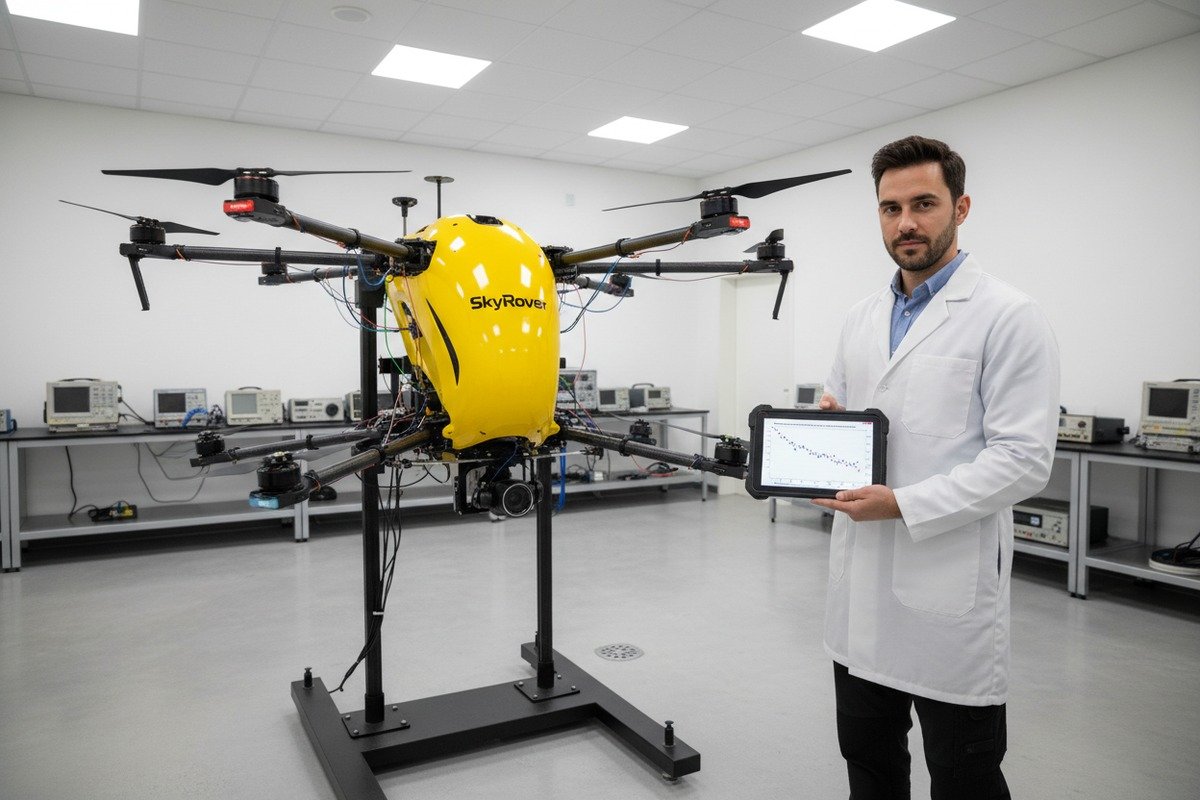
When we calibrate our flight controllers 2 and test payload capacities, we generate mountains of raw data. Genuine manufacturers can share this data. The ones who cannot? They often have something to hide.
Verify technical specifications by requesting raw test data with natural variation, comparing claimed specs against industry-standard component capabilities, asking for third-party testing reports, and checking if performance claims align with the laws of physics. Realistic data shows minor inconsistencies; "too perfect" results often indicate fabrication.
Understanding Specification Inflation
Specification inflation is rampant in the drone industry 3. A supplier might claim 60 minutes of flight time, but this often assumes zero wind, no payload, and perfect battery conditions. Our engineering team has found that real-world performance typically runs 15-25% below laboratory conditions.
Ask suppliers to clarify their testing methodology. What altitude? What temperature? What payload weight? A trustworthy manufacturer will provide detailed test parameters. An over-promising one will give vague answers like "standard conditions" or "optimal environment."
Key Specifications to Cross-Check
| Especificaciones | Red Flag | Método de verificación |
|---|---|---|
| Flight Time | Claims exceed battery capacity physics | Calculate watt-hours vs. motor draw |
| Capacidad de carga útil | Maximum equals airframe weight | Request lift test videos with timestamps |
| Range | Exceeds regulatory limits without explanation | Ask about transmission power and antenna gain |
| Wind Resistance | Claims Level 7+ without evidence | Request wind tunnel test reports |
| Temperatura de funcionamiento | Extreme ranges without battery heating systems | Ask about thermal management design |
The Raw Data Test
Here is a simple test we recommend. Ask for three separate test reports from the same product batch. Genuine test data will show minor variations. If every report shows identical numbers down to the decimal, the data is likely fabricated or copied.
Our quality control team documents every test flight. The numbers vary because real-world conditions vary. A flight at 9 AM performs differently than one at 2 PM due to temperature changes. This natural variation is proof of authentic testing.
Component Capability Analysis
Every drone's performance is limited by its components. If a supplier claims a 45-minute flight time but uses a 6S 10000mAh battery with motors that draw 50A at hover, the math does not work. Learn basic calculations to catch impossible claims.
We openly share our component specifications because they support our performance claims. technical specifications 4 Suppliers who hide component details often do so because the specs would expose their exaggerations.
What red flags should I look for when a supplier claims to have all the necessary export certifications?
In our experience exporting to the US and Europe, we have learned that certification claims require careful verification. Some suppliers display certificates that are expired, belong to different products, or were simply purchased from corrupt certification bodies.
Watch for certificates without unique identification numbers, missing product-specific appendices, expired validity dates, certifications from unaccredited bodies, and reluctance to provide certificate copies before ordering. Verify certificates directly with issuing authorities and check if the certified model matches the product you are purchasing.

Common Certification Deceptions
The most common trick we see competitors use is showing a CE or FCC certificate 5 for one product model while selling a completely different one. Certificates are model-specific. A certificate for Model A does not cover Model B, even if they look similar.
Another deception involves showing test reports without the actual certification. A test report from a laboratory is not the same as regulatory approval. The test might have failed, or the supplier might never have completed the certification process.
Essential Documents to Request
| Tipo de documento | Qué verificar | Warning Signs |
|---|---|---|
| FCC Certificate | Grant number searchable in FCC database | Number returns no results or different product |
| CE Declaration | Notified Body number for radio equipment | Self-declaration for products requiring NB approval |
| UN38.3 Battery Report | Laboratory accreditation and test date | Report older than battery design changes |
| MSDS/SDS | Matches actual battery chemistry used | Generic template without specific product data |
| Country-Specific Import Permits | Valid date range covers your import period | Expired or pending status |
Verification Steps
First, request high-resolution copies of all certificates. Legitimate certificates have unique identification numbers. Search these numbers in official databases. The FCC maintains a public database. European notified bodies maintain registers of certified products.
Second, check the certificate scope. Some suppliers obtain certifications for basic functionality but skip testing for optional features like high-power transmission modes. If you need those features, confirm they are included in the certification scope.
Third, verify the testing laboratory's accreditation. Not all test reports are equal. Reports from ISO 17025 accredited laboratories 6 carry more weight than those from unknown facilities. We use only accredited laboratories because our customers' import processes depend on valid documentation.
The Certification Timeline Problem
Obtaining legitimate certifications takes time. FCC certification typically requires 6-8 weeks. CE marking with a notified body takes 8-12 weeks. If a supplier offers a brand-new product with all certifications already complete, ask when the testing was done. If they cannot provide a clear timeline, the certificates may not be genuine.
Our product development cycle always includes certification lead time. We start testing before production ramps up. This is expensive but necessary for legitimate market access.
How do I tell if a supplier's promised delivery timeline is too good to be true?
Our production planning team tracks every stage from component procurement 7 to final shipping. When competitors quote delivery times that seem impossibly fast, we know they are either cutting corners or setting up their customers for disappointment.
Evaluate delivery promises by understanding industry-standard lead times for components, asking about current inventory levels, requesting production schedules, and checking the supplier's on-time delivery history. Unrealistic timelines often indicate the supplier will either delay shipment or skip quality control steps.

Industry-Standard Lead Times
Understanding realistic timelines helps you spot impossible promises. Here are typical lead times for industrial drone production.
| Production Stage | Typical Duration | Factors Affecting Time |
|---|---|---|
| Component Procurement | 4-8 semanas | Chip shortages, motor availability |
| PCB Assembly | 1-2 semanas | Complexity, testing requirements |
| Airframe Production | 2-3 semanas | Carbon fiber curing, CNC machining |
| Final Assembly | 1-2 semanas | Quality control checkpoints |
| Testing & Calibration | 3-5 days | Flight testing, firmware calibration |
| Shipping (Sea) | 3-5 weeks | Port congestion, customs clearance |
| Shipping (Air) | 1-2 semanas | Dangerous goods routing |
A supplier promising delivery of custom-configured industrial drones in three weeks is either lying or skipping essential steps. Our standard lead time for configured systems is 8-12 weeks. This allows proper component sourcing, assembly, testing, and shipping.
Questions That Reveal Capacity Reality
Ask these questions to probe beyond surface promises:
What is your current order backlog? A supplier with zero backlog either has capacity problems or is new to the market. Both scenarios create risk.
Can I see your production schedule? Legitimate manufacturers track production in detail. If they cannot show you where your order fits in their schedule, they may be guessing at delivery dates.
What components have the longest lead time for my order? This question reveals whether the supplier actually plans production or simply quotes optimistic timelines to win orders.
The Hidden Costs of Rushed Delivery
When suppliers promise impossibly fast delivery, they often plan to cut corners. Common shortcuts include skipping burn-in testing, using substitute components without notification, reducing quality inspection sampling, and shipping via unreliable freight forwarders.
Our production line includes mandatory quality holds at three stages. Removing these would save time but would shift the risk of defective products to our customers. We refuse to do this because warranty claims and reputation damage cost more than the efficiency gains.
Tracking Delivery Performance
If you work with a supplier over time, track their actual performance. Calculate their on-time delivery rate. Request this data from new suppliers too. According to procurement research, suppliers who cannot provide historical delivery metrics often have poor performance to hide.
We maintain detailed shipment records and share them during customer onboarding. Our on-time delivery rate exceeds 94% because we build realistic buffers into our quotes rather than making promises we cannot keep.
How can I evaluate if a supplier's promise of long-term technical support is genuine?
When our engineers train customers on system maintenance, we build relationships that last years. This investment in support infrastructure is expensive. Suppliers who promise similar support without the infrastructure are setting up their customers for abandonment.
Evaluate technical support promises by requesting documentation of support infrastructure, asking for references from long-term customers, reviewing written SLAs with specific response time guarantees and remedies for failures, and checking if spare parts remain available for older models. Verbal promises are unenforceable; only written contracts with penalties provide protection.

Support Infrastructure Indicators
Genuine long-term support requires infrastructure investment. Look for these indicators when evaluating supplier capabilities.
Dedicated support staff: Ask how many engineers work in technical support. A supplier claiming 24/7 support but employing only three engineers cannot deliver on that promise across time zones.
Spare parts inventory: Request a parts catalog and ask about stock levels for your specific model. Suppliers who manufacture parts on-demand will leave you waiting weeks for critical replacements.
Documentation quality: Review user manuals, maintenance guides, and troubleshooting documentation. Poor documentation indicates poor support systems overall.
Written SLA Requirements
Verbal support promises mean nothing when your drones are grounded. Require written service level agreements 8 that specify:
| SLA Element | What to Include | Enforcement Mechanism |
|---|---|---|
| Tiempo de respuesta | Hours to initial response by severity level | Credits or penalties for missed targets |
| Resolution Time | Maximum time to provide solution or workaround | Escalation procedures and executive contacts |
| Spare Parts Availability | Guaranteed shipping time for critical components | Stock guarantees or alternative sourcing |
| Actualizaciones de software | Duration of firmware support post-purchase | Minimum update period in contract |
| Remote Support | Available hours and access methods | Named contacts and backup procedures |
Our customer contracts include specific SLA terms because we have the infrastructure to meet them. Suppliers who resist putting support terms in writing often know they cannot deliver on their verbal promises.
Reference Verification
Ask for references from customers who have owned the product for more than two years. Recent buyers cannot evaluate long-term support quality. Contact these references and ask specific questions:
How quickly does the supplier respond to support requests? Have they ever failed to provide spare parts? Has the supplier continued software updates? Would they purchase from this supplier again?
We encourage potential customers to contact our existing clients directly. This transparency demonstrates confidence in our support track record.
The Economics of Support
Long-term technical support costs money. Suppliers offering the lowest prices often fund that discount by eliminating support infrastructure. When problems arise, you discover that "lifetime support" actually means "support until we stop answering emails."
Our pricing includes support infrastructure costs. Customers pay slightly more upfront but receive genuine support throughout their product lifecycle 9. This model works because our customers value operational reliability over minimal purchase price.
Self-Monitoring and Verification
Some suppliers provide self-reported performance metrics. These can be useful but require verification. Request independent audit rights in your contract. According to procurement experts, self-reported metrics work only when paired with occasional independent verification.
We provide quarterly support performance reports to our distribution partners. These reports include response times, resolution rates, and customer satisfaction scores. Transparency in these metrics demonstrates genuine commitment to support quality.
Conclusión
Identifying over-promising suppliers requires systematic verification of specifications, certifications, delivery timelines, and support infrastructure. Trust data over promises, verify claims independently, and insist on written contracts with enforceable terms. Your due diligence investment protects your business from costly supplier failures.
Notas al pie
1. Replaced HTTP 404 with an authoritative Wikipedia page on Quality Control. ↩︎
2. Defines flight controllers as the central processing unit for drone flight and stability. ↩︎
3. Provides market insights, statistics, and trends for the global drone market. ↩︎
4. Outlines the detailed requirements, design, and functionality of a product or system. ↩︎
5. Explains what an FCC certificate signifies for electronic device compliance and approval. ↩︎
6. Replaced HTTP unknown with an authoritative page on ISO/IEC 17025 accreditation from ANAB (ANSI National Accreditation Board). ↩︎
7. Describes the process of identifying, selecting, and acquiring parts for manufacturing. ↩︎
8. Defines SLAs as contracts between providers and customers outlining service performance expectations. ↩︎
9. Replaced HTTP 404 with an authoritative Wikipedia page on Product Lifecycle. ↩︎

 English
  Spanish
  German
  French
  Dutch
Dutch  Arabic
