
Every season, our production line receives calls from frustrated farm operators. Their drone water pumps failed mid-spray. drones agrícolas 1 Crops went untreated. Money was lost. The real problem? Most buyers never learned how to evaluate pump lifespan before purchase.
To evaluate water pump lifespan, check the pump type (brushless pumps last 500+ hours versus 100-150 hours for conventional), monitor operating conditions, track flight hours, and inspect for wear indicators like pressure drops or leaks. Replacement costs range from $50 to $300 for parts, plus labor and downtime expenses.
This guide breaks down everything you need to know about pump evaluation, replacement triggers, budgeting, and supplier selection. Let’s dive into the details that will save you money and headaches.
How can I accurately estimate the service life of my agricultural drone's water pump?
When we calibrate our spray systems before shipment, pump longevity is the question we hear most often. Buyers want numbers. They want certainty. But accurate estimation requires understanding several key variables.
Accurate pump life estimation depends on three factors: pump technology type, actual operating hours, and maintenance quality. Brushless pumps typically deliver 500+ hours of service life, which is 3-5 times longer than conventional brush-type pumps. Track your flight hours and spray cycles to build a reliable prediction model.

Understanding Pump Technology Differences
The first step in estimation is knowing your pump type. Our engineering team has tested both technologies extensively. The differences are significant.
Brushless pumps 2 have no physical wear components inside the motor. This design enables maintenance-free performance for extended periods. Industry-standard brushless motors can achieve 10,000+ hours of service life. However, the pump mechanism itself may wear faster than the motor.
Conventional brush-type pumps use carbon brushes 3 that physically contact the commutator. These brushes wear down with use. Replacement becomes necessary far sooner.
| Pump Type | Average Service Life | Maintenance Needs | Cost Level |
|---|---|---|---|
| Brushless | 500+ hours | Bajo | Higher initial |
| Conventional | 100-150 hours | Alto | Lower initial |
| Diaphragm | 2 seasons | Medio | Medio |
Calculating Your Actual Operating Hours
Flight time does not equal pump operating time. Your pump only runs during active spraying. Most drone sprayers cover 5 to 15 acres per battery charge. Flight times typically allow two tank loads at 2+ gallons per acre.
Here is a practical calculation method:
- Record total acres sprayed per season
- Note your gallons-per-acre rate
- Calculate total gallons pumped
- Divide by pump flow rate for operating hours
A farm spraying 1,000 acres at 2 GPA moves 2,000 gallons. At a pump rate of 4 gallons per minute, that equals roughly 500 minutes or 8.3 hours of actual pump operation.
Environmental and Chemical Factors
Water quality 4 dramatically impacts pump lifespan. Hard water deposits minerals inside pump chambers. Sediment causes abrasion. Corrosive elements attack seals and impellers.
Certain agricultural chemicals accelerate wear. Abrasive formulations and aggressive adjuvants damage pump components faster than standard applications. Our quality control team recommends tracking which chemicals you use most frequently.
Temperature extremes also matter. Operating in very hot or very cold conditions stresses pump seals and housings. Humidity promotes corrosion on electrical connections.
What indicators should I look for to know when my drone pump needs replacing?
In our experience exporting to US distributors, we have learned that waiting for complete failure costs far more than proactive replacement. The key is recognizing warning signs early.
Watch for these replacement indicators: pressure drops exceeding 10% from baseline, visible leaks at seals or connections, unusual vibrations or noises during operation, inconsistent spray patterns, and flow rate variations beyond 10%. When nozzles show 10% increased flow after 40,000 acres, the entire spray system needs evaluation.
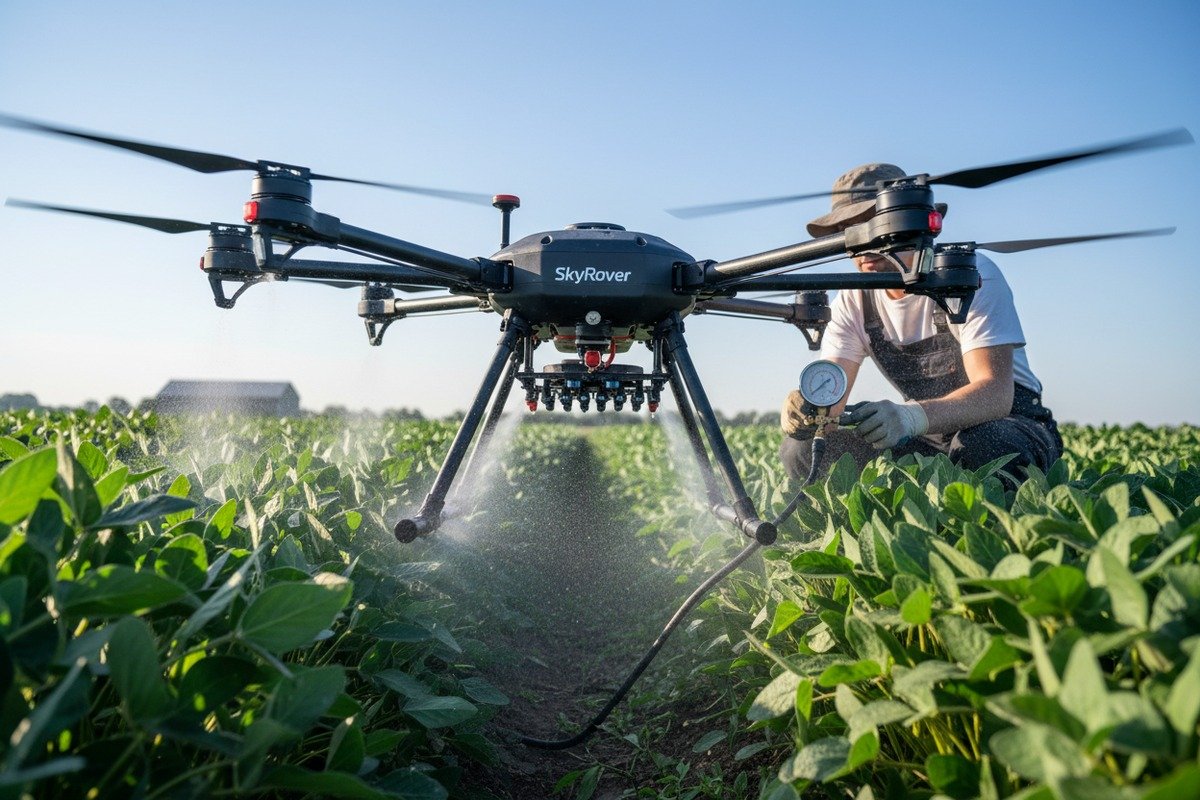
Pressure and Flow Rate Changes
Pressure monitoring is your best early warning system. Establish baseline pressure readings when your pump is new. Record these numbers. Check regularly during operation.
A 10% drop in pressure indicates significant internal wear. Seals may be failing. Impeller surfaces may be eroding. pressure drops 5 Diaphragms may be stretching or cracking.
Flow rate consistency matters equally. Uneven spray patterns often trace back to pump issues rather than nozzle problems. If calibration adjustments no longer restore uniform coverage, suspect the pump.
| Señal de advertencia | Severity Level | Se requiere acción |
|---|---|---|
| 5% pressure drop | Bajo | Monitor closely |
| 10% pressure drop | Medio | Plan replacement |
| 15%+ pressure drop | Alto | Replace immediately |
| Visible leaks | Alto | Replace seals or pump |
| Unusual noise | Medium-High | Inspect internally |
Visual and Auditory Inspection Points
Our technicians perform these checks on every unit before shipping. You should do the same before each spraying season and weekly during active use.
Busca:
- Cracks in pump housing
- Bulging or cracked hoses
- Corrosion on metal fittings
- Residue buildup around seals
- Discoloration indicating chemical damage
Listen for:
- Grinding or scraping sounds
- Cavitation noise (a distinct rattling)
- Inconsistent motor sound
- Unusual vibration patterns
Maintenance Schedule Benchmarks
Routine inspections should occur every 10 to 20 flight hours. Comprehensive maintenance checks are recommended every 50 to 100 flight hours. These intervals help catch problems before they become failures.
Daily inspection points include:
- Check if water pump is blocked
- Verify circuits are not oxidized
- Confirm rotating disc is secure
- Flush system with clean water after use
Pump diaphragms and spray system components typically need replacement after two full spraying seasons of regular use. Nozzles show degradation after approximately 40,000 acres of coverage.
How much should I budget for water pump replacement parts and labor for my fleet?
When our clients plan their annual maintenance budgets, pump replacement costs often surprise them. The direct parts cost is only part of the equation. Total cost of ownership tells the complete story.
Budget $50-$300 per pump for replacement parts depending on type and quality. Add $30-$100 for labor per unit. Most critically, factor in downtime costs of $200-$500 per day during peak spraying windows. For a 5-drone fleet, annual pump maintenance budgets typically range from $500 to $2,500.

Direct Replacement Costs Breakdown
Parts pricing varies significantly based on pump type, capacity, and brand. Higher-quality components cost more upfront but often deliver better long-term value through extended service life.
| Cost Category | Budget Range | Frequency |
|---|---|---|
| Brushless pump unit | $150-$300 | Every 2-3 years |
| Conventional pump | $50-$100 | Anual |
| Diaphragm kit | $20-$50 | Every 2 seasons |
| Seals and gaskets | $10-$30 | Anual |
| Hoses and fittings | $30-$80 | As needed |
| Labor (per pump) | $30-$100 | Each replacement |
Hidden Costs That Impact Your Budget
Downtime during critical spraying windows represents the largest hidden cost. A single day of delayed treatment can impact crop yields significantly. Expedited shipping for emergency parts adds premium charges of 50-200% over standard rates.
Consider these indirect costs:
- Lost operational time during replacement
- Potential yield reduction from delayed application
- Expedited shipping fees for critical components
- Technician travel costs for field repairs
- Rental equipment if needed during repairs
Our distributors who maintain spare pump inventory report 40% lower total costs than those who order parts only when failures occur.
Fleet Size Budget Planning
Larger fleets benefit from economies of scale in maintenance planning. Bulk parts purchases reduce per-unit costs. Scheduled maintenance windows minimize disruption.
For a 5-drone fleet operating 500 hours annually:
- Parts inventory: $500-$800
- Scheduled labor: $300-$500
- Emergency reserve: $400-$600
- Training and documentation: $100-$200
- Total annual budget: $1,300-$2,100
The ROI period for agricultural spray drones is typically 1-2 years. Proper maintenance budgeting protects this investment and extends the payback period benefits.
How can I ensure my supplier provides durable pumps to minimize my maintenance costs?
Our quality control process screens every component before assembly. But not all manufacturers maintain these standards. Knowing what to ask and what to verify protects your investment.
Ensure supplier durability by requesting documented pump specifications including rated operating hours, material certifications, and warranty terms. Verify suppliers have ISO quality certifications, can provide spare parts availability guarantees, and offer technical support. Ask for reference customers who can confirm real-world pump performance over multiple seasons.
Critical Specifications to Request
Before purchasing, obtain detailed technical documentation. Vague specifications often indicate lower-quality components. Reputable manufacturers provide complete data.
Request these specific details:
- Rated pump operating hours (minimum 500 for brushless)
- Flow rate at specified pressure
- Material composition of impeller, seals, and housing
- Chemical compatibility list
- Operating temperature range
- IP rating 6 for water and dust protection
Quality Certification Verification
Certifications provide independent verification of manufacturing standards. Our facility maintains ISO certifications that our US and European clients require for their own compliance needs.
| Certificación | What It Verifies | Por qué es importante |
|---|---|---|
| ISO 9001 7 | Sistemas de gestión de calidad | Consistent manufacturing quality |
| Marcado CE | European safety compliance | Product meets safety standards |
| Certificación FCC | Electromagnetic compliance | Legal operation in US |
| Clasificación IP | Ingress protection | Durability in field conditions |
| RoHS | Hazardous substances limits | Environmental compliance |
Supplier Capability Assessment
Beyond product specifications, evaluate supplier capabilities that impact long-term costs. Parts availability matters critically when failures occur mid-season.
Pregunte a los posibles proveedores:
- Do you stock replacement pumps and parts?
- What is your typical shipping time for spare parts?
- Do you offer technical support via phone or video?
- Can you provide remote diagnostics assistance?
- What warranty coverage do you offer on pumps?
- Can you connect me with current customers for references?
Design Features That Reduce Maintenance
Modern agricultural drone designs incorporate features that simplify pump service. Modular, quick-release pump designs allow rapid field replacements without specialized tools. This reduces downtime and eliminates the need for extensive technical expertise.
Predictive maintenance integration 8 represents the next evolution. IoT sensors monitoring real-time pressure, flow, temperature, and vibration can forecast potential failures before they occur. Our newer models support these monitoring capabilities through compatible software platforms.
Waterproof and corrosion-resistant coatings on pump housings and connections extend service life in harsh agricultural environments. Ask suppliers about protective treatments and material selection for components exposed to water and chemical spray.
Conclusión
Evaluating water pump lifespan and replacement costs requires attention to technology type, operating conditions, and maintenance practices. Budget for both direct costs and hidden downtime expenses. Choose suppliers who provide documentation, certifications, and ongoing support to protect your agricultural drone investment.
Notas al pie
1. Explains the various uses and benefits of drones in agriculture. ↩︎
2. Details the design, features, and benefits of brushless DC pumps, including increased lifespan. ↩︎
3. The new URL from Power Electric directly compares brushless and brushed motors and explains the role of carbon brushes, aligning with the original context of pump technology differences. ↩︎
4. Discusses how poor water quality, including hard water and corrosive elements, impacts pump longevity. ↩︎
5. Outlines common causes of pressure drops in pumps, such as impeller wear and blockages. ↩︎
6. Explains the IP rating system, classifying protection against solids and liquids for electrical equipment. ↩︎
7. Provides an overview of ISO 9001, an international standard for quality management systems. ↩︎
8. Highlights the benefits of predictive maintenance, including reduced costs and improved operational planning. ↩︎

 English
  Spanish
  German
  French
  Dutch
Dutch  Arabic
