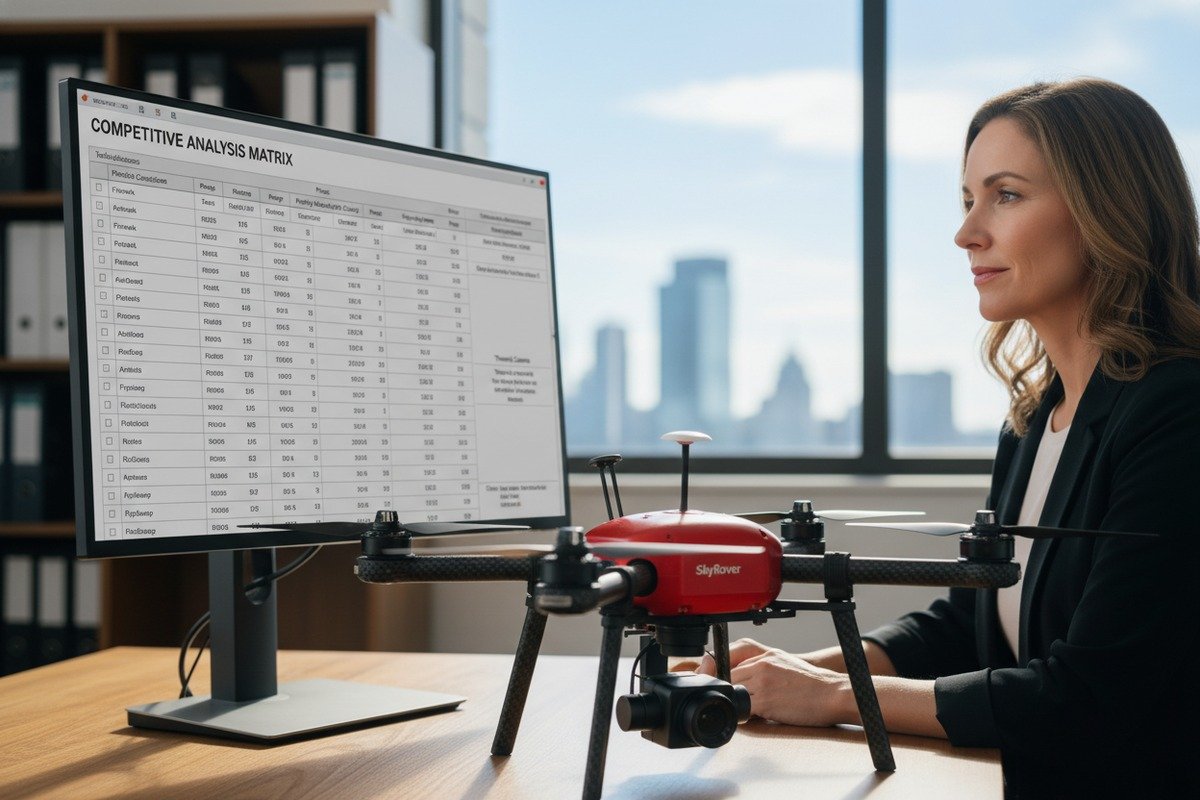
When our engineering team develops new firefighting drone models 1, we spend weeks analyzing competitor specs. Yet many buyers skip this step when evaluating suppliers payload capacity 2. This oversight costs them dearly. Poor supplier knowledge means hidden performance gaps, missed certifications, and drones that fail when fires rage.
To evaluate supplier knowledge of competitor products, ask targeted questions about specific rival models like Skydio X10, FLIR SIRAS, and DJI Matrice 350 RTK. Request detailed competitive matrices, probe their awareness of performance benchmarks, and verify they understand regulatory differences across markets. Suppliers who know competitors build better drones.
This guide walks you through practical methods to test whether your potential supplier truly understands the firefighting drone market. We will cover technical assessments, payload questions, software benchmarking, and certification comparisons.
How do I assess if a supplier understands the technical performance gaps between their firefighting drones and top global brands?
Our factory receives dozens of inquiries monthly from fire departments and distributors. The smartest buyers always ask how our drones compare to market leaders. This question separates serious suppliers from those who simply copy designs without understanding why they work.
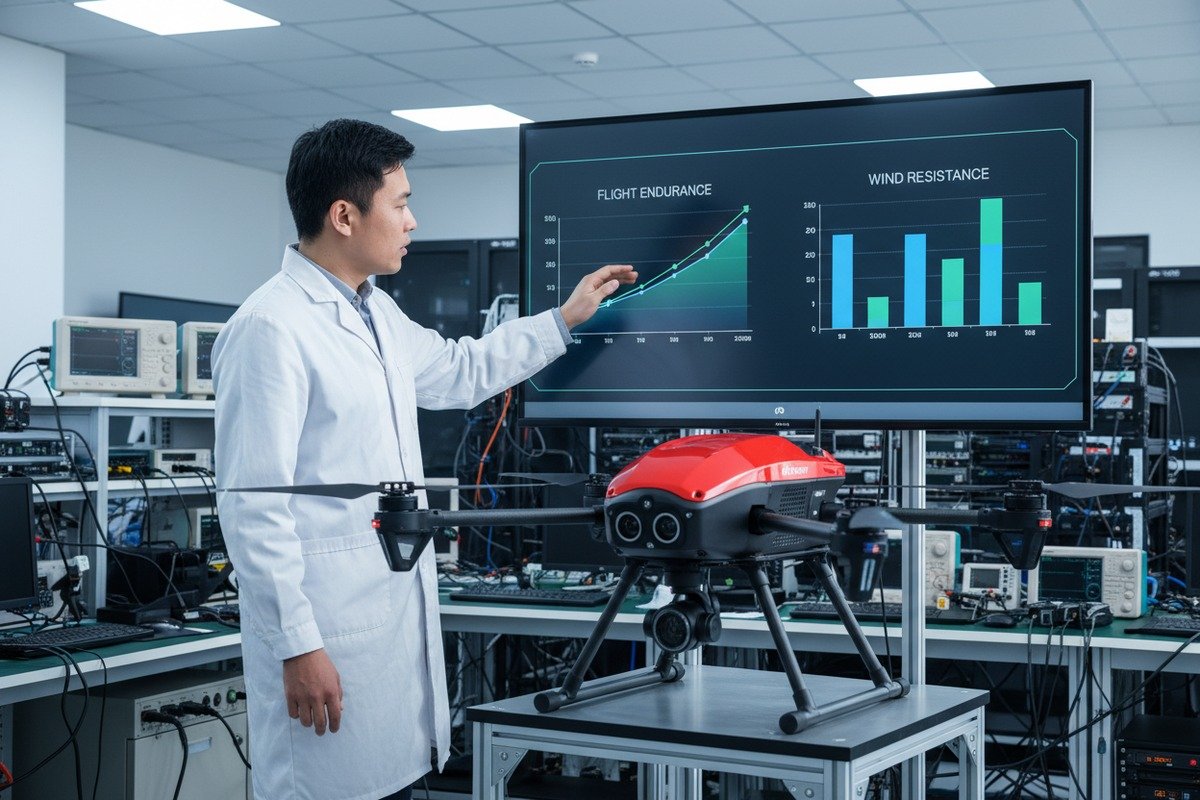
Assess supplier knowledge by requesting a side-by-side comparison matrix against at least three top competitors. Look for specific data on flight time, wind resistance, thermal resolution, and payload capacity. Suppliers who cite exact figures and explain performance trade-offs demonstrate genuine market awareness and engineering depth.
Why Technical Benchmarking Matters
Fire departments need drones that perform in extreme conditions. Smoke, heat, and high winds challenge every system. A supplier who cannot explain how their drone handles these conditions versus a DJI Matrice 350 RTK 3 or FLIR SkyRanger R70 likely has not tested rigorously.
When we calibrate our flight controllers, we reference competitor specs. For example, the FLIR SkyRanger R70 achieves 50-minute flight times. Our engineers studied this benchmark to optimize our battery management systems. This knowledge shapes better products.
Key Performance Metrics to Probe
Ask your supplier about these specific benchmarks:
| Performance Metric | Industry Leader Benchmark | Red Flag Response |
|---|---|---|
| Flight Time | 50 minutes (FLIR SkyRanger R70) | "About 30-40 minutes" without specifics |
| Wind Resistance | 12 m/s sustained | Cannot cite exact rating |
| Thermal Resolution 4 | 640×512 radiometric | Vague "high resolution" claims |
| Operating Temperature | -20°C to 50°C | No temperature range provided |
| Clasificación IP | IP45 or higher | Unknown or unrated |
Questions That Reveal True Knowledge
Start with open-ended questions. Ask: "Which competitor model do you consider your closest rival, and why?" Suppliers with deep market knowledge will name specific models and explain feature differences.
Follow up with technical probes. Request wind tunnel test data. Ask about thermal camera partnerships. Inquire about redundancy systems. Suppliers who partner with thermal imaging leaders like FLIR or DJI understand what firefighters need.
Watch for red flags. Vague answers like "our drone is better than Chinese competitors" show weak market awareness. Outdated references to discontinued models suggest the supplier stopped tracking the market years ago.
The Competitive Matrix Test
Request a formal competitive matrix document. This should compare at least three specific competitors across ten or more metrics. Suppliers who cannot produce this document likely have not studied the market systematically.
Our sales team maintains updated matrices for every major competitor. We share these with serious buyers because transparency builds trust. Suppliers who hide comparisons may have something to hide.
What specific questions should I ask to verify a manufacturer's awareness of competitor payload and flight endurance specs?
In our experience exporting to the US and European markets, payload and endurance questions reveal the most about supplier expertise. These specs directly impact firefighting missions. A drone that cannot carry thermal cameras long enough to survey a wildfire is useless.
Ask suppliers to compare their payload capacity and flight endurance against the DJI Matrice 350 RTK (2.7kg payload, 55 minutes) and Skydio X10 (45 minutes). Request data on how payload weight affects flight time. Knowledgeable suppliers will provide payload-endurance curves and explain trade-offs for different mission profiles.
Understanding Payload Trade-offs
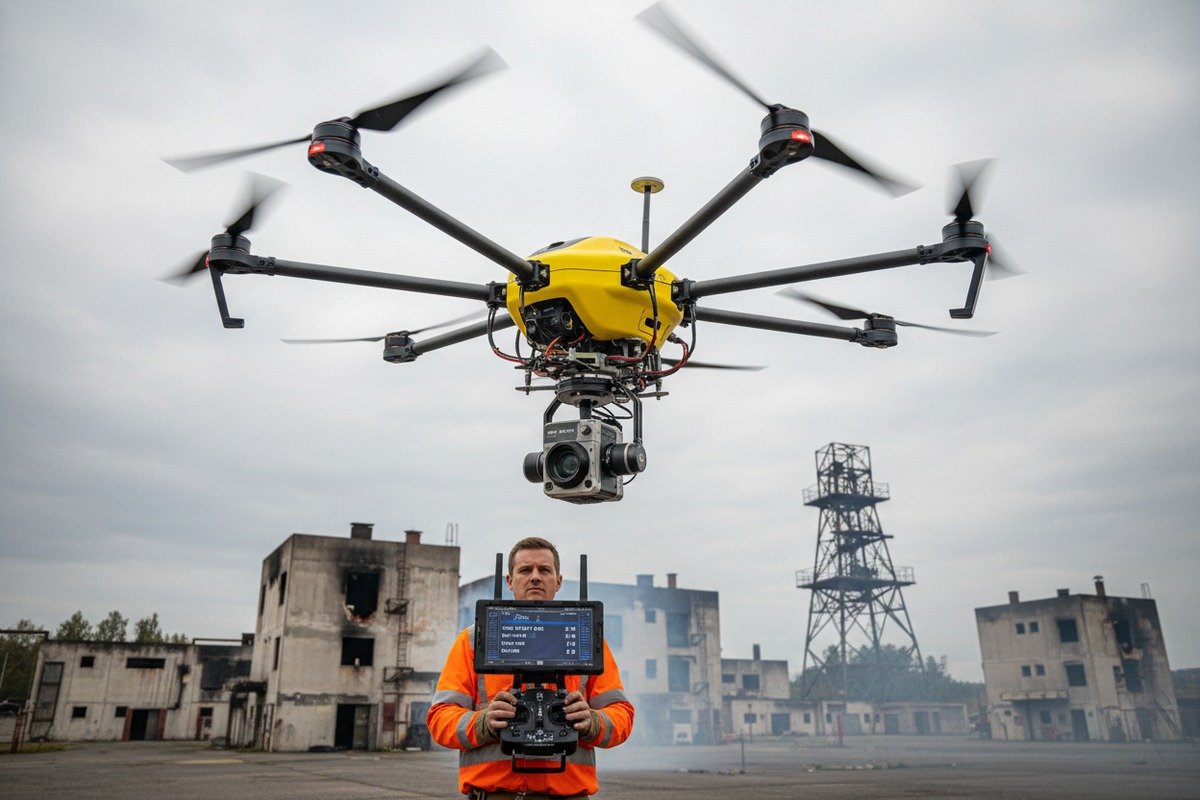
Every gram of payload reduces flight time. This relationship is nonlinear. A supplier who understands competitor products will explain this trade-off clearly.
For example, our octocopter models carry up to 5kg payloads. But maximum payload cuts flight time to 25 minutes. With a 2kg thermal camera, we achieve 42 minutes. This matches what top competitors offer.
Ask your supplier: "If I add a 1.5kg thermal camera, how much flight time do I lose?" Specific answers indicate real testing. Vague responses suggest guesswork.
Competitor Payload Comparison Table
| Drone Model | Max Payload | Flight Time (No Payload) | Flight Time (Max Payload) |
|---|---|---|---|
| DJI Matrice 350 RTK | 2.7 kg | 55 min | 35 min |
| FLIR SkyRanger R70 | 1.5 kg | 50 min | 38 min |
| Skydio X10 5 | 1.2 kg | 45 min | 32 min |
| Parrot ANAFI Thermal | 0.5 kg | 32 min | 26 min |
Mission-Specific Endurance Questions
Different firefighting missions need different endurance profiles. Urban structure fires require short, intensive flights. Wildfire surveillance needs extended loiter time.
Ask your supplier: "How does your drone compare to the FLIR SkyRanger R70 for wildfire mapping missions lasting 40+ minutes?" This forces them to think about real applications, not just spec sheets.
Our engineering team designs different battery configurations for different missions. We offer quick-swap systems that match what Skydio provides. Suppliers who do not mention hot-swap batteries may not understand operational needs.
Probing for Real-World Data
Lab specs differ from field performance. Heat reduces battery efficiency. Altitude affects lift. Smoke can clog cooling systems.
Request field test data from actual firefighting deployments. Ask how performance changed at 40°C ambient temperature. Compare answers to published competitor data.
When we tested our firefighting drones in summer desert conditions, flight time dropped 18% compared to lab results. Competitors experience similar drops. Suppliers who claim identical lab and field performance are either lying or have not tested properly.
How can I tell if a supplier has benchmarked their software and flight control systems against other industrial drone leaders?
When we develop our flight control software, we study how Skydio handles autonomous obstacle avoidance 6 and how DJI manages RTK positioning. Software differentiates modern firefighting drones more than hardware. Yet many buyers overlook this critical evaluation area.
Test supplier software knowledge by asking about specific competitor features like Skydio's AI obstacle avoidance, DJI's RTK centimeter positioning, and FLIR's thermal analytics integration. Suppliers should explain their own autonomous capabilities, failsafe protocols, and how their ground control software compares to industry standards.
Critical Software Features for Firefighting
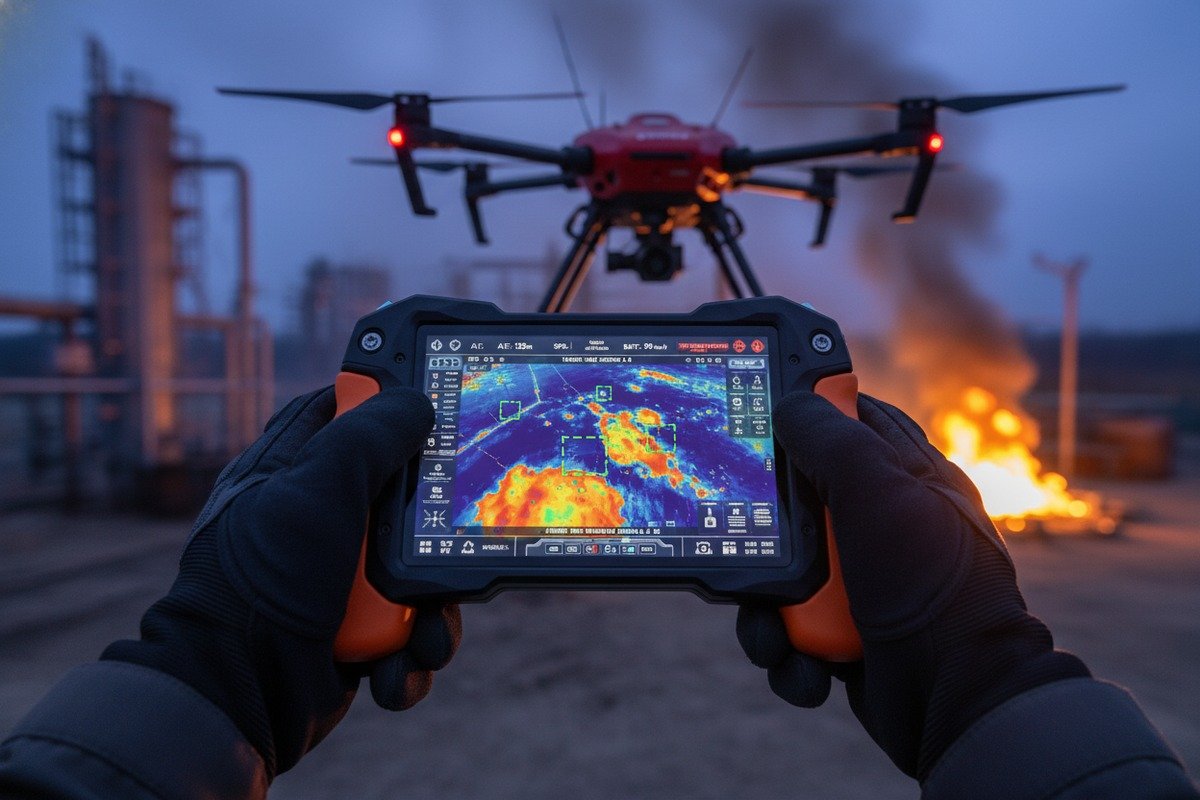
Firefighting drones need specialized software capabilities. Smoke penetration algorithms help thermal cameras see through haze. Automated search patterns cover large wildfire areas efficiently. Real-time video streaming reaches incident commanders instantly.
Ask your supplier: "How does your autonomous flight software compare to Skydio's obstacle avoidance in smoke-filled environments?" This question tests both competitor knowledge and technical depth.
Flight Control System Comparison
| Característica | Skydio X10 | DJI Matrice 350 | Industry Standard |
|---|---|---|---|
| Obstacle Avoidance | 360° AI-powered | 360° sensor-based | Front/rear only |
| RTK Positioning 7 | Optional | Built-in | GPS only |
| BVLOS Capability | Certified | Certified | Limitado |
| Autonomous Mapping | Advanced | Advanced | Basic |
| Failsafe Modes | 6+ protocols | 5+ protocols | 2-3 protocols |
Evaluating Autonomous Capabilities
Modern firefighting drones increasingly operate beyond visual line of sight. This requires sophisticated autonomous systems. The FAA Part 135 certification and EASA standards set high bars for BVLOS operations.
Ask if your supplier has achieved BVLOS certifications in any market. Inquire about their autonomous return-to-home logic. Request demonstrations of automated search patterns.
Our software team has spent three years developing autonomous wildfire mapping algorithms. We studied published research from competitors and academic institutions. This investment shows in our product capabilities.
Ground Control Software Integration
Fire incident commanders need intuitive ground control interfaces. They cannot spend precious minutes learning complex software during emergencies.
Ask your supplier to demonstrate their ground control software. Compare it to DJI Pilot 2 or Skydio's cloud platform. Look for thermal overlay features, team coordination tools, and data export capabilities.
Request information about SDK availability. Custom integrations with existing fire department systems add tremendous value. Suppliers who offer open APIs understand enterprise needs.
Red Flags in Software Claims
Beware of suppliers who claim "better than DJI" without specifics. Ask for latency measurements, frame rates, and connection range data. Request video demonstrations of obstacle avoidance in challenging conditions.
Suppliers who cannot explain their software architecture likely use off-the-shelf systems without customization. These generic solutions rarely meet firefighting requirements.
Why is it critical for my supplier to explain how their drone's durability and certifications compare to other high-end models on the market?
Our production lines run extensive durability testing on every unit. We subject drones to temperature cycling, vibration, and water spray tests. This matters because firefighting environments destroy fragile equipment. Suppliers who cannot explain their durability testing against competitors probably skip these steps.
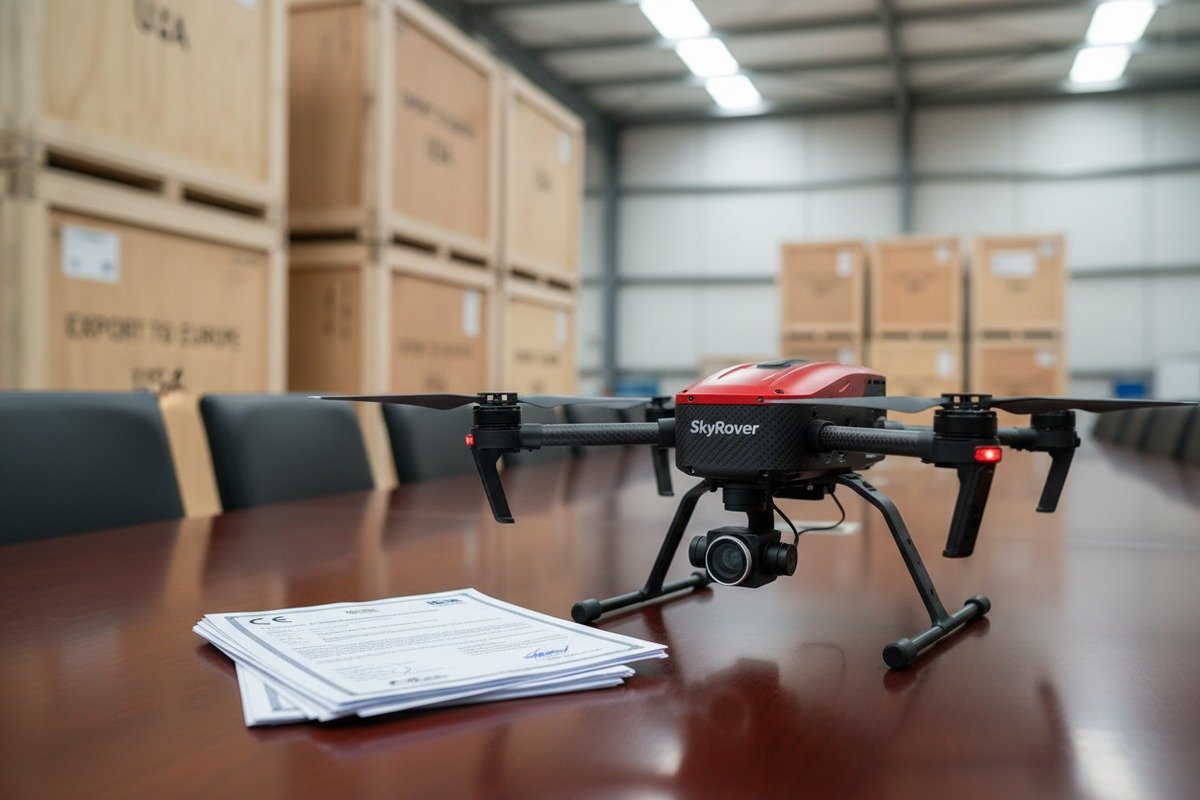
Supplier durability knowledge is critical because firefighting drones face extreme heat, water exposure, and smoke particles that destroy untested equipment. Require comparisons of IP ratings, operating temperature ranges, and relevant certifications (NDAA, C-Class, RoHS) against models like FLIR SIRAS and Skydio X10 to ensure operational reliability.
Environmental Durability Standards
Fire scenes expose drones to conditions that destroy consumer electronics. Water from hoses, smoke particles, and radiant heat attack every component. Industrial drones must meet stringent durability standards.
IP ratings indicate water and dust protection. IP45 represents minimum acceptable protection for firefighting. Some competitors achieve IP54 or higher. Ask your supplier to compare their IP rating against the FLIR SIRAS 8 and explain what testing they conducted.
Durability Certification Comparison Table
| Certification/Standard | Objetivo | Key Competitors | Minimum Requirement |
|---|---|---|---|
| IP Rating (IP45+) | Water/dust ingress | FLIR SIRAS (IP54) | IP45 |
| MIL-STD-810 | Shock/vibration | Skydio X10 | Optional but valued |
| Operating Temp Range | Extreme conditions | -20°C to 50°C typical | -10°C to 45°C minimum |
| NDAA Compliance 9 | US government sales | Skydio, FLIR, Parrot | Required for US gov |
| C-Class (EU) | European operations | Parrot ANAFI | Required for EU |
The NDAA Compliance Question
US fire departments increasingly require NDAA-compliant drones. This regulation excludes products with certain Chinese components from government procurement. The rule significantly impacts the competitive landscape.
Skydio, FLIR, and Parrot benefit from NDAA compliance. DJI products, despite superior features in some areas, face procurement restrictions. Your supplier should understand these dynamics and explain their compliance status clearly.
Ask: "Are your drones NDAA compliant, and which components would need substitution for US government sales?" Knowledgeable suppliers will provide specific answers about component sourcing.
Material and Construction Comparisons
High-end firefighting drones use carbon fiber frames, reinforced motor mounts, and sealed electronics housings. Budget models use plastic and lack environmental protection.
Our octocopter models feature woven carbon fiber arms with redundant motor configurations. This matches construction approaches used by Skydio and FLIR for their premium offerings. We can explain exactly how our materials compare because we have studied competitor teardowns.
Ask your supplier about frame materials, motor redundancy, and parachute systems. Request comparison data against specific competitor models. Suppliers who cannot provide this information have not conducted competitive analysis.
Certification Documentation
Legitimate suppliers maintain comprehensive certification documentation. This includes test reports, regulatory approvals, and quality management certificates.
Request copies of IP rating test reports. Ask for CE, FCC, or other relevant regulatory documentation. Inquire about quality management certifications like ISO 9001.
Compare the documentation scope against what competitors provide. Skydio and FLIR publish extensive compliance information. Your supplier should match this transparency level.
Total Cost of Ownership Perspective
Durability affects long-term costs significantly. A cheaper drone that fails after 50 flights costs more than a premium unit lasting 500 flights.
Ask your supplier to calculate total cost of ownership against competitor models. Include maintenance costs, spare parts pricing, and expected service life. Suppliers who understand competitor pricing can position their value proposition accurately.
Conclusión
Evaluating supplier knowledge of competitor products protects your investment in firefighting drones. Suppliers who understand the market build better products, provide better support, and deliver better value. Use the questions and frameworks in this guide to identify partners who truly know their competition.
Notas al pie
1. Provides an overview of various firefighting drone models and their applications. ↩︎
2. Defines drone payload capacity and factors influencing it for various applications. ↩︎
3. Official specifications for the DJI Matrice 350 RTK industrial drone. ↩︎
4. Explains thermal resolution and its importance in drone thermal imaging. ↩︎
5. Official product page for the Skydio X10 autonomous drone. ↩︎
6. Explains the concept and importance of autonomous obstacle avoidance in drones. ↩︎
7. Describes RTK positioning technology and its application in drones for enhanced accuracy. ↩︎
8. Official product page for the FLIR SIRAS professional thermal drone. ↩︎
9. Explains NDAA compliance for drones and its implications for government procurement. ↩︎

 English
  Spanish
  German
  French
  Dutch
Dutch  Arabic
