
When our engineering team visits European farms, one question comes up constantly: “How do I know if this drone can handle my land?” The frustration is real. Regulations change by country. Terrain varies wildly. And choosing the wrong drone means wasted money and failed operations.
To evaluate agricultural drone takeoff needs, European farmers must assess four key factors: farm acreage and terrain type, specific crop requirements, EU regulatory weight categories (under 25kg for open category operations), and operational goals like monitoring versus spraying. Matching these factors to drone specifications ensures legal compliance and operational success.
In this guide, we break down each critical factor EU regulatory weight categories 1. You will learn exactly how to calculate payload needs, battery requirements, regulatory compliance steps, and customization options. Let us start with the most common challenge farmers face.
How do I calculate the ideal payload capacity for my specific European crop types?
Our production line handles orders from vineyards in France to wheat farms in Poland Trichogramma for maize pest control 2. Each crop demands different payload calculations. Many farmers underestimate this step and end up with drones that cannot complete their tasks efficiently 2019/947 for operational rules 3.
Ideal payload capacity depends on your crop type, treatment method, and field density. For monitoring tasks, 1-7kg payloads suffice for sensors and cameras. For spraying operations, calculate liquid volume per hectare (typically 10-30 liters) multiplied by your chemical concentration. Granular spreading for bio-control requires 5-10kg capacity for most European field crops.
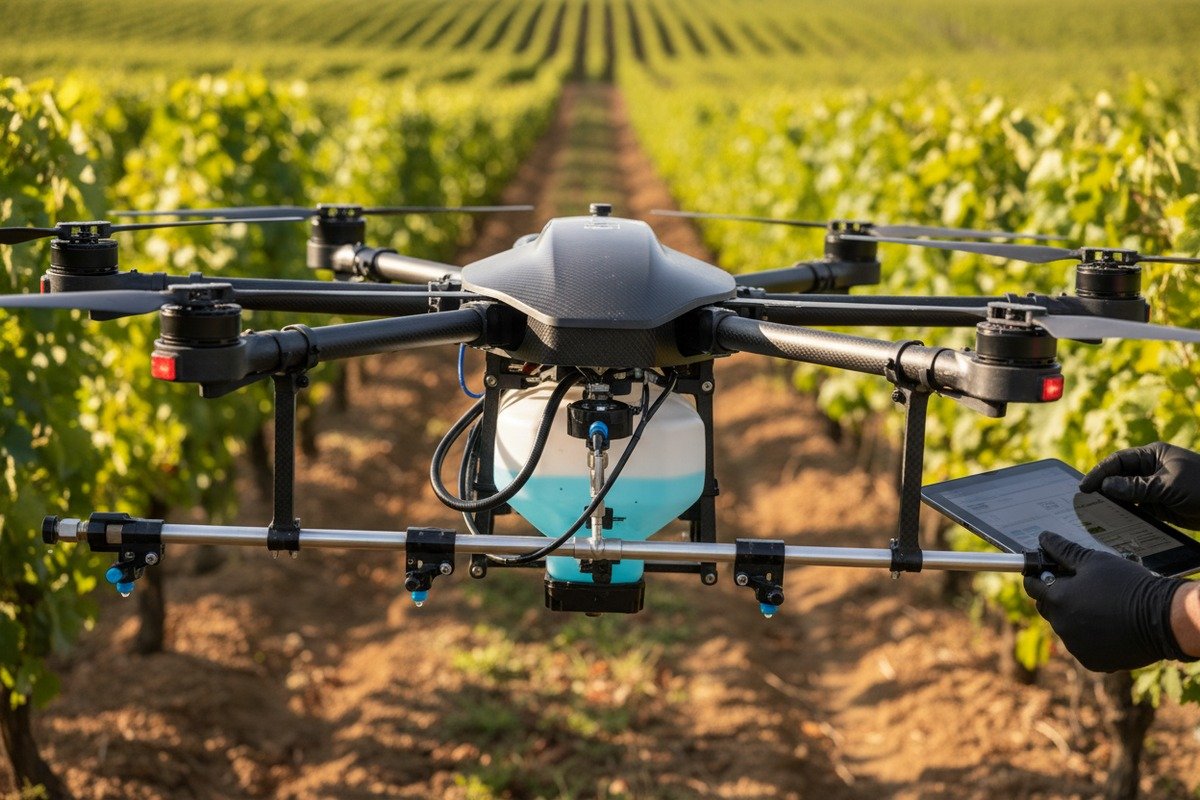
Understanding Payload Categories
Payload calculation starts with understanding what you carry. Our engineers divide agricultural payloads into three main categories.
First, monitoring equipment includes multispectral cameras, thermal sensors, and NDVI imaging systems 4. These weigh between 0.5kg and 3kg. Most small farms under 50 hectares need only this category.
Second, liquid payloads cover pesticides, herbicides, and foliar fertilizers. European regulations limit chemical spraying to specific contexts. Steep-slope viticulture in Germany allows spraying at 2 meters altitude. Poland permits broader use under national derogations.
Third, solid payloads include granular fertilizers and bio-control agents like Trichogramma 5 for maize pest control. These typically require 5-15kg capacity.
Crop-Specific Payload Requirements
| Crop Type | Primary Operation | Recommended Payload | Coverage Per Flight |
|---|---|---|---|
| Vineyards (slopes) | Targeted spraying | 15-25kg liquid | 2-5 hectares |
| Wheat/Barley | Monitoring + spot treatment | 5-10kg | 10-20 hectares |
| Maize | Bio-control release | 7-10kg solids | 8-15 hectares |
| Orchards | Precision spraying | 20-40kg liquid | 3-8 hectares |
| Vegetables | Detailed imaging | 1-3kg sensors | 5-10 hectares |
Calculating Your Actual Needs
Start with your treatment protocol. How many liters per hectare does your agronomist recommend? For most European herbicide applications, this ranges from 10 to 50 liters per hectare.
Next, consider application frequency. A vineyard needing weekly treatments during growing season requires more flights than annual wheat monitoring.
When we calibrate our spray systems, we test at various flow rates. A 40kg tank capacity with 2 liters per hectare application rate covers 20 hectares per flight. But heavier concentrations reduce this dramatically.
Finally, add a 15-20% buffer. Real field conditions—wind, uneven terrain, tank residue—reduce effective payload.
Monitoring Versus Application Trade-offs
Smaller farms often face a choice. Do you invest in a lightweight monitoring drone under 25kg? Or a heavier application drone requiring special permits?
Our recommendation for farms under 50 hectares: start with monitoring. A sub-25kg drone with good sensors identifies problem areas. You can then treat those spots manually or hire spray services.
Medium farms between 50 and 500 hectares benefit from dual-purpose systems. Our hexacopter platform accepts both camera modules and spray tanks. This flexibility reduces total investment while meeting EU open category requirements when configured for monitoring.
What flight endurance and battery life do I need to cover my farm acreage in one session?
During our testing in European conditions, battery performance became the most discussed topic. Cold mornings in northern Germany drain batteries faster than warm afternoons in Spain. Planning for real-world endurance matters more than manufacturer specifications.
For single-session coverage, calculate your acreage divided by coverage rate per flight, then multiply by flight time plus recharge cycles. Most agricultural drones offer 20-30 minutes flight time. A 50-hectare farm using a monitoring drone covering 10 hectares per flight needs five flights with four battery swaps or charging breaks—approximately 3-4 hours total operational time.

Flight Time Reality Check
Manufacturers list maximum flight times under ideal conditions. Our quality control testing reveals significant gaps.
Listed flight time assumes no payload, no wind, and moderate temperature. Add a full spray tank, and flight time drops 30-40%. Add 15km/h wind common in open European farmland, and subtract another 10-15%.
Temperature matters greatly. Below 10°C, baterías de litio 6 lose capacity. Our engineering team observed 20% reduction in flight time during early morning spring operations in Poland.
Coverage Calculations by Farm Size
| Farm Size | Drone Type | Flights Needed | Total Session Time | Batteries Required |
|---|---|---|---|---|
| 10-25 ha | Light monitoring | 2-3 | 1-1.5 hours | 2-3 |
| 25-50 ha | Mid-weight multi | 3-5 | 2-3 hours | 3-5 |
| 50-100 ha | Heavy spray | 4-8 | 3-5 hours | 4-8 |
| 100-500 ha | Fixed-wing hybrid | 2-4 | 2-4 hours | 2-4 |
Battery Management Strategies
Professional operators use several approaches. The simplest is multiple battery sets. Our clients typically purchase three to five battery packs per drone.
Hot-swapping keeps operations moving. Land, swap batteries in under two minutes, and launch again. This works well for monitoring tasks.
For spraying operations, recharging infrastructure matters. A portable generator or vehicle-based charging station enables continuous operations. Charge time for agricultural drone batteries ranges from 45 minutes to 2 hours depending on capacity.
Field-Specific Endurance Factors
Terrain affects battery consumption significantly. Flat wheat fields require minimal altitude adjustments. The drone maintains steady power draw.
Hilly vineyards demand constant altitude corrections. Following slope contours increases motor work. Expect 15-25% higher battery consumption on steep terrain.
Field shape also matters. Long rectangular fields allow efficient flight paths. Irregular parcels with obstacles require more turns. Each turn costs energy.
When we design flight controllers for European markets, we optimize for these varied conditions. Our obstacle avoidance systems add slight power draw but prevent crashes that destroy expensive equipment.
Planning Your Operational Window
European agriculture often faces narrow application windows. Disease pressure requires immediate response. Weather windows may last only hours.
Plan for worst-case scenarios. If you need three hours to cover your farm, ensure you have batteries and charging capacity for four hours. Equipment failures, wind delays, and software issues consume time.
For time-critical spraying, consider partnering with service providers who bring multiple drones. Our dealer network includes operators with fleet capabilities for urgent jobs.
How can I verify that my drone supplier meets all EU regulatory and safety certification standards?
Our export documentation team handles EU compliance daily. The requirements seem complex, but they follow logical patterns. Knowing what to verify protects your investment and keeps your operations legal.
Verify EU compliance by checking for C-class marking (C0-C6) on the drone, CE certification documentation, and Declaration of Conformity. Request proof of compliance with EU Regulation 2019/945 for product standards and 2019/947 for operational rules. For agricultural spraying drones, confirm the supplier understands national derogation requirements in your specific country.

Understanding EU Drone Classification
The EU system classifies drones by risk level. This determines which certifications matter for your purchase.
Open category covers most monitoring operations. Drones must be under 25kg MTOM (Maximum Takeoff Mass). C0 through C4 class markings indicate compliance. Flight altitude stays below 120 meters AGL (Above Ground Level). Visual line-of-sight rules apply.
Specific category covers heavier drones and complex operations. This includes most spraying drones over 25kg. Pre-Defined Risk Assessments 7 (PDRA) or operational authorizations from National Aviation Authorities 8 become necessary.
Certified category applies to highest-risk operations. Most farm operations avoid this category.
Lista de verificación de documentación esencial
| Tipo de documento | What It Proves | Where to Verify |
|---|---|---|
| C-Class Label | Product meets EU standards | Physical marking on drone |
| Marcado CE | Conformity with EU directives | Product and documentation |
| Declaration of Conformity | Manufacturer attestation | Request from supplier |
| User Manual (EU languages) | Operational compliance info | Included with product |
| Technical File | Detailed specifications | Available on request |
| Test Reports | Performance verification | Request from supplier |
Country-Specific Compliance Variations
EU regulations provide the framework. National Aviation Authorities add local requirements. Our experience shipping to different European countries reveals important variations.
Poland allows heavier spray drones up to 105kg under national derogations. NSTS-01 and NSTS-02 certifications apply. Flight altitude limits at 30 meters AGL for spraying. Minimum 30-meter distance from bystanders required.
Germany restricts chemical spraying primarily to viticulture. Maximum 2-meter application altitude. Speed limited to 13km/h. Drift mitigation technology mandatory.
France requires specific authorizations for agricultural spraying. Recent regulatory updates continue expanding approved use cases.
Hungary mandates additional examinations beyond standard EU pilot certifications.
Red Flags in Supplier Claims
Watch for these warning signs when evaluating suppliers.
Vague certification claims without documentation suggest non-compliance. Any legitimate supplier provides certificates upon request.
Claims of "universal EU approval" misrepresent reality. No single approval works across all EU countries for agricultural spraying.
Unusually low prices may indicate uncertified products. Proper testing and documentation add legitimate costs.
When we prepare export shipments, our documentation includes all certificates, test reports, and compliance statements. Legitimate manufacturers invest in this paperwork because it protects both parties.
Working with National Aviation Authorities
Before purchasing, contact your NAA. Each EU member state has one. They provide current operational requirements for your specific situation.
Ask about geo-zones in your area. Some regions restrict drone flights near airports, military installations, or protected areas. Online tools from NAAs show restriction zones.
Inquire about upcoming regulation changes. The 2024 C-class requirements affected many older drones. Understanding future requirements helps you choose equipment that remains compliant.
Registration requirements vary. Most EU countries require drone operator registration. Some require individual drone registration. Fees range from €20 to €100+ annually.
Insurance and Liability Considerations
EU regulations require liability insurance for drone operations. Coverage minimums depend on drone weight and operation type.
Agricultural operations may need specialized policies. Standard drone insurance often excludes chemical application. Verify coverage specifics before purchasing equipment.
Our dealer partners in Europe often connect clients with insurance brokers familiar with agricultural drone policies. This service helps navigate the complex requirements.
Can I collaborate with a manufacturer to customize drone features for my unique farm terrain?
When we receive customization requests from European clients, the conversations often surprise both parties. Farmers discover options they did not know existed. We learn about terrain challenges our standard products do not address. This collaboration improves outcomes for everyone.
Yes, reputable manufacturers offer customization for unique farm requirements. Common modifications include adjusted landing gear for soft soil, specialized spray nozzle configurations for specific crops, modified flight controller parameters for slope operations, and integrated software for existing farm management systems. Expect 4-12 weeks additional lead time and 15-40% cost increase for meaningful customizations.
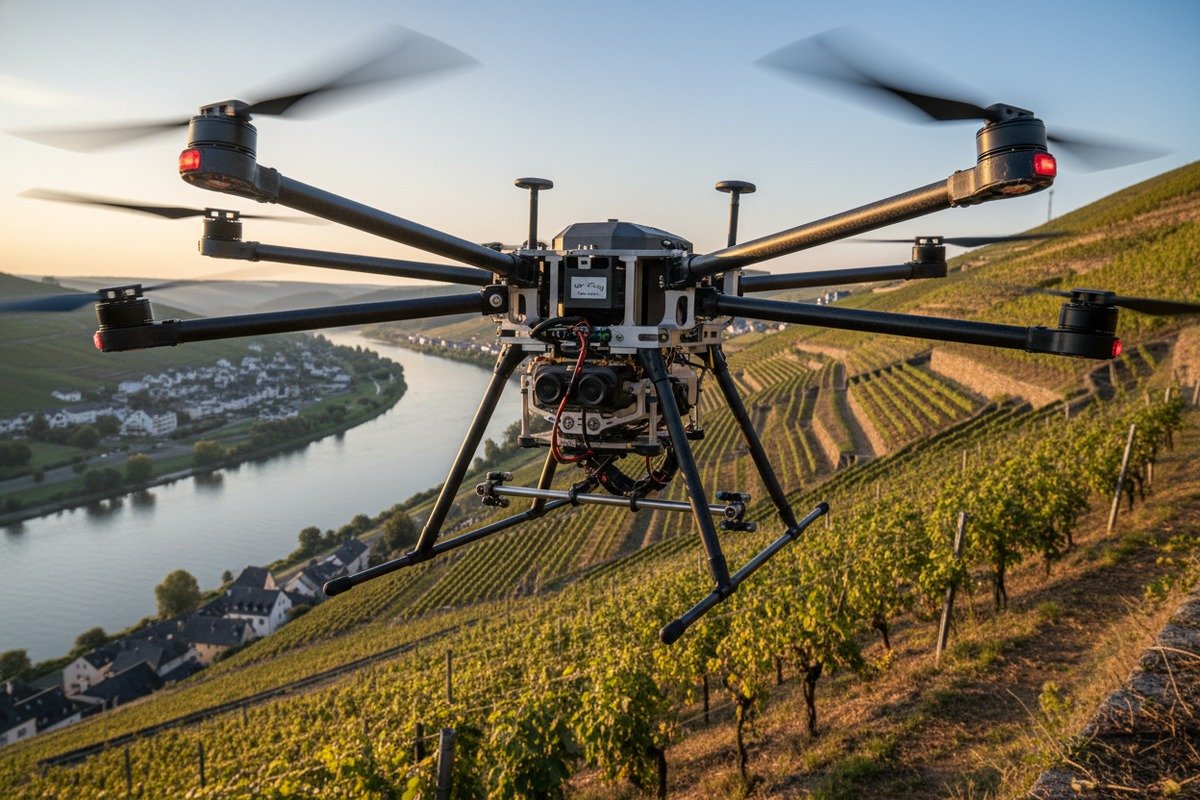
Types of Customization Available
Our engineering team categorizes customizations by complexity level.
Level one involves software adjustments. Flight controller parameters, spray patterns, and sensor calibrations fall here. These modifications require no hardware changes. Turnaround time is typically 1-2 weeks.
Level two covers hardware accessories. Extended landing gear, different tank sizes, alternative nozzle systems, and upgraded batteries fit this category. We maintain component inventory for common requests. Delivery within 2-4 weeks.
Level three means structural modifications. Reinforced frames for heavier payloads, custom motor configurations, and specialized sensor mounts require design work. These projects take 6-12 weeks and involve prototype testing.
Level four represents full custom development. New drone designs for specific applications require significant investment from both parties. These partnerships suit large agricultural enterprises or cooperatives.
Common European Terrain Challenges
| Terrain Type | Common Challenge | Customization Solution |
|---|---|---|
| Steep vineyards | Unstable landing on slopes | Articulating landing gear, enhanced stabilization |
| Wet clay fields | Sinking during takeoff | Extended gear, ground-effect optimization |
| Small fragmented parcels | Inefficient flight paths | Multi-zone route planning software |
| Forested edges | Obstacle collision risk | Enhanced proximity sensors, geofencing |
| Coastal areas | Salt corrosion, high wind | Corrosion-resistant coatings, stronger motors |
The Customization Process
Successful customization follows a structured process. Our approach includes several stages.
First, detailed needs assessment. We ask about your specific terrain, crops, operational goals, and existing equipment. Photos and videos of your farm help our engineers understand real conditions.
Second, feasibility analysis. Some requests work easily. Others require significant development. We provide honest assessments of what is possible within your budget and timeline.
Third, proposal and agreement. Detailed specifications, pricing, delivery timeline, and warranty terms go into a formal document. Both parties must agree before work begins.
Fourth, development and testing. Our team builds the modifications and tests them internally. For complex projects, we may ship prototypes for field testing at your location.
Fifth, delivery and training. Custom equipment requires custom training. We provide documentation and remote support sessions specific to your modifications.
Cost-Benefit Analysis for Customization
Customization costs more upfront. The question is whether benefits justify the investment.
Consider operational efficiency gains. A drone optimized for your terrain completes tasks faster with fewer problems. Over five years of operation, this efficiency compounds.
Consider reduced damage risk. Standard drones in challenging terrain experience more crashes. Custom features like enhanced stabilization or specialized landing gear prevent expensive repairs.
Consider integration value. Custom software connecting your drone to existing farm management systems eliminates manual data transfer. Labor savings accumulate over time.
Our experience suggests customization pays off when you operate more than 200 hours annually or face genuinely unusual terrain challenges.
Partnership Versus Purchase
Some customization requests lead to deeper partnerships. When modifications have broader market potential, we sometimes propose co-development arrangements.
In these partnerships, the farmer provides field testing and feedback. We invest engineering resources without full cost recovery. Both parties benefit from the resulting improved product.
Cooperative groups and agricultural associations sometimes pool resources for customization projects. Shared development costs make sophisticated modifications affordable for medium-sized operations.
Protecting Your Investment
Custom equipment requires clear documentation. Ensure your agreement specifies ownership of modifications, warranty coverage, and support obligations.
Spare parts availability matters especially for custom hardware. We maintain component inventory for all customized systems we produce. Verify this commitment before ordering.
Training documentation should reflect your specific configuration. Generic manuals do not cover custom features adequately.
Conclusión
Evaluating agricultural drone takeoff needs requires matching your farm's unique conditions to the right specifications. Start with payload calculations based on your crops. Plan battery capacity for realistic field coverage. Verify EU compliance documentation thoroughly. And explore customization options when standard products fall short. This systematic approach ensures your investment delivers real value for European farming operations.
Notas al pie
1. Authoritative EASA overview of drone regulatory categories. ↩︎
2. Provides information on a specific biological pest control agent for maize. ↩︎
3. Direct link to the specific EU operational regulation. ↩︎
4. Scientific definition of NDVI technology used in monitoring. ↩︎
5. Scientific background on Trichogramma used in agriculture. ↩︎
6. Technical overview of lithium-ion battery characteristics. ↩︎
7. EASA documentation on PDRA within the Specific Category. ↩︎
8. Provides a list of national bodies responsible for aviation regulation in EU countries. ↩︎
9. Official EASA explanation of the C-class marking system. ↩︎
10. Details the EU regulation concerning drone product standards and certification. ↩︎

 English
  Spanish
  German
  French
  Dutch
Dutch  Arabic
