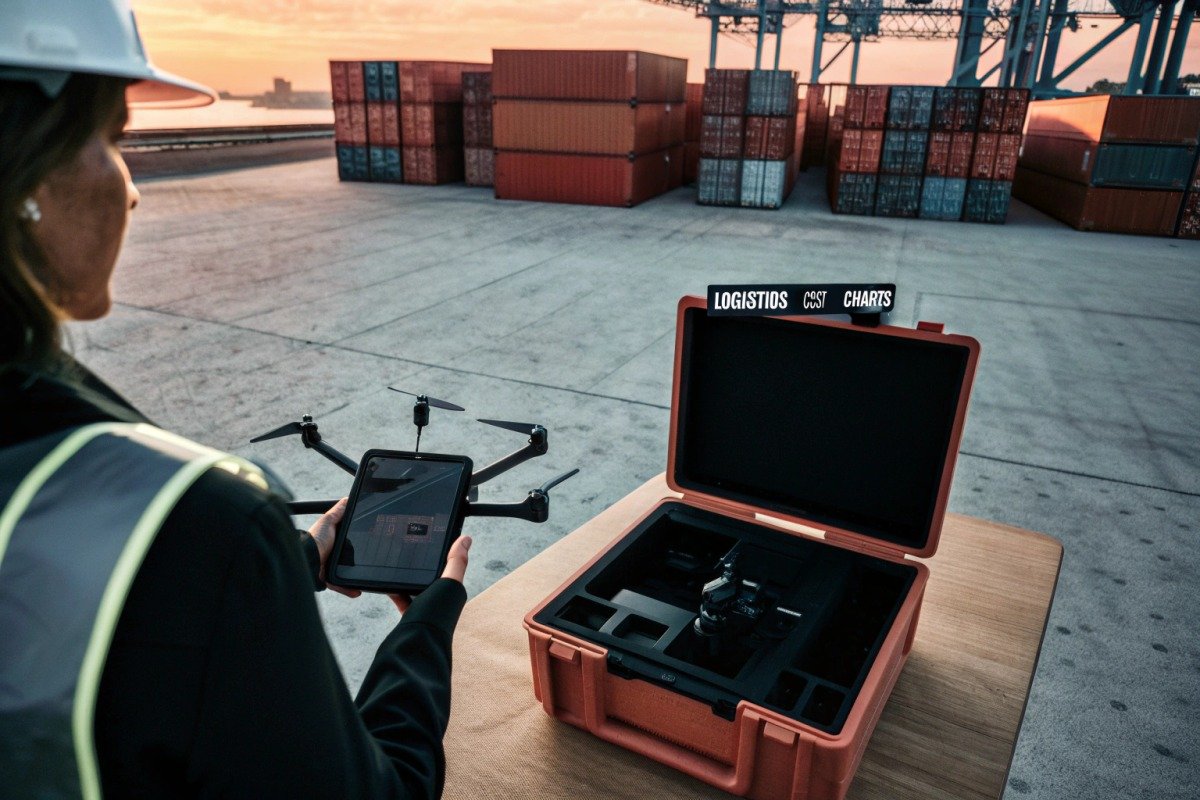
When our logistics team first encountered a surprise $1,500 storage fee on a firefighting drone shipment last year, we realized many importers face the same confusion demurrage fees 1. You budget carefully for product costs, freight, and duties—but port storage fees 2 can blindside even experienced buyers.
To estimate port storage fees for firefighting drones from China, calculate free days at your destination port (typically 5-7 days), then multiply daily storage rates ($100-$300 per container) by expected delay days. Add 2025-2028 US-China special port fees ($175-$1,600 per container), factor in lithium battery handling surcharges, and budget 15-30% above base freight costs.
Let me walk you through each component so you can build accurate cost projections for your next drone shipment.
How many free days do I typically get at the port before storage charges begin?
Our export documentation team has processed thousands of shipments to US ports, and free time allowances remain one of the most misunderstood aspects of landed cost calculations Informe de prueba de batería UN38.3 3. Miss this window, and costs escalate rapidly.
Most US ports offer 5-7 free days before storage charges begin, though this varies by shipping line, port congestion levels, and container type. Reefer containers and hazardous goods shipments often receive fewer free days. After this period, demurrage fees typically range from $100-$300 per container per day, compounding quickly during customs delays.
Understanding Free Time Structures
Free time is the grace period between when your container arrives at the port terminal and when storage charges kick in. Different parties control different portions of this timeline.
The shipping line sets "demurrage" free time for containers sitting inside the terminal. The terminal operator may have separate "port storage" fees. Once you pick up the container, "detention" free time begins—this covers how long you keep the container before returning it empty.
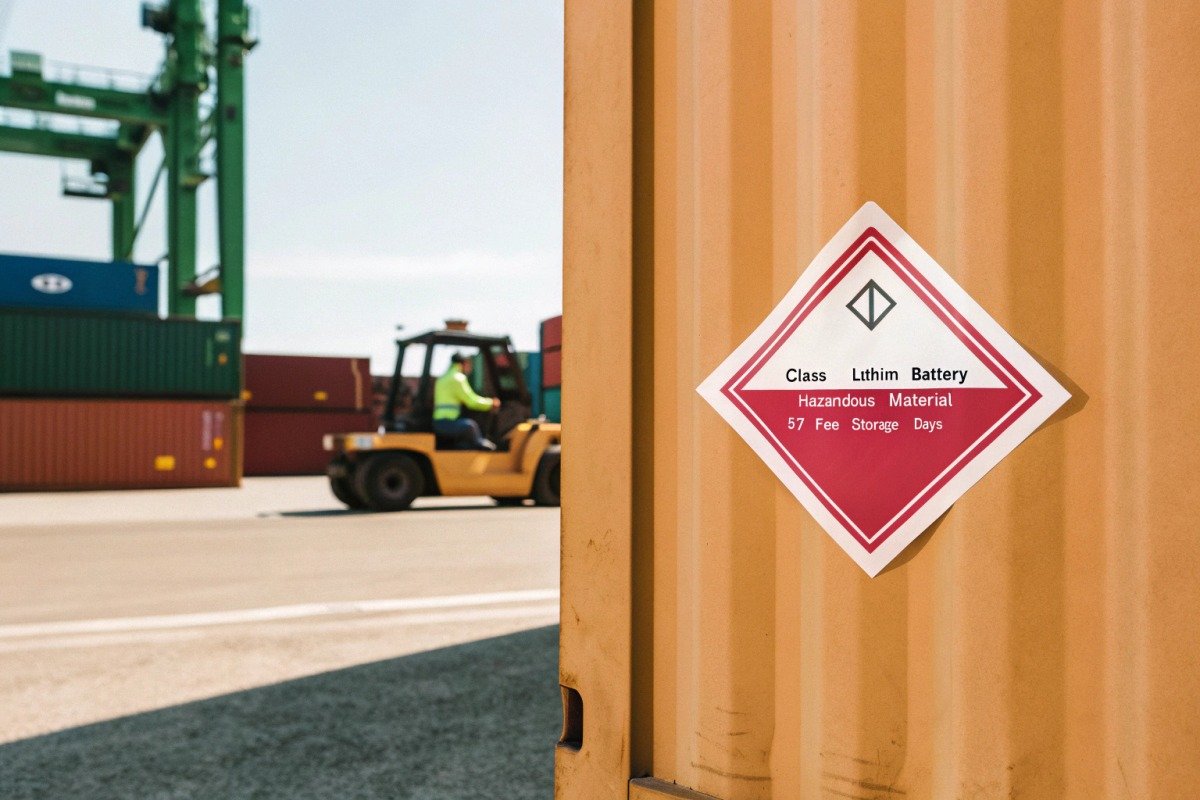
For firefighting drone shipments, you face additional complexity. Baterías de iones de litio 4 in industrial drones classify as Class 9 dangerous goods under IATA and IMDG codes 5. Many terminals offer reduced free time for hazmat cargo, sometimes just 3-4 days.
Port-by-Port Variations
| US Port | Estándar Free Days 6 | Hazmat Free Days | Daily Rate After Free Time |
|---|---|---|---|
| Los Ángeles/Long Beach | 5-7 días | 3-4 días | $200-$350/container |
| Nueva York/Nueva Jersey | 5-6 días | 3-4 días | $175-$300/container |
| Savannah | 6-7 days | 4-5 días | $125-$250/container |
| Houston | 5-7 días | 4 days | $150-$275/container |
| Seattle/Tacoma | 5-6 días | 3-4 días | $175-$325/container |
West Coast ports, particularly Los Angeles and Long Beach, have higher congestion levels. This means tighter free time windows and steeper daily penalties. Our customers importing through Savannah often report more flexibility.
How Container Type Affects Your Timeline
Standard dry containers receive the most generous free time. But firefighting drones with sensitive electronics sometimes require temperature-controlled reefer containers, especially for shipments traveling through extreme climate zones.
Reefer containers typically get 2-3 fewer free days. They also incur electrical connection fees while sitting at the terminal—often $50-$100 per day on top of storage charges.
If your firefighting drones contain oversized lithium battery packs, some terminals require specialized hazmat storage areas. These segregated zones charge premium rates, sometimes 40-60% above standard storage fees.
What factors will influence the total storage costs for my firefighting drone shipment?
In our factory quality control process, we test every drone unit before export. But even perfect products face unpredictable port costs. Understanding the variables helps you budget accurately.
Total storage costs depend on six key factors: container size and quantity, daily storage rates at your specific port, duration beyond free time, special handling requirements for lithium batteries, new 2025-2028 US-China port fees ($175-$1,600 per container), and cargo value requiring insured storage. A typical 40ft firefighting drone shipment may add $2,000-$4,000 in storage-related costs to base freight.
The New US-China Port Fee Reality
The 2025-2028 trade tensions introduced special port fees that dramatically change landed cost calculations. These fees apply separately from standard storage charges.
Starting October 14, 2025, the US Trade Representative implemented fees targeting Chinese-built or Chinese-owned vessels. Meanwhile, China's Ministry of Transport announced retaliatory fees on US-linked vessels calling at Chinese ports.
| Año | US Fee (Annex I) | US Fee (Annex II) | China Fee (per Net Ton) |
|---|---|---|---|
| 2025 | $550-$1,600/container | $175-$400/container | RMB 400 (~$56) |
| 2026 | +$33/container | +$5/net ton | RMB 640 (~$90) |
| 2027 | +$42/container | Annual increase | RMB 880 (~$123) |
| 2028 | +$55/container (max $250) | Plateau | RMB 1,120 (~$157) |
For a 20ft container of firefighting drones weighing 10-15 net tons, China's 2026 fees alone add $900-$1,350 per voyage. US fees compound this with another $300-$500 per container.
Drone-Specific Cost Multipliers
Firefighting drones create unique storage cost pressures. Let me explain why.
First, the HS code matters. Unmanned aircraft fall under HS 8806, which triggers specific inspection protocols. Extended customs reviews for high-tech imports increase dwell time at the port.
Second, lithium battery classification elevates handling costs. Large battery packs in industrial firefighting drones—often 10-20 kWh capacity—require compliant hazmat storage facilities. Premium rates apply.
Third, cargo value influences insurance requirements. A single industrial octocopter firefighting drone may cost $15,000-$50,000. High-value cargo needs insured storage facilities, adding 10-25% to base storage rates.
Calculating Your Specific Exposure
Here is a step-by-step estimation framework:
Paso 1: Identify container size and quantity. A standard 40ft container holds 8-12 firefighting drones depending on configuration.
Paso 2: Determine base storage rate at your destination port. Request current tariffs from your freight forwarder.
Paso 3: Estimate realistic delay days. First-time importers should budget 10-14 days total port time. Experienced importers with established customs broker relationships may achieve 7-10 days.
Paso 4: Add new special port fees based on vessel ownership and routing.
Step 5: Include hazmat handling surcharges if applicable (typically $200-$500 per container).
Step 6: Factor insurance premium for high-value storage if required by your cargo insurance policy.
Sample Cost Breakdown
| Componente de costo | Low Estimate | High Estimate |
|---|---|---|
| Base freight (40ft, China to LA) | $2,500 | $4,000 |
| US special port fees (2026) | $350 | $600 |
| China special port fees (2026) | $900 | $1,350 |
| Standard storage (5 days beyond free) | $750 | $1,500 |
| Hazmat handling surcharge | $200 | $500 |
| Insurance premium adjustment | $150 | $400 |
| Total Storage-Related Additions | $2,350 | $4,350 |
This represents a 15-30% increase above base freight costs—a significant budget line item.
How can I minimize the risk of expensive port delays during the customs clearance process?
Our engineering team designs drones with performance in mind, but we have learned that documentation quality determines import success. Delays at customs create the most expensive storage scenarios.
Minimize port delays by preparing complete documentation before shipment, including commercial invoice, packing list, bill of lading, certificate of origin, FCC certification for drones, lithium battery test reports (UN38.3), and pre-clearance ISF filing 24 hours before vessel departure. Work with an experienced customs broker familiar with HS 8806 unmanned aircraft classifications. Budget 3-5 extra free days as contingency.
Documentation That Prevents Delays
Every customs delay traces back to documentation problems. Missing paperwork triggers holds. Inconsistent information triggers inspections. Incomplete battery certifications trigger hazmat reviews.
When we ship firefighting drones to US customers, our export compliance team prepares a comprehensive documentation package:
Factura comercial: Must match packing list quantities exactly. Include código HS 8806 8.93 (drones weighing over 250g), unit values, and total declared value. Customs officers flag discrepancies for examination.
Lista de empaque: Detailed breakdown of each drone model, serial numbers, battery specifications, and weights. Our customers report faster clearance when we include component-level detail.
Certificate of Origin: Essential for tariff classification. Some firefighting drone components may qualify for preferential treatment under specific trade programs.
Certificación FCC: Required for radio frequency devices operating in the US. Firefighting drones use multiple RF systems—flight controllers, video transmitters, telemetry links. Each needs certification documentation.
UN38.3 Battery Test Report: Critical for lithium-ion batteries. This document proves batteries passed safety testing. Without it, customs can reject the entire shipment.
Estrategias de pre-despacho
Smart importers clear paperwork before their cargo arrives.
El Importer Security Filing (ISF) 9, known as "10+2," must be submitted 24 hours before vessel departure from China. Late ISF filings trigger automatic fines ($5,000-$10,000) and inspection holds.
Request your Chinese supplier provide draft documents 7-10 days before shipment. This allows time for corrections. Our documentation team sends preliminary paperwork to customers immediately after production completion, giving maximum review time.
Consider FDA registration if your firefighting drones include camera systems for thermal imaging. Some imaging devices fall under FDA radiation-emitting product regulations. Pre-registration prevents surprise holds.
Working With the Right Partners
Your customs broker relationship directly impacts port dwell time. Brokers experienced with HS 8806 unmanned aircraft understand the specific examination triggers.
Ask potential brokers:
- How many drone shipments have you cleared in the past year?
- What is your average clearance time for Class 9 hazmat cargo?
- Do you have established relationships at my destination port?
- Can you provide proactive tracking and delay alerts?
Freight forwarders with integrated customs brokerage often deliver smoother handoffs. The communication gap between separate forwarder and broker companies causes preventable delays.
Planificación de contingencias
Even perfect documentation encounters random inspections. Customs and Border Protection examines approximately 3-5% of all import containers. High-tech cargo from China faces elevated scrutiny.
Build contingency into your timeline and budget:
- Add 3-5 "buffer days" to your expected delivery date
- Budget storage costs for 7 days beyond free time
- Establish pre-approved warehousing as backup if port storage becomes cost-prohibitive
- Maintain communication channels with your broker for real-time status updates
Our US customers who plan for contingencies report significantly less stress and cost overrun compared to those who assume smooth clearance.
Can my Chinese drone manufacturer provide the documentation I need to avoid storage penalties?
When we established our export compliance department five years ago, we did so because customers kept experiencing documentation-related delays. A capable manufacturer eliminates most paperwork problems before shipment.
Yes, experienced Chinese drone manufacturers should provide complete export documentation including commercial invoices, packing lists, certificates of origin, FCC/CE certifications, UN38.3 battery test reports, material safety data sheets (MSDS) for lithium batteries, and properly formatted bills of lading. Request documentation samples before placing orders to verify supplier capability. Manufacturers lacking these documents will cause costly import delays.
Essential Documents Your Manufacturer Must Provide
Not all Chinese drone manufacturers maintain export documentation capability. Smaller factories focused on domestic sales often lack international compliance infrastructure.
Here is what a qualified export manufacturer should deliver with every shipment:
| Documento | Objetivo | Quién Proporciona |
|---|---|---|
| Factura comercial | Customs valuation, duty calculation | Fabricante |
| Lista de empaque | Cargo verification, weight confirmation | Fabricante |
| Certificado de origen | Tariff classification, trade programs | Manufacturer + Chamber of Commerce |
| Certificación FCC 10 | Cumplimiento de las normas de radiofrecuencia de EE. UU. | Manufacturer (must obtain pre-export) |
| Documentación de marcado CE | European compliance (if applicable) | Fabricante |
| Informe de prueba UN38.3 | Lithium battery safety certification | Battery supplier via manufacturer |
| MSDS/SDS | Hazmat handling requirements | Fabricante |
| Conocimiento de embarque | Cargo receipt, title document | Shipping line via manufacturer's forwarder |
Red Flags in Supplier Documentation Capability
During our conversations with potential customers, we often hear about documentation problems with previous suppliers. These warning signs indicate capability gaps:
Delayed document delivery: If a manufacturer cannot provide draft documentation within 48 hours of shipment completion, their compliance processes are inadequate.
Inconsistent formats: Professional export documentation follows standard international formats. Handwritten or informal documents trigger customs scrutiny.
Missing battery certifications: UN38.3 testing requires accredited laboratory facilities. Manufacturers using uncertified batteries expose importers to seizure risk.
No FCC registration: The FCC ID database is publicly searchable. Verify your drone models appear before placing orders.
Resistance to documentation requests: Qualified manufacturers expect documentation requests. Evasive responses suggest compliance problems.
How to Verify Supplier Capability
Before committing to a supplier, request sample documentation from a recent shipment. Our team provides prospective customers with redacted examples showing our documentation standards.
Haga preguntas específicas:
- Which accredited lab conducts your UN38.3 battery testing?
- Can you provide your FCC certification numbers for verification?
- Who prepares your export documentation internally?
- What is your typical document preparation timeline?
- Have any of your shipments been held at US customs in the past year?
Reputable manufacturers answer these questions directly. Hesitation or vague responses warrant concern.
The Manufacturer's Role in Delay Prevention
Beyond documentation, your manufacturer influences clearance speed through:
Accurate HS code classification: Experienced exporters understand tariff classification nuances. Incorrect codes trigger examination requests and potential penalty assessments.
Proper export packaging: Cargo damage during transit causes inspection holds. Our production team uses custom foam inserts and reinforced crating specifically designed for drone transport.
Shipping documentation timing: We coordinate with freight forwarders to ensure all documents reach the shipping line simultaneously, preventing "pending paperwork" holds at origin.
Communication responsiveness: When customs requests additional information, response speed determines delay duration. We maintain dedicated export support staff available during US business hours to address inquiries within 2-4 hours.
Building a Documentation Partnership
The best supplier relationships include documentation performance metrics. Establish expectations:
- Documentation package delivered within 24-48 hours of production completion
- All certificates current and verifiable through official databases
- Immediate response to customs information requests
- Proactive notification of regulatory changes affecting imports
Our long-term customers receive documentation packages formatted specifically for their customs broker's requirements, streamlining the handoff process.
Conclusión
Port storage fees for firefighting drones from China combine standard terminal charges with new 2025-2028 special port fees. Budget 15-30% above base freight, prepare documentation thoroughly, and partner with manufacturers who understand export compliance requirements.
Notas al pie
1. Provides FAQs on demurrage and detention from a regulatory body. ↩︎
2. Defines port storage fees in shipping logistics. ↩︎
3. Details UN 38.3 testing requirements for safe lithium battery transport. ↩︎
4. Provides guidance on hazardous materials regulations for lithium batteries. ↩︎
5. Describes the International Maritime Dangerous Goods (IMDG) Code. ↩︎
6. Clarifies free time, demurrage, and detention in shipping. ↩︎
7. Defines dangerous goods classifications, including Class 9. ↩︎
8. Official source for Harmonized Tariff Schedule, including HS codes for imports. ↩︎
9. Official information on Importer Security Filing (ISF) requirements from CBP. ↩︎
10. Provides access to the FCC ID database for certified radio frequency devices. ↩︎

 English
  Español de México
  Deutsch
  Français
  Русский
  العربية
