
When our engineering team first began shipping firefighting drones to US fire departments, we discovered a critical gap. A client once rejected an entire shipment because the documentation referenced “UAV” instead of “UAS 1.” This single terminology mismatch created weeks of delays and customs headaches.
To ensure suppliers understand US terminology, buyers should create detailed glossaries of FAA regulations, NFPA standards, and NWCG protocols. They must require suppliers to demonstrate comprehension through terminology audits, mandate compliance officers, and incorporate verification checkpoints into contracts before production begins.
The stakes are high. Over 200 US fire departments now deploy drones for wildfire monitoring and thermal imaging. Each operation demands precise communication between buyers and manufacturers. Let me walk you through the exact steps we use to bridge this terminology gap.
How can I verify that my supplier understands the specific NFPA standards and technical jargon used in the US firefighting industry?
When we calibrate our thermal imaging systems for wildfire detection, we must translate NFPA requirements into engineering specifications. Many buyers assume suppliers automatically understand terms like "LCES 2 protocols" or "PMS 515 compliance." This assumption leads to costly production errors and non-compliant drones.
Verify supplier understanding by requesting written definitions of key NFPA terms, conducting video calls to discuss specific standards like NFPA 1660 for UAS in emergency services, and requiring sample documentation using correct US terminology before signing contracts.

Building a Terminology Verification Framework
Our factory learned this lesson through experience. We now maintain an internal database of over 150 US firefighting terms. Every project manager must pass a terminology test before handling US orders.
Start by sending your supplier a glossary test. Include terms like these:
| US Term | Definition | Common Supplier Misunderstanding |
|---|---|---|
| NFPA 1660 3 | Standard for Emergency Services Use of UAS | Confused with general aviation standards |
| LCES | Lookouts, Communications, Escape Routes, Safety Zones | Often unknown to foreign suppliers |
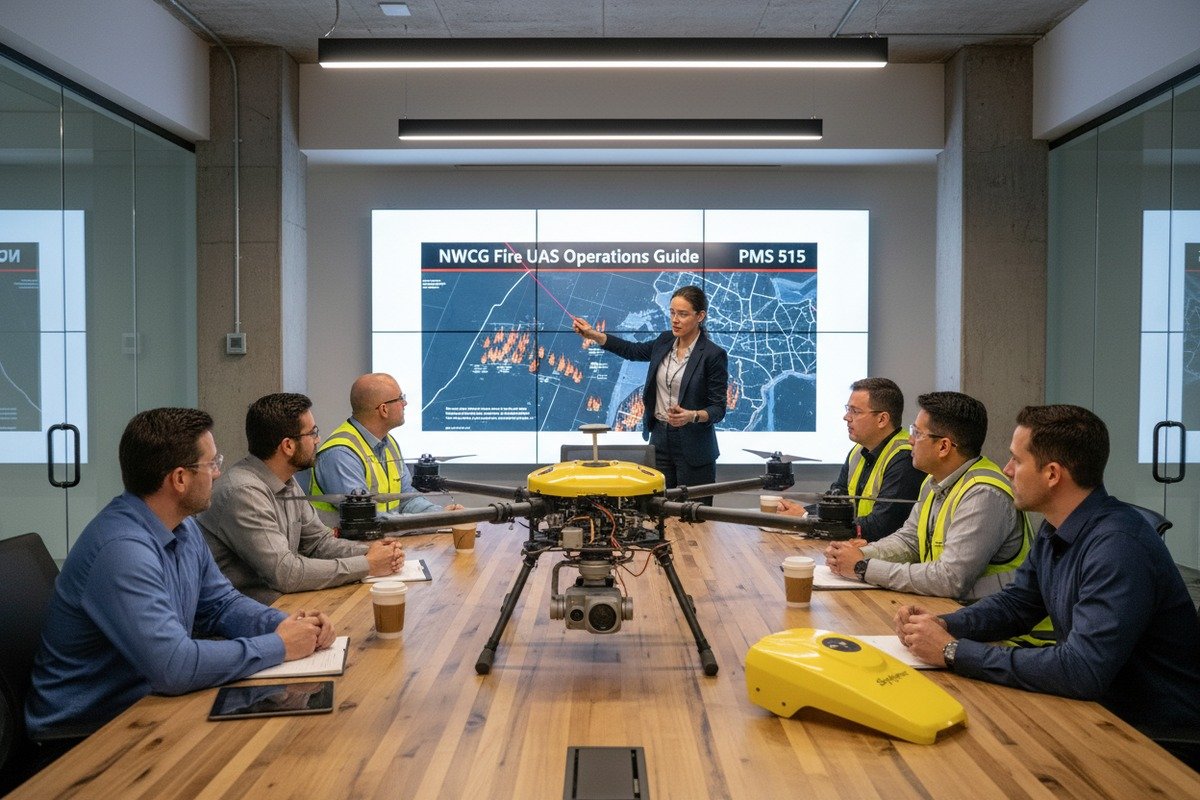
| PMS 515 | NWCG Fire UAS Operations Guide | Mistaken for product management systems |
| Thermal Hotspot Detection | Infrared identification of fire origins | Confused with general thermal imaging |
| FTA | Fire Traffic Area communications protocol | Mixed up with Free Trade Agreement |
Conducting Practical Verification Tests
Ask your supplier to complete three tasks. First, have them write a product specification sheet using only US terminology. Second, request they explain how their drone meets NFPA 1660 requirements in a recorded video call. Third, ask for sample export documentation.
Watch for red flags. If your supplier uses "RPAS" instead of "UAS," they may not understand FAA frameworks. If they cannot explain Mode C transponder requirements, their drone may fail interagency certification.
Creating Contractual Safeguards
We recommend adding a terminology compliance clause to every purchase agreement. This clause should state that all technical documents must use US-approved terminology. It should also require the supplier to designate a "Terminology Compliance Officer" who serves as the primary contact for clarification requests.
At our facility, we assign dedicated engineers to each US project. These engineers receive specialized training on NWCG standards and FAA regulations 4. We also conduct quarterly refresher courses to stay current with regulatory changes.
What steps should I take to ensure the factory's engineering team accurately interprets my custom OEM design requirements?
Our production line handles dozens of OEM requests each month. The most successful projects start with crystal-clear communication. The failed ones often trace back to ambiguous specifications that both parties interpreted differently.
Ensure accurate interpretation by providing visual design references, conducting pre-production design reviews via video conference, requiring engineering sign-off on terminology definitions, and establishing milestone checkpoints where both teams confirm understanding of specifications.

Establishing Clear Design Documentation Protocols
When our engineers receive OEM specifications, we follow a structured review process. We break down every requirement into three categories: must-have features, performance metrics, and compliance requirements.
Create a specification sheet that eliminates ambiguity:
| Categoría de especificaciones | Your Requirement | Supplier Confirmation | Método de verificación |
|---|---|---|---|
| Autonomía de vuelo | 45 minutes minimum at full payload | Confirmed / Not Confirmed | Flight test video |
| Capacidad de carga útil | 15 kg thermal imaging system | Confirmed / Not Confirmed | Weight test documentation |
| Frame Material | Carbon fiber with UV resistance | Confirmed / Not Confirmed | Material certification |
| Configuración del motor | Octocopter with redundant systems | Confirmed / Not Confirmed | Engineering drawings |
| Communication Range | 10 km line-of-sight | Confirmed / Not Confirmed | Range test results |
Implementing Design Review Checkpoints
Schedule three mandatory design reviews before production begins. The first review covers initial concept interpretation. Share photos, videos, and competitor product references. Ask your supplier to sketch their understanding of your design.
The second review focuses on engineering specifications. This is where terminology matters most. If you specify "AGL operational ceiling 5 of 400 feet," confirm your supplier understands this means Above Ground Level, not above sea level.
The third review happens after prototype completion. Request a video walkthrough of the prototype. Have your supplier demonstrate each feature while explaining how it meets your specifications.
Using Visual Communication Tools
We have found that visual aids reduce interpretation errors by over 60%. Send your supplier annotated photographs. Create simple diagrams showing exact component placement. Record short videos explaining complex requirements.
For example, when specifying a gimbal mount for thermal cameras, do not just write "3-axis stabilized gimbal." Instead, send a video demonstrating the required range of motion. Show examples of acceptable and unacceptable performance.
Managing Cultural and Language Barriers
Direct translation often fails with technical terms. The Chinese term for "drone" does not carry the same regulatory implications as "UAS." We address this by maintaining bilingual engineering teams and using standardized terminology databases.
Request that your supplier assign engineers who have worked on previous US projects. Ask about their familiarity with FAA Part 107 requirements 6. If they hesitate or provide vague answers, consider additional training requirements in your contract.
How do I confirm that the flight endurance and payload specifications provided align with my local operational needs?
In our testing facility, we run every firefighting drone through simulated wildfire conditions. We learned early that laboratory specifications rarely match real-world performance. A drone rated for 60 minutes of flight time may only achieve 35 minutes when carrying a full thermal imaging payload in hot, smoky conditions.
Confirm specification alignment by requesting performance data from real-world testing scenarios, specifying environmental conditions for testing, requiring video documentation of endurance tests, and comparing supplier claims against independent third-party verification.

Understanding the Gap Between Lab and Field Performance
Our engineers account for performance degradation in every specification. When we quote 45 minutes of flight time, we base this on worst-case conditions: maximum payload, high ambient temperature, and continuous maneuvering.
Ask your supplier these specific questions:
| Performance Metric | Laboratory Conditions | Real-World Conditions | Expected Degradation |
|---|---|---|---|
| Autonomía de vuelo | No payload, 20°C, no wind | Full payload, 35°C, 15 mph wind | 20-40% reduction |
| Maximum Range | Line of sight, clear weather | Smoke, terrain obstacles | 30-50% reduction |
| Payload Lift | Sea level, standard atmosphere | High altitude, thin air | 10-25% reduction |
| Battery Cycles | Climate-controlled storage | Field deployment conditions | Faster degradation |
Requesting Proper Testing Documentation
Do not accept generic specification sheets. Request specific test reports that include environmental conditions, payload configurations, and flight profiles. Ask for video recordings of endurance tests with visible timestamps.
At our facility, we provide customers with complete test packages. These include:
- Flight log data showing battery consumption rates
- GPS tracking of actual flight paths
- Thermal chamber test results for extreme temperature performance
- Drop test documentation for payload security
Matching Specifications to Operational Requirements
Before finalizing specifications, map your operational needs clearly. If your fire department operates in mountainous terrain above 6,000 feet, standard sea-level performance data is meaningless.
Create an operational requirements matrix:
| Your Operational Need | Required Specification | Supplier Must Demonstrate |
|---|---|---|
| Wildfire monitoring in Sierra Nevada | High-altitude performance above 8,000 ft | Altitude chamber testing |
| Night operations for hotspot detection | Low-light thermal sensitivity | Night flight test footage |
| Extended incident response | 40+ minute endurance with payload | Full-payload endurance test |
| Rapid deployment | Setup time under 5 minutes | Assembly demonstration video |
Building Performance Guarantees into Contracts
We recommend including performance guarantee clauses in your purchase agreement. These clauses should specify testing conditions, acceptable performance ranges, and remedies for non-compliance.
Our standard contracts include a performance verification period. Customers have 30 days after delivery to conduct field tests. If the drone fails to meet guaranteed specifications under documented conditions, we either remedy the issue or provide a refund.
Which certifications and export documents should I request to prove my supplier is familiar with US import and customs terminology?
Our export team processes shipments to the US every week. We have learned that documentation errors cause more delays than production issues. A single incorrect HS code or missing certificate can hold your shipment at customs for weeks.
Request FAA Part 107 compliance documentation, FCC certification for radio equipment, NDAA compliance certificates, Remote ID Declaration of Compliance, commercial invoice with correct HS codes, and Certificate of Origin. Verify your supplier can provide proper DOC listings and understands COA requirements.
Essential Certifications for US Market Entry
The US market requires specific certifications that differ from European or Asian standards. Our compliance team maintains current documentation for all major certifications.
| Certificación | Objetivo | Issuing Authority | Periodo de validez |
|---|---|---|---|
| Remote ID DOC | Compliance with broadcast identification | FAA | En curso |
| FCC Parte 15 | Cumplimiento de las normas de radiofrecuencia | Federal Communications Commission | Per model |
| NDAA Compliance 7 | Government procurement eligibility | Self-declaration with documentation | En curso |
| CE Mark | Not required but supports quality claims | European bodies | Per model |
| Battery UN38.3 | Lithium battery transport safety | Accredited testing labs | Per battery type |
Understanding NDAA Compliance Requirements
The National Defense Authorization Act restricts government agencies from purchasing drones with certain foreign components. If your customers include federal, state, or local government entities, NDAA compliance is essential.
Ask your supplier these specific questions about NDAA status:
- Are critical components sourced from approved countries?
- Can you provide component origin documentation?
- Is your drone listed on the Blue sUAS approved list?
- Do you use any restricted Chinese-manufactured components?
We maintain detailed supply chain documentation for every component. Our carbon fiber frames come from certified suppliers. Our flight controllers are designed and manufactured in controlled facilities with full traceability.
Export Documentation Checklist
Before shipment, request these documents from your supplier:
Commercial Documentation:
- Commercial invoice with correct HS code (8806.10 for drones under 250g, 8806.21 for larger aircraft)
- Packing list with accurate weights and dimensions
- Certificado de origen
- Bill of Lading or Air Waybill
Technical Documentation:
- FCC certification copies
- Remote ID Declaration of Compliance 8
- Battery safety certifications
- User manual in English with US terminology
Compliance Documentation:
- NDAA compliance declaration
- Export license if applicable
- End-user certificate if required
Verifying Supplier Export Experience
Ask your supplier about their export history to the US. Request references from previous US customers. Inquire about their customs broker relationships and their process for handling inspection holds.
At our facility, we work with experienced customs brokers who understand drone-specific requirements. We pre-clear documentation before shipment to minimize customs delays. We also provide customers with tracking updates throughout the import process.
Conclusión
Clear terminology alignment between US buyers and international drone suppliers prevents costly delays and compliance failures. By implementing glossaries, verification checkpoints, and proper documentation requirements, you can ensure successful procurement of firefighting drones that meet all US operational and regulatory standards.
Notas al pie
1. Explains the correct terminology for unmanned aircraft systems. ↩︎
2. Defines a critical safety protocol in wildfire operations. ↩︎
3. Details the specific standard for emergency management and UAS use. ↩︎
4. Provides official information on US aviation rules for drones. ↩︎
5. Clarifies a key aviation term for drone flight limits. ↩︎
6. Outlines the rules for commercial drone operations in the US. ↩︎
7. Explains the requirements for government drone procurement. ↩︎
8. Provides information on the FAA’s remote identification requirements. ↩︎

 English
  Spanish
  German
  French
  Dutch
Dutch  Arabic
