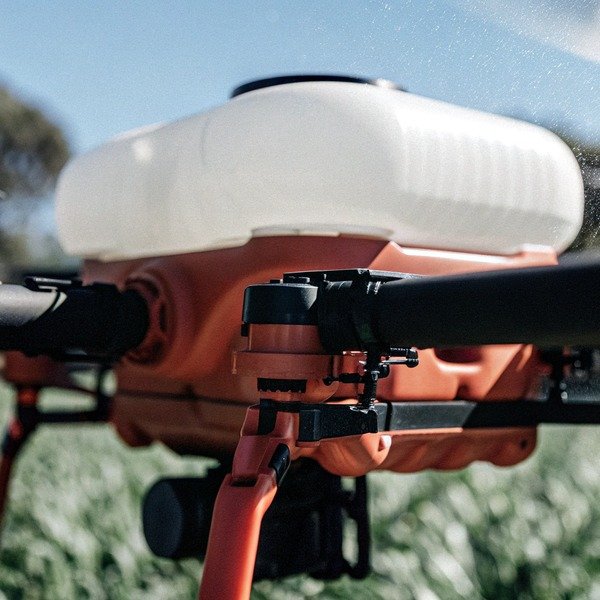
When we design our SkyRover agricultural drones, we focus heavily on durability and performance drones agrícolas 1, but we often see buyers confused by the vast difference between a base price and the final operational cost. A low initial number on a quote often hides significant expenses that can ruin your budget later.
To identify hidden costs in an agricultural drone quotation, meticulously audit the contract for exclusions like shipping tariffs, recurring software fees, and essential accessory bundles. Always verify if the quoted price covers battery charging stations, long-term technical support, and critical spare parts to avoid unexpected operational expenses.
Let’s break down the specific areas where costs often disappear so you can make a safe investment.
Does the quoted price cover shipping, tariffs, and door-to-door delivery fees?
We frequently handle logistics for our US and European clients, and nothing frustrates a buyer more than a surprise customs bill arriving weeks after the purchase. Shipping heavy agricultural drones is complex, and logistics costs are often significantly understated in initial estimates to make the deal look more attractive.
Quoted prices rarely include full door-to-door delivery fees unless explicitly stated as DDP (Delivered Duty Paid). Buyers typically face additional charges for international freight, import tariffs, customs brokerage fees, and last-mile trucking, which can add significant percentage points to the final landed cost of the equipment.

Understanding Incoterms and Freight Responsibility
When you receive a quotation, the first acronym you must look for is the Incoterm. the first acronym 2 In the industrial drone sector, many suppliers quote "EXW" (Ex Works) or "FOB" (Free on Board Free on Board 3). These terms mean the price only covers the drone leaving the factory or being loaded onto a ship in China. Once the product touches the water or air, every subsequent cost becomes your responsibility. This includes insurance during transit, unloading fees at the destination port, and inland transportation.
For an agricultural drone, which is bulky and contains heavy lithium batteries classified as "Dangerous Dangerous Goods 4 Goods" (Class 9), standard shipping rates do not apply. We have seen shipping costs triple for clients who assumed they could use a standard courier account. You must clarify if the quote is "DDP" (Delivered Duty Paid), which is the only term where the supplier covers all costs up to your doorstep.
The Hidden Impact of Tariffs and Duties
Import duties are perhaps the largest hidden cost in international trade. Depending on political climates and trade agreements between countries, tariffs on drone technology can range from 0% to over 25%. A quote might list a drone for $15,000, but after a 25% tariff and a standard VAT or sales tax, the real price jumps to over $20,000.
Furthermore, customs clearance requires a broker. While we provide door-to-door service to simplify this, many suppliers do not. If you are left to hire a third-party customs broker, you will face additional administrative fees.
Logistics Cost Breakdown
To help you analyze your quote, here is a breakdown of potential logistics costs that are often excluded from the "Unit Price."
| Componente de costo | Descripción | Estimated Impact |
|---|---|---|
| International Freight | Air or sea shipping fees based on volumetric weight. | $500 – $2,500 per unit |
| Dangerous Goods Fee | Surcharge for handling high-capacity lithium batteries. | $150 – $300 per shipment |
| Import Tariffs | Government taxes based on HS Code classification. | 0% – 25%+ of invoice value |
| Customs Brokerage | Fees paid to an agent to clear goods through customs. | $150 – $500 per entry |
| Last-Mile Delivery | Trucking from the local port/airport to your farm. | $200 – $800 depending on distance |
Always ask the supplier to provide a landed cost estimate that includes these variables. If they cannot provide it, you are at risk of an open-ended budget.
Will I be charged extra for software customization or ongoing firmware updates?
Our engineering team spends months perfecting flight algorithms and spraying precision, but we notice some competitors lock these essential features behind paywalls to generate recurring revenue. You might buy the hardware thinking you own the tool, only to find the software requires a monthly subscription to function effectively.
Many manufacturers charge extra for advanced software customization, RTK positioning subscriptions, and specialized flight planning tools. While basic firmware updates are often free, features like multispectral analysis, fleet management systems, and automated route optimization frequently require annual licensing fees that accumulate over the drone's lifespan.

The Difference Between Flight Control and Mission Planning
There is a distinct difference between the software that keeps the drone in the air and the software that manages your farm data. Flight control firmware is usually included. However, "Mission Planning" or "Ag Management" software often carries hidden costs. This software allows you to map boundaries, set automated spray routes, and analyze crop health.
Some companies offer a "Freemium" model. You get basic manual control for free, but if you want obstacle avoidance, terrain following, or centimeter-level accuracy, you must pay to unlock the software key. For large farms, these features are not optional; they are critical for efficiency.
RTK and Precision Fees
Real-Time Kinematic (RTK) positioning is standard for modern agricultural drones Real-Time Kinematic (RTK) 5 to ensure they don't overlap spray or miss rows. However, the hardware on the drone is useless without a correction signal. This signal often comes from a base station (which you must buy) or a network subscription (NTRIP).
- Base Station: A one-time hardware cost (often $2,000+).
- Network Subscription: A recurring annual fee (often $500 – $1,000/year).
If your quote includes an RTK module but does not mention the base station or subscription, you have a hidden cost waiting for you.
Customization and SDK Access
For clients who want to integrate our drones into their own proprietary systems, we offer SDK (Software Development Kit) support. SDK (kit de desarrollo de software) 6 Software Development Kit 7 However, in the broader market, access to the SDK is rarely free. If you need the drone to communicate with your specific farm management ERP or require a custom logo on the controller interface, suppliers will charge engineering fees.
Software Cost Analysis
Below is a table highlighting where software costs typically hide in a standard quotation.
| Software Feature | Standard Inclusion? | Costo oculto potencial |
|---|---|---|
| Basic Flight Firmware | Sí | Usually Free |
| Obstacle Avoidance | Sometimes | Unlock fee ($200-$500) |
| RTK Correction Data | No | Subscription ($500+/year) |
| Gestión de flotas | No | SaaS Fee ($50-$100/month) |
| Data Processing (Cloud) | No | Per-acre or monthly storage fee |
Always clarify if the software license is perpetual (one-time buy) or subscription-based. A cheap drone with a high monthly software fee is a liability.
Are essential accessories like batteries and chargers included in the base unit cost?
When testing flight endurance at our facility, we know that a single battery is never enough for a full day's work, yet many quotes list only the bare drone airframe to make the price appear lower. A drone without a continuous power cycle is essentially a static display piece, not a working agricultural tool.
Essential accessories like high-capacity batteries and fast-charging stations are rarely included in the base unit cost of an agricultural drone. To ensure continuous operation without downtime, you must budget for at least four to six batteries and a specialized generator or high-speed charger, significantly increasing the total investment.

The "Base Unit" Trap
In marketing materials, you will often see a price tag of, say, $15,000. This usually refers to the "Airframe Only." It includes the motors, propellers, and spray tank, but often zero batteries and no charger.
Agricultural drones consume immense amounts of power. A typical flight lasts 10 to 15 minutes. To spray all day, you need a continuous cycle: one battery flying, one cooling, and two charging. This means a minimum of 4 batteries is required for efficiency. If the quote only includes one battery, you are effectively buying a machine that can work for 15 minutes every two hours.
The Cost of Power Management
The cost of intelligent flight batteries is high because they must handle massive discharge rates. intelligent flight batteries 8 A single battery for a large ag drone can cost between $1,500 and $2,500. If you need four, that is an additional $6,000 to $10,000 on top of the drone price.
Furthermore, you cannot charge these batteries with a wall outlet. You need a high-voltage, high-amperage smart charger. smart charger 9 In the field, away from the grid, you also need a powerful generator (usually 8,000 watts or higher).
- Smart Charger: $800 – $2,000
- Field Generator: $1,000 – $3,000 (often not sold by the drone vendor, but a required cost for you).
Peripheral Equipment
Beyond power, there are other physical accessories often left out:
- Spreading Systems: Many drones can swap the spray tank for a granule spreader (for seeds or fertilizer). This is almost always an extra add-on unit.
- Transport Cases: A heavy-duty flight case is necessary to protect the drone during transport. Cardboard boxes won't suffice for daily farm use.
- Water Tanks and Mixers: While not part of the drone, you need a ground station to mix chemicals.
Accessory Budget Checklist
Use this table to estimate the "Real" price of a working system compared to the "Base" price.
| Item | Included in Base Price? | Quantity Needed for Work | Approx. Extra Cost |
|---|---|---|---|
| Drone Airframe | Sí | 1 | $0 |
| Remote Controller | Usually | 1 | $0 |
| Smart Battery | No (or only 1) | 4 – 6 | $6,000 – $12,000 |
| Fast Charging Hub | No | 1 – 2 | $1,500 – $3,000 |
| Granule Spreader | No | 1 | $800 – $1,500 |
| Hard Transport Case | No | 1 | $300 – $600 |
If you do not account for these, your initial budget could be off by nearly 50%.
How can I estimate future expenses for spare parts and technical maintenance support?
We build our frames to resist corrosion and harsh field conditions, but spray nozzles, pumps, and propellers are consumables that wear out eventually. Ignoring these inevitable replacements in your budget leads to costly downtime during the critical spraying season when you cannot afford to wait.
Estimate future maintenance expenses by budgeting 10-20% of the drone's purchase price annually for high-wear parts like nozzles, propellers, and motors. Additionally, factor in costs for remote technical support packages, shipping for major repairs, and potential revenue loss during downtime if the supplier lacks a local service center.

Identifying Consumables vs. Repair Parts
Agricultural environments are brutal. Chemicals cause corrosion, dust enters motors, and landings can be rough. You must categorize spare parts into two groups: consumables (expected costs) and repairs (unexpected costs).
Consumables:
- Nozzles: These clog or wear out quickly. You should have 2-3 spare sets on hand immediately.
- Propellers: Even minor chips reduce efficiency. Carbon fiber props are expensive but necessary.
- Landing Gear: Frequent landings on uneven terrain cause stress fractures.
Repairs:
- Motors and ESCs: These are expensive components. If a quote does not include a warranty that covers motor failure (not caused by crash), you are at risk.
- Arms: In a collision, arms are designed to break to save the main body.
The Hidden Cost of "Distance-to-Service"
The most dangerous hidden cost is time. If you buy a drone directly from a factory overseas without a local support agreement, a malfunction can ground you for weeks.
- Shipping for Repair: Sending a drone back to China or a distant service center costs hundreds of dollars in shipping.
- Downtime: If your corn needs spraying now and the drone is broken for 14 days, the cost is not just the repair—it’s the crop loss.
We recommend asking: "Do you have a local repair center in my country?" or "Do you offer a swap program?" Some premium service packages include a loaner drone while yours is being fixed. This is worth paying extra for.
Technical Support Subscriptions
Does the quote include training? Operating an ag drone requires skill.
- Training Fees: On-site training can cost $1,000 – $3,000.
- Remote Support: Some companies charge for "Tier 2" support (video calls with engineers). Tier 1 (email) might be free but slow.
Annual Maintenance Projection
This table estimates the annual upkeep for a single agricultural drone used moderately (500 acres/season).
| Maintenance Category | Frequency | Estimated Annual Cost |
|---|---|---|
| Propeller Replacement | 2 sets per year | $400 |
| Nozzle/Tube Replacement | 4 sets per year | $200 |
| Battery Degradation | Replace 2 batteries/year | $3,000 |
| Motor/ESC Service | Once per year | $500 |
| Insurance Premiums | Anual | $1,500 – $3,500 |
| Total Estimated Upkeep | ~$5,600+ |
This data shows that the purchase price is just the entry ticket. Real profitability comes from calculating the Total Cost of Ownership (TCO) over 3 years. Total Cost of Ownership (TCO) 10
Conclusión
Identifying hidden costs requires looking beyond the sticker price to the operational reality of farming. By scrutinizing logistics terms (DDP vs. EXW), validating software subscriptions, securing adequate battery power, and budgeting for inevitable maintenance, you protect your investment. A transparent quotation is the foundation of a profitable agricultural drone program.
Notas al pie
1. Overview of drone technology in modern farming. ↩︎
2. Standard international commercial terms for shipping and liability. ↩︎
3. Official definition of Incoterms by the International Chamber of Commerce. ↩︎
4. IATA sets global standards for the air transport of dangerous goods. ↩︎
5. Technical explanation of RTK positioning from a leading GNSS manufacturer. ↩︎
6. General background definition of a Software Development Kit. ↩︎
7. Technical documentation for integrating custom software with drone hardware. ↩︎
8. Scientific explanation of the battery technology used in UAVs. ↩︎
9. Specifications for industrial-grade battery charging and power management. ↩︎
10. Official government definition of TCO for procurement and asset management. ↩︎

 English
  Spanish
  German
  French
  Dutch
Dutch  Arabic
