
Every week, our production floor ships drones agrícolas 1 to farms across three continents. Yet we still receive calls from buyers who struggle to verify whether their deliveries meet operational standards. This gap between shipping and acceptance causes costly delays and safety risks.
To develop acceptance standards for agricultural drone deliveries, you must establish systematic verification protocols covering hardware inspection, flight performance testing, regulatory compliance documentation, and custom feature validation. These standards ensure every drone meets safety requirements and operational specifications before field deployment.
This guide walks you through each critical acceptance checkpoint. We will cover hardware quality verification, performance testing methods, compliance documentation, and custom engineering standards. Let us start with the physical inspection process.
What hardware inspection steps should I follow to verify the build quality of my agricultural drones?
When our quality control team prepares shipments for export to the US and Europe, we follow a strict 47-point hardware inspection checklist. Many buyers skip this process and discover problems only after deployment. This approach costs time, money, and sometimes entire growing seasons.
Hardware inspection for agricultural drones requires systematic verification of frame integrity, motor alignment, propeller balance, wiring connections, tank seals, nozzle assemblies, and sensor calibration. Each component must pass visual examination, functional testing, and measurement against factory specifications before acceptance.

Frame and Structural Integrity
The frame forms the backbone of any agricultural hexacopter. Our carbon fiber frames 2 undergo stress testing before leaving the factory. However, shipping can cause hidden damage.
Start your inspection by examining all carbon fiber tubes and joints. Look for cracks, chips, or discoloration. Check that all bolts are properly torqued. Our engineers recommend using a torque wrench 3 to verify fastener tightness against the specification sheet included with each shipment.
Pay special attention to motor mount points. These areas receive the most stress during flight. Any looseness here will cause vibration problems that affect spraying accuracy.
Motor and Propulsion System Checks
Motors determine flight reliability. Each motor should spin freely without grinding sounds. Connect the drone to its controller and run each motor at 50% throttle for 30 seconds. Listen for inconsistent sounds.
| Inspection Point | Criterios de aprobación | Common Failure Signs |
|---|---|---|
| Motor spin test | Smooth, quiet rotation | Grinding, clicking, uneven sound |
| Propeller balance | No visible wobble at 75% throttle | Visible oscillation, vibration |
| ESC response | Immediate throttle response | Delayed response, stuttering |
| Wiring integrity | No exposed copper, secure connections | Frayed wires, loose connectors |
| Motor temperature | Below 60°C after 2-min run | Overheating, burning smell |
Tank and Spraying System Verification
Agricultural drones carry liquid payloads. Leaks destroy electronics and waste expensive chemicals. Fill the tank with clean water and let it sit for 15 minutes. Check all seals, fittings, and the tank body for moisture.
Test each nozzle individually. Flow rate should match the specification within 5% tolerance. Uneven flow indicates clogged or damaged nozzles that need replacement before field use.
Sensor and Calibration Verification
Modern agricultural drones rely on multiple sensors. The GPS module 4, altimeter, flow sensors, and obstacle avoidance cameras all require verification. Power on the drone and check that each sensor reports data correctly in the ground station software.
Our factory calibrates every sensor before shipping. However, we recommend running the calibration routine again after delivery. This confirms nothing shifted during transport.
How can I accurately test the flight endurance and spraying performance of my new drone delivery?
Our test pilots log over 200 flight hours monthly validating drone performance. We have learned that specifications on paper rarely match real-world conditions. Wind, temperature, and payload weight all affect performance. Your acceptance testing must account for these variables.
Accurate flight endurance and spraying performance testing requires controlled field trials measuring actual flight time under load, spray coverage uniformity, droplet size distribution, and system response to varying environmental conditions. Compare results against manufacturer specifications with documented tolerances.

Establishing Baseline Flight Parameters
Before testing, establish your baseline conditions. Record ambient temperature, humidity, wind speed, and altitude. These factors significantly impact battery performance and flight characteristics.
Our agricultural hexacopters are rated for specific conditions. The carbon fiber frame models handle winds up to 12 m/s. However, spray drift becomes problematic above 8 m/s. Your acceptance standards should define acceptable testing windows.
Flight Endurance Testing Protocol
Resistencia de vuelo 5 claims often assume ideal conditions. Real acceptance testing must simulate actual use cases.
| Test Scenario | Carga útil | Expected Endurance | Acceptable Variance |
|---|---|---|---|
| Empty hover | 0 kg | 45 minutes | ±5% |
| Half payload cruise | 10 kg | 28 minutes | ±8% |
| Full payload spray mission | 20 kg | 18 minutes | ±10% |
| Return-to-home reserve | Variable | 3 minutes minimum | Must meet minimum |
Run each test three times and average the results. Variance beyond acceptable limits indicates battery problems, motor inefficiency, or calibration issues.
Spray Pattern and Coverage Analysis
Spray performance determines agricultural effectiveness. Poor coverage wastes chemicals and reduces crop protection. Excessive overlap wastes money and may cause crop damage.
Set up water-sensitive paper cards in a grid pattern across your test area. Fly a standard spray mission at recommended height and speed. Collect the cards and analyze droplet distribution.
Target specifications for most agricultural applications:
- Droplet VMD 6 (Volume Median Diameter): 150-300 microns
- Coverage density: 20-40 droplets per square centimeter
- Coefficient of variation: Below 25% across test grid
Flow Rate and Pump Consistency
The pump system must deliver consistent flow throughout the tank. Many systems lose pressure as the tank empties. Test flow rate at full tank, half tank, and near-empty conditions.
Our engineering team designs pumps with pressure compensation. This maintains consistent flow regardless of tank level. Your acceptance standard should verify this performance with actual measurements, not just trust the specification.
Environmental Stress Testing
If possible, test in conditions slightly beyond normal operating parameters. This reveals safety margins and identifies weak points.
Test early morning when temperatures are lowest and humidity highest. Test midday when temperatures peak. Note any performance degradation. Drones that fail under mild stress will fail more severely under actual field conditions.
Which compliance documents and certifications must I check before accepting my drone shipment?
In our experience exporting to the US and European markets, documentation problems cause more shipment rejections than hardware defects. Buyers often focus solely on the physical product while ignoring paperwork. This leads to customs delays, legal liability, and operational restrictions.
Before accepting agricultural drone shipments, verify FAA registration eligibility, Part 107 compliance documentation, Part 137 agricultural aircraft operator certificates, Section 44807 exemptions for over-55lb operations, CE marking for European markets, and complete technical documentation packages including airworthiness statements.
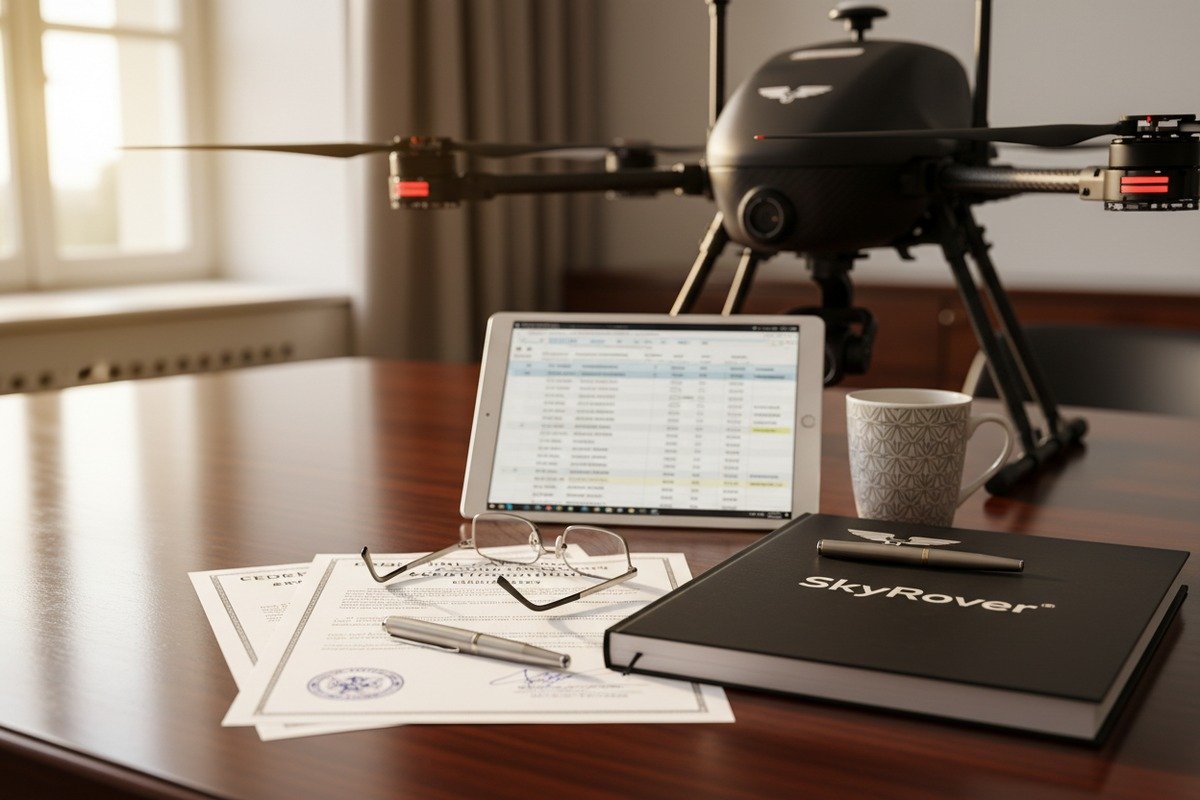
FAA Regulatory Framework
US operations require multiple regulatory clearances. The framework seems complex, but breaking it down makes verification straightforward.
| Requirement | Applicability | Documentation Needed | Renewal Period |
|---|---|---|---|
| FAA Registration | All drones >250g | Registration certificate, ID marking | 3 years |
| Part 107 Certification | Commercial operators | Remote Pilot Certificate | 24 months (recurrent test) |
| Part 137 Certificate | Agricultural aircraft operations | Agricultural Aircraft Operator Certificate | Varies by state |
| Sección 44807 Exención | Drones >55 lbs | Exemption letter, operational limitations | Per exemption terms |
| BVLOS Waiver | Beyond visual line of sight | Approved waiver documentation | Per waiver terms |
When we ship agricultural sprayers to US buyers, we include documentation supporting Part 137 applications 7. This includes technical specifications, safety features, and operational limitations that regulators require.
Weight Class Considerations
Most loaded agricultural sprayers exceed the 55-pound Part 107 limit. Our hexacopter models with full spray tanks weigh between 75-95 pounds. This triggers additional requirements.
Section 44807 exemptions 8 allow operations above 55 pounds. The application process typically takes 90-120 days. Your acceptance checklist should verify the drone model appears on your exemption or that documentation supports a pending application.
European EASA Requirements
European regulations differ significantly from US rules. EASA uses risk-based categories that affect agricultural operations.
Agricultural drones dispensing materials fall under the Specific Category. This requires:
- Operational authorization or declaration
- Remote pilot competency certificate
- Organizational procedures for the operation
- Risk assessment documentation (often using SORA methodology 9)
Drones over 25 kg face additional scrutiny. Our factory provides technical documentation packages that support EASA Specific Category applications.
Chemical Application Certifications
Agricultural spraying involves additional regulations beyond aviation rules. In the US, EPA regulations govern pesticide application. State agricultural departments may require additional licensing.
Your acceptance standard should verify:
- The drone meets requirements for the intended chemical applications
- Spray system certifications (if applicable)
- Compatibility documentation for specific chemicals
- Calibration records supporting accurate application rates
Documentation Completeness Checklist
Every shipment from our facility includes a documentation package. Your acceptance process should verify completeness:
- Original manufacturer's technical specifications
- Calibration certificates with dates
- Quality control test reports
- Warranty documentation
- Spare parts list and availability statement
- Software license agreements
- Training material access credentials
Missing documentation should halt acceptance until resolved. We have seen buyers accept shipments with incomplete paperwork, only to face regulatory problems months later.
How do I ensure the OEM branding and custom software features meet my specific engineering standards?
When we collaborate with distributors on custom drone configurations, alignment on specifications prevents disputes. Our engineering team has seen projects fail because acceptance criteria were never clearly defined. Both parties thought they agreed, but their understanding differed on critical details.
Ensuring OEM branding and custom software features meet engineering standards requires detailed written specifications, prototype approval stages, documented acceptance criteria for each customization, functional testing protocols, and clear procedures for addressing deviations before final delivery acceptance.

Defining Custom Feature Specifications
Clear specifications prevent misunderstandings. Every custom feature needs documentation covering:
- Functional requirements (what it does)
- Performance requirements (how well it does it)
- Interface requirements (how it connects to other systems)
- Environmental requirements (conditions it must handle)
- Testing requirements (how you verify compliance)
Our project managers create specification documents for each customization. These become part of the acceptance criteria.
OEM Branding Verification
Brand presentation affects your market perception. Verify all branding elements match approved designs.
| Branding Element | Método de verificación | Common Issues |
|---|---|---|
| Logo placement | Visual inspection against approved mockup | Wrong position, incorrect size |
| Color matching | Pantone comparison under standard lighting | Color shift, inconsistent finish |
| Label durability | Adhesion test, scratch resistance check | Peeling labels, fading print |
| Packaging design | Compare to approved artwork | Wrong materials, print quality |
| Documentation branding | Review all included materials | Mixed branding, missing logos |
Request samples before full production. Our factory provides branding samples for approval before applying to production units.
Software Customization Validation
Custom software introduces complexity. Our development team can modify flight parameters, add features, and integrate with external systems. Each modification requires specific testing.
Create test cases for every custom software feature. Define:
- Input conditions
- Expected outputs
- Pass/fail criteria
- Test environment requirements
Run all test cases and document results. Software bugs discovered after deployment are expensive to fix and may ground your entire fleet.
Integration Testing
Custom drones often integrate with farm management platforms, third-party sensors, or specialized equipment. Integration testing verifies these connections work correctly.
Test data flow in both directions. Verify the drone sends correct data to external systems. Confirm the drone correctly receives and acts on commands from external systems. Check edge cases where connections fail or data is corrupted.
Engineering Change Control
Custom projects often evolve during development. Changes after initial specification create risk. Establish clear change control procedures:
- Document all change requests in writing
- Assess impact on timeline, cost, and other features
- Obtain written approval before implementing
- Update specifications to reflect approved changes
- Re-test affected features after changes
Our project coordinators manage change control documentation. This protects both parties and ensures final delivery matches agreed specifications.
Acceptance Testing for Custom Units
Custom units require more thorough acceptance testing than standard products. Create a test plan covering:
- All standard hardware verification steps
- All standard performance tests
- Specific tests for each custom feature
- Integration tests with your systems
- User acceptance testing by your operators
Document all test results. Identify any deviations from specification. Agree on resolution path for issues discovered during testing.
Conclusión
Developing acceptance standards protects your investment and ensures operational success. Cover hardware inspection, performance testing, compliance verification, and custom feature validation. Document everything and never accept delivery without complete verification.
Notas al pie
1. Provides a comprehensive overview of agricultural drones and their applications. ↩︎
2. Explains the classification and advantages of carbon fiber in drone frames. ↩︎
3. Defines what a torque wrench is and its importance in assembly. ↩︎
4. Explains the function and importance of GPS modules in drone navigation. ↩︎
5. Discusses factors influencing drone flight time and capabilities. ↩︎
6. Defines Volume Median Diameter and its relevance in agricultural spraying. ↩︎
7. Provides official FAA information on Part 137 regulations for agricultural aircraft operations. ↩︎
8. Explains FAA Section 44807 exemptions for drones exceeding weight limits. ↩︎
9. Describes the Specific Operations Risk Assessment (SORA) methodology for drone operations. ↩︎

 English
  Spanish
  German
  French
  Dutch
Dutch  Arabic
