
Sourcing industrial drones from overseas is daunting; we know the fear of receiving substandard equipment that fails during critical missions.
Using LinkedIn for background checks involves verifying company pages against website claims, analyzing employee profiles for specialized engineering degrees, and reviewing tagged posts for real-world flight tests. This process confirms legitimacy, validates technical expertise, and reveals unfiltered customer feedback before you commit to a purchase.
Let’s explore the specific steps to validate your potential partners effectively using professional network data.
What employee profiles indicate a strong engineering team at the supplier?
At our R&D center in Xi’an, we prioritize hiring specialists in avionics and structure; you should look for these specific credentials. (21 words)
A strong engineering team features profiles with degrees in robotics, avionics, or thermal imaging from reputable universities. Look for senior engineers with documented history in UAV development and R&D staff located in tech hubs like Chengdu or Shenzhen, ensuring the supplier has genuine in-house technical capabilities. (47 words)
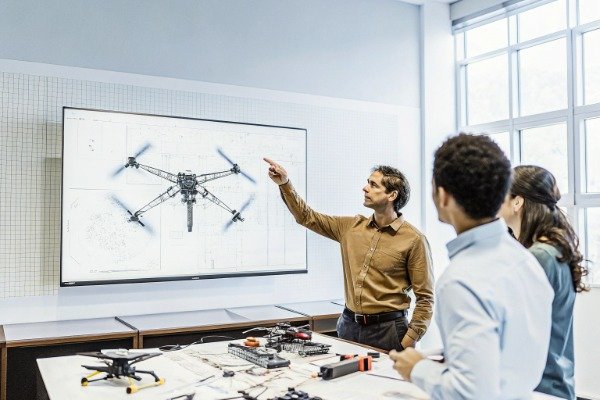
When you are evaluating a potential supplier for high-value items like firefighting drones, the "People" tab on their LinkedIn company page is your most powerful investigative tool. It reveals the true DNA of the company, stripping away the polished marketing claims found on their website. A legitimate manufacturer relies heavily on technical talent, not just sales staff.
Analyzing Educational Backgrounds and Specializations
In the industrial drone sector, the complexity of flight controllers and payload systems requires advanced education. When we build our teams, we look for graduates from top technical institutions. You should see similar patterns in your supplier’s staff. Look for engineers who list degrees from recognized Chinese universities known for aerospace and engineering, such as the Harbin Institute of Technology, Beihang University, or Northwestern Polytechnical University.
Harbin Institute of Technology 1
If the "Chief Engineer" or "CTO" lists a degree in marketing or business administration without a technical background, this is a significant red flag. You want to see specific keywords in their headlines and "About" sections, such as "Flight Control Algorithm," "Structural Analysis," "Embedded Systems," or "Thermal Imaging Integration." These are not general terms; they indicate the person actually works on the product.
The Ratio of Engineers to Sales Staff
A common issue we see in the market is "factories" that are actually just trading companies. You can spot this by calculating the ratio of employees. If a company claims to be a leading manufacturer but has 50 employees on LinkedIn, and 45 of them are "Sales Managers" or "Business Development Representatives," they are likely outsourcing production.
A genuine factory will have a healthy mix of roles. You should see profiles for:
- Mechanical Engineers: Responsible for the drone frame and durability.
- Software Engineers: Responsible for the ground control station and flight stability.
- Quality Control (QC) Managers: Responsible for testing before shipment.
- Supply Chain Managers: Responsible for sourcing raw materials.
Table: Key Job Titles and What They Signify
| Job Title on LinkedIn | What It Indicates About the Supplier | Risk Level if Missing |
|---|---|---|
| Algorithm Engineer | The company develops its own flight control software. | High (Likely buying generic kits) |
| Structural Engineer | The company designs its own drone frames and molds. | Medium (May use public molds) |
| Assembly Technician | The company has an in-house production line. | High (Likely a trading company) |
| Overseas Sales | The company has experience exporting to your region. | Low (But communication may be hard) |
| After-sales Support | The company provides technical help after purchase. | High (Maintenance will be difficult) |
Location Consistency
Finally, check the location of these employees. If the company claims their factory is in Chengdu, but all their engineers are listed in a residential district in a different province, or if the "engineers" are all remote workers in unrelated cities, be cautious. In our experience, R&D and production teams need to be physically close to the manufacturing floor to solve problems effectively. Dispersed teams often indicate a lack of centralized quality control.
How can I find customer reviews or tagged posts about the supplier’s drones?
Our clients often tag us in their field test videos; these authentic, unscripted moments are much harder to fake than website testimonials. (22 words)
Search for the supplier’s brand name combined with keywords like "test," "deployment," or "firefighting" in the main search bar. Filter by "Posts" to see content shared by third parties, such as fire departments or distributors, which provides unbiased proof of product performance and reliability. (45 words)
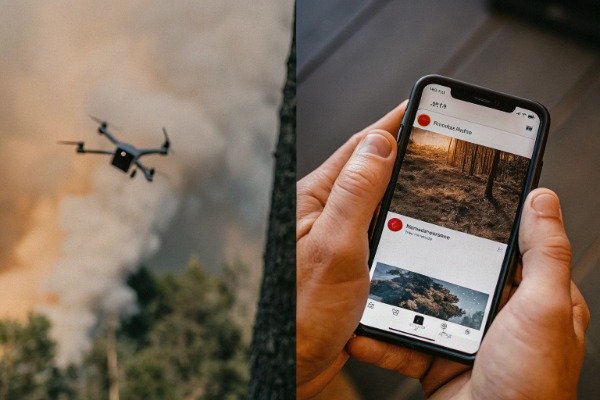
Finding honest feedback on B2B platforms is difficult because standard review sites often lack data on niche industrial machinery. However, LinkedIn offers a unique "backdoor" to see how products perform in the real world. Unlike a curated "Testimonials" page on a supplier’s website, user-generated content on LinkedIn is raw and often reveals the true operational capabilities of the drones.
Utilizing Boolean Search for Due Diligence
To find these hidden gems, you cannot simply visit the company’s page. You must actively search for discussions acerca de the company. Use Boolean search operators in the main LinkedIn search bar to narrow down your results. This technique helps you bypass the supplier’s own marketing noise and find posts from distributors, end-users, or industry observers.
Boolean search operators 2
Try combinations like:
"Supplier Name" AND "problem""Supplier Name" AND "test""Supplier Name" AND "firefighting""Supplier Name" AND "review"
This will surface posts where the supplier is mentioned. You might find a distributor in Europe posting a video of a successful test flight, or conversely, a buyer complaining about a delayed shipment or a technical glitch.
Analyzing the "Tagged In" Section
Navigate to the supplier’s company page, but don’t just look at their feed. Look for posts where they are tagged. This is often where the truth lies. If a local fire department in South America buys a drone, they might post a photo of the training session and tag the manufacturer.
These posts serve as "Proof of Life" for the product.
- Look for background details: Does the environment look like a real operational site (e.g., a farm, a fire station, a forest)?
- Check the equipment: Is the drone in the photo the same model they are trying to sell you?
- Read the comments: Are other users asking about price or performance? How does the original poster respond?
Table: Interpreting User-Generated Content
| Content Type | Positive Signal | Negative Signal |
|---|---|---|
| Flight Video | Stable flight, clear video feed, real-world weather conditions (wind/rain). | Edited "sizzle reel" with music, no raw audio, short cuts only. |
| Unboxing Photo | Professional packaging, foam inserts, included manuals/accessories. | Damaged boxes, loose parts, generic cardboard without branding. |
| Exhibition Post | Booth is busy, real prototypes on display, staff engaging with visitors. | Empty booth, only posters (no physical product), staff on phones. |
| User Comment | "Great support from the team," "Works well in high winds." | "Still waiting for spare parts," "Battery life is not as advertised." |
Validating Through Third-Party Connections
Another effective strategy is to look for connections between the supplier and reputable industry bodies. If we claim to supply the State Grid or a major forestry agency, you should be able to find posts from those organizations mentioning the project. If a supplier claims big partnerships but there is zero social proof from the "partner" side, it is likely an exaggeration. You can also reach out to the people who posted the content. A simple message like, "I saw you used the SkyRover drone in your recent drill, how has the battery endurance been for you?" can save you thousands of dollars.
Does the company page show consistent updates on product development?
We document our durability tests and firmware updates regularly to show our partners that we are active, transparent, and constantly innovating. (22 words)
Consistent updates feature high-definition videos of flight tests, new payload integrations, and participation in global exhibitions. A legitimate manufacturer’s page shows a timeline of technological progression, patent announcements, and ISO certifications, rather than just generic marketing images or long periods of inactivity. (43 words)
A stagnant LinkedIn page is a warning sign in the fast-moving drone industry. Technology evolves rapidly; a manufacturer that hasn’t posted in six months is either out of business or not investing in R&D. When we manage our online presence, we ensure that our feed reflects the daily reality of our factory floor and testing grounds. You should expect the same from any serious supplier.
The Difference Between Marketing and Engineering Content
There is a distinct difference between a trading company’s feed and a manufacturer’s feed. A trading company often posts generic, high-gloss rendered images that look like they came from a stock photo library. They might post "Happy Holidays" graphics or generic industry news, but rarely their own product in action.
A manufacturer, on the other hand, posts "ugly" content that is actually more valuable. Look for:
- Bench Testing: Videos of motors running on a test stand.
- Waterproofing Tests: Videos of the drone being sprayed with water to prove IP ratings.
- Load Testing: Photos of the drone carrying heavy weights (often concrete blocks or water jugs) to prove payload capacity.
- Firmware Logs: Screenshots or notes about software updates that fix bugs or add features.
This type of content proves that the company understands the engineering behind the product. It shows they aren’t just moving boxes; they are building machines.
Timeline of Technological Progression
Scroll back through the company’s posts over the last 12 to 24 months. You want to see a logical evolution of their products. Did they announce a "Version 1" two years ago, and now they are discussing "Version 2"? Did they acknowledge a problem in the past and show how they fixed it?
If the product photos look exactly the same today as they did three years ago, it suggests the supplier is selling outdated inventory. In the firefighting sector, where thermal sensors and battery tech improve yearly, buying outdated tech is a liability.
RTK module 3
Table: Content Red Flags vs. Green Lights
| Característica | Green Light (Manufacturer) | Red Flag (Middleman/Scam) |
|---|---|---|
| Video Audio | Raw drone motor noise, wind, people talking in Chinese/English. | Overlaid techno music, no ambient sound. |
| Background | Factory floor, messy workbenches, testing fields. | Clean white studios only, or stolen viral videos. |
| Frequency | Weekly or bi-weekly updates on specific features. | Bursts of 10 posts in one day, then silence for months. |
| Engagement | Technical answers to questions in comments. | "Please DM for price" copy-pasted to every comment. |
Verification via Global Exhibitions
Legitimate manufacturers invest heavily in trade shows. Check their "Events" tab or look for posts about attending major expos like CES, XPONENTIAL, or local Chinese fairs like the Canton Fair. Photos from these events are excellent verification. They prove the company has the budget to travel and the confidence to show their products in person. Look for photos of their booth setup. Does it look professional? Do they have physical brochures and multiple units on display? If they claim to be a "Global Leader" but have never posted a photo from an international trade show, be skeptical.
CES 4
Can I message current employees to verify the company’s operational status?
We encourage transparency and welcome questions, but reaching out to the right technical staff often yields the most honest, unfiltered answers. (21 words)
Canton Fair 5
Yes, messaging current employees is a powerful verification tactic. Contacting mid-level engineers or former staff often yields unfiltered insights into production capacity and quality control, whereas sales representatives may only provide scripted answers. Always approach with professional, specific questions to gauge responsiveness and expertise. (44 words)
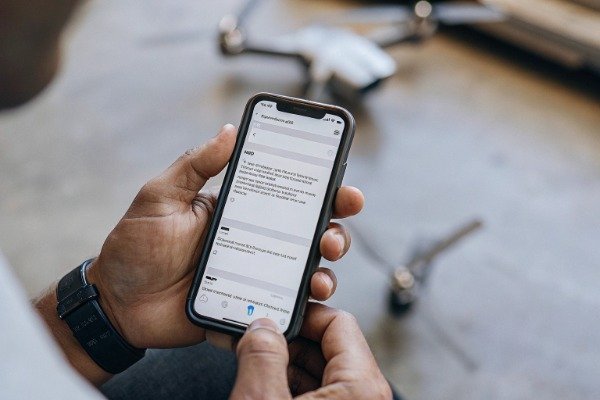
Direct outreach is perhaps the most underutilized tactic in supplier verification. While sales representatives are trained to highlight positives and hide negatives, other employees often provide a more realistic picture of the company’s operations. This is not about being deceptive; it is about conducting thorough due diligence to protect your investment.
ground control station 7
Identifying the Right Targets
Do not waste time messaging the CEO or the general "Sales" account if you want operational details. Instead, use the "People" tab to find mid-level employees.
- Target 1: Former Employees. Use the "Past Company" filter in LinkedIn search. Find someone who left the company 3-6 months ago. They have no incentive to lie. You can ask, "I’m considering placing a large order with SkyRover. During your time there, did they have consistent production delays?"
- Target 2: Technical Support Engineers. These employees deal with problems every day. Message them with a technical question: "I see you work in support. Does the new firefighting model support the specific RTK module I use?" Their ability to answer quickly and accurately tests the company’s support infrastructure.
- Target 3: Supply Chain Staff. Ask about lead times. "I see you are in procurement. Is the chip shortage affecting the delivery of the flight controllers?"
Crafting the Right Message
When we receive messages from potential partners, we appreciate professionalism. Do not sound like an interrogator. Frame your questions as a potential customer doing their homework.
flight controllers 8
Template for Current Engineer:
"Hi [Name], I see you are a structural engineer at [Company]. We are looking to procure firefighting drones for the US market. I wanted to ask about the wind resistance testing for the [Model X]. Do you perform wind tunnel tests in-house, or is that outsourced? Thanks for your time."
Template for Former Employee:
"Hi [Name], I noticed you used to work at [Company]. I am considering them as a supplier. I wanted to ask if you felt their quality control processes were strict during your tenure? Any insights would be helpful before I commit."
Analyzing the Response
The quality of the response is data in itself.
- Speed: A legitimate company usually has employees who check LinkedIn regularly.
- Language: Do they use professional industry terminology?
- Defensiveness: If an employee gets defensive or refuses to answer basic technical questions, it might indicate a culture of secrecy or internal problems.
Cross-Referencing with Other Platforms
Finally, take the information you gather from these conversations and cross-reference it. If an engineer tells you they use a specific type of battery, but the sales rep tells you something different, that is a discrepancy that needs to be resolved. If a former employee mentions that the factory moves locations frequently, check the company page’s "About" section to see if the address history matches. This triangulation of data points—public posts, private messages, and official claims—creates a safety net that significantly reduces your risk of falling victim to scams or incompetence.
Northwestern Polytechnical University 9
Conclusión
LinkedIn is a vital tool for vetting Chinese drone suppliers, ensuring safety, quality, and compliance for your business. (18 words)
Beihang University 10
Notas al pie
- Provides background on the specific university mentioned as a credential source. ↩︎
- Official documentation on how to use the specific search commands described. ↩︎
- Defines the precision positioning technology mentioned in the technical support question. ↩︎
- Links to the major global technology exhibition mentioned in the text. ↩︎
- Provides context for the specific Chinese import/export trade fair mentioned. ↩︎
- Explains the international standard for waterproofing mentioned in the testing section. ↩︎
- Explains the software and hardware system mentioned in the software engineering role. ↩︎
- Defines the core electronic component mentioned regarding engineering complexity. ↩︎
- Identifies this university as a major hub for Chinese aviation research. ↩︎
- Contextualizes this university as a key institution for aerospace engineering talent. ↩︎

 English
  Spanish
  German
  French
  Dutch
Dutch  Arabic
