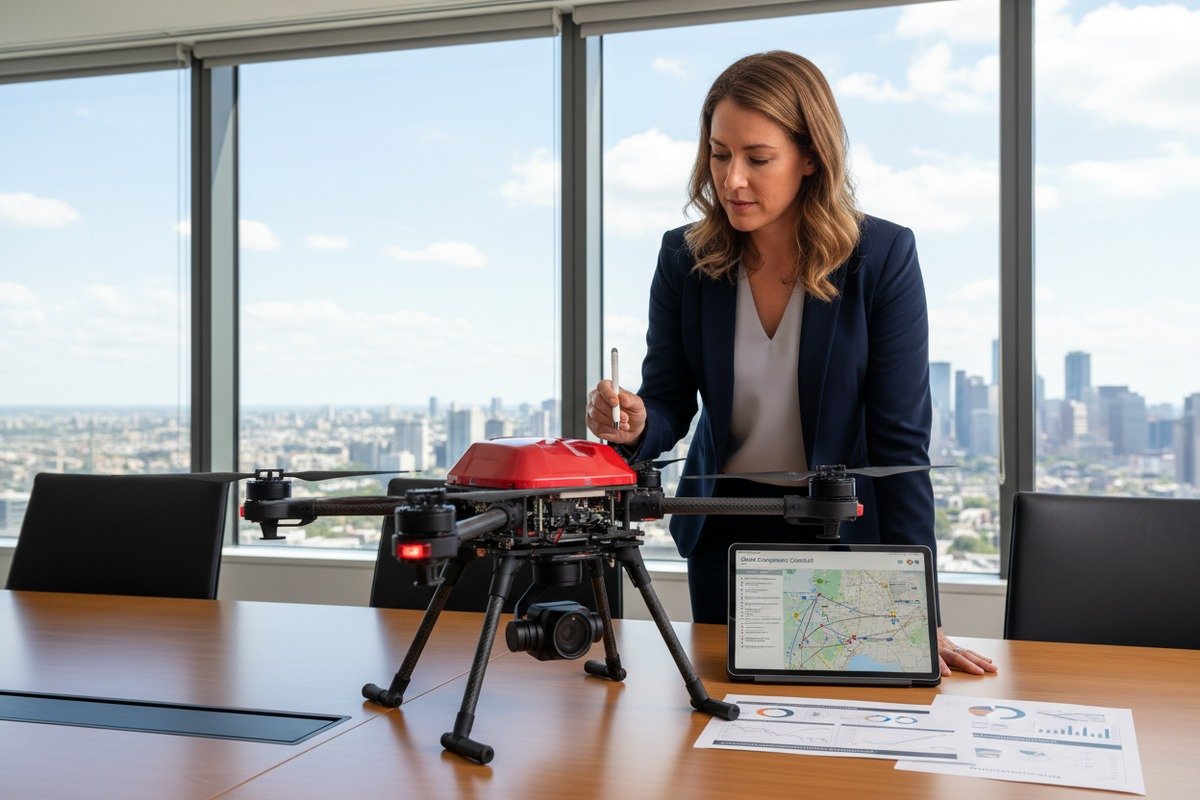
When our engineering team develops drones contra incendios 1 for international markets, we constantly hear one concern from importers: “Will this drone actually work under our local conditions?” Without proper local market research support from your supplier, you risk buying equipment that fails compliance tests or misses critical regional needs.
To assess supplier local market research support, verify their knowledge of your country’s aviation regulations, demand their region-specific case studies, confirm customization capabilities for local environmental challenges, and check their export certifications and import documentation experience for your specific market.
El global firefighting drone market 2 reached USD 1.2 billion in 2024 and is projected to grow at 8.5-10.5% CAGR through 2035. This rapid growth means more suppliers are entering the market, but not all understand the importance of localized support BVLOS permit requirements 3. Let me walk you through exactly what to look for.
How do I know if a drone manufacturer truly understands the firefighting regulations and standards in my country?
In our experience exporting to North America and Europe, regulatory compliance 4 is where most deals succeed or fail. Many buyers discover too late that their supplier has never shipped to their country before.
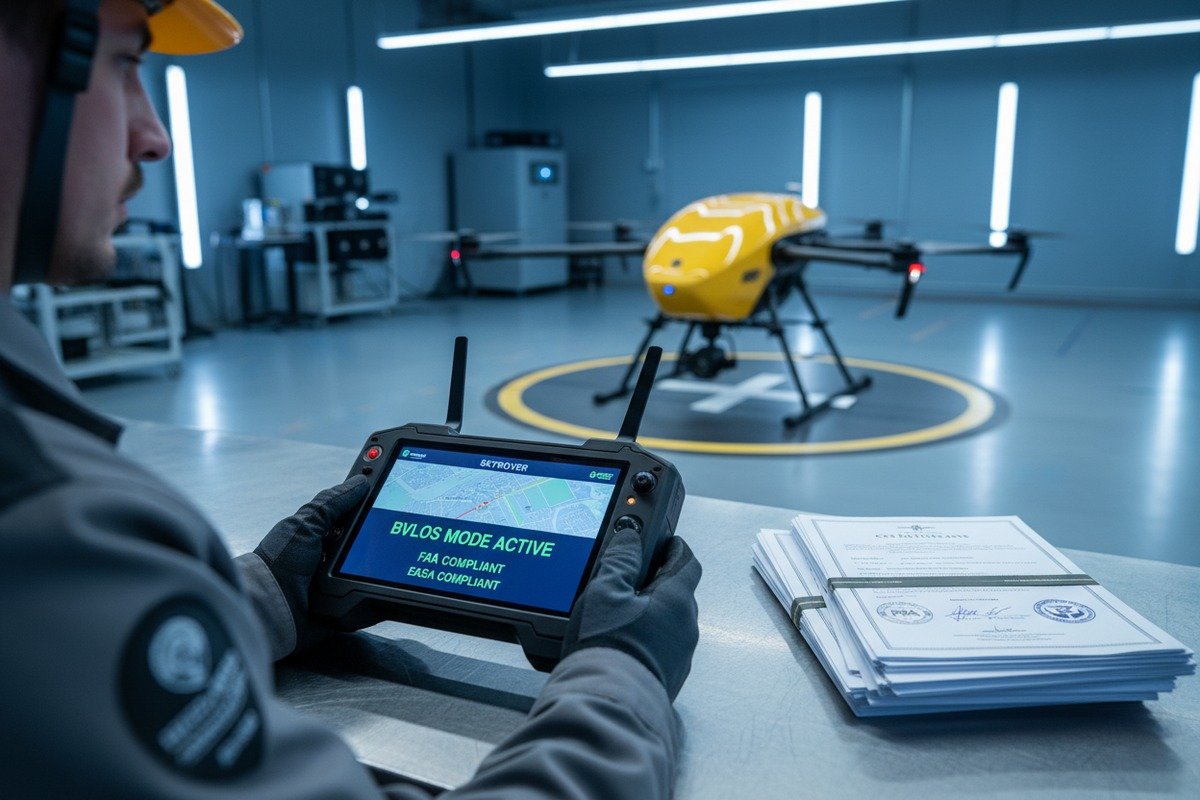
A manufacturer demonstrates regulatory understanding by providing specific documentation for your country's aviation authority, showing previous export history to your region, explaining BVLOS permit requirements, and offering pre-configured compliance settings for local airspace restrictions.
Why Regulatory Knowledge Matters More Than You Think
Fire departments and government agencies cannot deploy drones that lack proper certifications. In the United States, FAA Part 107 5 governs commercial drone operations, but firefighting often requires Beyond Visual Line of Sight waivers. European markets follow EASA regulations 6 with different classification systems. A supplier who does not understand these differences will ship you a drone that sits in a warehouse.
Our quality control team maintains a database of certification requirements for over 40 countries. When a client from Germany requests a quote, we already know they need CE marking, EASA compliance documentation, and specific frequency band configurations for their radio equipment.
Key Regulatory Areas to Verify
| Regulatory Area | Questions to Ask Your Supplier | Señales de alerta |
|---|---|---|
| Aviation Authority Compliance | "Which certifications do you hold for my country?" | Vague answers or no specific documentation |
| BVLOS Operations | "Have you supplied drones for BVLOS firefighting missions in my region?" | No case studies or references |
| Radio Frequency Approval | "What frequency bands does your controller use, and are they legal in my country?" | Single global configuration without regional variants |
| Data Privacy | "Where is flight data stored, and does it comply with local data sovereignty laws?" | Cloud servers in restricted countries |
| Import Documentation | "Can you provide the customs codes and import paperwork I need?" | Unwillingness to assist with documentation |
How to Test Regulatory Knowledge
Ask your potential supplier to name three specific regulations in your country that affect firefighting drone deployment. If they cannot answer, they lack the local market research you need. At our facility, we train sales engineers on region-specific requirements because we understand that a drone purchase is only successful when it becomes operational.
Request sample compliance documentation. We provide clients with pre-filled customs declaration templates, certificate of conformity documents, and aviation authority submission packages. Suppliers without this capability will leave you navigating complex bureaucracy alone.
What specific market insights can a supplier provide to help me sell their drones to my local government clients?
When we prepare distributor partnerships, we always ask: "Who are your end customers?" Government clients require different selling approaches than private industrial buyers.
Quality suppliers provide local demand forecasts, competitor pricing analysis, government procurement cycle information, successful deployment case studies from similar regions, and end-user testimonials from fire departments or emergency agencies that can support your sales presentations.

Understanding Government Procurement Cycles
Government fire departments do not buy equipment the same way private companies do. They follow fiscal year budgets, require multiple approval layers, and often need competitive bidding documentation. government procurement cycles 7 A supplier with strong local market research will know when your regional governments typically release RFPs for emergency equipment.
In North America, many fire departments receive federal grant funding through programs like FEMA's Assistance to Firefighters Grants. Our team tracks these funding cycles and can advise distributors on optimal timing for their sales outreach. This kind of insight separates serious manufacturing partners from simple product sellers.
Market Intelligence You Should Demand
| Market Intelligence Type | What to Request | How It Helps Your Sales |
|---|---|---|
| Demand Forecasts | Regional growth projections for firefighting drone adoption | Justifies inventory investment and identifies high-potential territories |
| Competitor Analysis | Pricing and feature comparison with other suppliers in your market | Positions your offering effectively against local alternatives |
| Case Studies | Documented deployments with measurable outcomes | Provides proof points for government procurement committees |
| End-User Testimonials | Quotes from fire chiefs or emergency managers | Builds credibility with risk-averse government buyers |
| Regulatory Updates | Ongoing monitoring of rule changes affecting drone operations | Keeps your sales team informed and trustworthy |
Tailoring Sales Support for Different Client Types
Our distributors sell to various customer segments. Fire departments need different information than industrial facility managers. A supplier should provide segment-specific sales materials.
For government clients, we prepare total cost of ownership analyses that include maintenance, training, and five-year operational projections. Government procurement officers must justify long-term budget allocations, not just initial purchase prices. Our research shows that firefighting drones require approximately 15-20% of initial cost annually for maintenance and software updates.
For third-party service providers, we focus on revenue potential and operational efficiency gains. These buyers want to know how quickly the drone pays for itself through contracted firefighting support services.
Real Partnership vs. Transactional Selling
Ask potential suppliers about their distributor support programs. Do they offer co-marketing funds? Will they participate in trade shows in your region? Can they provide technical staff for important client demonstrations?
We have allocated dedicated account managers for key markets because we recognize that local success requires ongoing support, not just a single transaction.
Can the manufacturer help me customize drone features based on the unique environmental challenges of my local region?
Our R&D team often receives requests that surprise us: drones for extreme cold in Scandinavia, salt-air resistance for coastal regions, or high-altitude performance for mountain firefighting. Every region presents unique challenges.
Capable manufacturers offer environmental customization including battery chemistry optimization for temperature extremes, corrosion-resistant coatings for coastal or industrial environments, altitude-adjusted motor tuning, specialized payload configurations for regional fire types, and software modifications for local communication protocols.
Environmental Challenges That Require Customization
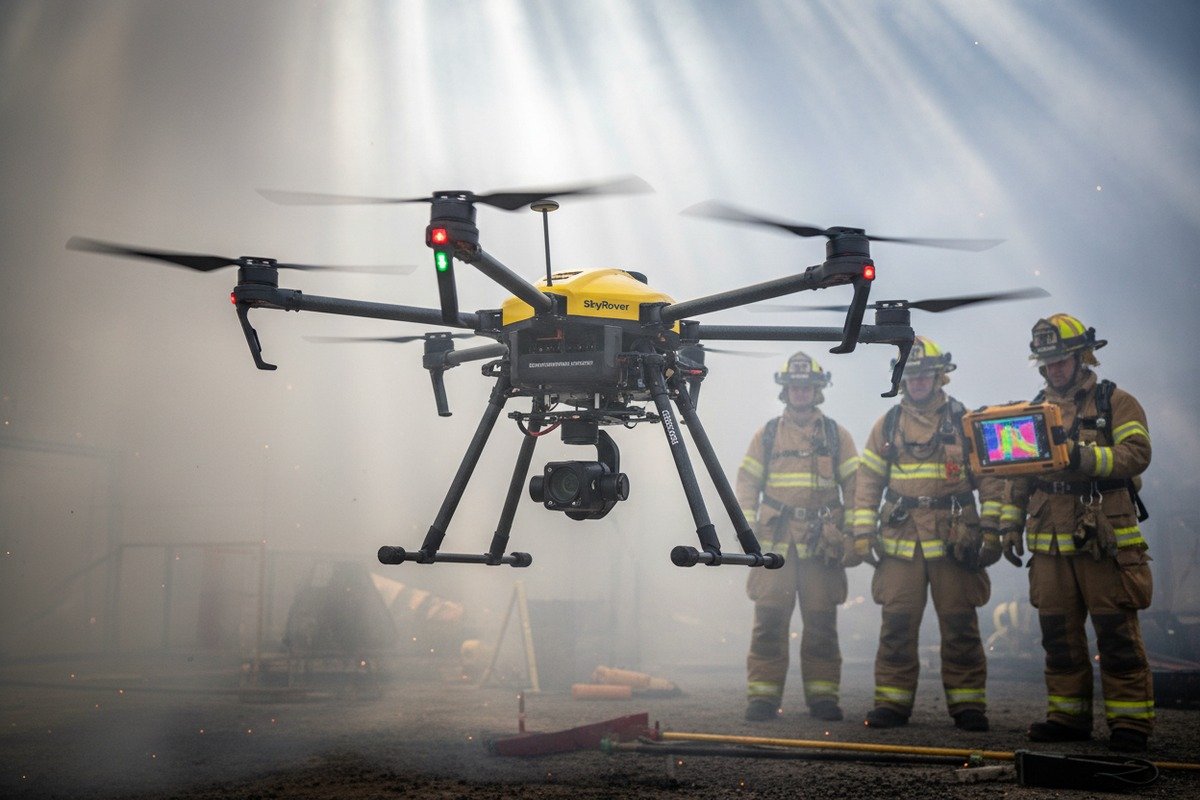
Firefighting drones face harsh operating conditions. Standard configurations work well in moderate climates, but extreme environments demand engineering modifications. When we calibrate our flight controllers, we consider ambient temperature ranges from -20°C to +50°C because our clients operate in vastly different conditions.
| Environmental Challenge | Standard Limitation | Customization Solution |
|---|---|---|
| Extreme Cold (-30°C and below) | Battery capacity drops 40-50%, motors may freeze | Heated battery compartments, cold-weather lubricants, pre-flight warming systems |
| Extreme Heat (+45°C and above) | Electronics overheat, battery degradation accelerates | Enhanced cooling systems, heat-resistant component selection, thermal management software |
| High Altitude (3000m+) | Reduced lift from thin air, motor strain | High-altitude propeller designs, uprated motors, adjusted flight algorithms |
| Coastal/Marine Environments | Salt corrosion on electronics and frame | Conformal coating on PCBs, marine-grade connectors, corrosion-resistant materials |
| Dense Smoke Conditions | Sensor interference, GPS signal loss | Redundant navigation systems, smoke-penetrating sensors, enhanced thermal imaging |
Payload Customization for Regional Fire Types
Urban fires require different capabilities than wildland fires. Our engineering team has developed payload variants specifically for these distinct use cases.
For urban and structural fires, thermal imaging cameras with higher resolution help identify trapped victims and hotspots in complex building structures. Water or fire-retardant delivery systems need precision targeting for confined spaces.
For wildland fires, extended flight endurance matters more than payload precision. Our heavy-lift octocopter platform can carry fire-retardant payloads up to 25kg with 35-minute flight times. Some clients in western United States request integration with aerial firefighting coordination systems used by CAL FIRE.
Software and Communication Customization
Different regions use different emergency communication standards. European clients often need integration with TETRA networks. North American clients may require P25 compatibility. Our software development team can modify communication protocols to match local infrastructure.
We also customize mapping and reporting software to match local language requirements and data formats. Government agencies typically need reports that align with their existing incident management systems.
How to Evaluate Customization Capability
Request examples of previous customization projects. Ask for technical specifications of how modifications were implemented. A manufacturer with genuine customization capability will have engineering documentation and test data to share.
Beware of suppliers who promise customization but only offer cosmetic changes like color schemes or logo placement. True environmental customization requires hardware modifications, software adjustments, and validation testing.
How can I confirm that a supplier has the necessary certifications and export experience to support my local import requirements?
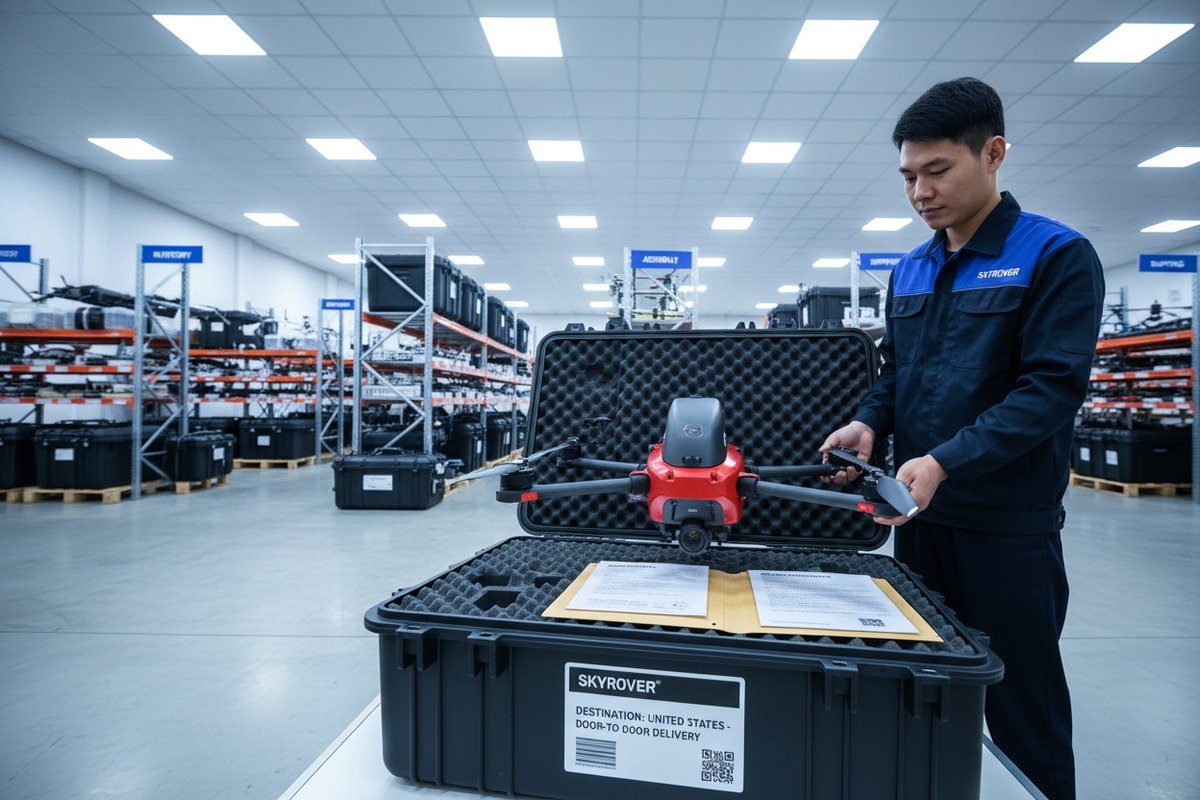
Our shipping department handles customs documentation daily. We have learned that export experience separates reliable suppliers from problematic ones. A single documentation error can delay your shipment by weeks.
Confirm export experience by requesting copies of previous export declarations to your country, verifying ISO 9001 and relevant product certifications, checking references from current distributors in your region, reviewing their customs broker relationships, and confirming they understand dual-use export control regulations for drone technology.
Essential Certifications to Verify
Product certifications vary by destination market. A comprehensive supplier maintains certifications for multiple regions and can provide documentation quickly upon request.
| Certificación | Region | Qué cubre | Verification Method |
|---|---|---|---|
| Marcado CE | European Union | Product safety, EMC, radio equipment | Request Declaration of Conformity and test reports |
| FCC Part 15 | United States | Radio frequency emissions | Request FCC ID and certification documentation |
| ISO 9001 8 | Global | Sistemas de gestión de calidad | Request current certificate with audit dates |
| ISO 14001 | Global | Gestión ambiental | Request current certificate |
| ITAR/EAR Compliance | United States | Export control for defense-related technology | Request export classification determination |
| RoHS Compliance | EU and others | Hazardous substance restrictions | Request material declarations |
Export Documentation Your Supplier Should Provide
Professional exporters prepare comprehensive documentation packages. At our facility, every international shipment includes:
Commercial invoice with accurate HS codes and product descriptions. Packing list with weights and dimensions. Certificate of origin for preferential tariff treatment where applicable. Product compliance certificates for destination country. Technical documentation for customs classification verification.
We also provide guidance on import duties and any special requirements. For example, lithium battery shipments require UN38.3 test reports 9 and specific dangerous goods documentation. A supplier unfamiliar with these requirements will cause your shipment to be held at customs.
Red Flags in Export Experience
Watch for these warning signs when evaluating supplier export capability:
Inability to provide previous export documentation examples. Unfamiliarity with HS codes for drone products. No established relationship with freight forwarders or customs brokers. Requests for you to handle all import logistics independently. Lack of experience with lithium battery shipping regulations.
Dual-Use Export Controls
Drone technology sometimes falls under export control regulations because of potential military applications. In the United States, ITAR and EAR regulations govern exports of certain technologies. European countries have similar controls.
A responsible supplier understands these regulations and maintains proper export licenses. They should be able to explain how their products are classified and what documentation supports legal export to your country.
Our compliance team reviews every international order against export control lists. This protects both us and our clients from regulatory violations that could result in severe penalties.
Practical Verification Steps
Contact references in your region. Ask other importers about their experience with the supplier. Did shipments arrive on time? Was documentation accurate? How did the supplier handle customs issues?
Request a trial shipment of accessories or spare parts before committing to a full drone order. This tests the supplier's logistics capability with lower risk.
Conclusión
Selecting a firefighting drone supplier requires thorough assessment of their local market research capabilities. Verify regulatory knowledge, demand market insights, confirm customization ability, and validate export experience. These four areas determine whether your supplier becomes a true partner or a source of ongoing problems.
Notas al pie
1. Provides an overview of drone use in firefighting applications. ↩︎
2. Offers insights into the market size and growth of firefighting drones. ↩︎
3. Replaced 404 link with the official FAA page on advanced UAS operations, including Beyond Visual Line of Sight (BVLOS). ↩︎
4. Explains the importance of regulatory compliance for drone operations. ↩︎
5. Details the specific US regulations for commercial drone operations. ↩︎
6. Provides information on European drone regulations and classification systems. ↩︎
7. Provides an overview of government procurement services and roles. ↩︎
8. Provides information on the international standard for quality management systems. ↩︎
9. Replaced 403 link with a reputable testing and certification body’s page on UN 38.3 testing for lithium batteries. ↩︎

 English
  Spanish
  German
  French
  Dutch
Dutch  Arabic
