
Every week, our customer support team receives calls from frustrated buyers who purchased drones elsewhere only to discover their spraying systems waste chemicals or damage crops coefficient of variation 1. One distributor in Texas lost over $15,000 in a single season because his drone consistently over-applied pesticides—all due to poor calibration.
When buying agricultural drones, ask about flow meter accuracy verification, swath width testing methods, recalibration frequency, software customization options, and post-purchase engineering support. Request field test data showing less than 5% deviation between intended and actual application rates, plus documentation for independent calibrations.
The questions you ask before signing a purchase order can save thousands of dollars and protect your reputation with end users real-time flow compensation 2. Let me walk you through the essential calibration inquiries every smart buyer should make.
How can I verify the precision of the spraying system's flow rate calibration during the procurement process?
When our engineers test drones before shipment, flow rate precision 3 is the first checkpoint. A single percentage point of error can mean thousands of dollars wasted or crops damaged beyond recovery. Many buyers skip this verification step and regret it later remote engineering support 4.
To verify flow rate calibration precision, request factory test certificates showing actual versus intended rates, ask for live demonstrations using measuring cylinders, and demand water-sensitive paper tests. The acceptable error threshold is below 5%. Also inquire about the flow meter brand, calibration frequency, and replacement protocols.

Why Flow Rate Accuracy Matters
Flow rate determines how much chemical lands on each acre. If your drone delivers 12 liters per hectare instead of the intended 10, you waste 20% of expensive chemicals. Worse, over-application can burn crops or violate environmental regulations 5.
Our production line uses TeeJet-style flow meters because they maintain accuracy across thousands of flight hours. But even quality meters drift over time. That is why we recommend buyers ask for both factory calibration data and field verification methods.
What to Ask During Demonstrations
Request a live test where the seller fills the tank with a known volume of water. Have them fly a measured area at standard settings. Then calculate:
Actual Application Rate = Volume Used ÷ Area Covered
Compare this to the software's displayed rate. The difference should be under 5%.
Key Flow Rate Verification Questions
| Pregunta | Por qué es importante | Red Flag Answer |
|---|---|---|
| What is your flow meter brand and accuracy rating? | Quality meters have ±2% accuracy | "We use generic sensors" |
| How often should the flow meter be recalibrated? | Prevents drift-related errors | "Never needs recalibration" |
| Can I see test data from the last 10 units produced? | Shows consistency across production | "We don't keep records" |
| What is the replacement cost for the flow meter? | Budgeting for maintenance | Evasive or no answer |
| At what deviation percentage should I replace the meter? | Industry standard is >5% | "Any meter works fine" |
Field Testing Tools You Should Request
Water-sensitive paper 6 reveals exactly where droplets land and their size distribution. Ask if the seller provides these papers or can recommend suppliers. Also request measuring cylinders rated for agricultural use.
Some manufacturers now include digital flow tracking in their apps. Our drones log every spray session with timestamps and flow data. This helps buyers identify calibration drift before it becomes costly.
What technical documentation should I request to ensure my team can perform field calibrations independently?
During our export shipments to American distributors, documentation quality is often the difference between successful resellers and struggling ones. Your technicians need clear guides to maintain calibration without calling overseas support every week.
Request comprehensive calibration manuals covering nozzle selection charts, step-by-step recalibration procedures, troubleshooting flowcharts, and video tutorials. Documentation should include pressure settings for different chemicals, swath width measurement protocols, and Excel templates for calculating coefficient of variation.

Essential Documentation Categories
Technical documentation falls into three categories: operational guides, reference charts, and troubleshooting resources. Each serves a different purpose during field calibration.
Operational guides walk technicians through calibration step by step. They should include photos of each adjustment point and expected readings at each stage. Our manuals specify wrench sizes, torque values, and safety precautions.
Reference charts provide quick lookups for common scenarios. What nozzle size for corn fungicide at 5 gallons per acre? What pressure for thick herbicide formulations? These answers should be instantly accessible.
Documentation Checklist for Buyers
| Tipo de documento | Contents to Verify | Format Needed |
|---|---|---|
| Calibration Manual | Step-by-step procedures with photos | PDF and printed |
| Nozzle Selection Guide | Flow rates at various pressures | Laminated quick-reference |
| Troubleshooting Flowchart | Common problems and solutions | Visual diagram |
| Video Tutorials | Calibration demonstrations | Downloadable MP4 files |
| Excel Calculators | Application rate and CV formulas | Editable spreadsheet |
| Parts Diagram | Exploded view with part numbers | High-resolution PDF |
What Makes Documentation Useful
Good documentation assumes the reader has basic drone knowledge but no experience with your specific model. Bad documentation assumes expertise or skips critical steps.
Ask to review sample pages before purchasing. Look for clear photos, numbered steps, and warnings about common mistakes. Our team updates documentation quarterly based on support ticket trends.
Language and Translation Quality
For American buyers purchasing Chinese drones, translation quality matters enormously. Poor translations cause dangerous misunderstandings. Ask for documentation reviewed by native English speakers, not just machine-translated.
We employ technical writers in both Xi'an and California to ensure our manuals read naturally. This investment pays off in fewer support calls and happier customers.
Training Resources Beyond Written Docs
Some manufacturers offer certification programs for technicians. These might include online courses, hands-on workshops, or video call training sessions. Ask what training support comes with your purchase and what costs extra.
Can the calibration software be customized to accommodate the specific viscosity of the chemicals my customers use?
When we develop firmware for new drone models, chemical viscosity 7 is one of the trickiest variables. A thin fungicide flows completely differently than a thick adjuvant mixture. Standard settings fail when real-world conditions vary.
Yes, quality agricultural drone software should allow viscosity-based calibration adjustments. Ask if the system includes viscosity presets for common chemical types, custom profile creation, and real-time flow compensation. Verify whether changes require dealer access codes or can be made by field operators independently.
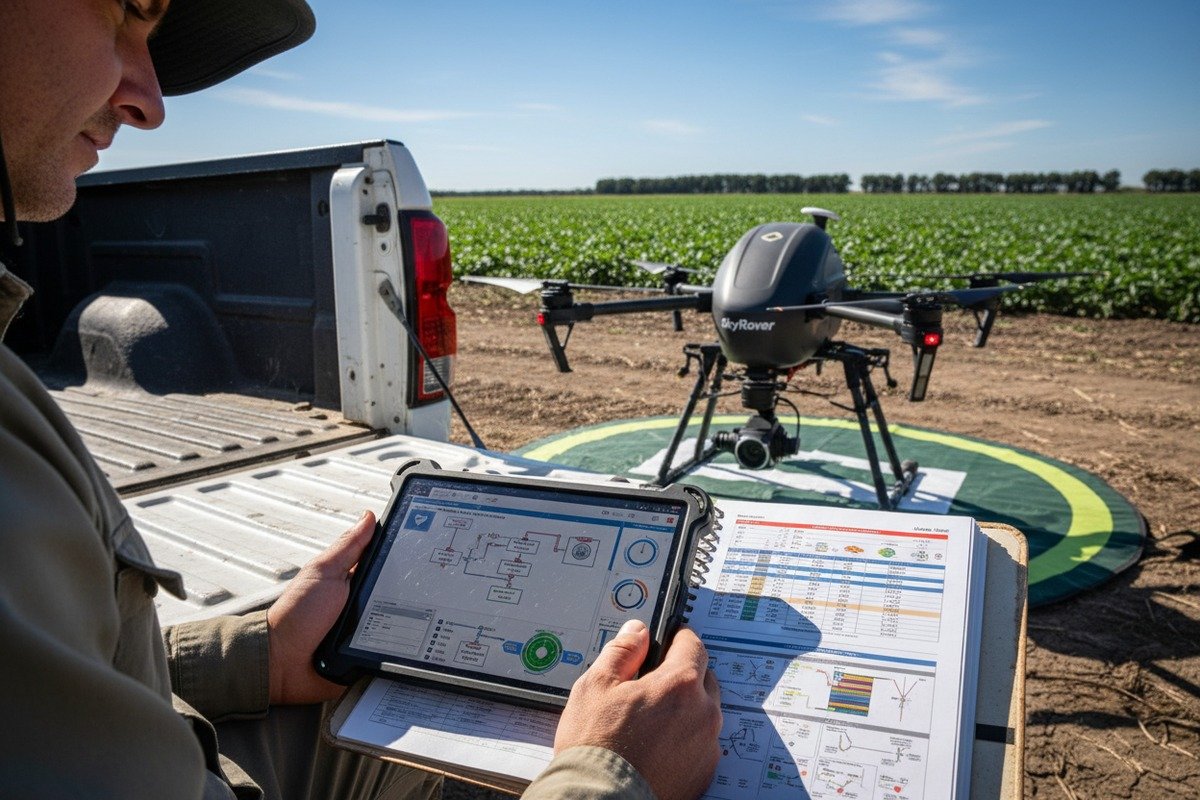
How Viscosity Affects Calibration
Viscosity is a liquid's resistance to flow. Water has low viscosity. Honey has high viscosity. Agricultural chemicals range widely between these extremes.
High-viscosity liquids move slower through nozzles and require higher pump pressure to maintain target flow rates. If your software assumes water-like viscosity, thick chemicals will under-apply consistently.
Software Features to Request
| Característica | Benefit | Método de verificación |
|---|---|---|
| Viscosity presets | Quick setup for common chemicals | Ask for preset list |
| Custom profile saving | Store client-specific settings | Demo the save function |
| Real-time compensation | Adjusts flow during flight | Check sensor integration |
| Temperature correction | Viscosity changes with heat | Review algorithm documentation |
| Multi-tank management | Different chemicals per tank | Test dual-tank scenario |
Questions About Software Customization Access
Not all customization is created equal. Some manufacturers lock advanced settings behind dealer codes. Others give full access but void warranties if you change certain parameters.
Ask specifically: Can my technicians create new chemical profiles without contacting you? Will changes void our warranty? Is there an undo function if settings cause problems?
Integration With Chemical Databases
Advanced systems connect to databases of agricultural chemicals with pre-loaded viscosity data. Enter the product name, and the drone adjusts automatically. This saves time and reduces human error.
Our latest software includes over 500 common North American chemicals. Operators can also add new products manually with viscosity meter readings.
Real-World Viscosity Challenges
Temperature changes viscosity throughout a spray day. A tank of chemical mixed at 7 AM is thicker than the same mixture at noon. Quality systems compensate automatically using temperature sensors.
Ask how the drone handles viscosity changes during operation. Does it alert operators? Does it adjust flow rates automatically? Or does it simply apply whatever flows, regardless of accuracy?
What level of remote engineering support will I receive if my clients encounter calibration issues after delivery?
Our support team in Xi'an works around the clock because American customers have questions during American business hours—which is our night. Without robust remote support, even the best drones become expensive paperweights when problems arise.
Inquire about response time guarantees, support availability hours in your time zone, communication methods, and escalation procedures. Confirm whether support covers calibration guidance specifically, not just hardware failures. Request references from current customers about their support experiences.

Support Level Comparison
Different manufacturers offer vastly different support packages. Some include unlimited technical assistance. Others charge hourly fees after a brief warranty period.
| Elemento de soporte | Basic Package | Premium Package | Enterprise Package |
|---|---|---|---|
| Tiempo de respuesta | 48-72 hours | 24 horas | 4 horas |
| Disponibilidad | Solo correo electrónico | Email + phone | Email + phone + video |
| Time zone coverage | Manufacturer's hours | Extended hours | 24/7 coverage |
| Calibration guidance | Solo documentación | Remote assistance | On-site visits available |
| Software updates | Major versions only | All updates | Priority early access |
| Costo | Included | $500-1500/year | $3000-5000/year |
What "Remote Engineering Support" Actually Means
Remote support ranges from email replies to live video calls where engineers watch your screen and guide adjustments. Clarify exactly what you will receive.
Ask these specific questions: Can your engineers connect remotely to view our drone's software? Do you offer video call support for complex calibration issues? Is support available in English without translation delays?
Response Time Realities
Advertised response times and actual response times often differ. A manufacturer might promise 24-hour response but take three days during busy seasons.
Request references from existing customers in your market. Ask specifically about support response during their busiest spray seasons. That is when delays hurt most.
Escalation Procedures
What happens when first-level support cannot solve your problem? Is there a clear escalation path to senior engineers? Can issues be escalated to the design team if needed?
Our support structure has three tiers. First response handles common questions within hours. Tier two involves experienced technicians who can diagnose complex issues. Tier three connects customers directly with our R&D engineers in Xi'an.
Support for Your End Customers
If you are a distributor, your customers will have questions too. Can the manufacturer support your customers directly? Or must all support flow through you? This affects your staffing needs significantly.
Some manufacturers offer white-label support where they answer calls using your company name. Others refuse any contact with end users. Clarify this arrangement before purchasing.
Documentation of Support Interactions
Quality manufacturers document every support interaction. This history helps diagnose recurring issues and proves warranty compliance. Ask how support tickets are tracked and whether you receive copies of all correspondence.
Conclusión
Asking the right calibration questions before purchasing drones agrícolas 8 protects your investment and your reputation. Focus on flow rate verification, documentation quality, software flexibility, and support responsiveness. These inquiries separate professional buyers from those who learn expensive lessons after delivery.
Notas al pie
1. Defines coefficient of variation as a measure of spray distribution uniformity in agricultural applications. ↩︎
2. Replaced with a page describing a system for remote flow monitoring and real-time adjustments in agricultural spraying, which aligns with real-time flow compensation. ↩︎
3. Highlights the importance of regular calibration for accurate application rates and preventing waste. ↩︎
4. Illustrates how remote diagnostics and support reduce equipment downtime for agricultural machinery. ↩︎
5. Explains EPA’s role in regulating pesticides to protect human health and the environment. ↩︎
6. Explains how water-sensitive paper is used to assess spray coverage and droplet distribution. ↩︎
7. Explains how fluid viscosity affects nozzle performance, spray angle, and flow rate. ↩︎
8. Provides a comprehensive overview of agricultural drones and their applications. ↩︎

 English
  Spanish
  German
  French
  Dutch
Dutch  Arabic
