
When our engineering team first developed high-capacity lithium batteries 1 for firefighting drones, we quickly discovered a troubling reality. Many operators had no idea how to legally dispose of these batteries federal RCRA hazardous waste rules 2. The fines can reach $5,000 per violation in some states. Worse, improper disposal causes dangerous fires at recycling facilities.
Firefighting drone batteries must meet both federal RCRA hazardous waste rules and state-specific recycling laws. Most lithium-ion batteries are classified as hazardous materials requiring certified recyclers. States like California and New York enforce stricter mandates than federal baselines, with new regulations taking effect through 2027.
This guide breaks down everything drone operators need to know. We will cover federal requirements, state variations, certification standards, and practical workflows. Let us start with state-specific compliance.
How do I ensure my firefighting drone batteries comply with specific US state recycling and disposal laws?
Our US distribution partners often ask this question first. They worry about varying rules across different states. The confusion is understandable. Each state can add requirements beyond federal law. Missing a single regulation can result in hefty fines and damaged business relationships.
To comply with state laws, identify your state's generator status, register with required stewardship programs, use only certified recyclers, and maintain disposal records. California requires producer registration by 2025. New York imposes fines up to $5,000. Most states ban lithium battery landfill disposal entirely.
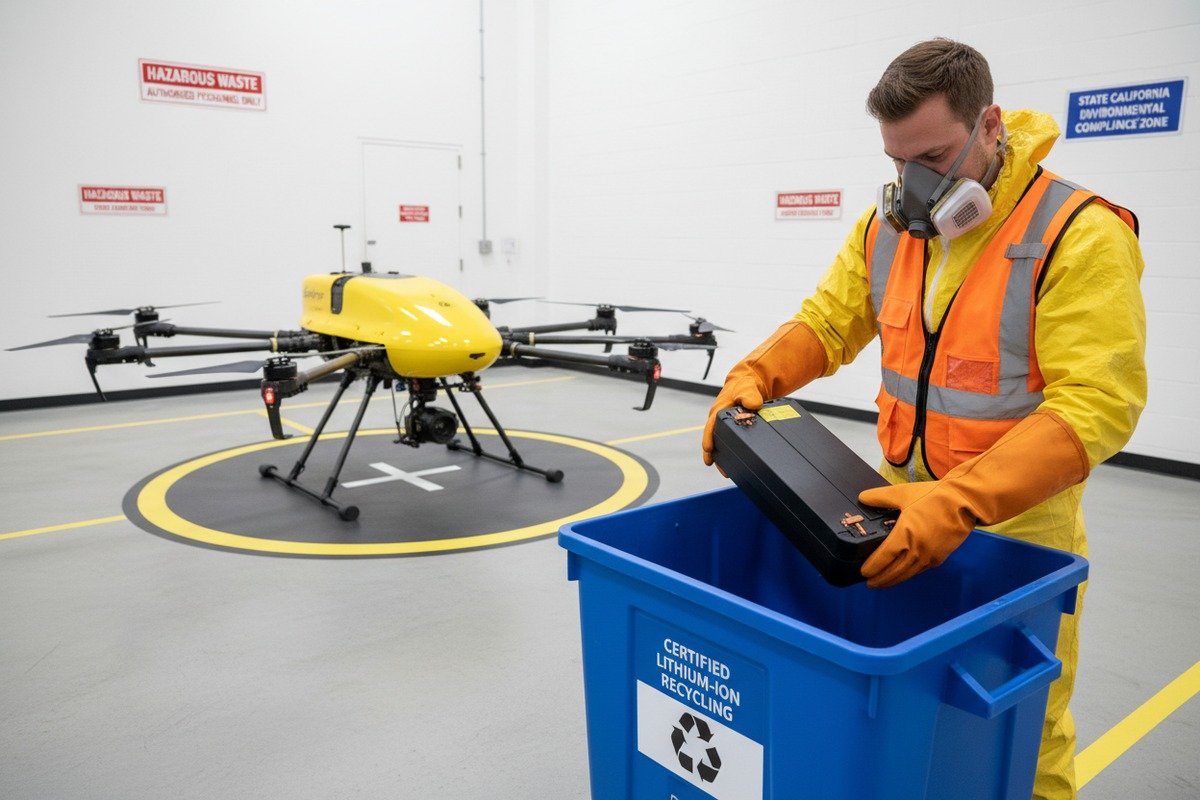
Understanding Your Generator Status
The first step is knowing your classification. Under RCRA rules, businesses fall into different categories based on hazardous waste volume. This determines your compliance obligations.
| Generator Type | Monthly Waste Limit | Requisitos clave |
|---|---|---|
| Very Small Quantity Generator (VSQG) 3 | Under 100 kg (220 lbs) | Reduced recordkeeping, basic labeling |
| Small Quantity Generator (SQG) | 100-1,000 kg | EPA ID number, 270-day storage limit |
| Large Quantity Generator (LQG) | Over 1,000 kg | Full manifests, 90-day storage limit, training |
Most firefighting drone operators qualify as VSQGs. However, after major wildfire seasons, damaged battery volumes can push you into higher categories. Our clients track monthly totals carefully to avoid unexpected compliance shifts.
State-by-State Requirements
States implement their own rules on top of federal guidelines. Here are the strictest states for battery disposal.
| State | Key Regulation | Effective Date | Penalties |
|---|---|---|---|
| California | AB 2440 Producer Stewardship 4 | 2025 | Severe fines, product bans |
| California | SB 1215 E-waste Fees | 2026 | Additional fees on sales |
| New York | Battery Disposal Ban | 2025 | Up to $5,000 per violation |
| Vermont | EPR Requirements | 2025 | Producer registration mandates |
| Washington | Battery Stewardship | 2027 | Collection program participation |
California leads with the most comprehensive rules. AB 2440 requires manufacturers to fund collection programs. Our team worked closely with California distributors to prepare for these changes early.
Practical Steps for Compliance
Start by contacting your state environmental agency. Ask specifically about lithium-ion battery regulations. Many agencies have dedicated battery disposal hotlines now.
Next, document your battery inventory. Record purchase dates, capacity ratings, and condition status. This creates an audit trail if inspectors visit.
Finally, establish relationships with certified recyclers in your state. Not all recyclers accept high-capacity drone batteries. We maintain a list of approved partners for our US customers.
What environmental certifications should I require from my drone manufacturer to satisfy US regulatory audits?
When we prepare export documentation for American buyers, certification questions come up constantly. Procurement managers want proof their suppliers meet environmental standards. Without proper certifications, audits become nightmares. Products can be seized at customs or rejected by end customers.
Require manufacturers to provide UN38.3 transport certification, UL 2054 or IEC 62133 safety standards, RoHS compliance documentation, and EPA registration numbers where applicable. These certifications demonstrate batteries meet federal and state environmental requirements for import, use, and eventual disposal.

Essential Battery Certifications
Our quality control team ensures every battery pack meets these standards before shipping. Each certification serves a specific regulatory purpose.
UN38.3 certification proves batteries passed transport safety tests. UN38.3 transport certification 5 This includes altitude simulation, thermal cycling, vibration, shock, and short circuit tests. Without UN38.3, shipping lithium batteries legally is nearly impossible.
UL 2054 covers household and commercial battery safety in North America. IEC 62133 is the international equivalent. IEC 62133 safety standards 6 Both address thermal runaway, overcharge protection, and fire resistance.
RoHS compliance confirms batteries contain no restricted hazardous substances. RoHS compliance documentation 7 This matters for eventual recycling. Batteries with restricted materials face stricter disposal requirements.
Manufacturer Documentation Checklist
When evaluating suppliers, request these specific documents.
| Documento | Objetivo | Periodo de validez |
|---|---|---|
| Resumen de la prueba UN38.3 | Transport compliance | Per battery model |
| UL 2054 / IEC 62133 Certificate | Safety standards | Annual renewal typical |
| RoHS Declaration | Hazardous substance limits | Per production batch |
| MSDS / SDS Sheets | Chemical composition | Current version required |
| EPA Registration (if applicable) | Importer identification | En curso |
Our documentation packages include all items above. We update them whenever battery chemistry or design changes. This proactive approach saves customers from audit scrambles later.
Verifying Certification Authenticity
Unfortunately, fake certifications exist. We have seen competitors submit fraudulent UN38.3 reports. Here is how to verify authenticity.
Contact the certifying laboratory directly. Ask them to confirm the test report number. Legitimate labs maintain searchable databases.
Check certificate dates carefully. Old certifications may not cover current battery models. Manufacturing changes can invalidate previous tests.
Request factory audit reports from accredited bodies. ISO 14001 environmental management certification shows systematic compliance. We maintain ISO 14001 certification at our Xi'an facility specifically for this reason.
Preparing for Regulatory Audits
When auditors visit your facility, they want organized records. Create a dedicated certification file for each battery model you import.
Include purchase orders linking specific batteries to certification documents. Show chain of custody from manufacturer to your warehouse.
Keep disposal records separate but accessible. Auditors often check both incoming certifications and outgoing waste documentation in the same visit.
How can I establish a safe and compliant battery recycling workflow for my industrial drone fleet?
Our technical support team has helped dozens of fire departments build recycling programs from scratch. The process intimidates many operators at first. They picture complex hazmat procedures and expensive equipment. In reality, a systematic workflow makes compliance manageable. The key is establishing clear protocols before problems arise.
Establish a compliant workflow by designating trained personnel, creating a secure storage area with fire suppression, discharging batteries to under 30% state of charge, partnering with certified recyclers, and documenting every step. Track batteries from acquisition through final disposition using standardized forms.

Setting Up Secure Storage
Battery storage failures cause most recycling-related incidents. Between field use and recycling pickup, batteries need proper containment.
Choose a well-ventilated area away from flammable materials. Concrete floors work best. Install smoke detectors and consider fire suppression systems for larger fleets.
Use metal or fire-resistant containers. Label containers clearly with hazardous waste markings. Include emergency contact information on each container.
Separate damaged batteries from healthy ones immediately. Damaged batteries require full hazmat protocols under DOT regulations. Even small punctures or swelling disqualify batteries from standard transport.
Discharge and Preparation Procedures
Before recycling, discharge batteries to 30% state of charge or less. This dramatically reduces fire risk during transport and processing.
Use dedicated discharge equipment designed for your battery type. Our clients often use simple resistor-based dischargers. More sophisticated options exist for high-volume operations.
Never attempt to fully discharge lithium batteries to zero. This can damage cells and create safety hazards. The 30% threshold balances safety with practicality.
Building Recycler Relationships
Not all recyclers accept every battery type. High-capacity drone batteries require specialized processing equipment.
Contact multiple recyclers before generating waste. Ask specifically about firefighting drone batteries. Confirm they hold appropriate permits for your state.
Negotiate pickup schedules in advance. Some recyclers only service certain regions on specific days. Planning prevents storage limit violations.
Get quotes in writing. Recycling costs vary significantly. We have seen prices range from free collection to substantial per-pound fees depending on battery condition and volume.
Documentation and Tracking Systems
Implement a tracking system from day one. This proves compliance during audits and identifies patterns in battery failure.
Record these data points for every battery:
- Serial number and purchase date
- Total flight hours and charge cycles
- Reason for retirement (end of life, damage, failure)
- Discharge verification date
- Recycler pickup date and manifest number
Spreadsheets work for small fleets. Larger operations benefit from dedicated asset management software. Several of our enterprise customers integrate battery tracking with their drone fleet management systems.
Handling Damaged Batteries from Fire Operations
Firefighting operations create unique challenges. Batteries exposed to extreme heat may become unstable. Batteries dropped from aircraft need immediate inspection.
Isolate any battery showing swelling, discoloration, or unusual odor. Place it in a fireproof container outdoors if possible.
Contact your recycler for specific guidance on damaged battery transport. Full hazmat shipping protocols typically apply. This means UN-rated packaging, proper labeling, and certified hazmat carriers.
What are my legal responsibilities for disposing of high-capacity lithium batteries used in firefighting drones?
When we train new distributors, legal responsibility discussions get serious attention. Many operators assume battery disposal is the recycler's problem. This misconception leads to expensive violations. The law holds generators responsible from creation through final disposition. Understanding these obligations protects your business and the environment.
Drone operators bear legal responsibility as hazardous waste generators under RCRA. You must identify waste properly, store it safely, use only permitted transporters and recyclers, maintain records for three years minimum, and report spills or releases immediately. Violations can result in criminal penalties and facility closure.
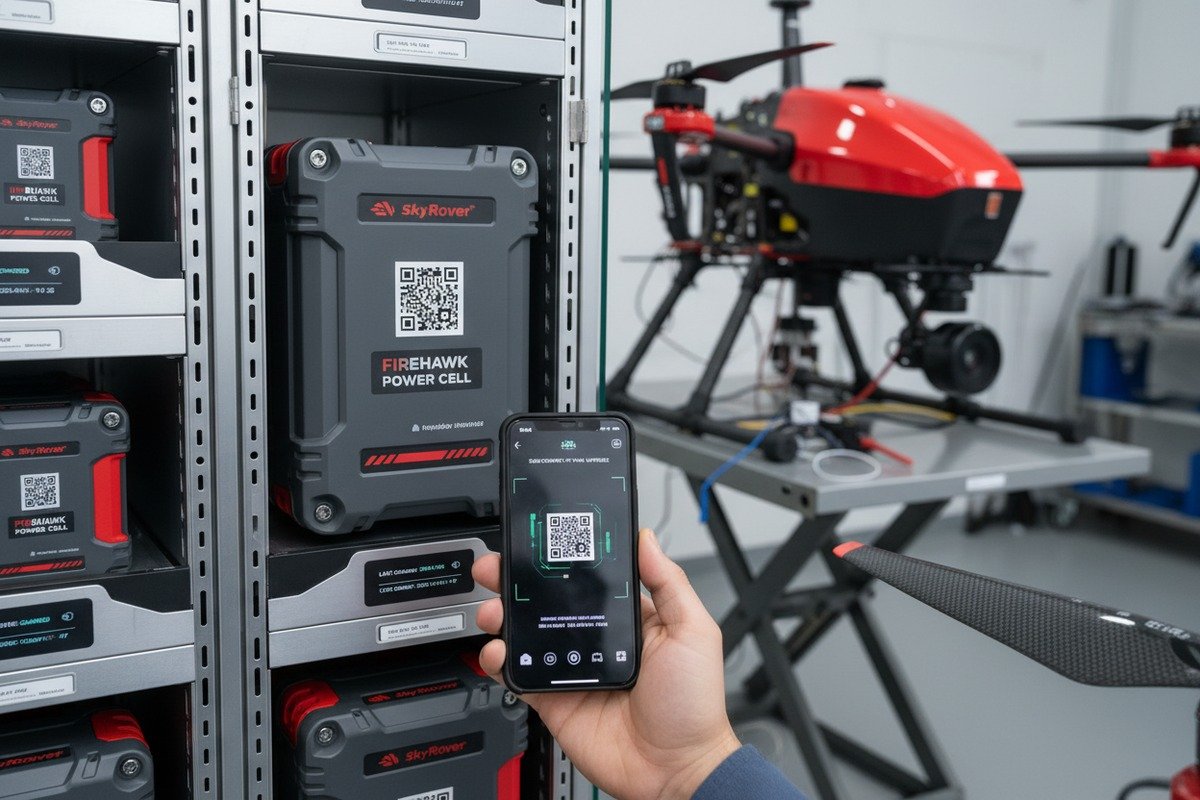
Generator Responsibilities Under RCRA
The Resource Conservation and Recovery Act creates a "cradle to grave" liability system. cradle-to-grave liability system 8 As the party generating hazardous waste, you remain legally connected to those batteries until proper disposal is verified.
This means choosing transporters carefully. If your transporter dumps batteries illegally, you share liability. Use only permitted hazardous waste haulers with valid EPA identification numbers.
Similarly, recycler problems become your problems. If a recycler loses permits or mishandles waste, generators face investigation. Verify recycler credentials annually at minimum.
Documentation Requirements
Federal and state laws mandate specific recordkeeping. Missing documents can be as damaging as missing the disposal requirements themselves.
| Record Type | Retention Period | Contents Required |
|---|---|---|
| Waste determination | 3 years minimum | How you classified the waste |
| Manifests | 3 years from shipment | Tracking from generator to final destination |
| Training records | 3 years after employment ends | Employee hazmat training documentation |
| Inspection logs | 3 years minimum | Storage area inspection records |
| Exception reports | 3 years minimum | Any manifest discrepancies |
Keep copies in multiple locations. Digital backups protect against fire or theft. Our clients increasingly use cloud storage with automatic backup for compliance records.
Emergency Response Obligations
Battery incidents require immediate action. Spills, fires, or releases trigger specific reporting requirements.
Know your state emergency response number. Federal requirements kick in for larger releases, but state thresholds are often lower.
Train employees on emergency procedures. Everyone handling batteries should know evacuation routes, fire extinguisher locations, and emergency contacts.
Document all incidents thoroughly. Even minor events may need reporting depending on your state. When in doubt, report promptly. Late reporting carries its own penalties.
Civil and Criminal Penalties
RCRA violations carry serious consequences. Civil penalties can reach $70,117 per day of violation under federal law. States often add their own penalties.
Criminal penalties apply to knowing violations. This includes knowing endangerment, knowing treatment or disposal without a permit, and knowing transport to unpermitted facilities.
Company officers can face personal liability. Corporate structure does not automatically shield individuals who made compliance decisions.
Future Regulatory Changes
The regulatory landscape continues evolving. EPA's proposed Universal Waste rules 9 for lithium-ion batteries may simplify some requirements by 2026.
However, recycled content mandates starting in 2030 will add new compliance dimensions. Batteries will need documented recycled content percentages: 4% lithium, 12% cobalt, and 4% nickel from recycled sources.
Stay connected to industry associations and regulatory updates. Our team monitors Federal Register announcements and shares relevant changes with US customers proactively.
Conclusión
Firefighting drone battery disposal demands careful attention to both federal RCRA rules and state-specific regulations. Build compliant workflows now before violations occur. Our team stands ready to support customers with certification documentation and recycler connections.
Notas al pie
1. Provides guidance on safe handling, storage, and disposal of lithium batteries. ↩︎
2. Explains the categories of hazardous waste generators under EPA’s RCRA regulations. ↩︎
3. EPA fact sheet detailing requirements for very small quantity generators of hazardous waste. ↩︎
4. Outlines California’s AB 2440, establishing an EPR program for batteries. ↩︎
5. Details UN38.3 testing for safe transport of lithium batteries by a certification body. ↩︎
6. Explains the international IEC 62133 standard for lithium-ion battery safety testing. ↩︎
7. Defines RoHS and its importance for restricting hazardous substances in batteries. ↩︎
8. Replaced HTTP 404 with an authoritative .gov source from the EPA explaining the ‘cradle-to-grave’ concept under RCRA. ↩︎
9. EPA’s information on proposed Universal Waste regulations for lithium batteries. ↩︎

 English
  Spanish
  German
  French
  Dutch
Dutch  Arabic
