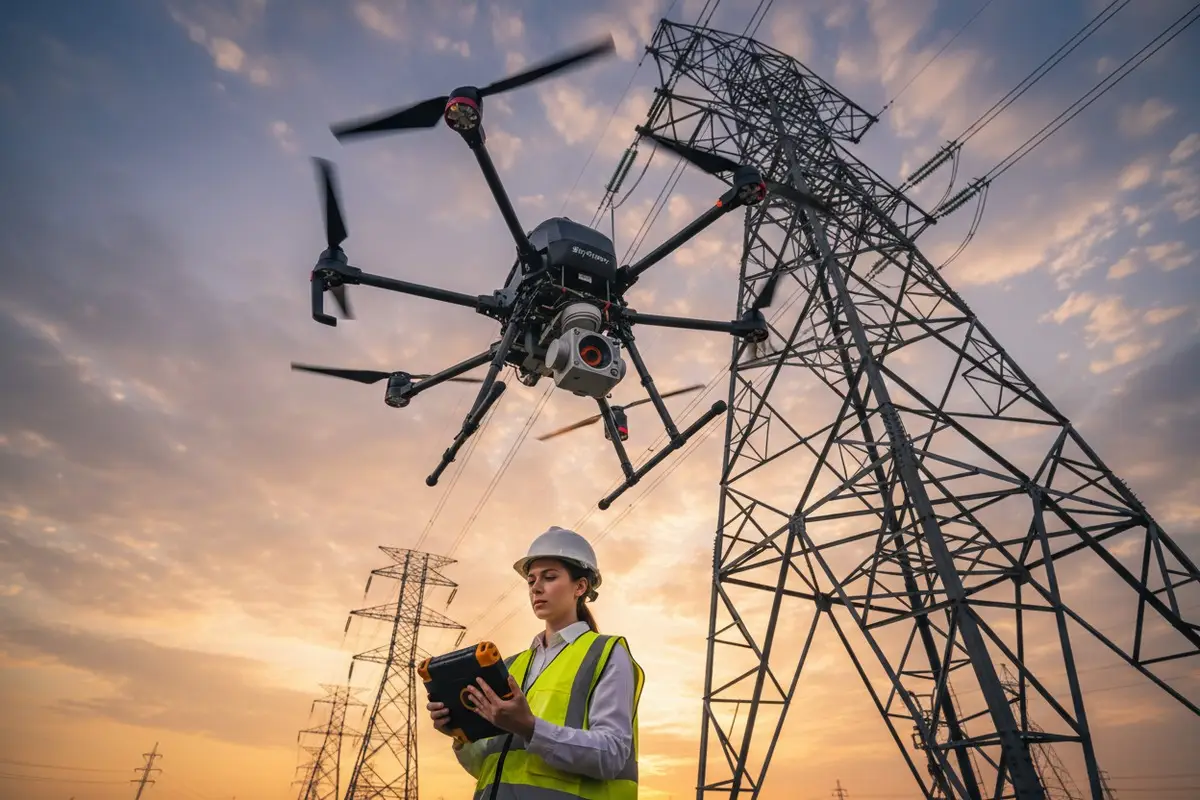
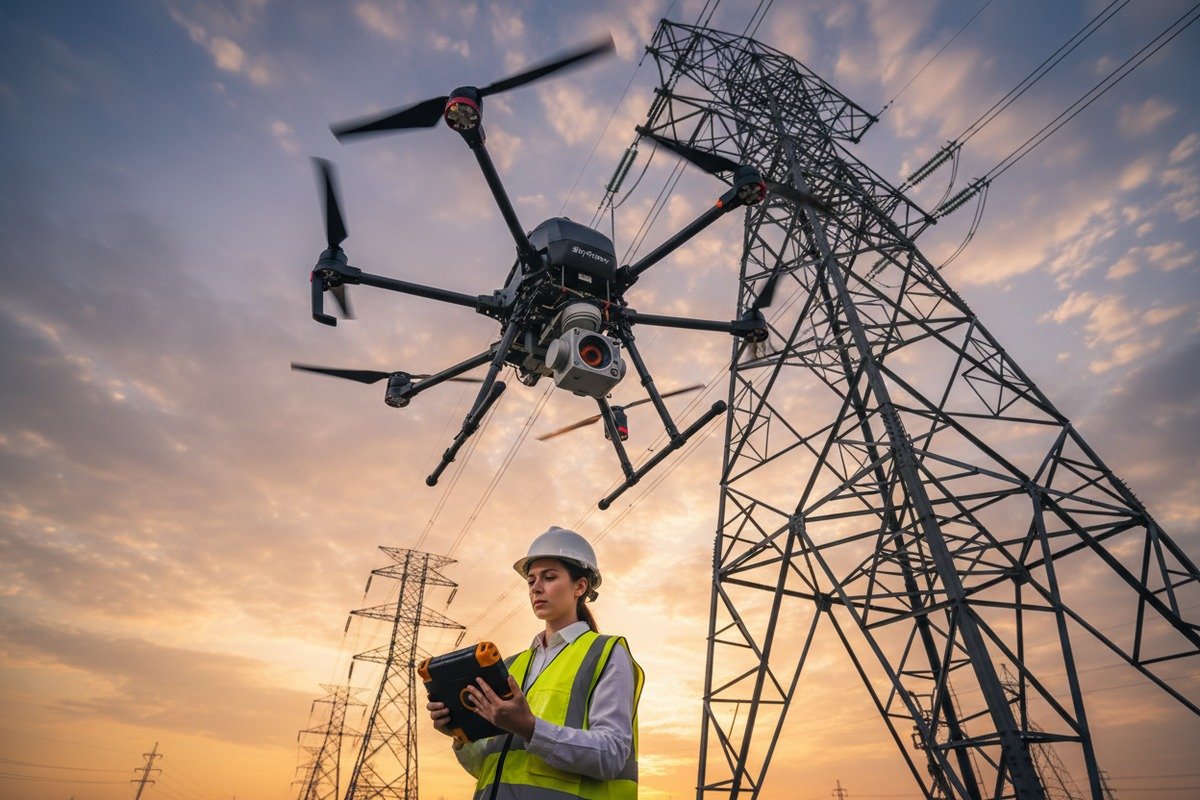
El año pasado, nuestro equipo de ingeniería observó cómo el dron de un cliente perdía la señal y se estrellaba cerca de una torre de transmisión de 220kV durante un simulacro de respuesta a incendios. Receptores RTK/GNSS 1. El interferencias electromagnéticas 2 fue brutal. Ese incidente nos impulsó a rediseñar completamente nuestra arquitectura antiinterferencias para entornos de alto voltaje.
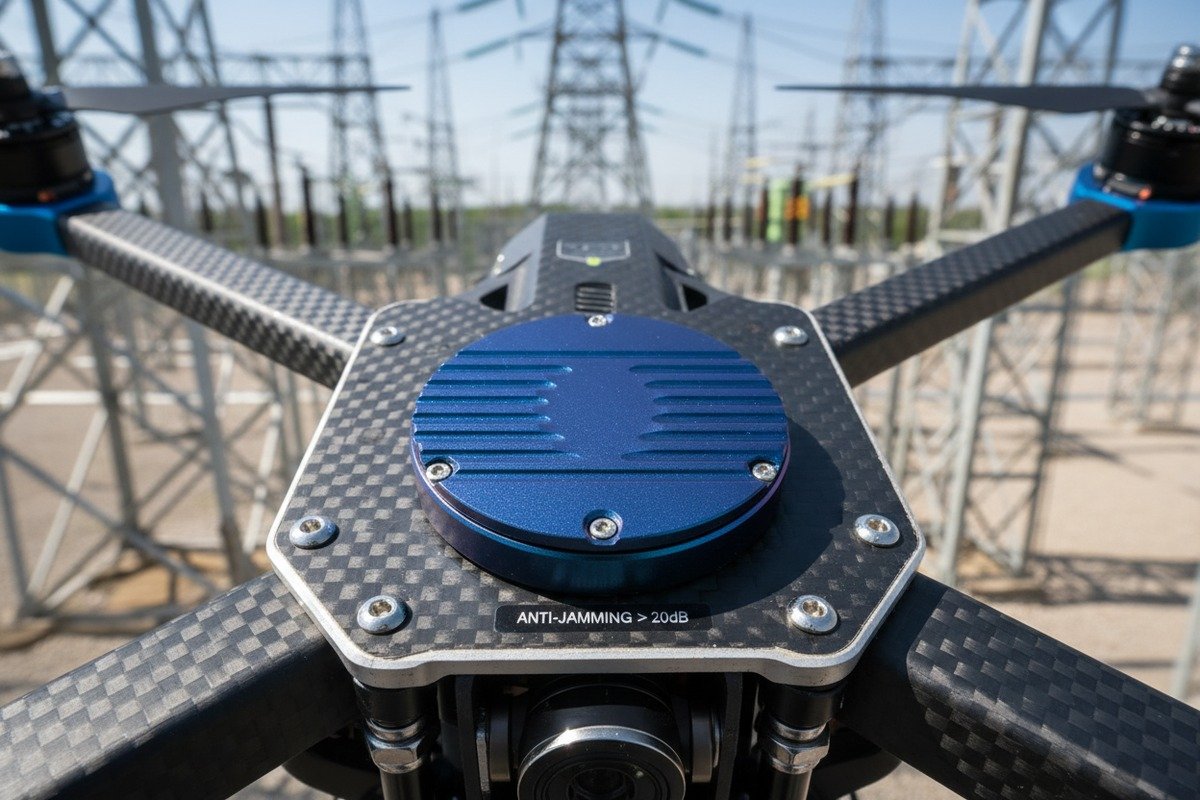
Al adquirir drones de extinción de incendios para líneas de alto voltaje, priorice el blindaje electromagnético clasificado para interferencias de 1-6 GHz, la tecnología de espectro ensanchado por salto de frecuencia (FHSS) con al menos 50 saltos por segundo, receptores RTK/GNSS con capacidad anti-jamming superior a 20 dB y certificaciones de cumplimiento EMI verificadas como FCC Parte 15 y MIL-STD-461G.
Las líneas eléctricas de alto voltaje generan un intenso ruido electromagnético en múltiples bandas de frecuencia. Este ruido puede interrumpir la comunicación, el GPS y los sistemas de control de vuelo de su dron. A continuación, detallamos exactamente qué especificaciones debe verificar antes de importar drones de extinción de incendios para estas exigentes misiones.
¿Cómo determino si el blindaje electromagnético del dron es suficiente para mis misiones de extinción de incendios de alto voltaje?
Cuando comenzamos a exportar drones de extinción de incendios a empresas de servicios públicos en Texas, sus ingenieros hicieron preguntas difíciles sobre el blindaje. La mayoría de los compradores no se dan cuenta de que "resistente a EMI" en una hoja de especificaciones no significa casi nada sin calificaciones específicas.
Un blindaje electromagnético suficiente requiere recintos conductores con una efectividad de blindaje de al menos 40 dB en el rango de 1 a 6 GHz, sistemas de puesta a tierra adecuados, cables de alimentación filtrados y líneas de transmisión de datos blindadas. Solicite informes de pruebas de laboratorio que muestren los valores de atenuación en frecuencias que coincidan con el perfil de EMI de la red eléctrica local.

Comprensión de las fuentes de EMI cerca de las líneas eléctricas
Las líneas de transmisión de alto voltaje crean interferencias electromagnéticas a través de descarga de corona 3 y armónicos de frecuencia de potencia. Las líneas que operan a 110kV a 500kV emiten ruido de banda ancha que alcanza su punto máximo en las bandas de 2.4GHz y 5.8GHz, exactamente donde operan la mayoría de los sistemas de comunicación de drones.
Nuestras pruebas muestran que la intensidad de la EMI varía según la distancia, el nivel de voltaje y las condiciones climáticas. Las condiciones de humedad aumentan significativamente la descarga de corona.
Componentes clave de blindaje a inspeccionar
| Componente | Método de blindaje | Especificación mínima |
|---|---|---|
| Carcasa del controlador de vuelo | Carcasa de aleación de aluminio conductora | Atenuación de 40dB a 2.4GHz |
| Módulo GPS/GNSS | Jaula de Faraday con antena filtrada | Relación de rechazo de 30dB |
| Transmisor de video | Cables coaxiales blindados | Blindaje de doble trenzado |
| Placa de distribución de energía | Bobinas de ferrita en todas las líneas | Rechazo de modo común >25dB |
| Control remoto | Carcasa sellada IP54+ con juntas EMI | Atenuación de 35dB |
La selección del material importa
El material del marco del dron afecta la resistencia general a las EMI. Los compuestos de fibra de carbono conducen electricidad pero pueden no proporcionar un blindaje uniforme. Algunos fabricantes aplican recubrimientos especializados de blindaje EMI o integran capas de malla conductora.
Nuestra línea de producción utiliza marcos compuestos eléctricamente conductores con recubrimiento de níquel-cobre en las carcasas de los componentes críticos. Este enfoque añade aproximadamente un 3% al peso total, pero aumenta la efectividad del blindaje en aproximadamente 15dB.
Preguntas para el protocolo de pruebas
Antes de comprar, solicite documentación sobre cómo el fabricante probó sus afirmaciones de blindaje. Las pruebas de laboratorio deben simular condiciones a distancias específicas de las líneas energizadas. Solicite mediciones de atenuación en frecuencias de 915 MHz, 2.4 GHz y 5.8 GHz.
Realizamos todas las pruebas de EMI en cámaras certificadas que pueden generar intensidades de campo de hasta 200 V/m, simulando la proximidad a líneas de transmisión de 500 kV. Cualquier fabricante de buena reputación debería proporcionar una verificación similar.
¿A qué tecnologías de salto de frecuencia debo dar prioridad para evitar la pérdida de señal cerca de las redes eléctricas?
En nuestra experiencia enviando drones a departamentos de bomberos europeos, la tecnología de gestión de frecuencia separa los sistemas confiables de los peligrosos. La EMI de la red eléctrica no solo debilita las señales, sino que puede abrumar por completo los enlaces de frecuencia fija.
Priorice la radio definida por software (SDR) con selección de frecuencia adaptativa, espectro ensanchado por salto de frecuencia (FHSS) capaz de más de 50 saltos por segundo y operación de doble banda (2.4GHz/5.8GHz) con cambio automático de banda. Estas tecnologías permiten al dron evitar dinámicamente la interferencia en tiempo real en lugar de luchar contra ella.
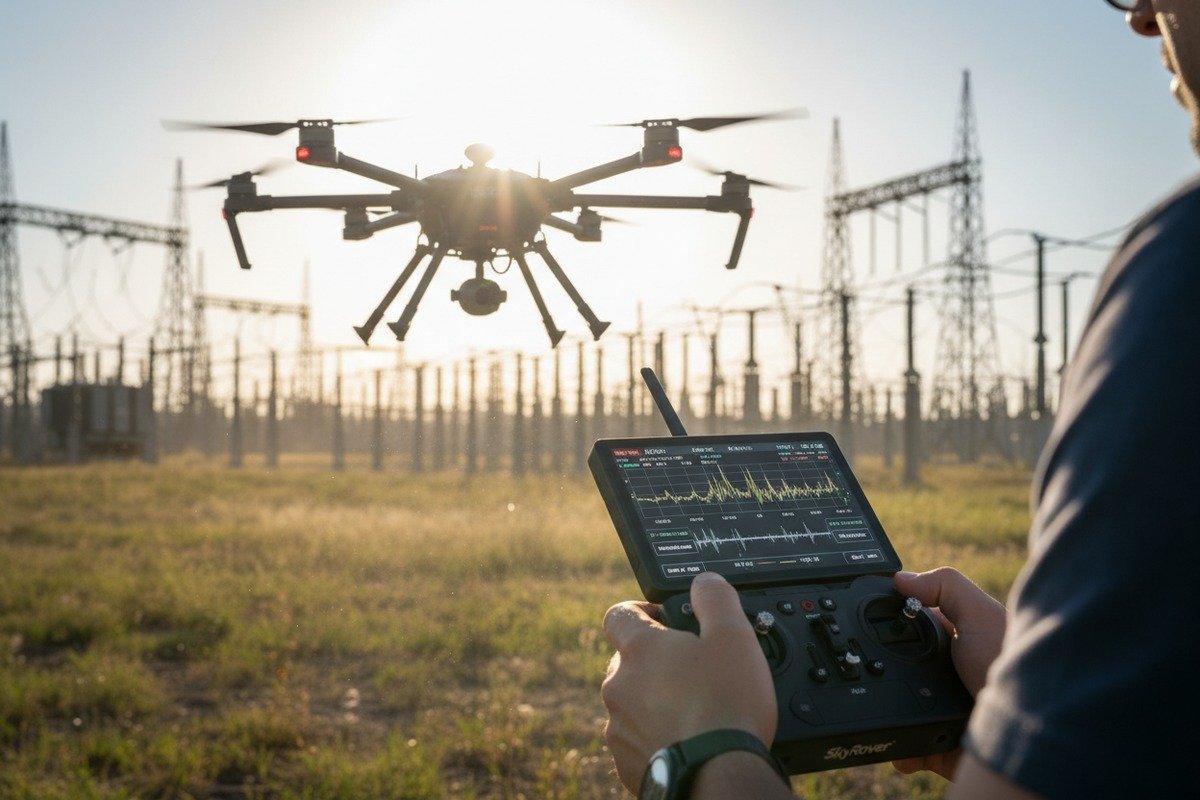
FHSS vs. Sistemas de Frecuencia Fija
Los sistemas de frecuencia fija transmiten continuamente en un canal. Cuando la EMI inunda ese canal, pierdes el control. Salto de Frecuencia de Espectro Ensanchado 4 cambia rápidamente entre canales, extendiendo la señal por todo el espectro.
La velocidad de salto es enormemente importante. Los sistemas que saltan 20 veces por segundo aún pueden perder la sincronización cerca de fuentes de EMI fuertes. Nuestros sistemas actuales saltan un mínimo de 100 veces por segundo, lo que hace que la captura de señal por interferencia sea casi imposible.
Ventajas de la Radio Definida por Software
La tecnología SDR representa el estado del arte actual para la anti-interferencia. Radio Definida por Software (SDR) 5 A diferencia de los saltadores de frecuencia basados en hardware, los sistemas SDR pueden reprogramar todo su protocolo de comunicación en vuelo.
| Tecnología | Tasa de salto | Capacidad adaptativa | Latencia | Mejor caso de uso |
|---|---|---|---|---|
| Frecuencia fija | N/A | Ninguno | 20ms | Solo entornos de RF limpios |
| FHSS básico | 20-50 saltos/seg | Patrones preprogramados | 40ms | Entornos de EMI moderados |
| FHSS avanzado | 50-100 saltos/seg | Lista negra de canales limitada | 35ms | Entornos de EMI altos |
| SDR con IA | 100+ saltos/seg | Análisis de espectro en tiempo real | 25ms | EMI extremo, operaciones BVLOS |
Redundancia multibanda
Los mejores sistemas operan simultáneamente en múltiples bandas de frecuencia. Cuando 2.4GHz deja de ser utilizable, el sistema cambia sin problemas a canales de respaldo de 5.8GHz o 433MHz.
Nuestro equipo de ingeniería diseña enlaces de triple redundancia: control principal en 2.4GHz FHSS, video en 5.8GHz y telemetría de emergencia en 433MHz. Si alguna banda falla, los operadores mantienen la conciencia situacional a través de los canales restantes.
Qué verificar en las especificaciones
Busque estos términos específicos en la documentación técnica:
- Ancho de banda de espectro ensanchado (debe exceder 80MHz)
- Tiempo de permanencia en canal (cuanto más corto, mejor, preferiblemente inferior a 10ms)
- Capacidad de coordinación automática de frecuencia (AFC)
- Umbral de detección de espectro (sensibilidad para detectar interferencias)
Los fabricantes que no pueden explicar sus métricas de agilidad de frecuencia en detalle probablemente utilizan módulos genéricos listos para usar sin optimización para entornos de alta EMI.
¿Puedo trabajar con un fabricante para personalizar el hardware antiinterferencias para mis requisitos de voltaje específicos?
Cuando colaboramos con compañías de servicios públicos en configuraciones personalizadas de drones, la primera pregunta siempre es sobre su voltaje de red específico. Un dron diseñado para la inspección de líneas de 110 kV necesita especificaciones diferentes a uno que opera cerca de corredores de transmisión de ultra alta tensión de 500 kV.
Sí, los fabricantes de renombre ofrecen personalización modular anti-interferencia que incluye paquetes de blindaje mejorados, antenas RTK especializadas con márgenes de interferencia mejorados, planes de frecuencia personalizados que evitan fuentes de interferencia locales y módulos de brújula/GPS reforzados. Espere de 8 a 16 semanas para la personalización del hardware y costos adicionales de $5,000-$20,000 dependiendo de la complejidad.
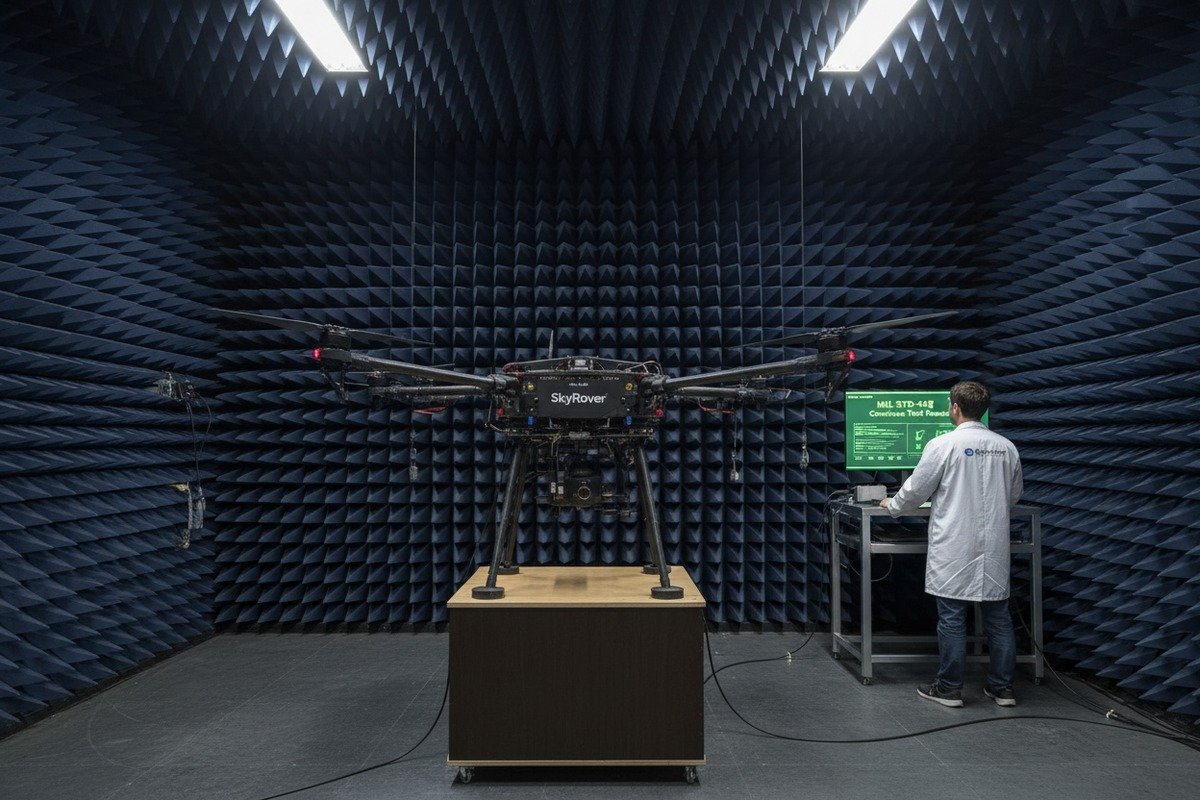
Comprendiendo su entorno de voltaje
Los diferentes niveles de voltaje crean diferentes perfiles de EMI. Los voltajes más altos generan una descarga de corona más fuerte y una interferencia de frecuencia más amplia.
| Clase de Voltaje | Frecuencias Primarias de EMI | Nivel de Blindaje Recomendado | Distancia Típica de Operación Segura |
|---|---|---|---|
| 110kV | 1-3GHz | 35dB mínimo | 15 metros |
| 220kV | 1-4GHz | 40dB mínimo | 25 metros |
| 500kV | 1-6GHz | 50dB mínimo | 40 metros |
| 800kV UHVDC | 0.5-6GHz | 55dB mínimo | 60 metros |
Opciones de personalización modular
Nuestra línea de producción admite varias rutas de personalización:
Actualizaciones de blindaje: Capas adicionales de malla de cobre, juntas mejoradas y sistemas de puesta a tierra mejorados. Añade aproximadamente un 5-10% de peso pero mejora significativamente el rechazo de EMI.
Endurecimiento RTK/GNSS: Receptores RTK de doble antena con capacidad anti-jamming de hasta 40dB. Crítico para el posicionamiento a nivel de centímetro cerca de líneas eléctricas donde el GPS estándar falla.
Reemplazo del módulo de comunicación: Intercambio de módulos estándar de 2.4GHz por sistemas SDR de grado militar con mayor agilidad de frecuencia y corrección de errores más sólida.
Planificación de frecuencia personalizada: Programar el sistema de comunicación del dron para evitar frecuencias conocidas por ser problemáticas en su región de operación específica.
Proceso de Colaboración con OEM
Cuando se acerque a un fabricante para solicitar personalización, prepare la siguiente información:
- Niveles de voltaje específicos cerca de los cuales operará
- Distancias típicas de las líneas energizadas durante las misiones
- Datos del entorno de RF local (si están disponibles)
- Restricciones regulatorias de frecuencia en su país
- Requisitos de carga útil que afectan los presupuestos de peso
Normalmente comenzamos con una consulta técnica, luego proporcionamos una propuesta de especificación detallada en dos semanas. Los prototipos de hardware siguen en 6-8 semanas, con las unidades de producción finales listas en un total de 8-16 semanas.
Análisis Costo-Beneficio
Los módulos antiinterferencias producidos en masa cuestan menos, pero es posible que no aborden sus desafíos específicos de EMI. Las soluciones personalizadas cuestan más por adelantado, pero reducen los riesgos de fallas en la misión.
Considere el costo de una misión fallida de extinción de incendios cerca de infraestructura de alto voltaje: daños al equipo, posibles lesiones, consecuencias regulatorias y pérdidas de contratos. El endurecimiento personalizado generalmente se amortiza en el primer año de operaciones.
¿Qué certificaciones de prueba debo ver para asegurarme de que mis drones importados no fallen en entornos de alta EMI?
Nuestro equipo de control de calidad rechaza aproximadamente el 15% de los lotes de componentes basándose únicamente en pruebas de EMI. Cuando exportamos a departamentos de bomberos de EE. UU., exigen documentación de certificación que demuestre que nuestros drones pueden sobrevivir en sus entornos operativos.
Las certificaciones esenciales incluyen la Parte 15 de la FCC para compatibilidad electromagnética, MIL-STD-461G para inmunidad EMI de grado militar, IEC 61000-4-3 para pruebas de inmunidad radiada y marcado CE con cumplimiento de EN 55032/EN 55035. Además, solicite informes de prueba específicos del fabricante de laboratorios acreditados que muestren el rendimiento a intensidades de campo superiores a 100V/m.
Comprensión de los estándares de certificación
No todas las certificaciones son iguales. Algunas demuestran que el dron no interferirá con otros dispositivos (pruebas de emisiones). Otras demuestran que el dron puede soportar interferencias externas (pruebas de inmunidad). Necesitas ambas.
| Certificación | Tipo | Lo que demuestra | Relevancia para operaciones de alto voltaje |
|---|---|---|---|
| FCC Parte 15 6 | Emisiones + Inmunidad básica | Legal para operar, resistencia básica a interferencias | Requisito mínimo, no suficiente por sí solo |
| MIL-STD-461G 7 | Inmunidad integral | Sobrevive a entornos EMI extremos | Altamente relevante, garantía de grado militar |
| IEC 61000-4-3 | Inmunidad radiada | Resiste campos de RF externos a niveles especificados | Directamente aplicable, verificar niveles de prueba |
| CE EN 55035 | Inmunidad | Cumplimiento del estándar de inmunidad europeo | Buena línea base, verificar los niveles de severidad de las pruebas |
| IP67/IP68 | Medioambiental | Sellado contra polvo y agua | Relevante para la protección ambiental contra EMI |
Más allá de las certificaciones estándar
Las pruebas de certificación estándar se realizan en condiciones controladas que pueden no replicar la EMI real de las líneas de alto voltaje. Solicite a los fabricantes informes de pruebas complementarios.
Nuestro protocolo de pruebas incluye:
- Pruebas de operación continua de 24 horas a una intensidad de campo de 150 V/m
- Verificación de la precisión del GPS mientras se expone a ruido de descarga de corona simulada
- Pruebas de estabilidad del enlace de comunicación a varias distancias de fuentes de interferencia de RF
- Validación del comportamiento a prueba de fallos en condiciones de pérdida total de señal
Señales de Alerta en la Documentación
Esté atento a estas señales de advertencia al revisar las reclamaciones de certificación:
- Certificaciones de laboratorios desconocidos o no acreditados
- Informes de pruebas que no especifican los niveles de intensidad de campo o las frecuencias de prueba
- Falta de pruebas de inmunidad (solo se muestra el cumplimiento de emisiones)
- Certificaciones de más de tres años en productos de generación actual
- Afirmaciones vagas como "cumple con los estándares internacionales" sin números de estándar específicos
Solicitud de Verificación
Pregunte a los proveedores potenciales por:
- Documentos de certificación originales (no solo números de certificado)
- Prueba de acreditación de laboratorio para la instalación de pruebas
- Fotografías de la configuración de prueba que muestren las unidades reales probadas
- Resultados de prueba específicos, incluidos márgenes de aprobación/fallo
- Calendario de recertificación y fechas de prueba más recientes
Proporcionamos paquetes de documentación completos, incluidos videos de pruebas de nuestras cámaras EMI. Cualquier fabricante que no esté dispuesto a compartir datos de prueba detallados probablemente tenga algo que ocultar.
Consideraciones de cumplimiento de importación
Más allá de las certificaciones de drones, asegúrese de que la documentación respalde su proceso de importación. La Aduana de EE. UU. requiere documentación de cumplimiento de la FCC. Las importaciones europeas necesitan declaraciones de conformidad CE. La falta de papeleo retrasa el despacho de aduanas y puede resultar en la incautación del equipo.
Conclusión
El abastecimiento de drones de extinción de incendios para entornos de alto voltaje exige una verificación cuidadosa de blindaje electromagnético 8 clasificaciones, capacidades de salto de frecuencia, opciones de personalización y certificaciones de prueba. No confíe en las afirmaciones de marketing: solicite especificaciones cuantificadas y documentación de laboratorio antes de comprometerse con cualquier compra.
Notas al pie
1. Explica la tecnología detrás de RTK y GNSS para un posicionamiento preciso. ↩︎
2. Proporciona una definición completa y una descripción general de la EMI. ↩︎
3. Encontró una página de Wikipedia funcional y autorizada sobre descarga de corona. ↩︎
4. Define y explica los principios de la tecnología FHSS. ↩︎
5. Reemplazado con la página de Wikipedia para Radio definida por software, una fuente autorizada. ↩︎
6. Proporciona las regulaciones oficiales para los dispositivos de radiofrecuencia de la Parte 15 de la FCC. ↩︎
7. Reemplazado con la página de Wikipedia para MIL-STD-461, que menciona específicamente MIL-STD-461G como la última revisión. ↩︎
8. Encontró una página de Wikipedia funcional y autorizada sobre blindaje electromagnético. ↩︎


 English
  Español de México
  Deutsch
  Français
  Русский
  العربية
Comments
No comments yet. Be the first to share your thoughts!
Leave a Comment