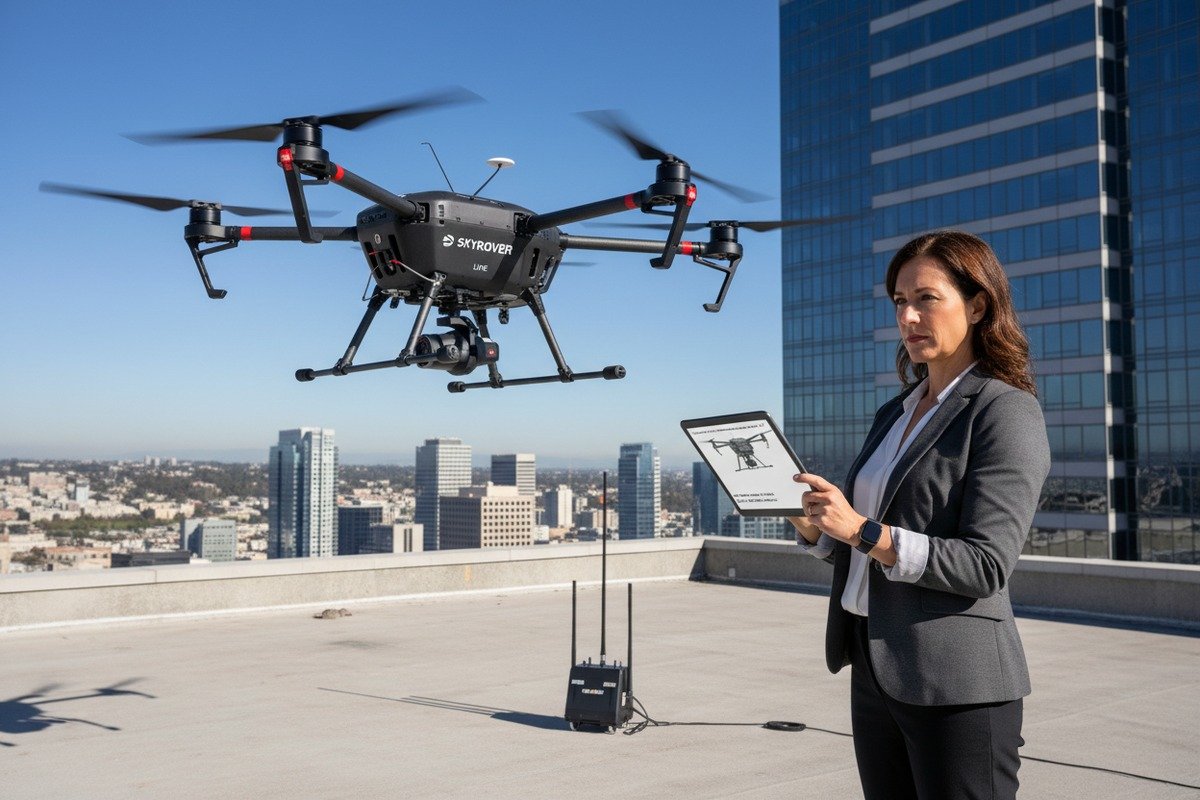
Cada semana, nuestro equipo de ingeniería recibe llamadas de departamentos de bomberos frustrados de EE. UU. Sus drones pierden la señal de video a mitad de operación. Las señales urbanas densas interfieren sus transmisiones. Vidas y propiedades penden de un hilo.
Para evaluar la resistencia a la interferencia de video de drones de extinción de incendios, los gerentes de adquisiciones deben probar los sistemas de transmisión en entornos de RF urbanos reales, verificar la potencia de salida conforme a la FCC hasta 33 dBm, exigir documentación sobre protocolos de salto de frecuencia y realizar pruebas de campo que midan la latencia cerca de torres de comunicación y rascacielos.
Esta guía lo guiará a través de cada paso crítico. Cubriremos métodos de verificación, requisitos de documentación, opciones de personalización y protocolos de prueba de latencia. Sumerjámonos en los detalles.
¿Cómo verifico si el sistema de transmisión de un dron de extinción de incendios puede manejar interferencias de señal de alta densidad en mi ciudad?
Nuestras instalaciones de prueba en Xi'an simulan las condiciones exactas de RF que se encuentran en ciudades como Nueva York y Los Ángeles. Cuando calibrar módulos de transmisión 1, los sometemos a escenarios de peor caso. Los resultados a menudo sorprenden a los equipos de adquisiciones que visitan nuestra fábrica.
Verifique el manejo de interferencias solicitando informes de análisis de espectro, realizando pruebas in situ en su área de implementación objetivo con inundación de Wi-Fi, midiendo las relaciones señal/ruido a varias distancias y comparando los tiempos de respuesta de conmutación dinámica de canales entre modelos competidores.
Comprensión de los desafíos de RF urbanos
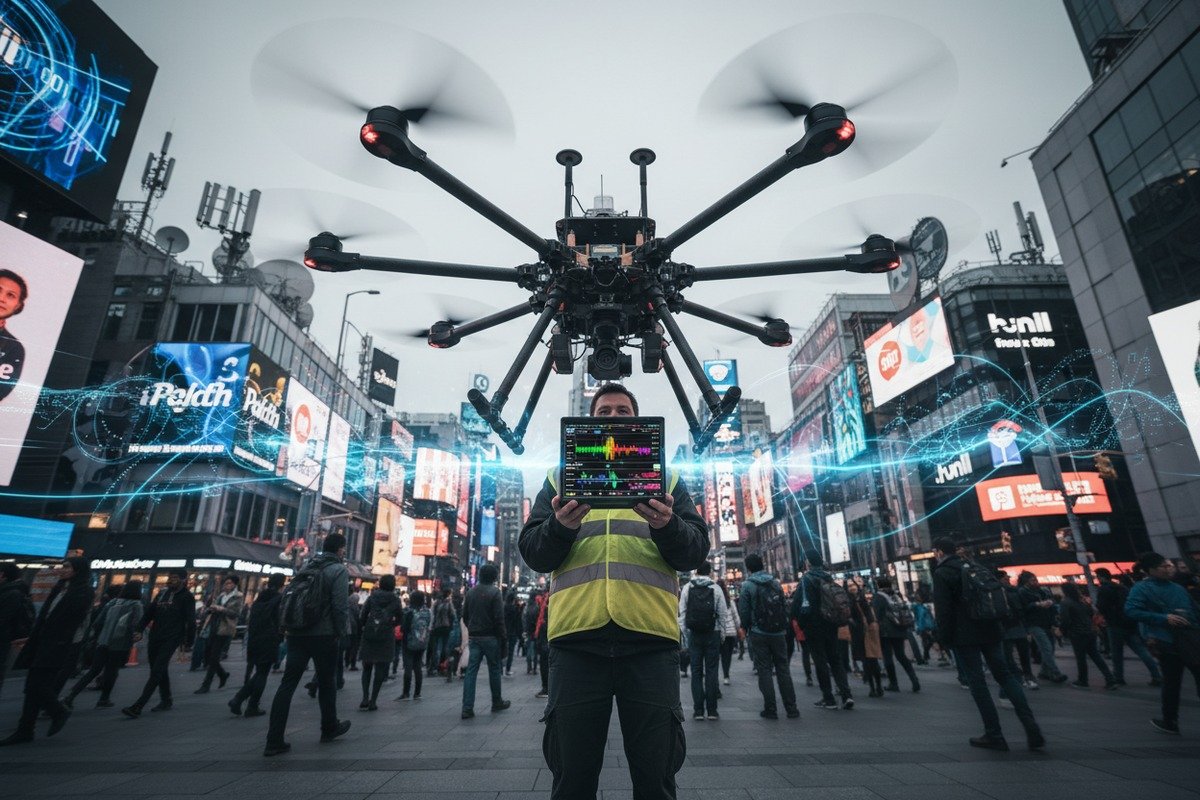
Las ciudades crean un entorno hostil para la transmisión de video de drones. Las redes Wi-Fi cubren cada cuadra. Los dispositivos inteligentes emiten señales constantes. Los materiales de construcción reflejan y absorben las ondas de radio de manera impredecible. Esto interferencia multitrack 2 causa interrupciones de video en momentos críticos.
El entorno regulatorio de EE. UU. ofrece una ventaja. La FCC permite potencia de transmisión 3 hasta 33 dBm. Esto excede los límites europeos de 14-20 dBm y los límites chinos de 20-30 dBm. Sin embargo, el hardware a menudo no alcanza estos máximos debido a restricciones térmicas y de batería.
Proceso de verificación paso a paso
Comience con el mapeo del espectro. Antes de cualquier compra, documente el entorno de RF en sus zonas de despliegue. Utilice un analizador de espectro durante las horas pico. Anote los niveles de congestión en las bandas de 2.4 GHz y 5.8 GHz.
A continuación, solicite datos de prueba del fabricante. Nuestro proceso de control de calidad incluye simulación de interferencias. Exponemos cada unidad a inundaciones de Wi-Fi mientras medimos la estabilidad de la tasa de bits de video. Solicite estos registros a los proveedores potenciales.
Protocolo de prueba de campo práctico
| Fase de Prueba | Método | Criterios de aprobación |
|---|---|---|
| Línea de base | Apague los dispositivos cercanos | 1080p estable al alcance máximo |
| Inundación de Wi-Fi | Más de 20 puntos de acceso activos | Sin interrupción >2 segundos |
| Múltiples drones | 3 drones dentro de los 100 m | Transmisiones estables independientes |
| Cañón urbano | Entre edificios altos | Latencia <200 ms |
| Proximidad a la torre | Dentro de los 500 m de la torre celular | Relación señal/ruido >15 dB |
Realice primero pruebas de corta distancia. Posicione el dron a 200 metros de la estación de comando en el área más concurrida de su centro. Transmita video durante un mínimo de 30 minutos. Documente cualquier congelamiento, artefacto o interrupción.
Luego, extienda el rango incrementalmente. Muévase a 500 metros, luego a 1 kilómetro. Anote el punto donde la calidad del video se degrada. Compare esto con las afirmaciones del fabricante.
Aislamiento de fuentes de interferencia
Existe un problema oculto con los dispositivos que lleva el piloto. Los teléfonos y tabletas emiten señales que pueden interferir con los enlaces de control del dron. Durante las pruebas, haga que los operadores apaguen sus dispositivos personales. Luego repita las pruebas con los dispositivos activos. La diferencia revela la resiliencia del sistema.
Considere también los factores ambientales. Los tejados metálicos amplifican la reflexión de la señal. Las fachadas de vidrio crean una propagación impredecible. Las estructuras de estacionamiento de concreto bloquean la transmisión por completo. Pruebe en cada escenario relevante para la arquitectura de su ciudad.
¿Qué documentación técnica específica debo solicitar a mi proveedor para confirmar la estabilidad del enlace de video en entornos urbanos?
Cuando nuestro equipo de exportación prepara envíos para clientes de EE. UU., compilamos paquetes de documentación completos. Estos documentos tardan semanas en ensamblarse correctamente. Muchos competidores omiten este paso por completo, dejando a los compradores sin pruebas de las afirmaciones de rendimiento.
Solicitar la certificación de la FCC que muestre la potencia de salida real probada, informes de análisis de espectro de entornos de prueba urbanos, especificaciones del protocolo de salto de frecuencia, documentación del códec de video y bitrate, y resultados de pruebas de interferencia de terceros con detalles de la metodología.

Documentos de certificación esenciales
Certificación de la FCC 4 demuestra el cumplimiento legal pero revela más. Los informes de prueba muestran la potencia de transmisión medida real. Compare esta cifra con la 33 dBm 5 máximo. Muchos drones prueban por debajo de 25 dBm a pesar del margen regulatorio.
Solicite el informe de prueba completo, no solo el certificado. Contiene rangos de frecuencia, datos de emisiones espurias y mediciones de potencia en todos los canales. Estos datos predicen el rendimiento en el mundo real.
Especificaciones del sistema de transmisión
| Tipo de documento | Información Clave | Señales de alerta |
|---|---|---|
| Informe de prueba FCC | Potencia de salida real | Potencia <25 dBm |
| Certificado de banda de frecuencia | Bandas compatibles | Solo banda única |
| Especificación del protocolo | Algoritmo de salto | Frecuencia fija |
| Hoja de códec de video | Resolución/tasa de bits | Sin tasa adaptativa |
| Certificado de cifrado | Estándar de seguridad | Sin cifrado |
La capacidad de doble banda importa enormemente. Los sistemas que operan en 2.4 GHz y 5.8 GHz pueden cambiar cuando una banda se congestiona. Los sistemas de banda única no tienen ruta de escape de la interferencia.
Registros de control de calidad
Nuestra línea de producción genera registros de prueba para cada unidad. Estos muestran el rendimiento de la transmisión de video antes del envío. Pregunte a los proveedores si realizan pruebas de 100% o pruebas de muestreo. Las pruebas de muestreo dejan margen para unidades defectuosas.
La documentación de pruebas de estrés ambiental demuestra durabilidad. Las clasificaciones IP54 o IP55 indican resistencia al polvo y a las salpicaduras de agua. Las certificaciones de rango de temperatura deben cubrir de -10 °F a 104 °F para aplicaciones de departamentos de bomberos de EE. UU.
Validación por terceros
Los informes de pruebas independientes tienen más peso que las afirmaciones del fabricante. Pregunte si alguna agencia gubernamental o universidad ha probado el modelo de dron. El Departamento del Interior de EE. UU. mantiene una lista de aprobación de drones con datos de pruebas de interferencia.
Las normas NFPA ahora abordan los programas de drones para departamentos de bomberos. La documentación que demuestra el cumplimiento de estas normas emergentes demuestra el compromiso del fabricante con el mercado de lucha contra incendios.
Documentación de seguridad de datos
Las especificaciones de cifrado de video protegen las imágenes confidenciales. Solicite documentación sobre protocolos de cifrado. Cifrado AES-256 6 representa el estándar actual. Un cifrado más débil expone a los departamentos a riesgos de ciberseguridad.
Cumplimiento de identificación remota 7 la documentación se convirtió en obligatoria en 2023. Este sistema transmite la identidad y la ubicación del dron. Asegúrese de que los proveedores proporcionen documentación de integración para los requisitos de FAA Remote ID.
¿Puedo colaborar con el fabricante para personalizar las capacidades de salto de frecuencia del dron según mis regulaciones locales?
Nuestro equipo de ingeniería ha completado diecisiete configuraciones de frecuencia personalizadas para clientes de EE. UU. en los últimos dos años. Cada proyecto nos enseñó algo nuevo sobre los requisitos regionales. El proceso requiere una estrecha colaboración, pero entrega drones perfectamente adaptados a las condiciones locales.
Sí, los fabricantes de renombre pueden personalizar los parámetros de salto de frecuencia dentro de las bandas aprobadas por la FCC, ajustar los tiempos de permanencia en el canal para patrones de interferencia específicos, configurar frecuencias de prioridad para su región y desarrollar firmware personalizado que cumpla con los protocolos de comunicación de emergencia locales.

Comprensión de la tecnología de salto de frecuencia
Salto de frecuencia dinámico 8 distribuye la transmisión a través de múltiples canales rápidamente. Cuando la interferencia golpea un canal, el sistema salta a otro. Esto sucede cientos de veces por segundo en sistemas avanzados.
Direct Sequence Spread Spectrum ofrece un enfoque alternativo. Distribuye señales a través de un ancho de banda amplio simultáneamente. Ambas tecnologías resisten la interferencia, pero el salto se adapta mejor a entornos urbanos donde la congestión varía según la ubicación.
Opciones de personalización disponibles
| Parámetro | Configuración estándar | Opciones personalizadas |
|---|---|---|
| Tasa de salto | 200 saltos/seg | 100-500 saltos/seg |
| Conjunto de canales | Banda completa | Subconjunto regional |
| Tiempo de permanencia | 5 ms | 2-20 ms |
| Canales prioritarios | Ninguno | Hasta 10 definidos |
| Lista negra | Ninguno | Frecuencias excluidas |
Las tasas de salto más altas mejoran la resistencia a las interferencias pero consumen más potencia de procesamiento. Para la lucha contra incendios urbana, generalmente recomendamos de 300 a 400 saltos por segundo. Esto equilibra la resiliencia con la duración de la batería.
Consideraciones de Frecuencia Regional
Las diferentes regiones de EE. UU. enfrentan diferentes perfiles de interferencia. La ciudad de Nueva York tiene una congestión extrema de 2.4 GHz debido a millones de dispositivos Wi-Fi. Las áreas rurales pueden tener interferencia de equipos agrícolas en frecuencias específicas.
Las listas negras personalizadas evitan que el dron utilice frecuencias problemáticas conocidas en su área. Si una estación de televisión local o una torre de radio causa interferencia, podemos excluir esas frecuencias del patrón de salto.
Cumplimiento Normativo en la Personalización
Toda la personalización debe permanecer dentro de los límites de la Parte 15 de la FCC. Nuestros ingenieros verifican que el firmware modificado mantenga el cumplimiento. Proporcionamos documentación de prueba actualizada que muestra que la configuración personalizada cumple con los requisitos normativos.
Algunos departamentos de bomberos operan bajo autorizaciones especiales de la FCC. Las agencias de seguridad pública pueden acceder a espectro adicional. Si su departamento tiene dicha autorización, podemos configurar los sistemas para utilizar estas frecuencias protegidas.
Cronograma de implementación
Los proyectos de frecuencia personalizados suelen requerir de ocho a doce semanas. La primera fase implica el análisis de RF de su área de despliegue. Nuestro equipo puede solicitar datos de encuesta de espectro o enviar ingenieros para realizar mediciones.
A continuación, se programan y prueban. Validamos el rendimiento en interferencias simuladas que coinciden con su entorno. Las unidades finales se envían con documentación que demuestra que la configuración personalizada cumple con las especificaciones.
¿Cómo evalúo la latencia de video en tiempo real de un dron cuando opera cerca de grandes rascacielos y torres de comunicación?
El mes pasado, nuestro piloto de pruebas voló una unidad entre edificios de cuarenta pisos en el distrito financiero de Shanghái. La transmisión de video se mantuvo estable con una latencia de 120 ms. Este tipo de pruebas se realizan antes de que cualquier dron salga de nuestras instalaciones, pero sus condiciones locales pueden diferir significativamente.
Evalúe la latencia midiendo el retraso de extremo a extremo con marcas de tiempo calibradas, probando a múltiples distancias de rascacielos y torres, monitoreando los picos de latencia durante los cambios de ruta de vuelo y comparando el rendimiento en diferentes momentos del día cuando la congestión de RF varía.

Medición de la Latencia Real
La latencia tiene múltiples componentes. El retraso de captura ocurre en la cámara. La codificación lleva tiempo. La transmisión agrega retraso. La decodificación en la estación terrestre consume milisegundos. La representación de la pantalla agrega latencia final.
La latencia total del sistema para aplicaciones de extinción de incendios debe mantenerse por debajo de los 200 milisegundos. Más rápido siempre es mejor. La interpretación de imágenes térmicas sufre cuando la latencia excede este umbral. Los operadores toman decisiones con información desactualizada.
Protocolo de Prueba para Entornos Urbanos
| Distancia de la Estructura | Latencia Aceptable | Nivel de Advertencia |
|---|---|---|
| 500 m de rascacielos | <150 ms | >200ms |
| 200 m de rascacielos | <180 ms | >250 ms |
| 100 m de torre celular | <150 ms | >200ms |
| Vuelo en cañón urbano | <200 ms | >300 ms |
| Operaciones en azoteas | <120ms | >180ms |
Utilice relojes sincronizados para una medición precisa. Muestre una marca de tiempo en un monitor visible para la cámara del dron. Registre la pantalla de la estación terrestre. La diferencia entre los tiempos mostrados equivale a la latencia total.
Patrones de interferencia de rascacielos
Las fachadas de vidrio y acero crean complejos patrones de reflexión. Las señales rebotan entre los edificios de forma impredecible. Este efecto multitrayecto provoca picos de latencia a medida que el sistema lucha por reconstruir señales limpias.
Pruebe volando en paralelo a las caras de los edificios a varias distancias. Observe los cambios de latencia. Muchos sistemas muestran una latencia estable hasta una distancia umbral, luego se degradan rápidamente. Conocer este umbral guía la planificación operativa.
Consideraciones sobre torres de comunicación
Las torres celulares emiten potentes señales en múltiples frecuencias. La proximidad provoca la sobrecarga del receptor en algunos sistemas de drones. El control automático de ganancia puede compensar, pero los cambios agresivos de ganancia introducen latencia.
Pruebe a distancias decrecientes de las torres. Supervise tanto el aumento de la latencia como los artefactos de video. Algunos sistemas manejan bien la proximidad de las torres. Otros requieren una separación mínima de 500 metros para un funcionamiento fiable.
Variaciones según la hora del día
Los entornos de RF urbanos cambian a lo largo del día. La hora punta de la mañana trae el tráfico celular máximo. Las horas de la tarde ven el uso máximo de Wi-Fi residencial. Pruebe durante los tiempos de respuesta más probables de su departamento.
Las respuestas de emergencia ocurren de forma impredecible. Pruebe durante varios períodos de tiempo. Documente la latencia peor en cada caso. Las decisiones de adquisición deben tener en cuenta los escenarios de congestión máxima.
IA de borde como mitigación de latencia
Los drones avanzados procesan video a bordo utilizando IA de borde. Esto permite funciones autónomas incluso durante los retrasos de transmisión. La detección de objetos, el mapeo de límites de incendios y la identificación de peligros continúan independientemente de la calidad del enlace.
Pregunte a los proveedores sobre las capacidades de procesamiento a bordo. Los drones con IA local proporcionan continuidad operativa cuando se producen picos de latencia. Esta redundancia resulta valiosa en escenarios críticos de extinción de incendios.
Opciones de redes en malla
Las operaciones con múltiples drones permiten redes en malla. Si un dron pierde la conexión directa con el mando, otros pueden retransmitir su alimentación de video. Esta arquitectura mejora la resiliencia en entornos urbanos complejos.
Evalúe las capacidades de malla durante la adquisición. Pruebe con tres o más drones operando simultáneamente. Verifique que las alimentaciones de video mantengan una latencia aceptable cuando se enrutan a través de drones de retransmisión.
Conclusión
La evaluación de la resistencia a la interferencia de los drones de extinción de incendios requiere pruebas sistemáticas, revisión exhaustiva de la documentación y ensayos de campo realistas. Sus decisiones de adquisición protegen tanto a los bomberos como a las comunidades. Tómese el tiempo para verificar cada afirmación antes de comprometer los presupuestos del departamento con equipos que deben funcionar cuando las vidas dependen de ellos.
Notas al pie
1. Explica los componentes del enlace de datos en Sistemas de Aeronaves No Tripuladas (UAS). ↩︎
2. Se reemplazó un enlace roto con un artículo de Wikipedia que proporciona una explicación completa de la propagación e interferencia multitrayecto, que es una fuente autorizada y accesible. ↩︎
3. Proporciona las regulaciones oficiales de la FCC para dispositivos de radio sin licencia, incluidos los límites de potencia. ↩︎
4. Describe el proceso y los requisitos para la autorización de equipos de la FCC. ↩︎
5. Proporciona una explicación técnica de dBm como unidad para medir la potencia de RF. ↩︎
6. Proporciona información oficial sobre el Estándar de Cifrado Avanzado (AES). ↩︎
7. Detalla los requisitos de la FAA para la identificación remota de drones. ↩︎
8. Explica los principios de la tecnología de espectro ensanchado por salto de frecuencia. ↩︎

 English
  Español de México
  Deutsch
  Français
  Русский
  العربية
