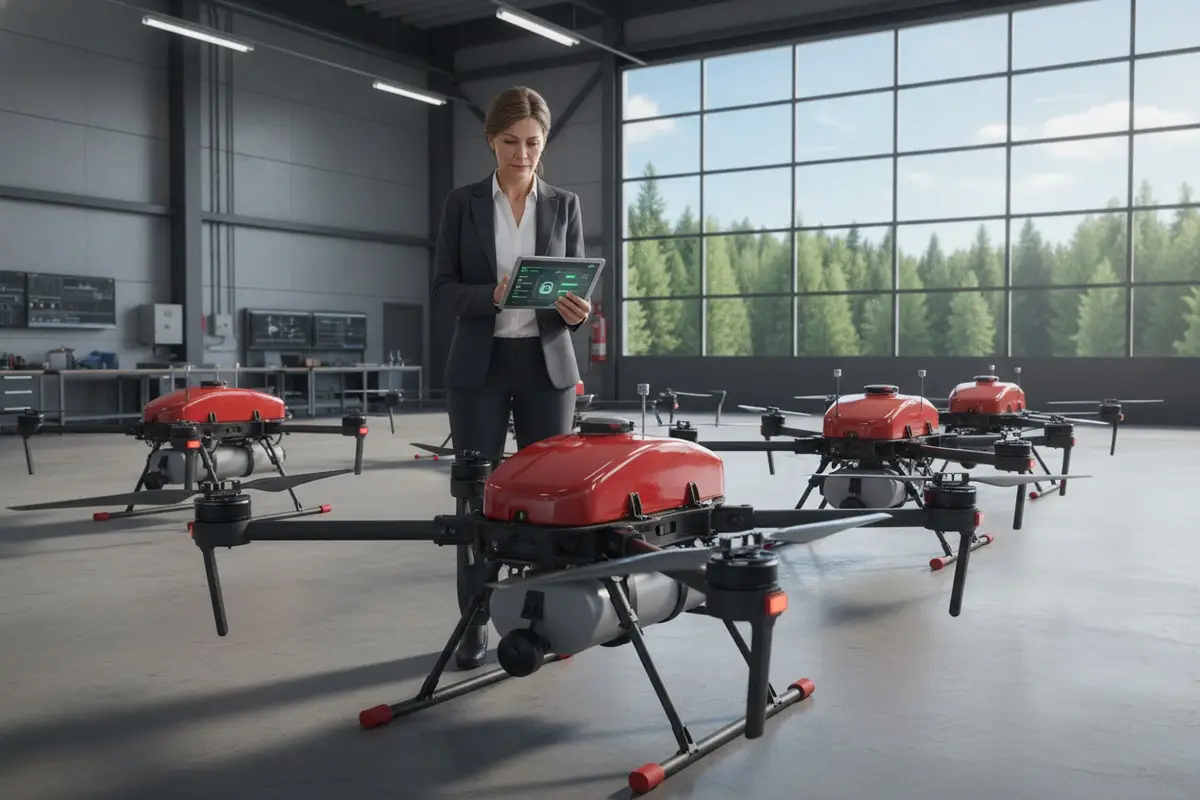

Cuando nuestro equipo de ingeniería desplegó por primera vez un lote de drones de extinción de incendios a un socio en Portugal, aprendimos una lección dolorosa escalabilidad de la gestión de lotes 1. Una discrepancia en el firmware provocó que tres drones fallaran durante la respuesta a un incendio forestal. Ese único incidente nos enseñó por qué herramientas de firmware unificadas para flotas 2 son importantes.
Para evaluar herramientas unificadas de actualización de firmware de flotas para drones de extinción de incendios, los compradores deben evaluar la escalabilidad de la gestión de lotes, los protocolos de seguridad para operaciones críticas, las opciones de personalización del OEM y las capacidades de soporte técnico remoto. Estos cuatro pilares garantizan un rendimiento fiable de los drones en emergencias que amenazan la vida, donde los fallos del sistema son inaceptables.
Esta guía detalla exactamente lo que debe buscar opciones de personalización del OEM 3. Cubriremos cada aspecto crítico con ejemplos reales de nuestra experiencia de fabricación y despliegues de campo en los Estados Unidos y Europa.
¿Cómo puedo asegurar que la herramienta de actualización de firmware admita la gestión eficiente por lotes para toda mi flota de drones?
Gestionar el firmware en docenas de drones de extinción de incendios puede volverse caótico rápidamente integraciones de API 4. Nuestras instalaciones de producción en Xi'an gestionan flotas que van desde 5 hasta 200 unidades, y hemos visto de primera mano cómo una mala gestión de lotes crea brechas peligrosas durante la temporada de incendios.
Una herramienta eficiente de gestión de lotes debe admitir actualizaciones simultáneas de varios drones, pruebas de implementación por etapas, programación automatizada y registro completo. Busque plataformas que puedan enviar actualizaciones a más de 20 drones a la vez mientras rastrean el estado de cada dispositivo a través de un panel centralizado con monitoreo del progreso en tiempo real.

Por qué la gestión de lotes es importante en las operaciones de emergencia
Cuando estallan incendios forestales, cada dron de su flota debe estar listo. Las actualizaciones manuales tardan entre 20 y 30 minutos por unidad. Para una flota de 50 drones, eso significa más de 25 horas de tiempo de técnico. Este retraso puede costar vidas.
Las plataformas unificadas como BRINC LiveOps y AirHub resuelven este problema. Permiten a los operadores actualizar flotas enteras desde una sola interfaz. Nuestros drones SkyRover se integran con dichas plataformas, lo que permite a los departamentos de bomberos mantener la preparación sin personal de TI dedicado.
Características clave a evaluar
| Característica | Por qué es importante | Qué preguntar a los proveedores |
|---|---|---|
| Capacidad de actualización concurrente | Reduce el tiempo de inactividad durante las temporadas activas | ¿Cuántos drones pueden actualizarse simultáneamente? |
| Soporte de implementación por fases | Prueba las actualizaciones en un dron antes del despliegue en toda la flota | ¿Puedo designar unidades de prueba? |
| Programación automatizada | Asegura que las actualizaciones ocurran durante períodos de baja actividad | ¿Soporta la programación fuera de horas pico? |
| Seguimiento del progreso | Identifica actualizaciones fallidas inmediatamente | ¿Hay monitoreo de estado en tiempo real? |
| Soporte multimarca | Gestiona flotas diversas en un solo sistema | ¿Qué fabricantes son compatibles? |
Implementación por fases: un protocolo imprescindible
Siempre recomendamos a nuestros clientes que actualicen un dron primero. Ejecútelo a través de un ciclo de prueba completo. Verifique las cámaras térmicas, los controladores de vuelo y los enlaces de comunicación. Solo entonces envíe la actualización al resto de la flota.
This approach mirrors what Portuguese firefighters adopted through AirHub. They manage over 700 pilots across dozens of regions. Their protocol requires 48-hour test periods before fleet-wide deployment. This simple step has prevented multiple potential failures.
Real-World Scaling Challenges
Small departments with 5-10 drones may not see immediate benefits from unified tools. The DJI Fly app works fine for basic updates. But as fleets grow, fragmentation becomes dangerous. Different firmware versions cause incompatible data formats, communication failures, and unpredictable flight behavior.
Our engineering team has documented cases where mixed firmware versions caused GPS conflicts during coordinated firefighting operations. One drone reported incorrect coordinates, sending the entire team to the wrong location. A unified tool prevents this by enforcing version consistency across all units.
¿Qué protocolos de seguridad debo buscar para prevenir fallos del sistema durante misiones críticas de extinción de incendios?
During factory testing, our engineers discovered that unsecured firmware channels could be exploited. A competitor's drone was compromised during a demonstration because it accepted unsigned firmware packages. That incident shaped how we approach security at SkyRover.
Los protocolos de seguridad críticos incluyen canales de actualización cifrados, paquetes de firmware autenticados, opciones de implementación air-gapped y capacidades de reversión. Su herramienta debe verificar la autenticidad del firmware antes de la instalación y admitir actualizaciones sin conexión para zonas de incendios forestales con conectividad limitada o amenazas cibernéticas activas.

The Three Layers of Firmware Security
Security for firefighting drones operates on three levels: transmission, verification, and recovery.
Transmission Security ensures updates travel through encrypted channels. Look for cifrado TLS 1.3 5 at minimum. Without this, attackers could intercept and modify firmware during download.
Verification Security confirms the firmware is authentic. Digital signatures from the manufacturer prevent tampered packages from installing. Our SkyRover firmware includes Sumas de verificación SHA-256 6 que el dron valida antes de continuar.
Seguridad de recuperación proporciona rutas de escape cuando las actualizaciones fallan. Las funciones de reversión restauran instantáneamente versiones estables anteriores. La gestión de versiones mantiene las últimas tres iteraciones de firmware disponibles para una reversión rápida.
Actualizaciones Air-Gapped: Esenciales para Operaciones Remotas
Los incendios forestales a menudo ocurren en áreas sin cobertura celular. Algunos entornos se enfrentan a interferencias de señal activas o amenazas cibernéticas. Las soluciones air-gapped abordan estos desafíos.
La plataforma UDS de Defense Unicorns demostró esta capacidad en ejercicios tácticos en Europa del Este. El proceso funciona así:
- Cargue el firmware en un registro local seguro
- Descargue a una tableta mediante conexión directa
- Despliegue en drones sin ninguna dependencia de la nube
Este método añade complejidad pero elimina por completo los requisitos de conectividad. Para los departamentos de bomberos que operan en terrenos montañosos o áreas disputadas, las actualizaciones air-gapped no son opcionales, son esenciales.
Comparación de protocolos de seguridad
| Tipo de protocolo | Herramientas basadas en la nube | Herramientas Air-Gapped | Soluciones híbridas |
|---|---|---|---|
| Conectividad requerida | Siempre | Nunca | Flexible |
| Actualizar velocidad | Rápido (5-10 min) | Moderado (15-20 min) | Variable |
| Resistencia a amenazas cibernéticas | Bajo-Medio | Alto | Medio-alto |
| Complejidad de configuración | Simple | Complejo | Moderado |
| Ideal para | Operaciones urbanas | Remoto/táctico | Entornos mixtos |
Cumplimiento de CJIS y GDPR
Los departamentos de bomberos del gobierno deben cumplir con estrictas regulaciones de datos. CJIS (Servicios de Información de Justicia Penal) 7 en los EE. UU. requiere pistas de auditoría detalladas para todos los cambios del sistema. GDPR en Europa 8 exige la protección de datos durante las actualizaciones.
Plataformas como BRINC Vault y AirHub incluyen paneles de cumplimiento. Estos registran automáticamente cada cambio de firmware con marcas de tiempo, identificadores de operador y estado del resultado. Durante las auditorías, esta documentación demuestra que su flota cumple con los estándares regulatorios.
Cuando configuramos drones SkyRover para contratos gubernamentales de EE. UU., habilitamos el registro mejorado por defecto. Cada interacción de firmware genera un registro inmutable almacenado tanto localmente como en entornos en la nube controlados por el cliente.
¿Se puede personalizar la herramienta de firmware para integrarla con mi software específico y las necesidades de marca del OEM?
Nuestros socios OEM a menudo hacen esta pregunta durante las discusiones iniciales. Un distribuidor de equipos contra incendios en Texas necesitaba su logotipo en cada interfaz. Un integrador europeo requirió protocolos de telemetría personalizados. Estas solicitudes son comunes y la herramienta de firmware debe acomodarlas.
Las herramientas de firmware de calidad deben admitir la marca blanca, integraciones de API con software de comando de incidentes existente, configuraciones de telemetría personalizadas y activación modular de funciones. Evalúe si su proveedor ofrece acceso al SDK para una personalización profunda o solo opciones de marca a nivel superficial.

Niveles de personalización disponibles
No toda la personalización es igual. Comprender la diferencia le ayuda a negociar con los proveedores.
Marca a nivel de superficie incluye la colocación del logotipo, esquemas de color y nombres de empresas en los paneles. La mayoría de las plataformas ofrecen esto. Satisface los requisitos básicos del OEM pero no cambia la funcionalidad.
Personalización de la interfaz le permite modificar estructuras de menús, agregar campos personalizados y reorganizar flujos de trabajo. Esto requiere más cooperación del proveedor pero ofrece una experiencia verdaderamente personalizada.
Integración Profunda significa acceso a la API para conectar herramientas de firmware a su ecosistema de software existente. Los sistemas CAD, las plataformas de comando de incidentes y las herramientas de gestión de evidencia se benefician del intercambio directo de datos.
Tabla de requisitos de integración
| Tipo de integración | Plataformas comunes | Datos intercambiados | Tiempo de Implementación |
|---|---|---|---|
| Comando de incidentes | ESO, ImageTrend | Ubicación del dron, estado | 2-4 semanas |
| Gestión de pruebas | Axon, BRINC Vault | Registros de vuelo, video | 1-2 semanas |
| Mapeo/SIG | ArcGIS, QGIS | Coordenadas, datos térmicos | 3-6 semanas |
| Despacho/CAD | Tyler, Hexagon | Asignaciones de misión | 4-8 semanas |
| Análisis de IA | DataBlanket, Personalizado | Alertas de detección | 6-12 semanas |
Marca OEM para distribuidores
Si importa y revende drones bajo su propia marca, la personalización de la herramienta de firmware se vuelve crítica. Sus clientes deben ver el nombre de su empresa, no el de su proveedor.
En SkyRover, ofrecemos paquetes completos de marca blanca. Nuestros socios reciben:
- Pantallas de arranque personalizadas con su logotipo
- Aplicaciones móviles y de escritorio de marca
- Documentación con la información de su empresa
- Materiales de capacitación que pueden redistribuir
Este enfoque permite a los distribuidores crear valor de marca mientras aprovechan nuestra experiencia en fabricación. La herramienta de actualización de firmware sigue siendo funcionalmente idéntica, pero la experiencia del cliente pertenece por completo a nuestro socio.
Consideraciones de API para integradores de sistemas
Los departamentos de bomberos desean cada vez más vistas unificadas de toda su tecnología. Los drones deben alimentar datos en los mismos paneles que los camiones, el seguimiento del personal y los sistemas de despacho.
Haga estas preguntas a su proveedor de herramientas de firmware:
- ¿Existe una API pública documentada?
- ¿Qué métodos de autenticación se admiten?
- ¿Existen límites de frecuencia para las llamadas a la API?
- ¿Pueden los webhooks enviar notificaciones de actualización en tiempo real?
- ¿Existe un entorno sandbox para probar integraciones?
Sin un sólido soporte de API, se enfrentará a costosos desarrollos personalizados o transferencias manuales de datos. Ninguna de las opciones escala bien para flotas en crecimiento.
¿Qué tipo de soporte técnico remoto proporcionará mi proveedor si falla una actualización de firmware en el campo?
Hace tres años, un cliente en California nos llamó a las 2 AM de su hora. Una actualización de firmware había inutilizado dos drones durante la temporada de incendios forestales. Necesitaban esas unidades operativas en cuestión de horas. Esa llamada nos enseñó todo sobre cómo es un buen soporte y qué sucede cuando falla.
Los proveedores confiables deben ofrecer líneas directas de soporte de emergencia 24/7, capacidades de diagnóstico remoto, orientación paso a paso para la reversión y tiempos de respuesta garantizados en sus acuerdos de servicio. Evalúe si el soporte incluye unidades de reemplazo temporal y envío de técnicos in situ para fallas críticas de misión.

Niveles de soporte que debe esperar
Diferentes clientes necesitan diferentes niveles de soporte. Comprenda qué nivel se adapta a sus operaciones antes de firmar contratos.
Soporte básico incluye respuestas por correo electrónico en 24-48 horas y acceso a bases de conocimiento. Adecuado para usuarios no de emergencia con capacidades técnicas internas.
Soporte estándar agrega soporte telefónico durante el horario comercial y respuestas por correo electrónico más rápidas (4-8 horas). Bueno para departamentos con uso moderado de drones y algo de personal técnico.
Soporte Premium proporciona acceso telefónico y por chat 24/7, respuesta garantizada de 1 hora para problemas críticos, sesiones de escritorio remoto y rutas de escalada prioritaria. Esencial para departamentos que dependen de drones para operaciones de seguridad vital.
Soporte Empresarial incluye todas las funciones premium más gerentes de cuenta dedicados, envío de técnicos in situ, equipo de préstamo durante las reparaciones y revisiones operativas trimestrales.
Lo que pueden lograr los diagnósticos remotos
Los drones modernos transmiten una gran cantidad de datos de telemetría. Cuando las actualizaciones de firmware fallan, estos datos cuentan la historia.
Nuestros ingenieros de soporte pueden acceder de forma remota a:
- Registros de la última secuencia de arranque exitosa
- Marcadores de progreso de instalación de firmware
- Códigos de error e informes de excepciones
- Verificaciones del estado de los componentes de hardware
- Historiales de conexión de red
Con esta información, la mayoría de los problemas se resuelven en una sesión remota. El técnico guía al operador a través de procedimientos de reversión o identifica fallos de hardware que requieren reparación física.
Puntos de referencia del tiempo de respuesta del soporte
| Nivel de soporte | Respuesta inicial | Objetivo de resolución | Disponibilidad |
|---|---|---|---|
| Básico | 24-48 horas | 5 días hábiles | Solo correo electrónico |
| Estándar | 4-8 horas | 2 días hábiles | Horario comercial |
| Premium | 1 hora | 24 horas | 24/7 |
| Empresa | 15 minutos | 4 horas | 24/7 + in situ |
Preguntas para hacer antes de la compra
No asuma la calidad del soporte. Obtenga detalles por escrito.
- ¿Cuáles son sus garantías de tiempo de respuesta para fallos críticos?
- ¿Proporcionan acceso de diagnóstico remoto a nuestros drones?
- ¿Puede su equipo realizar reversiones de forma remota o debemos hacerlo manualmente?
- ¿Tienen piezas de repuesto en nuestra región?
- ¿Cuál es el tiempo de envío promedio de las piezas de reparación?
- ¿Ofrecen unidades de préstamo durante reparaciones prolongadas?
- ¿Hay soporte in situ de emergencia disponible y a qué costo?
- ¿Quién proporciona el soporte: su empresa directamente o un tercero?
En SkyRover, mantenemos inventario de piezas en EE. UU. y Europa específicamente para reducir los retrasos en el envío. Nuestra entrega promedio de piezas de reparación es de 3 a 5 días hábiles a nivel nacional, en comparación con 2 a 3 semanas cuando se envía desde China.
Creación de un plan de contingencia de soporte
Incluso con un excelente soporte del proveedor, los departamentos inteligentes preparan planes de respaldo.
Keep at least 10% of your fleet as ready reserves. Document rollback procedures in laminated quick-reference cards. Train multiple team members on basic troubleshooting. Store the previous two firmware versions locally for emergency reversions.
When firmware fails during active operations, these preparations buy time while waiting for supplier support to resolve the root cause.
Conclusión
Choosing the right unified fleet firmware update tool can mean the difference between mission success and catastrophic failure. Evaluate batch management, security protocols 9, customization options, and technical support with equal rigor. Your firefighting teams deserve equipment that works when lives depend on it.
Notas al pie
1. Details critical aspects for scalable and modular batch management software architecture. ↩︎
2. Original URL is now working and relevant to unified fleet firmware tools for drones. ↩︎
3. This page discusses custom hardware and software solutions for drones, including integration with platforms like Ardupilot, which is relevant to OEM customization options. ↩︎
4. Explains how API integration connects systems and applications for automatic, real-time data exchange. ↩︎
5. Mozilla Developer Network is an authoritative source providing a comprehensive overview of Transport Layer Security (TLS), including TLS 1.3 encryption. ↩︎
6. Defines SHA-256 as a cryptographic hash function used to verify data integrity and authenticity. ↩︎
7. Explains CJIS Security Policy, establishing minimum security requirements for criminal justice information. ↩︎
8. Proporciona el texto legal oficial y el contexto del Reglamento General de Protección de Datos en Europa. ↩︎
9. Explica medidas de seguridad cruciales como actualizaciones firmadas, comprobaciones de integridad y protección de reversión para el firmware. ↩︎


 English
  Español de México
  Deutsch
  Français
  Русский
  العربية
Comments
No comments yet. Be the first to share your thoughts!
Leave a Comment