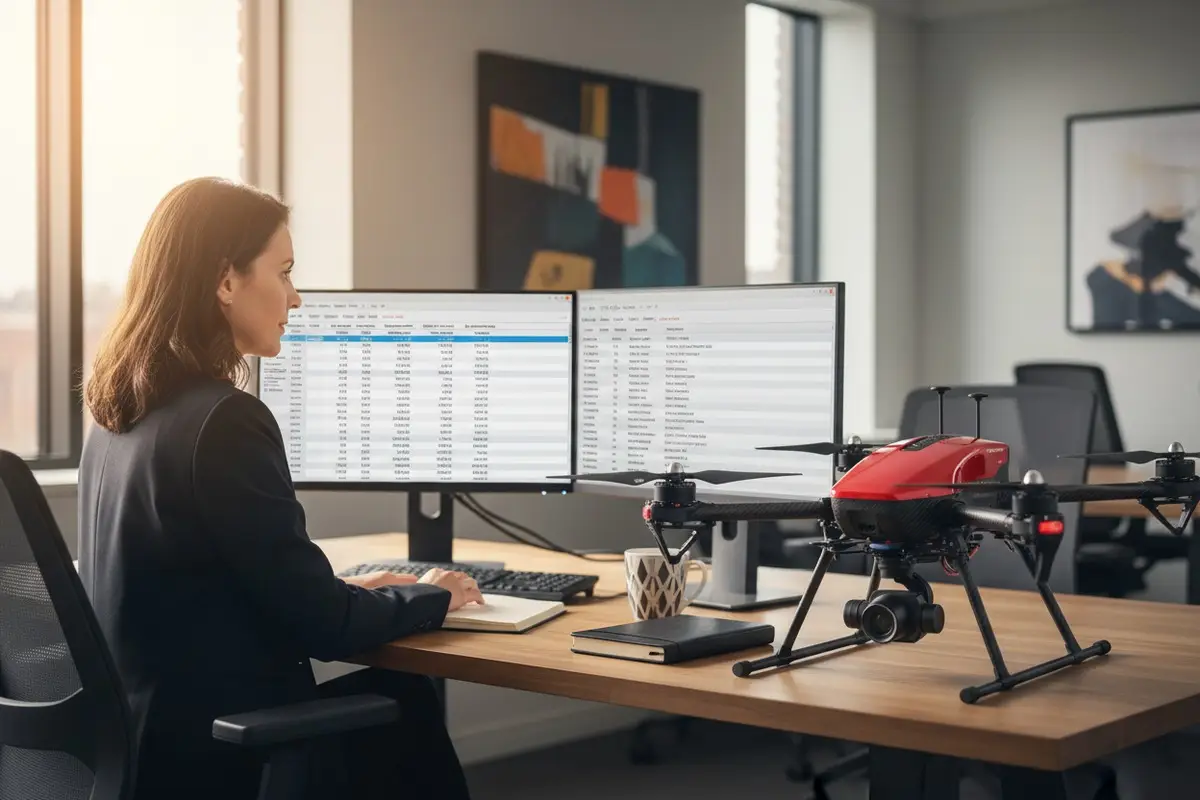

Cuando nuestro equipo de producción envía drones de extinción de incendios al extranjero, la cuestión de los cálculos de aranceles surge constantemente Zonas de comercio exterior 1. Los importadores a menudo se enfrentan a costos inesperados que pueden duplicar o incluso triplicar sus gastos proyectados de llegada. Un solo envío mal clasificado puede generar multas, retrasos y graves problemas de flujo de efectivo.
To assess tariff quotas and anti-dumping duties on China firefighting drone sourcing, identify the correct HTS code (typically 8806.21 for UAVs over 250g), calculate layered duties including base rates plus Section 301 tariffs (currently up to 25%), check active ADD/CVD orders via the ITA database, and factor in MPF and HMF fees for accurate total landed cost projections.
Comprender estas estructuras arancelarias protege su presupuesto y previene sorpresas costosas Devolución de aranceles 2. Permítame guiarlo a través de cada paso crítico basándome en lo que vemos en nuestras operaciones de exportación a diario.
¿Cómo identifico los códigos HTS específicos y las tasas arancelarias para la importación de mi dron de extinción de incendios?
Nuestro equipo de documentación de exportación maneja solicitudes de clasificación HTS semanalmente. Muchos compradores asumen que todos los drones comparten un código, pero esa suposición genera problemas. El código incorrecto significa aranceles incorrectos, y aranceles incorrectos significan auditorías de la CBP.
Los drones de extinción de incendios suelen clasificarse bajo la partida HTS 8806.21 para aeronaves no tripuladas que pesan más de 250 gramos con un peso máximo de despegue inferior a 7 kg, o la partida 8806.22 para unidades más pesadas. Las tasas arancelarias base oscilan entre el 0% y el 6%, pero los aranceles de la Sección 301 pueden añadir un 25% o más, lo que hace que una clasificación precisa sea esencial para la planificación de costos.

Comprender la estructura HTS para drones
El Arancel Armonizado 3 organiza los productos en capítulos, partidas y subpartidas. Los drones caen bajo el Capítulo 88, que cubre aeronaves, naves espaciales y sus partes. Dentro del Capítulo 88, la partida 8806 aborda específicamente las aeronaves no tripuladas.
La clasificación de su dron de extinción de incendios depende de varios factores:
- Peso máximo al despegue
- Si transporta cámaras o equipos especializados
- Función principal frente a funciones secundarias
- País de origen
Desglose de clasificación basado en el peso
| Código HTS | Descripción | Rango de peso | Tasa impositiva básica |
|---|---|---|---|
| 8806.21.00 | Aeronave no tripulada | Más de 250 g, MTOW ≤7 kg | 0% |
| 8806.22.00 | Aeronave no tripulada | MTOW >7kg pero ≤25kg | 0% |
| 8806.23.00 | Aeronave no tripulada | MTOW >25kg pero ≤150kg | 0% |
| 8806.24.00 | Aeronave no tripulada | MTOW >150kg | 0% |
La mayoría de los drones de extinción de incendios de nuestras instalaciones pesan entre 10 kg y 50 kg completamente cargados, lo que los sitúa en las categorías 8806.22 u 8806.23. Sin embargo, la tarifa base es solo el punto de partida.
La capa arancelaria de la Sección 301
Aranceles de la Sección 301 4 golpearon duramente a los productos de origen chino. Para los drones, estos aranceles adicionales han alcanzado el 25% además de las tarifas base. A principios de 2025, los aranceles acumulados sobre algunos drones chinos se acercaban al 170% cuando se combinaban todas las capas.
Así es como se apilan las capas:
| Tipo de impuesto | Tarifa Típica | Aplicación |
|---|---|---|
| Tarifa Base HTS | 0-6% | Todas las importaciones bajo ese código |
| Sección 301 (Lista 3/4A) | 25% | Productos de origen chino |
| ADD (si aplica) | 0-550%+ | Productos bajo investigación |
| MPF | 0.3464% | Todas las entradas (mínimo 31.67%, máximo 614.35%) |
| HMF | 0.125% | Entradas de transporte marítimo |
Pasos prácticos para la clasificación
Cuando preparamos facturas comerciales 5, incluimos descripciones detalladas de los productos. Debe solicitar lo mismo a cualquier proveedor chino. La descripción debe especificar:
- Función del producto (lucha contra incendios, vigilancia, carga)
- Peso máximo de despegue en kilogramos
- Tipo de propulsión (batería, híbrido)
- Especificaciones de la cámara o del sensor
- País de fabricación
La CBP utiliza esta información para verificar su código HTS declarado. Las discrepancias activan auditorías.
¿Hay alguna investigación antidumping activa o aranceles que afecten mi estrategia de abastecimiento de drones en China?
En nuestra experiencia exportando a varios mercados, hemos visto cómo las investigaciones de ADD remodelan cadenas de suministro enteras de la noche a la mañana. Un cliente se enfrentó a depósitos preliminares del 67% que luego aumentaron al 88%. Esa incertidumbre hace que la planificación sea casi imposible.
A partir de 2025, ninguna orden específica de derecho antidumping se dirige directamente a los drones de extinción de incendios. Sin embargo, más de 230 órdenes activas de ADD/CVD cubren productos chinos en general, y las investigaciones en curso de la Sección 232 sobre las importaciones de drones podrían resultar en nuevos aranceles. Los importadores deben monitorear la base de datos de la ITA regularmente ya que las investigaciones pueden surgir rápidamente.

Cómo funcionan los derechos antidumping
Derechos antidumping 6 abordan situaciones en las que los productos extranjeros se venden por debajo del valor justo de mercado, causando daños a las industrias nacionales. El Departamento de Comercio de EE. UU. investiga las acusaciones y calcula los "márgenes de dumping"."
La fórmula parece simple:
Margen de Dumping = Valor Normal – Precio de Exportación
Pero calcular el "valor normal" para los productos chinos se complica. EE. UU. trata a China como una "economía no de mercado 7.". Esto significa que el Departamento de Comercio utiliza valores sustitutos de terceros países en lugar de los costos de producción reales de China. Esa metodología a menudo produce márgenes altos.
Panorama actual de ADD/CVD para productos relacionados
| Categoría de producto | Rango de tasa ADD | Estado |
|---|---|---|
| Productos de acero | Hasta 500% | Órdenes activas |
| Extrusiones de aluminio | 33-374% | Órdenes activas |
| Baterías de litio | Bajo investigación | Pendiente |
| Componentes electrónicos | Varios | Múltiples pedidos |
| Vehículos aéreos no tripulados/Drones | Ninguno específico | Monitoreo |
Ningún pedido ADD directo cubre drones de extinción de incendios hoy. Sin embargo, componentes como baterías de litio, marcos de aluminio y piezas electrónicas pueden enfrentar sus propios aranceles.
Señales de advertencia a tener en cuenta
Varios factores sugieren que podrían surgir investigaciones ADD específicas para drones:
- Las restricciones de la NDAA ya prohíben el uso federal de ciertos drones chinos
- Las investigaciones de la Sección 232 examinan las implicaciones de seguridad nacional
- Los fabricantes nacionales de drones han presionado para obtener protección
- Las investigaciones tecnológicas anteriores se han expandido rápidamente
Cuando nuestro equipo de ingeniería desarrolla nuevos modelos, seguimos de cerca estas tendencias regulatorias. Su estrategia de abastecimiento debe incluir planes de contingencia.
El cronograma de investigación
Si se lanza una investigación ADD contra drones, espere este cronograma:
- Día 0: Petición presentada por la industria nacional
- Día 20: El Comercio decide si inicia
- Día 160: Determinación preliminar (los aranceles pueden aplicarse retroactivamente)
- Día 235: Determinación preliminar de daño de la ITC
- Día 300: Determinación final del Comercio
- Día 345: Determinación final de la ITC
- Día 352: Orden emitida
Los aranceles preliminares requieren depósitos en efectivo de inmediato. Estos inmovilizan el capital de trabajo durante años hasta la liquidación final.
Protegiendo su estrategia de abastecimiento
Los importadores inteligentes diversifican las cadenas de suministro antes de que surjan problemas. Algunas opciones incluyen:
- Calificación de proveedores alternativos en Vietnam, Taiwán o México
- Acumulación de inventario antes de posibles investigaciones
- Negociación de términos contractuales que aborden los cambios en los aranceles
- Establecimiento de acuerdos de almacén fiscalizado
Nuestros clientes que planificaron con anticipación resistieron mejor las escaladas arancelarias de 2018-2019 que aquellos que fueron tomados por sorpresa.
¿Cómo puedo proyectar con precisión mi costo total de llegada, incluidos los aranceles de la Sección 301 y las posibles cuotas?
Cuando cotizamos precios a compradores internacionales, siempre enfatizamos que el monto de la factura representa solo una parte del rompecabezas. Costo total de llegada 8 incluye aranceles, tarifas, flete, seguro y cargos de manipulación que pueden exceder el precio del producto en sí.
Para proyectar el costo total de llegada, multiplique el valor ingresado por las tasas de aranceles combinadas (HTS base más Sección 301 más cualquier ADD), luego agregue la Tarifa de Procesamiento de Mercancías (0.3464%), la Tarifa de Mantenimiento del Puerto (0.125% para transporte marítimo), los costos de flete, el seguro y las tarifas de corretaje de aduanas. Para un envío de drones de $100,000 que enfrenta aranceles de la Sección 301 del 25%, espere aproximadamente $30,000-$35,000 en costos adicionales antes de posibles ADD.

La Fórmula Completa del Costo de Entrega
Aquí está el marco de cálculo completo:
Costo Total de Entrega = Costo del Producto + Flete + Seguro + (Valor Declarado × Tasa Total de Aranceles) + MPF + HMF + Corretaje + Manipulación
Permítanme desglosar un ejemplo realista utilizando nuestros precios de drones de extinción de incendios.
Cálculo de Muestra: Pedido de Drone de $500,000
| Componente de costo | Cálculo | Importe |
|---|---|---|
| Precio FOB del producto | Costo base | $500,000 |
| Transporte marítimo | Estimado | $12,000 |
| Seguro | 0.51% del valor | $2,500 |
| Valor introducido | FOB + Flete + Seguro | $514,500 |
| Arancel HTS base (01%) | $514,500 × 1% | $0 |
| Sección 301 (25%) | $514,500 × 25% | $128,625 |
| MPF | $514,500 × 0.34% | $614.35 (máx.) |
| HMF | $514,500 × 0.125% | $643.13 |
| Corretaje de aduanas | Estimado | $500 |
| Costo total de entrega | Suma | $646,882.48 |
| Tasa efectiva | Aranceles/Costo del producto | ~29.4% |
Este cálculo asume que no se aplica ningún ADD. Si se impusiera un ADD preliminar al 67%, el cálculo cambiaría drásticamente:
Mismo pedido con ADD hipotético del 67%
| Componente de costo | Cálculo | Importe |
|---|---|---|
| Valor introducido | Como arriba | $514,500 |
| Arancel HTS base (01%) | $514,500 × 1% | $0 |
| Sección 301 (25%) | $514,500 × 25% | $128,625 |
| ADD (67%) | $514,500 × 67% | $344,715 |
| MPF | Máximo | $614.35 |
| HMF | $514,500 × 0.125% | $643.13 |
| Corretaje | Estimado | $500 |
| Costo total de entrega | Suma | $989,597.48 |
| Tasa efectiva | Aranceles/Costo del producto | ~98% |
El costo de su producto casi se duplica. Este escenario no es hipotético para muchos productos chinos.
Comprensión de las cuotas arancelarias
Las cuotas arancelarias tradicionales (TRQ) rara vez se aplican a los drones industriales. Las TRQ suelen cubrir productos agrícolas como el azúcar, los lácteos y ciertos textiles. Bajo un sistema de TRQ, las importaciones hasta un límite de cuota enfrentan aranceles más bajos, mientras que las importaciones que exceden ese límite enfrentan tasas más altas.
Para el abastecimiento de drones, concéntrese en cambio en:
- Aranceles ad valorem (porcentaje del valor)
- Listas de aranceles de la Sección 301
- Investigaciones ADD/CVD
- Posibles cuotas futuras bajo la Sección 232
Estrategias de reducción de costos
Varios enfoques legítimos pueden reducir su costo de llegada:
Valoración de la Primera Venta: Si su cadena de suministro incluye a un intermediario, puede declarar los aranceles basándose en el precio de la primera venta en lugar del precio pagado al intermediario.
Zonas de comercio exterior: La importación a una Zona de Libre Comercio (FTZ) aplaza los aranceles hasta que las mercancías entren en el comercio de EE. UU. Esto mejora el flujo de caja.
Devolución de aranceles: Si reexporta productos, puede recuperar hasta el 99% de los aranceles pagados.
Ingeniería Arancelaria: Modificar las especificaciones del producto o adquirir componentes de orígenes distintos a China puede reducir la exposición a aranceles.
Nuestro equipo de ingeniería ha ayudado a los clientes a rediseñar productos para que califiquen para diferentes clasificaciones. Esto requiere una planificación y documentación cuidadosas.
¿Qué documentación necesito de mi fabricante chino para garantizar el cumplimiento y evitar el pago excesivo de aranceles?
Nuestro departamento de documentación procesa la documentación de exportación a diario. Sabemos exactamente lo que requiere la aduana de EE. UU. porque nuestros clientes nos informan cuando falta algo. La documentación incompleta retrasa el despacho y puede desencadenar exámenes costosos.
Solicitud de su fabricante chino: factura comercial con descripciones detalladas de los productos y códigos HTS, lista de empaque con pesos y dimensiones, conocimiento de embarque, certificado de origen, declaración de exportación, especificaciones del producto que incluyen MTOW y materiales, y cualquier certificado aplicable como CE o FCC. Para situaciones de ADD, también obtenga códigos de identificación del fabricante y certificaciones de alcance para demostrar que su producto queda fuera de las categorías específicas.

Lista de verificación de documentación esencial
Cada envío necesita estos documentos principales:
Requisitos de la factura comercial:
- Direcciones completas del vendedor y comprador
- Fecha y número de factura
- Descripción detallada del producto
- Cantidad y precio unitario
- Valor total y moneda
- Términos de venta (FOB, CIF, etc.)
- Declaración del país de origen
- Código HTS (asesoramiento)
Requisitos de la lista de empaque:
- Conteo y dimensiones de las cajas
- Pesos brutos y netos
- Desglose del producto por caja
- Números de lote o serie
Protección contra la responsabilidad de ADD
Si su categoría de producto enfrenta investigaciones de ADD, la documentación adicional se vuelve crítica:
| Documento | Objetivo | Quién Proporciona |
|---|---|---|
| Certificado del Fabricante | Prueba la identidad del productor | Fabricante |
| Certificación de Alcance | Muestra el producto fuera del alcance de ADD | Abogado de aduanas |
| Factor de datos de producción | Admite valoración | Fabricante |
| Registros de control de calidad | Demuestra especificaciones | Fabricante |
| Certificados de origen de componentes | Rastrea las fuentes de materiales | Proveedores |
Nuestro equipo de control de calidad mantiene registros de producción detallados. Cuando los clientes necesitan esta información para fines aduaneros, la proporcionamos rápidamente.
Evitar errores comunes de documentación
Según los comentarios de nuestros clientes de EE. UU., estos errores causan la mayoría de los problemas:
Descripciones vagas: "Dron" es insuficiente. Especifique "Aeronave no tripulada, configuración de cuadricóptero, MTOW 15 kg, alimentada por batería de litio, con montura de cámara con cardán de 3 ejes, para aplicaciones industriales de extinción de incendios"."
Pesos faltantes: Incluya siempre el peso bruto, el peso neto y el MTOW en kilogramos y libras.
Declaraciones de origen incorrectas: Si su dron contiene componentes significativos no chinos, las reglas de transformación sustancial pueden afectar la determinación del origen.
Subvaloración: Declarar valores artificialmente bajos invita a auditorías. La CBP compara su valor declarado con datos del mercado.
Requisitos de Retención de Registros
Los importadores de EE. UU. deben conservar los registros durante cinco años a partir de la fecha de entrada. Mantenga archivos organizados que incluyan:
- Toda la documentación de entrada
- Registros de pago
- Correspondencia con proveedores
- Especificaciones del producto
- Resultados de pruebas de calidad
- Cualquier resolución de alcance ADD/CVD
Los registros electrónicos son aceptables pero deben ser de fácil acceso para la revisión de la CBP.
Trabajar con Agentes de Aduanas
Un agente de aduanas calificado agrega valor más allá de simplemente presentar declaraciones. Pueden:
- Verificar las clasificaciones HTS antes del envío
- Monitorear los desarrollos ADD/CVD que afectan sus productos
- Presentar protestas cuando los aranceles se evalúan incorrectamente
- Solicitar resoluciones vinculantes a la CBP para la certeza de la clasificación
- Representarle durante auditorías o exámenes
El tarifa de corretaje 9 es pequeña en comparación con el ahorro potencial de aranceles o la evitación de sanciones.
Conclusión
La evaluación de las cuotas arancelarias y los derechos antidumping sobre el abastecimiento de drones de extinción de incendios en China requiere una atención sistemática a la clasificación HTS, los cálculos de las capas de aranceles y la documentación adecuada. Supervise las bases de datos de la ITA regularmente, mantenga registros detallados y elabore planes de contingencia para los cambios regulatorios.
Notas al pie
1. Describe qué son las Zonas de Comercio Exterior y sus beneficios para los importadores. ↩︎
2. Explica el programa que permite el reembolso de los aranceles sobre las mercancías importadas que luego se exportan. ↩︎
3. Fuente oficial de tarifas arancelarias y categorías estadísticas para importaciones. ↩︎
4. Proporciona la base legal y el contexto de los aranceles de la Sección 301 impuestos por la USTR. ↩︎
5. Describe los requisitos para las facturas comerciales para el despacho de aduanas. ↩︎
6. Define los derechos antidumping y su propósito en el comercio internacional. ↩︎
7. Explica el concepto de economía no de mercado en el contexto de las regulaciones comerciales. ↩︎
8. Proporciona una definición completa del costo total de llegada en la gestión de la cadena de suministro. ↩︎
9. Explica el papel de los agentes de aduanas y las tarifas asociadas a sus servicios. ↩︎
 English
  Español de México
  Deutsch
  Français
  Русский
  العربية
Comments
No comments yet. Be the first to share your thoughts!
Leave a Comment