
Cada año, nuestro equipo de exportación ve a compradores perder miles de dólares en acuerdos de drones chinos que salieron mal servicios de depósito en garantía 1. ¿El problema? Pagaron demasiado, demasiado pronto, sin las salvaguardias adecuadas. La agitación aumenta cuando surgen problemas de calidad después de que los fondos ya han sido transferidos.
Los hitos de pago seguros para drones de extinción de incendios chinos deben seguir un depósito del 20-30%, 30% tras la aprobación del prototipo, 20% después de la inspección de producción y un saldo final del 20-30% tras la confirmación de la entrega. Utilice servicios de depósito en garantía o cartas de crédito para una máxima protección, y siempre vincule los pagos a entregables verificables e inspeccionables.
Esta guía lo guiará a través de cada etapa de pago Cartas de Crédito 2. Aprenderá los porcentajes exactos, los métodos de verificación y las tácticas de negociación que protegen su inversión y al mismo tiempo mantienen a su proveedor chino motivado para entregar drones de extinción de incendios de calidad.
¿Cuánto depósito debo pagar por adelantado para asegurar mi calendario de producción de drones contra incendios?
Cuando comenzamos las discusiones de producción con nuevos clientes en el extranjero, la pregunta del depósito siempre surge primero Transferencia telegráfica (T/T) 3. Pagar demasiado por adelantado pone su capital en riesgo. Pagar muy poco puede hacer que los proveedores le den prioridad baja a su pedido.
Un depósito del 20-30% mediante transferencia telegráfica (T/T) es el estándar de la industria para los pedidos de drones de extinción de incendios. Esta cantidad asegura su espacio de producción, cubre los costos iniciales de materiales y demuestra el compromiso del comprador, sin exponerlo a un riesgo financiero excesivo antes de que se verifiquen los entregables.

Por qué 20-30% es el punto ideal
Nuestros gerentes de producción necesitan fondos por adelantado para comprar componentes especializados. Los marcos de fibra de carbono, las cámaras térmicas y las carcasas ignífugas requieren un pago anticipado a nuestros propios proveedores. Pero este depósito nunca debe exceder el 30% del valor total de su pedido.
Aquí le explicamos por qué este rango funciona para ambas partes:
| Porcentaje de depósito | Nivel de riesgo del comprador | Beneficio para el proveedor | Recomendado para |
|---|---|---|---|
| 10-15% | Muy bajo | Cobertura mínima | Pedidos repetidos con proveedores de confianza |
| 20-30% | Moderado | Cubre materiales y programación | Primeros pedidos, configuraciones estándar |
| 40-50% | Alto | Fuerte flujo de caja | Proyectos de I+D personalizados solamente |
| 70%+ | Muy alto | Máxima seguridad para el proveedor | No recomendado para compradores |
Señales de alerta a las que hay que prestar atención
Algunos proveedores exigen el 50% o más por adelantado. Esto es una señal de advertencia. Los fabricantes legítimos entienden que los pagos por hitos protegen a ambas partes.
Si un proveedor insiste en pagos iniciales elevados, haga estas preguntas:
- ¿Pueden proporcionar referencias bancarias de clientes internacionales anteriores?
- ¿Aceptarán pagos parciales a través de Alibaba Trade Assurance?
- ¿Están dispuestos a utilizar un servicio de depósito en garantía para la parte del depósito?
Protegiendo su depósito
Antes de transferir fondos, verifique los datos bancarios del proveedor a través de una videollamada. En 2025, las estafas de hackeo de correo electrónico hicieron que los importadores perdieran más de 100.000 $ al enviar depósitos a cuentas fraudulentas. Un estudio de caso de Supplier Ally mostró cómo una simple verificación telefónica evitó una pérdida de este tipo.
Solicite siempre la licencia comercial del proveedor, los permisos de exportación y las certificaciones de fabricación de drones antes de la transferencia del depósito.
¿Cómo puedo vincular mis pagos a los hitos de inspección de calidad para garantizar que mis drones cumplan con los estándares técnicos?
Nuestro equipo de control de calidad inspecciona cada dron de extinción de incendios antes de que salga de nuestras instalaciones. Pero como comprador, nunca debe confiar únicamente en la autoinspección del proveedor. Verificación por terceros 4 en hitos clave es tu mayor protección.
Vincule el 30-40% de su pago a los hitos de inspección de terceros. Programe inspecciones en la finalización del prototipo, la aprobación de la muestra de preproducción y las etapas de pre-envío. Libere los fondos solo después de recibir informes de inspección positivos que confirmen el rendimiento de vuelo, la capacidad de carga útil y el cumplimiento de seguridad.

Los Tres Puntos Críticos de Inspección
Los drones de extinción de incendios requieren pruebas rigurosas. A diferencia de los drones de consumo, deben transportar cargas pesadas, operar en calor extremo y mantener un vuelo estable mientras despliegan supresores de incendios.
| Etapa de Inspección | Pago Liberado | Qué Comprueban los Inspectores | Criterios de aprobación |
|---|---|---|---|
| Aprobación del Prototipo | 15-20% | Precisión del diseño, calidad de los componentes | Coincide con las especificaciones aprobadas |
| Muestra Pre-Producción | 10-15% | Prueba de vuelo, prueba de carga útil, resistencia térmica | Tasa de aprobación de prueba de vuelo de 80%+ |
| Pre-Envío (PSI) | 10-15% | Lote de producción completo, embalaje, etiquetado | AQL 2.5 o mejor |
Elegir el Servicio de Inspección Adecuado
Varias empresas de inspección internacionales operan en China. SGS, Bureau Veritas e Intertek 5 tienen oficinas cerca de los principales centros de fabricación de drones en Shenzhen y Xi'an.
Específicamente para drones de extinción de incendios, su protocolo de inspección debe incluir:
- Prueba de autonomía de vuelo: Tiempo mínimo de vuelo con carga útil completa de extinción de incendios
- Prueba de despliegue de carga útil: Liberación exitosa de agua o supresor de incendios
- Calibración de la cámara térmica: Detección precisa de calor dentro de los rangos especificados
- Verificación de la integridad estructural: Sin grietas ni debilidades en los componentes de fibra de carbono
Estándares de prueba de rendimiento
Cuando enviamos drones de extinción de incendios a los departamentos de bomberos de EE. UU., esperan puntos de referencia de rendimiento específicos. Su contrato debe definirlos claramente.
Aquí hay una tabla de hitos de rendimiento de muestra:
| Métrica de rendimiento | Requisito mínimo | Método de Prueba |
|---|---|---|
| Tiempo de vuelo (cargado) | 25 minutos | Vuelo cronometrado con carga útil completa |
| Carga útil máxima | 30 kg | Pesar antes y después de la carga |
| Resistencia al viento | Nivel 5 (8-10 m/s) | Prueba de vuelo al aire libre |
| Rango de detección térmica | 500 metros | Prueba de fuente de calor calibrada |
| Capacidad del tanque de agua | 20 litros | Medición de volumen |
Verificación de ciberseguridad
Para equipos de infraestructura crítica como drones de extinción de incendios, agregue un hito de ciberseguridad. Esto significa una verificación independiente de que el software del dron no contiene puertas traseras, recopilación de datos no autorizada o vulnerabilidades de acceso remoto.
Algunos compradores ahora requieren depósito de código fuente 6 o auditorías de firmware de terceros antes de liberar los pagos de producción intermedia.
¿Qué términos de pago debo negociar para la marca OEM personalizada y el desarrollo de software en mi pedido?
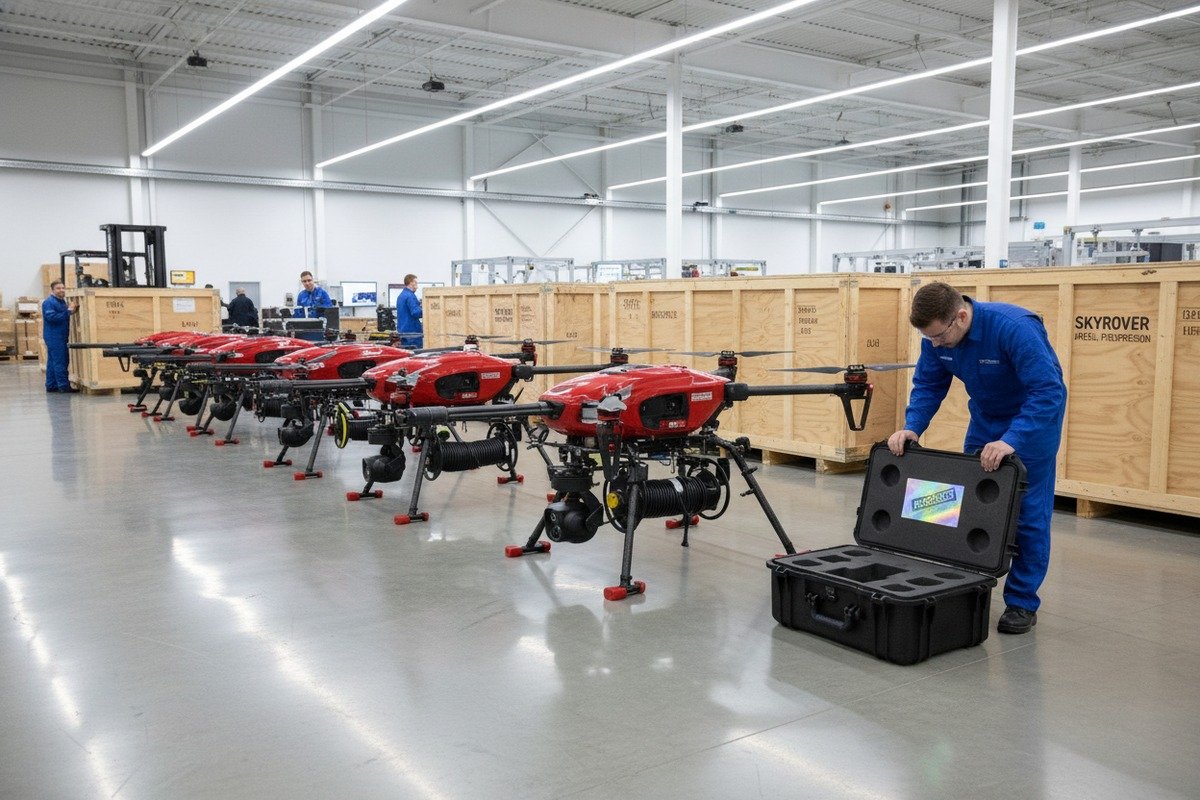
Nuestro equipo de ingeniería trabaja regularmente en funciones de software personalizadas para clientes en el extranjero. Estos proyectos requieren estructuras de pago diferentes a las de los pedidos de producción estándar. El desarrollo personalizado conlleva un mayor riesgo para ambas partes.
Para marca OEM y desarrollo de software, negocie una división 50-50: 25% tras la aprobación del diseño, 25% tras pruebas exitosas. Retenga 20-30% de los pagos de software hasta la entrega completa del código fuente y un período de garantía de 60-90 días que confirme la estabilidad. Incluya siempre cláusulas de propiedad intelectual en su contrato.
Separación de Pagos de Hardware y Software
Los pedidos personalizados tienen dos componentes distintos. El hardware (el dron físico con su marca) y el software (controladores de vuelo personalizados, aplicaciones o sistemas de datos) deben tener cronogramas de hitos separados.
| Componente de Pago | Hito 1 | Hito 2 | Hito 3 | Liberación Final |
|---|---|---|---|---|
| Marca de Hardware/OEM | Depósito del 30% | 30% con aprobación de muestra | 20% con aprobación de PSI | 20% en entrega |
| Desarrollo de Software | 25% en aprobación de especificaciones | 25% en entrega beta | 25% en pruebas finales | 25% después de la garantía |
Protegiendo su propiedad intelectual
El desarrollo de software crea riesgos de propiedad intelectual. Sus funciones personalizadas podrían ser copiadas para otros clientes. Sus datos de vuelo podrían verse comprometidos.
Incluya estas protecciones en su contrato:
- Depósito de código fuente: Código en poder de un tercero neutral, entregado a usted tras el pago final
- Cláusula de no competencia: El proveedor no puede vender funciones idénticas a competidores durante 2-3 años
- Propiedad de los datos: Todos los datos de vuelo, datos de usuario y análisis le pertenecen a usted
- Derechos de auditoría: Puede inspeccionar sus sistemas para verificar que no existan copias no autorizadas
Hitos de marca OEM
La marca física requiere sus propios pasos de verificación. Antes de liberar pagos relacionados con la marca, confirme:
- La ubicación del logotipo coincide con las maquetas aprobadas
- Los códigos de color son precisos (verificación Pantone)
- Los materiales de embalaje cumplen sus especificaciones
- Los manuales de usuario incluyen la información de su empresa
- Las tarjetas de garantía reflejan los datos de contacto de su soporte
Requisitos de prueba de software
Antes de liberar los pagos de hitos del software, se requieren estas entregas:
- Demostración de la versión beta: Videollamada que muestra todas las funciones funcionando
- Resolución de informes de errores: Todos los errores críticos y mayores corregidos
- Pruebas de aceptación del usuario: Su equipo prueba en hardware real
- Paquete de documentación: Guías de API, materiales SDK, instrucciones de integración
Algunos compradores ahora utilizan plataformas de automatización como Tipalti para activar automáticamente la liberación de pagos tras la verificación de la finalización de hitos. Esto reduce los retrasos y elimina los errores de procesamiento manual.
¿Cómo estructuro el pago final del saldo para garantizar la entrega segura y el despacho de aduanas de mis drones?
Nuestro equipo de logística se encarga de la entrega puerta a puerta para clientes en EE. UU. y Europa. La etapa de pago final es donde muchos acuerdos salen mal. Liberar fondos antes de confirmar la entrega lo expone al máximo riesgo.
Estructure su saldo final (20-30% del pedido total) con dos desencadenantes de liberación: 50% al recibir el conocimiento de embarque limpio y los documentos de envío, 50% al confirmar el despacho de aduana y la inspección de entrega física. Utilice los Incoterms CIF para garantizar la responsabilidad del proveedor hasta que los productos lleguen a su puerto.

Comprensión de los Incoterms para envíos de drones
Los Incoterms definen quién asume el riesgo en cada etapa del envío. Para drones de extinción de incendios, CIF (Costo, Seguro, Flete) suele ser lo mejor para los compradores.
| Incoterm | Punto de transferencia de riesgo | Recomendado para | Responsabilidad del comprador |
|---|---|---|---|
| FOB (Libre a bordo) | Cuando las mercancías cruzan el ferrocarril del barco | Importadores experimentados | Flete, seguro, aduanas |
| CIF (Costo, Seguro, Flete) | Cuando las mercancías llegan al puerto de destino | La mayoría de los compradores de drones | Despacho de aduanas, entrega final |
| DDP (Entrega con derechos pagados) | En la puerta del comprador | Máxima conveniencia | Ninguno (precio más alto) |
Documentos de envío requeridos
Antes de liberar cualquier pago final, verifique que ha recibido:
- Factura comercial: Coincide exactamente con su orden de compra
- Lista de empaque: Detalla todos los drones y accesorios
- Conocimiento de embarque: Limpio, sin anotaciones de daños
- Certificado de origen: Requerido para aduanas
- Licencia de exportación: Permiso de exportación de drones chinos
- Certificados de cumplimiento: Documentación relevante de la FAA/EASA
Consideraciones sobre el despacho de aduanas
Los drones de extinción de incendios enfrentan requisitos de importación específicos. En los EE. UU., los drones que superan ciertos umbrales de peso requieren el registro de la FAA. Algunos estados tienen regulaciones adicionales para drones utilizados en servicios de emergencia.
Su proveedor debe proporcionar:
- Documento de especificaciones técnicas para la clasificación aduanera
- Recomendación de código HS (generalmente 8806.10 para aeronaves multirrotor)
- Declaraciones de cumplimiento de seguridad
- Documentación de envío de baterías (las baterías de litio tienen requisitos especiales)
Plazo de liberación del pago
Aquí hay un cronograma de liberación de pago final recomendado:
| Evento desencadenante | Pago Liberado | Documentos requeridos |
|---|---|---|
| Salida del envío | 10% del total | Conocimiento de embarque 7, factura comercial |
| Llegada al puerto de destino | 5% del total | Aviso de llegada, sin informe de daños |
| Despacho de aduana completo | 10% del total | Documento de liberación de aduana |
| Inspección de entrega física | 5% del total | Recibo de entrega, inspección visual |
Uso de Cartas de Crédito para Máxima Seguridad
Para pedidos superiores a $50,000, considere una Carta de Crédito. Los bancos garantizan el pago al cumplir con los documentos. Esto protege a ambas partes.
Los costos de LC suelen ser del 1-3% del valor del pedido. Pero brindan protección inquebrantable. El banco verifica todos los documentos antes de liberar los fondos. Si los documentos no coinciden exactamente, el pago se bloquea.
Algunos proveedores chinos se resisten a las LC porque reducen la flexibilidad. Pero para los primeros pedidos de drones de extinción de incendios costosos, la seguridad adicional vale la pena el costo y la complejidad.
Planificación de la resolución de disputas
Su contrato debe especificar cómo se resuelven las disputas. Para el comercio con China, CIETAC (Comisión de Arbitraje Económico y Comercial Internacional de China) es una opción común. Sin embargo, muchos compradores prefieren el arbitraje en su país de origen o en una ubicación neutral como Singapur.
Incluya un lenguaje claro sobre:
- La ley de qué país rige el contrato
- Dónde ocurrirá el arbitraje
- Quién paga los costos del arbitraje
- Plazo para la resolución de disputas
Conclusión
Los hitos de pago seguros transforman las importaciones de drones chinos arriesgadas en transacciones controladas. Comience con un depósito del 20-30%, vincule los pagos intermedios a inspecciones verificadas, estructure el desarrollo personalizado con protecciones de propiedad intelectual y libere los saldos finales solo tras la entrega confirmada. Estas prácticas protegen su inversión al tiempo que construyen relaciones sólidas con los proveedores.
Notas al pie
1. Se reemplazó HTTP 403 con una fuente autorizada .edu del Legal Information Institute (LII) de la Facultad de Derecho de Cornell. ↩︎
2. Se reemplazó HTTP 403 con una fuente autorizada .gov de la Administración de Comercio Internacional. ↩︎
3. Se reemplazó HTTP 403 con una página autorizada de Wikipedia que proporciona una definición e historia claras. ↩︎
4. Explica la verificación por terceros como un proceso independiente para confirmar la precisión o la calidad. ↩︎
5. Muestra la gama de servicios de inspección, verificación, pruebas y certificación que ofrece una empresa líder. ↩︎
6. Explica el depósito de código fuente como un acuerdo legal y técnico para la protección de software. ↩︎
7. Define el conocimiento de embarque como un documento legal emitido por un transportista para acusar recibo de la carga. ↩︎
8. Proporciona información oficial sobre Incoterms 2020, incluida la regla CIF para el comercio internacional. ↩︎
 English
  Español de México
  Deutsch
  Français
  Русский
  العربية
Comments
No comments yet. Be the first to share your thoughts!
Leave a Comment