
When we co-develop firefighting drones with clients, we see how easily proprietary designs can leak without strict boundaries. Your unique thermal imaging integration or flight algorithm could become a competitor's product tomorrow if safeguards are missing.
To structure effective IP clauses, clearly distinguish between pre-existing technology and new custom developments. You must explicitly define ownership of design files, restrict sub-supplier access through tiered NDAs, and establish specific legal jurisdictions for enforcement. Additionally, secure source code escrow and define data ownership rights to prevent unauthorized replication.
Let's break down the specific legal frameworks and practical steps to secure your investment.
How do I ensure my custom drone design remains exclusive to my company?
When our engineers customize a fuselage or landing gear for a specific mission, we know that clear ownership definitions prevent future disputes. Ambiguity here is the biggest risk to your market advantage.
You ensure exclusivity by defining "Foreground IP" in your contract, stating that all new designs created during the project belong solely to you. Combine this with a "Work for Hire" clause and prohibit the manufacturer from using these specific molds or blueprints for other clients.
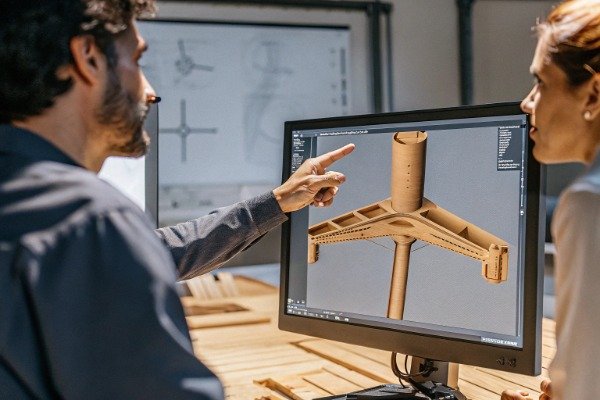
To truly protect your design, you must understand the difference between what you bring to the table and what the factory creates for you. In the manufacturing world, we call this the distinction between Background IP and Foreground IP. If you do not separate these in the contract, a manufacturer might claim that the new heavy-lift arm design they built for you is just an "improvement" of their standard model, giving them the right to sell it to others.
You need to be specific about the deliverables. It is not enough to say "I own the drone." You must list the specific components. For example, if you pay for a custom mold for a fire-retardant shell, that physical mold and the digital 3D files associated with it must be your property. We often see buyers forget to claim ownership of the tooling. If the factory owns the tool, they control the production.
Here is a breakdown of how to categorize IP in your agreement:
IP Ownership Categorization
| IP Category | Definition | Recommended Owner |
|---|---|---|
| Background IP | Technology the manufacturer already possessed before your project (e.g., standard flight controller logic). | Manufacturer (SkyRover) |
| Foreground IP | New inventions, designs, or modifications created specifically for your project (e.g., custom payload release mechanism). | Buyer (You) |
| Third-Party IP | Components licensed from others (e.g., camera sensors, transmission modules). | Third-Party Licensor |
Furthermore, you should include a "No-Reverse Engineering" clause. Even if you own the design, you want to prevent the factory from analyzing your proprietary payload to create a "knock-off" version that looks different but functions the same. By locking down the Foreground IP, you ensure that the money you spend on R&D results in an asset that sits on your balance sheet, not ours.
Should I sign a separate NDA before sharing technical drawings?
Before we even open a CAD file or look at a client's spec sheet, we expect to see a legal barrier in place. Sending files without this protection is like leaving your front door open.
CAD file 1
Yes, signing a standalone NDA before sharing any technical drawings is critical. It establishes a legal barrier prior to the main manufacturing agreement, covering preliminary discussions and file transfers. Ensure this NDA explicitly binds the supplier's employees and their downstream sub-suppliers to the same confidentiality standards.

Many buyers make the mistake of relying on a simple confidentiality paragraph in the final purchase order. This is dangerous because the most sensitive information—your technical drawings, concept art, and unique requirements—is usually shared before the final contract is signed. A standalone Non-Disclosure Agreement (NDA) covers this vulnerable negotiation phase.
Non-Disclosure Agreement (NDA) 2
However, a standard NDA is often insufficient for complex manufacturing supply chains. When we build a drone, we do not make every screw and wire in-house. We source carbon fiber sheets, motors, and camera gimbals from other vendors. If you send us a drawing for a custom gimbal mount, and we send that drawing to a CNC shop down the street, is that shop bound by your NDA?
You must include a "Flow-Down" clause. This requires the primary manufacturer to sign back-to-back NDAs with any sub-contractors they use for your project. If they share your data with a third party, they must guarantee that the third party is under the same strict obligations.
Critical NDA Clauses for Manufacturing
- Definition of Confidential Information: Do not just say "data." Specify "CAD files, schematics, tooling designs, software code, and business plans."
- Permitted Purpose: Limit the use of the data strictly to manufacturing your order. It cannot be used for marketing or internal R&D.
- The "Sub-Supplier" Loophole: Explicitly state that the manufacturer is liable for any leaks caused by their sub-contractors.
- Duration: Manufacturing secrets last a long time. Ensure the confidentiality obligation lasts for at least 3-5 years, or indefinitely for trade secrets.
By closing the sub-supplier loophole, you prevent your design from ending up in a public catalog of generic parts. We respect clients who demand this level of detail because it shows they are serious about their business.
What legal jurisdiction should apply if the supplier leaks my IP?
We export to the US and Europe constantly, and we know that a contract is only as good as its enforceability. A lawsuit in a court that has no power over the factory is a waste of money.
The governing jurisdiction should ideally be your home country for ease of legal action, but arbitration in a neutral location like Singapore or Hong Kong is often more enforceable against international suppliers. Specify the exact arbitration tribunal and language in the contract to avoid costly procedural delays.
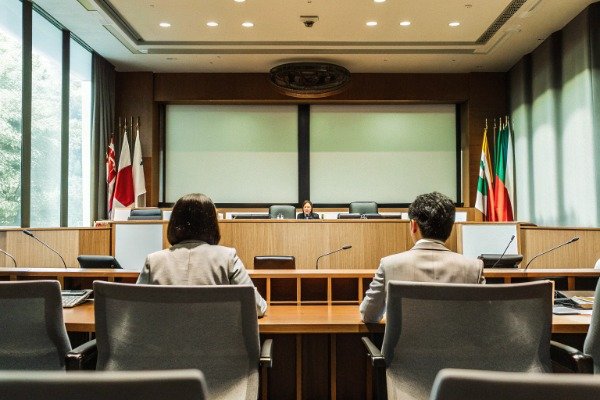
This is where many procurement managers get stuck. You naturally want the contract governed by the laws of your state or country because that is what your lawyer understands. However, if your supplier is in China, a court judgment from a US district court can be very difficult and expensive to enforce here. The Chinese legal system does not automatically recognize foreign court orders.
A better approach for cross-border manufacturing is International Arbitration. Institutions like the Hong Kong International Arbitration Centre (HKIAC) or the Singapore International Arbitration Centre (SIAC) are widely respected. China is a signatory to the New York Convention, which means Chinese courts are legally obligated to enforce arbitration awards from these bodies.
New York Convention 3
Comparison of Dispute Resolution Venues
| Venue Type | Pros | Cons |
|---|---|---|
| US/EU Court Litigation | Familiar legal system; lower upfront cost for you. | Very hard to enforce the judgment in China; manufacturer may ignore it. |
| China Court Litigation | Direct enforcement power over the factory's assets. | Language barrier; unfamiliar legal procedures; potential local bias. |
| International Arbitration (HK/Singapore) | Neutral ground; enforceable in China (New York Convention); experts in trade. | Higher upfront costs (arbitrator fees); process can be lengthy. |
When drafting this clause, be precise. State the number of arbitrators (usually one or three), the language of arbitration (English), and the specific rules to be followed.
You should also consider "Injunctive Relief." This is a legal tool that allows you to force the factory to stop production immediately if they are caught selling your design. While damages pay you back later, an injunction stops the bleeding now. Ensure your contract explicitly allows you to seek injunctive relief in the manufacturer's local court, even if the main dispute is settled by arbitration.
Injunctive Relief 4
How do I protect the proprietary software I load onto the drone?
Our flight controllers support custom firmware, but we often see clients worry that their code will be copied once it leaves their hands. Hardware is easy to copy; software is your true competitive moat.
Source Code Escrow 5
Protect proprietary software by implementing encryption keys and "anti-readback" protection on the hardware level. Legally, your contract must grant you full ownership of the code and restrict the manufacturer from reverse-engineering the firmware. A source code escrow agreement adds safety if the supplier ceases operations.
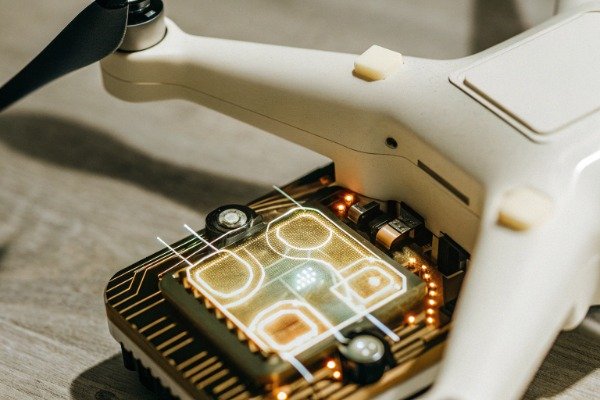
For firefighting drones, the software often contains high-value assets: AI algorithms for fire detection, autonomous flight paths, or thermal data analysis. If you send this code to a factory to be flashed onto the chips, you are taking a risk.
Singapore International Arbitration Centre 7
The first layer of defense is technical. We recommend providing the factory with compiled binary files rather than the raw source code. Additionally, you should require the factory to use chips with "Read-Out Protection" (ROP) enabled. This prevents anyone from connecting a debugger to the drone and sucking the code back out.
Hong Kong International Arbitration Centre 8
Legally, you need to address "Derivative Works." If the factory tweaks your code to make it work better with their motors, who owns that tweak? Your contract must state that any modifications to your software, regardless of who writes them, belong to you.
trade secrets 9
Data Ownership and Escrow
You must also protect the data the drone generates. Firefighting drones collect sensitive maps and thermal logs. Your contract should state that all telemetry and sensor data belongs to the buyer, not the manufacturer.
Finally, consider a Source Code Escrow agreement. This is vital if you rely on the manufacturer's proprietary software for the drone's basic operation. If the manufacturer goes bankrupt or stops supporting the product, an escrow agent releases the source code to you so you can maintain your fleet.
- License Scope: Ensure you have a perpetual, non-exclusive license to use any pre-installed firmware.
- Updates: Define who is responsible for security patches.
- Audit Rights: Reserve the right to audit the factory's IT systems to ensure your software is stored securely.
Conclusión
Securing your drone IP requires precise contracts and technical safeguards. By defining ownership, controlling supply chain access, and choosing enforceable jurisdictions, you protect your innovation and market position.
Work for Hire 10
Notas al pie
1. Explains the technical file format mentioned. ↩︎
2. Provides context on the legal contract type. ↩︎
3. Official source for the international arbitration treaty. ↩︎
4. Legal definition of the specific court order. ↩︎
5. Explains the software safety mechanism. ↩︎
6. Defines the software licensing model discussed. ↩︎
7. Official website of the cited arbitration body. ↩︎
8. Official website of the cited arbitration body. ↩︎
9. Authoritative definition of this IP category. ↩︎
10. Defines the legal concept determining IP ownership. ↩︎

 English
  Spanish
  German
  French
  Dutch
Dutch  Arabic
