
We often see procurement managers struggle with vague contracts that fail to protect their interests. Without clear acceptance standards, your department risks receiving equipment that malfunctions during critical rescue missions.
Quality acceptance standards must define specific technical benchmarks, such as flight endurance under load and thermal sensor resolution. You should also mandate compliance with regulations like NDAA, establish rigorous field-testing protocols for stability in high winds, and set clear thresholds for major versus minor defects to ensure operational readiness.
Let's break down the essential clauses and testing protocols you need to include to protect your investment and ensure mission success.
What Specific Functional Tests Must the Drone Pass Before Shipment?
At our testing facility in Chengdu, we rigorously validate every unit before it leaves the factory. Skipping this step often leads to dangerous failures when the drone is deployed in actual fire scenarios.
Before shipment, drones must pass functional tests including full-payload flight duration verification, signal range stability checks, and obstacle avoidance accuracy in simulated smoke environments. Additionally, thermal imaging calibration and battery performance under stress must be validated against the agreed technical specifications to ensure reliability.
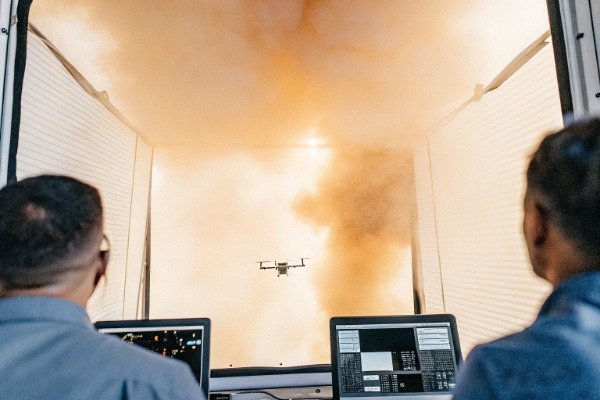
Defining functional tests is the most critical part of your purchase agreement. You cannot rely on a simple "it flies" confirmation. Firefighting drones operate in hostile environments involving high heat, smoke, and water spray. Therefore, your contract must list specific "Go/No-Go" tests that the manufacturer must perform and document.
Core Performance Verification
The first layer of testing involves basic flight mechanics but pushed to the operational limits. A standard hover test is insufficient. We recommend requiring a Full Endurance Test where the drone flies with its maximum payload (e.g., fire extinguishing balls or heavy thermal cameras) until the battery reaches its safety threshold. If the spec sheet promises 40 minutes, the test must prove it.
You must also define Environmental Stress Testing. Firefighting drones often face high winds and heat. Your contract should require the manufacturer to simulate these conditions. For instance, we often use wind tunnels or open-field tests with measured wind speeds to verify stability. If the drone cannot hold its position in 12 m/s winds, it is useless for a forest fire operation.
Sensor and Payload Calibration
For firefighting, the payload is as important as the aircraft. The thermal camera is your eyes in the smoke. You must specify a Thermal Sensitivity Test. This ensures the sensor can accurately distinguish between a human body and a heated background. A resolution check (e.g., verifying 640×512 output) is mandatory.
Furthermore, Obstacle Avoidance Systems need specific validation. In a clean factory, sensors work perfectly. However, you need to know if they work when the air is thick with particulate matter. While we cannot burn down a forest for every test, we can simulate low-visibility conditions to ensure the radar or vision systems do not trigger false positives or fail to detect a wall.
Data Security and Connectivity
Modern procurement requires strict data protocols. You should include a test for Signal Integrity and Encryption. Ensure the video feed remains stable at the maximum advertised range (e.g., 10km) and that no data is being transmitted to unauthorized servers. This is particularly vital for government contracts where data sovereignty is a legal requirement.
Recommended Functional Test Checklist
Below is a table you can insert directly into your contract as an annex for the Factory Acceptance Test (FAT).
| Test Category | Specific Test Item | Acceptance Criteria |
|---|---|---|
| Flight Mechanics | Full Payload Endurance | Flight time ≥ 35 mins with 5kg payload; Battery temp < 60°C. |
| Stability | Wind Resistance | Position hold deviation < 0.5m in 12 m/s wind gusts. |
| Carga útil | Thermal Accuracy | Temperature reading error < ±2°C at 100m distance. |
| Safety | Return-to-Home (RTH) | Landing accuracy within 1m of takeoff point upon signal loss. |
| Connectivity | Video Transmission | Latency < 200ms at 5km range; No frame drops > 1 sec. |
Should I Use AQL Standards for Visual Inspection of the Drone Body?
When we inspect our carbon fiber frames, we know that small scratches do not affect flight, but micro-cracks do. Misunderstanding inspection standards causes unnecessary disputes and delays in your deployment schedule.
Yes, using Acceptable Quality Limit (AQL) standards provides a statistical basis for accepting or rejecting a batch based on visual defects. It helps distinguish between critical structural flaws that compromise safety and minor cosmetic imperfections, ensuring you receive high-quality equipment without unreasonable rejection rates for non-functional issues.
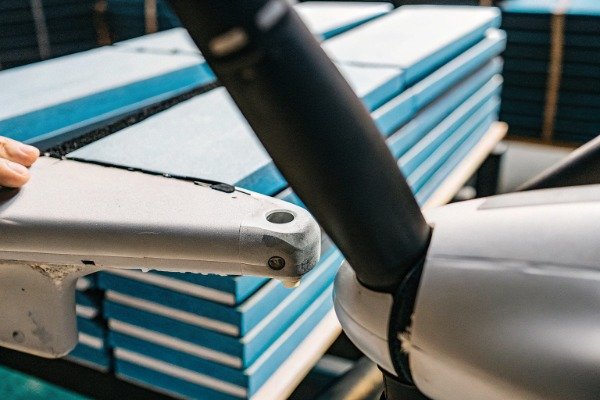
Many buyers assume that "100% quality" means "zero imperfections." In the world of industrial manufacturing, especially with composite materials like carbon fiber, this is unrealistic and can drive up costs significantly. AQL (Acceptable Quality Limit) is an industry-standard method (ISO 2859-1) that helps you and the supplier agree on what level of imperfection is acceptable.
Acceptable Quality Limit 1
Why AQL Matters for Industrial Drones
Unlike consumer electronics that are molded from plastic, industrial drones are often hand-assembled. This introduces variables. By setting an AQL standard, you protect yourself from receiving a batch of drones with systemic issues while allowing the manufacturer to operate efficiently.
For a shipment of 50 drones, inspecting every single screw might be feasible, but for larger orders of accessories or batteries, you need a sampling plan. AQL tells you how many units to inspect and how many defects are allowed before you reject the entire lot.
Applying AQL to Structural Integrity
Visual inspection is not just about aesthetics; it is a proxy for structural health. A scratch on a plastic cover is cosmetic. A scratch on a carbon fiber arm could be a stress riser that leads to failure under load.
stress riser 2
We recommend setting different AQL levels for different types of defects. For Critical Defects (safety issues), the AQL should be 0. This means if you find one critical defect in your sample, the whole batch is rejected. For Major Defects (functional issues), an AQL of 1.0 or 2.5 is common. For Minor Defects (cosmetic), an AQL of 4.0 is standard.
Implementing the Standard
In your contract, clearly state: "Visual inspection shall be conducted according to ISO 2859-1, Inspection Level II." Then, specify the AQL limits. This gives your QC team a clear rulebook. If they find a drone with a slightly uneven sticker, they know it counts as a 'Minor' defect and doesn't necessarily trigger a shipment rejection unless the total number of such defects exceeds the threshold.
AQL Thresholds for Drone Procurement
| Defect Class | AQL Level | Definition | Example |
|---|---|---|---|
| Critical | 0 | Hazardous or unsafe conditions. | Exposed wiring, cracked propeller, battery swelling. |
| Major | 1.0 | Reduces usability or likely to result in failure. | Loose screws on motor mount, deep scratch on sensor lens. |
| Minor | 2.5 | Does not reduce usability; cosmetic only. | Paint chip < 2mm, label slightly crooked, smudge on body. |
How Do We Define a Major Defect Versus a Minor Cosmetic Issue?
Our engineers often debate with QC teams about what constitutes a true failure versus a harmless blemish. You need clear definitions to prevent operational downtime due to misunderstandings during the handover process.
A major defect is any failure that impacts the drone's safety, flight performance, or mission capability, such as a malfunction in the propulsion system or thermal sensor. A minor cosmetic issue, conversely, is a surface blemish like a scratch on the landing gear that does not affect functionality or structural integrity.
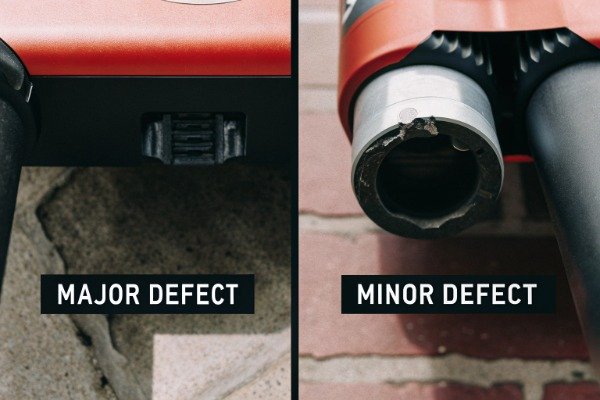
Ambiguity is the enemy of procurement. If you do not define these terms, a supplier might argue that a jittery gimbal is "minor" because the drone still flies. Conversely, an over-zealous inspector might reject a perfectly good drone because of a tiny scratch on the remote controller case.
8D report 3
Defining Major Defects
A Major Defect is a deal-breaker. It renders the unit unfit for its intended purpose. In the context of firefighting drones, this includes anything that prevents the drone from flying safely, capturing data, or deploying its payload.
You should categorize defects based on their impact on the mission.
- Safety Critical: Any defect that could cause the drone to crash or injure the operator. Examples include loose motor mounts, faulty battery locking mechanisms, or software bugs that cause uncommanded flight.
- Mission Critical: The drone flies safe, but cannot do its job. For example, if the thermal camera has dead pixels in the center of the frame, or if the video transmission cuts out at 500 meters.
- Durability Compromise: Issues that will shorten the product's life, such as poor waterproofing seals (IP rating failure) or corrosion on connectors.
Defining Minor Defects
A Minor Defect is a deviation from the standard that does not affect the form, fit, or function of the item. These are usually aesthetic.
- Surface Imperfections: Scratches, scuffs, or color variations on the body shell that do not expose the underlying material to the elements.
- Labeling: A serial number sticker that is slightly off-center (as long as it is legible).
- Packaging: Damage to the cardboard box that does not impact the drone inside.
The Grey Area: Workmanship
There is often a grey area regarding "workmanship." For example, messy soldering on an internal board. Is it minor? We argue it is Major. While the drone might work today, poor soldering vibrates loose over time. As a buyer, you should classify internal workmanship issues as Major defects because they speak to long-term reliability.
Defect Classification Matrix
Use a matrix like this in your Quality Assurance (QA) manual to align your team and the supplier.
Root Cause Analysis 4
| Componente | Major Defect (Reject) | Minor Defect (Accept with Note) |
|---|---|---|
| Estructura del avión | Cracks in carbon fiber; Loose arm locking mechanism. | Scratches < 1cm length; Glue residue. |
| Motores | Abnormal noise; Grinding feel when turned by hand. | Discoloration on motor bell. |
| Camera/Gimbal | Lens scratches; Gimbal drift; Fogging inside lens. | Dust on exterior housing. |
| Battery | Swelling; Connector corrosion; Latch failure. | Scuff marks on plastic casing. |
| Controller | Stick drift; Dead pixels on screen; Button sticking. | Screen protector air bubbles. |
What Is the Procedure If the Received Goods Do Not Match the Golden Sample?
We always encourage our clients to seal a Golden Sample before mass production begins. If the final delivery deviates from this standard, having a pre-agreed protocol saves both time and money for everyone involved.
IP rating 5
If the received goods do not match the Golden Sample, the contract must trigger an immediate non-conformance protocol. This includes freezing payments, requiring a detailed root cause analysis from the manufacturer, and mandating replacement or rework at the supplier's expense within a specified timeframe to minimize operational disruption.
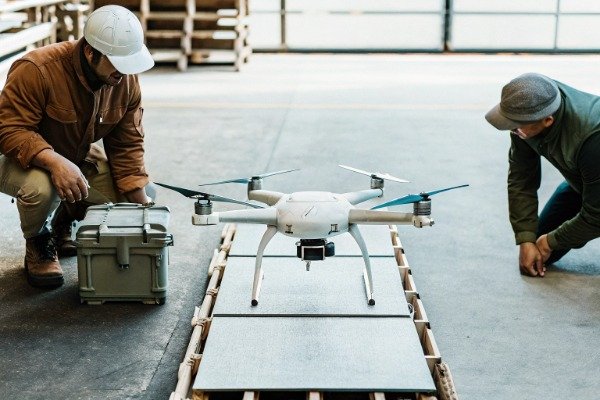
The "Golden Sample" is your master reference. It is a unit that you have tested, approved, and signed off on. It represents the perfect standard for all subsequent units. When a shipment arrives that looks or performs differently, you need a clear roadmap to resolve the issue without resorting to lawsuits immediately.
data sovereignty 7
The Immediate Response: Quarantine and Notification
If your inspection reveals a discrepancy, the first step is Quarantine. Do not deploy the drones. Segregate the affected batch. Your contract should state that the buyer has the right to reject the entire lot if the defect rate exceeds the AQL.
Next, issue a Non-Conformance Report (NCR). This document should detail exactly how the received goods differ from the Golden Sample. Use photos and video evidence. For example, "The Golden Sample has a matte finish to reduce glare, but the received batch has a glossy finish." Or, "The Golden Sample hovers for 38 minutes, but the received batch only manages 32 minutes."
The Supplier's Obligation: Root Cause Analysis
Don't just ask for a replacement; ask why it happened. A reputable manufacturer (like us) will want to investigate. Did a sub-supplier change a component without notice? Did the firmware get updated incorrectly?
particulate matter 8
Your contract should require the supplier to provide a Root Cause Analysis (RCA) within 3 to 5 working days. This ensures that the replacement batch won't have the same problem. If you are a newbie to this, you can ask your supplier: "How do your mature clients handle this? Can you share a template for an 8D report or an RCA?" This shows you are serious about quality control.
Remedies and Timelines
The contract must define the remedy. Usually, you have three options:
- Rework: The supplier sends engineers to your location (or you ship goods back) to fix the issue. This is viable for software or minor hardware swaps.
- Replacement: The supplier ships new units immediately. This is necessary for structural or critical defects.
- Refund/Credit: If the supplier cannot fix it, you get your money back.
Crucially, define the Timeline. "Replacement units must be shipped within 14 days of NCR acceptance." Without this, you could be waiting months while your fire department lacks critical gear.
Financial Penalties
To ensure compliance, include a penalty clause for deviations from the Golden Sample. For instance, if the goods are rejected, the supplier should cover all shipping costs (both ways) and potentially a penalty fee for the delay in your operations. This keeps the manufacturer accountable and focused on maintaining the Golden Sample standard.
thermal camera 9
Step-by-Step Non-Conformance Protocol
- Identification: User spots difference vs. Golden Sample.
- Documentation: Photos/Videos taken; NCR generated.
- Notification: Sent to supplier within 48 hours of receipt.
- Assessment: Supplier reviews evidence (remote or on-site).
- Resolution Plan: Supplier proposes Rework or Replace within 5 days.
- Execution: Corrective action taken at supplier's cost.
- Verification: New/Fixed units inspected against Golden Sample again.
Conclusión
Defining clear standards protects your budget and your team's safety. Use these guidelines to build a robust contract that ensures your firefighting drones are mission-ready from day one.
wind tunnels 10
Notas al pie
1. Defines the statistical sampling method used in manufacturing. ↩︎
2. Defines the mechanical engineering failure mode mentioned. ↩︎
3. Explains the specific problem-solving methodology referenced. ↩︎
4. Industry standard definition from the American Society for Quality. ↩︎
5. Official source for Ingress Protection standards. ↩︎
6. Department of Energy page explaining the material properties. ↩︎
7. Explains the legal concept regarding data storage location. ↩︎
8. Official EPA definition of the environmental hazard described. ↩︎
9. Provides a comprehensive overview of the sensor technology mentioned. ↩︎
10. NASA is a primary authority on aerodynamic testing facilities. ↩︎

 English
  Spanish
  German
  French
  Dutch
Dutch  Arabic
