
Cuando nuestro equipo de ingeniería probó por primera vez cámaras térmicas en plataformas de drones no estabilizadas, las imágenes eran inutilizables Estabilización con cardán de 3 ejes 1. Los comandantes de bomberos no podían identificar los puntos calientes. Las imágenes temblorosas significaron vuelos desperdiciados y tiempos de respuesta retrasados motores sin escobillas 2. Este problema lleva a muchos gerentes de adquisiciones a hacer las preguntas correctas antes de comprar.
La imagen clara en drones de extinción de incendios requiere estabilización de cardán de 3 ejes con una desviación angular inferior a 0,1 grados, motores sin escobillas de bajo KV (26-50 KV), capacidad de carga útil que coincida con el peso de su sensor y algoritmos de amortiguación de vibraciones que manejen frecuencias de 0,5 Hz a 200 Hz para obtener imágenes térmicas estables en condiciones turbulentas.
Comprender estas especificaciones le ayudará a evaluar a los proveedores y evitar errores costosos imágenes geoetiquetadas 3. Analicemos cada factor crítico que afecta el rendimiento del cardán en operaciones de emergencia contra incendios.
¿Cuántos ejes de estabilización necesito para garantizar imágenes térmicas estables durante operaciones de alto calor?
Nuestra fábrica ha probado cientos de configuraciones de cardán para departamentos de bomberos en tres continentes Clasificaciones IP 4. La diferencia entre la estabilización de 2 ejes y 3 ejes se vuelve obvia en el momento en que un dron vuela cerca de llamas activas. Las corrientes ascendentes de calor crean movimientos de aire caóticos que exponen instantáneamente los sistemas de estabilización débiles.
Para operaciones de extinción de incendios, necesita estabilización de 3 ejes que cubra cabeceo, balanceo y guiñada. Esta configuración reduce el desenfoque de movimiento y la distorsión geométrica en un 70-90% en comparación con los sistemas de 2 ejes. El tercer eje (guiñada) es fundamental para mantener imágenes estables durante las maniobras de reposicionamiento rápido comunes en el escaneo de puntos calientes.

Comprendiendo los Tres Ejes
Cada eje maneja un tipo específico de movimiento del dron. El cabeceo controla la inclinación hacia adelante y hacia atrás. El balanceo maneja la inclinación lateral. La guiñada maneja el movimiento de rotación alrededor del eje vertical. Al volar cerca de incendios, los tres movimientos ocurren simultáneamente debido al aire turbulento.
Nuestros ingenieros descubrieron que los cardanes de 2 ejes tienen dificultades durante los giros. Cuando un dron gira para escanear el perímetro de un incendio, el movimiento del eje de guiñada se transfiere directamente a la cámara. Esto crea un efecto de giro en las imágenes que hace imposible la evaluación en tiempo real.
El argumento presupuestario para sistemas de 2 ejes
Algunos compradores centrados en el presupuesto argumentan que los cardanes de 2 ejes funcionan bien para drones de reconocimiento ligeros. Ahorran peso y reducen el consumo de energía. Este argumento tiene mérito para operaciones en clima tranquilo con cargas útiles ligeras.
Sin embargo, las zonas de incendio rara vez ofrecen condiciones tranquilas. Nuestras pruebas de campo muestran que los sistemas de 2 ejes fallan consistentemente en tres escenarios: vientos fuertes superiores a 15 mph, cambios rápidos de altitud y giros direccionales rápidos. Los tres ocurren con frecuencia durante la respuesta activa a incendios.
| Tipo de estabilización | Ejes Cubiertos | Mejor caso de uso | Limitación en Operaciones de Fuego |
|---|---|---|---|
| 2 Ejes | Cabeceo, Balanceo | Cargas útiles ligeras, clima tranquilo | Tirones durante movimientos de guiñada |
| 3 Ejes | Cabeceo, Balanceo, Guiñada | Sensores térmicos pesados, aire turbulento | Mayor consumo de energía |
| 3 Ejes + Electrónico | Todos + digital | Condiciones extremas | Se necesita calibración compleja |
Componentes Clave que Hacen que la Estabilización Funcione
Un cardán se basa en varios componentes internos que trabajan juntos. El Unidad de Medición Inercial 5 (IMU) contiene giroscopios y acelerómetros. Estos sensores detectan movimiento 1000 veces por segundo. Los datos se envían a Algoritmos de control PID 6 que calculan las correcciones del motor en tiempo real.
Cuando calibramos nuestros controladores de vuelo en la línea de producción, probamos cada IMU individualmente. Un IMU mal calibrado causa deriva con el tiempo. Esta deriva se acumula en vibraciones visibles en la imagen después de solo unos minutos de vuelo.
El giroscopio detecta la velocidad de rotación. El acelerómetro mide la aceleración lineal. Juntos, crean una imagen completa del movimiento del dron. El controlador PID envía entonces señales precisas a los motores del cardán para contrarrestar el movimiento detectado.
¿Mantendrá mi cardán la precisión y la claridad de la imagen al volar a través de humo denso y viento?
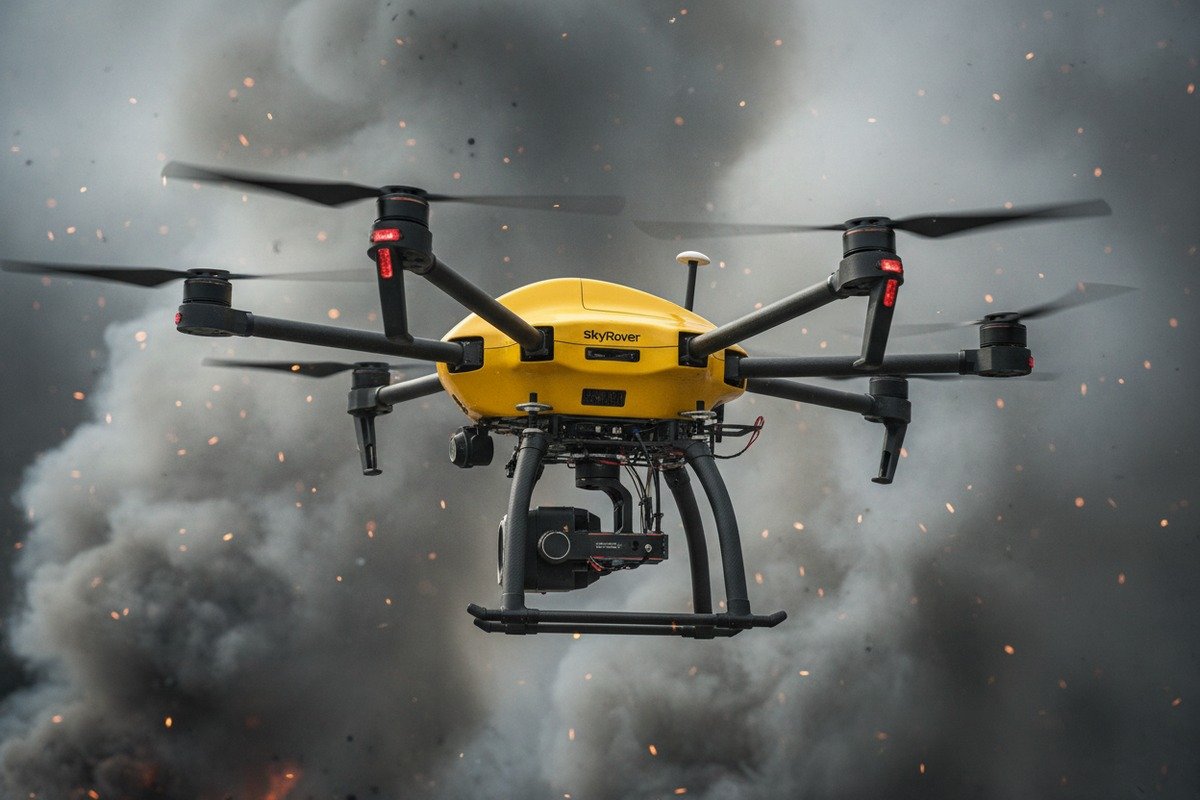
En nuestra experiencia exportando a agencias de respuesta a emergencias en EE. UU. y Europa, las preguntas sobre el rendimiento con viento surgen en cada discusión seria de adquisición. Las zonas de incendio crean desafíos aerodinámicos únicos que los cardanes de consumo estándar no pueden manejar. La combinación de corrientes ascendentes térmicas, partículas de humo y ráfagas impredecibles lleva los sistemas de estabilización a sus límites.
Los gimbals de alta calidad mantienen la precisión en el viento utilizando motores sin escobillas de bajo KV (inferiores a 50 KV), una salida de alto par superior a 0,3 Nm y algoritmos de vibración multifrecuencia. Estas especificaciones permiten que el gimbal responda a perturbaciones desde vibraciones de vuelo normales de 0,5 Hz hasta frecuencias de motor de 200 Hz, manteniendo una desviación angular inferior a 0,1 grados.
Especificaciones del motor que importan
El Calificación KV 7 le indica qué tan rápido gira un motor por voltio de entrada. Un KV más bajo significa una rotación más lenta pero un mayor par motor. Para aplicaciones de cardán, los motores de KV bajo proporcionan movimientos suaves y precisos sin sobrepasar la posición objetivo.
Cuando seleccionamos motores para nuestros cardanes de drones contra incendios, priorizamos el rango de 26-50 KV. Motores como el GB36-2 a KV30 entregan 0.36 Nm de par motor mientras pesan solo 128 gramos. Esta relación par-peso maneja cargas térmicas pesadas sin forzar el sistema.
Los motores de KV más alto (por encima de 100) giran más rápido pero producen efectos de "cogging". El "cogging" crea micro-vibraciones que se transfieren a la cámara. En imágenes térmicas, esto aparece como un ligero temblor que oscurece las lecturas de temperatura.
| Modelo de motor | Clasificación KV | Par motor (Nm) | Peso (g) | Carga útil recomendada |
|---|---|---|---|---|
| GB54-2 | 26 | 0.48 | 156 | 800g – 1200g |
| GB36-2 | 30 | 0.36 | 128 | 500g – 800g |
| GB36-1 | 50 | 0.24 | 88 | 300g – 500g |
| GB2208 | 128 | 0.08 | 88 | Menos de 300g |
Frecuencias de vibración y cómo los gimbals las manejan
Los drones producen vibraciones a múltiples frecuencias simultáneamente. El vuelo normal crea oscilaciones de baja frecuencia entre 0.5Hz y 3Hz. Las maniobras agresivas elevan esto a 20Hz. La estructura del dron resuena a 5-15Hz. Las vibraciones del motor ocurren a las frecuencias más altas, típicamente 50-200Hz.
Un gimbal bien diseñado debe filtrar todas estas frecuencias a la vez. Nuestro equipo de producción utiliza algoritmos de estabilización multifrecuencia que fusionan datos de la IMU con modelos predictivos. El sistema anticipa patrones de vibración comunes y pre-corrige antes de que ocurra una sacudida visible.
El aislamiento mecánico también juega un papel. Las bolas de choque oblicuas y los amortiguadores de goma entre el cuerpo del dron y el soporte del gimbal absorben las vibraciones del motor de alta frecuencia. Esta barrera física evita que las micro-vibraciones lleguen a la cámara, incluso cuando los algoritmos no pueden compensar completamente.
Efectos de la carga de viento en los motores del gimbal
El viento añade una fuerza externa que los motores del gimbal deben superar. Nuestras pruebas muestran que vientos sostenidos de 20 mph aumentan la carga del motor en un 20-50% dependiendo del peso de la carga útil. Esta tensión adicional calienta los motores más rápido y puede causar una pérdida temporal de precisión.
Los sensores térmicos más pesados amplifican este problema. Una carga útil de cámara dual de 1 kg con viento fuerte puede exceder la capacidad de torque del gimbal. Cuando esto sucede, el sistema no puede regresar a la posición central lo suficientemente rápido. Las imágenes muestran un efecto de retraso donde la imagen se queda atrás de los movimientos del dron.
Recomendamos seleccionar gimbals con 30% más capacidad de torque que su necesidad calculada. Este margen de seguridad garantiza un rendimiento estable cuando las ráfagas de viento superan las condiciones esperadas.
¿Puedo personalizar el software del cardán para integrarlo sin problemas con mis cargas útiles de sensores de extinción de incendios específicas?
Cuando colaboramos con clientes en diseño y desarrollo, la integración de software se encuentra entre las principales preocupaciones. Un gimbal que funciona perfectamente con una cámara puede fallar con otra. Los algoritmos de control, protocolos de comunicación 8, y perfiles de calibración deben coincidir con su configuración de sensor específica.
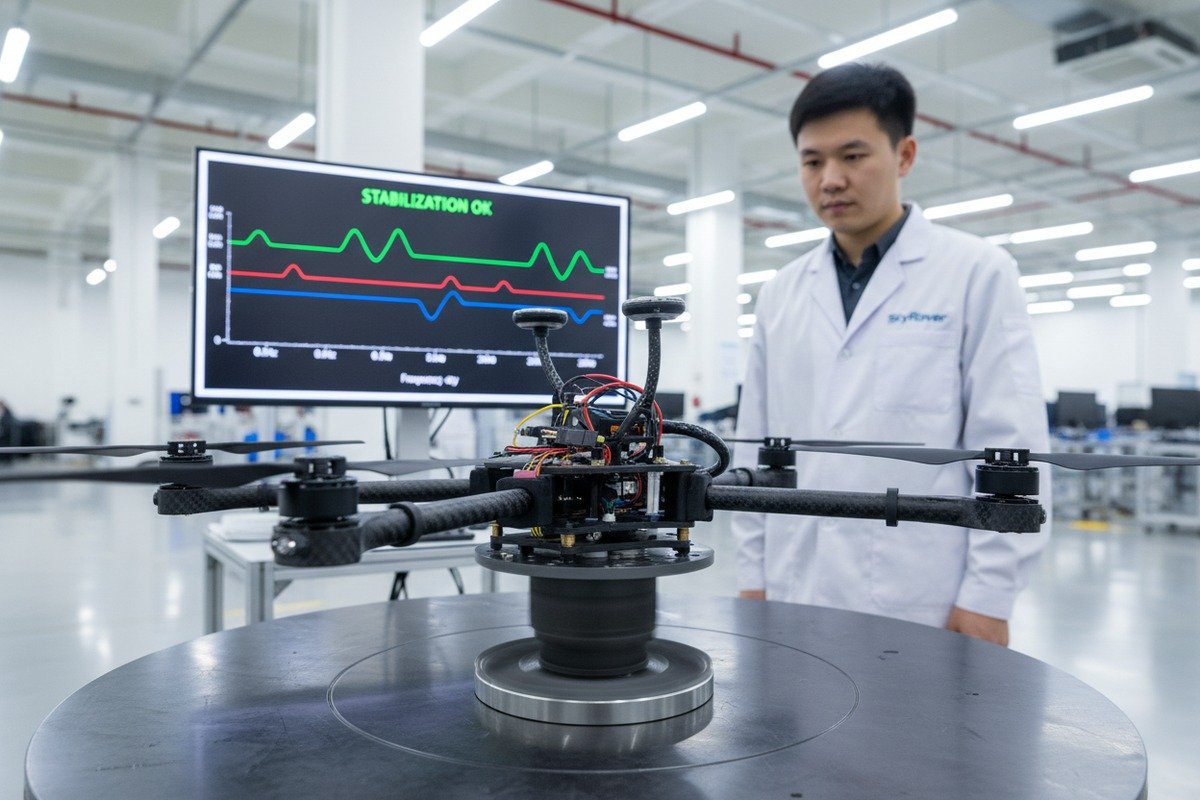
Sí, los sistemas de cardán profesionales permiten la personalización por software a través de parámetros PID ajustables, perfiles de carga configurables y protocolos de comunicación abiertos. La integración requiere igualar los bucles de control del cardán a la distribución del peso del sensor, sincronizar los disparadores GPS para imágenes geoetiquetadas y calibrar las curvas de respuesta para el centro de gravedad específico de su cámara.
Ajuste PID para cargas útiles personalizadas
PID significa Proporcional, Integral, Derivativo. Estos tres valores controlan cómo responde el gimbal al movimiento detectado. El término proporcional determina la fuerza de respuesta inmediata. El término integral corrige los errores acumulados con el tiempo. El término derivativo predice el movimiento futuro para evitar el sobreimpulso.
Al montar un nuevo sensor, la configuración PID predeterminada rara vez funciona perfectamente. Una cámara térmica más pesada necesita valores proporcionales más altos para mover el gimbal rápidamente. Un sensor más ligero necesita valores más bajos para evitar movimientos bruscos.
Nuestros ingenieros ajustan los parámetros PID durante las pruebas de integración. El proceso implica montar la carga útil, observar el comportamiento de respuesta y ajustar los valores hasta que se produzca un seguimiento suave. Algunos sistemas de gimbal ofrecen funciones de autoajuste, pero el ajuste manual generalmente produce mejores resultados para sensores especializados de extinción de incendios.
Compatibilidad del protocolo de comunicación
Los gimbals se comunican con los controladores de vuelo a través de protocolos específicos. Las opciones comunes incluyen PWM, S.Bus, CAN y UART serial. El controlador de vuelo de su dron debe hablar el mismo idioma que el gimbal.
Además, las señales de control de la cámara pasan a través del gimbal para activar la grabación, ajustar el zoom o cambiar las paletas térmicas. Estos comandos requieren protocolos compatibles entre el software de su estación terrestre y la interfaz de la carga útil.
| Protocolo | Tasa de datos | Uso Típico | Complejidad de la integración |
|---|---|---|---|
| PWM | Bajo | Control de posición básico | Simple |
| S.Bus | Medio | Control multicanal | Moderado |
| Bus CAN | Alto | Telemetría completa + control | Complejo |
| UART serie | Variable | Comandos personalizados | Moderado |
Sincronización GPS para mapeo
Los drones de extinción de incendios a menudo capturan imágenes para mapeo posterior al incendio y evaluación de daños. Esto requiere geoetiquetar cada fotograma con coordenadas GPS precisas. El cardán debe sincronizar su señal de disparo con los datos de posición del controlador de vuelo.
La precisión del tiempo es muy importante aquí. Un retraso de incluso 100 milisegundos a una velocidad de vuelo de 30 mph significa errores de posición de varios pies. Para una fotogrametría precisa del perímetro del incendio, el disparo del cardán y la marca de tiempo GPS deben alinearse dentro de los 10 milisegundos.
Nuestros sistemas incluyen puertos de sincronización de disparo que se conectan directamente al controlador de vuelo. Este enlace de hardware garantiza una precisión de tiempo que las soluciones solo de software no pueden igualar. Al adquirir drones de extinción de incendios, verifique que el cardán admita la sincronización de disparo por hardware para aplicaciones de mapeo.
Equilibrio de carga útil y centro de gravedad
El software no puede compensar completamente un mal equilibrio físico. Antes de calibrar el software, el sensor debe estar mecánicamente centrado en el cardán. Esto significa ajustar las placas de montaje y deslizar la cámara hasta que se equilibre neutralmente en los tres ejes.
Cuando el centro de gravedad está descentrado, los motores trabajan continuamente solo para mantener la posición. Esto agota las baterías más rápido y reduce el par disponible para la estabilización. Nuestros técnicos de montaje dedican un tiempo considerable a equilibrar cada carga útil antes de que comience la calibración del software.
¿Qué índices de durabilidad debo buscar para prevenir fallos del cardán en entornos industriales hostiles?
Nuestra línea de producción construye cardanes que se envían a operaciones de extinción de incendios en el desierto en Arizona y a equipos de rescate en climas fríos en Escandinavia. Las demandas ambientales varían drásticamente, pero los requisitos básicos de durabilidad siguen siendo consistentes. Un cardán que falla en el campo no solo desperdicia dinero, sino que puede costar vidas cuando los comandantes de incendios pierden la conciencia situacional.
Busque clasificaciones IP de al menos IP54 para resistencia al polvo y al agua, rangos de temperatura de funcionamiento de -20 °C a +50 °C, certificación de blindaje EMI y materiales de construcción clasificados para choque térmico. Los motores deben usar rodamientos sellados y la electrónica debe resistir la exposición a partículas de humo y productos químicos retardantes de fuego potencialmente corrosivos.

Explicación de las clasificaciones IP
El sistema de clasificación de Protección de Ingreso (IP) utiliza dos números. El primero indica la resistencia al polvo en una escala de 0 a 6. El segundo indica la resistencia al agua de 0 a 9. Para aplicaciones de extinción de incendios, IP54 representa el estándar mínimo aceptable.
IP54 significa que el cardán resiste la intrusión de polvo suficiente para evitar depósitos dañinos y maneja salpicaduras de agua desde cualquier dirección. Esto protege la electrónica interna durante condiciones de humo y operaciones con lluvia ligera. Clasificaciones más altas como IP67 (completamente hermético al polvo y sumergible) brindan márgenes de seguridad adicionales, pero aumentan el peso y el costo.
Extremos de temperatura cerca de incendios
Los incendios activos crean gradientes de temperatura extremos. Un dron puede volar desde aire ambiente de 30 °C a penachos térmicos de 60 °C en segundos. Este rápido cambio de temperatura hace que los componentes metálicos se expandan y contraigan a diferentes velocidades. Los cardanes mal diseñados desarrollan juego mecánico en sus rodamientos después de ciclos térmicos repetidos.
Las carcasas de nuestros cardanes utilizan aleaciones de aluminio elegidas específicamente por su estabilidad térmica. Los devanados del motor incluyen aislamiento de alta temperatura clasificado para operación continua a 80 °C. La electrónica está recubierta de forma conformada para evitar daños por condensación al moverse entre zonas calientes y frías.
| Factor Ambiental | Especificación mínima | Especificación recomendada | Por qué es importante |
|---|---|---|---|
| Clasificación IP | IP54 | IP67 | Exposición al humo y al agua |
| Temperatura de funcionamiento | -10 °C a +40 °C | -20°C a +50°C | Exposición a penacho térmico |
| Temperatura de almacenamiento | -20°C a +60°C | -30°C a +70°C | Almacenamiento del vehículo al sol |
| Resistencia a EMI | Blindaje básico | MIL-STD-461 9 | Interferencia de radio cerca de vehículos de emergencia |
| Vibración | 2G continuo | 5G continuo | Condiciones de vuelo turbulentas |
Blindaje EMI para Entornos de Emergencia
Las escenas de incendios concentran las comunicaciones de radio de emergencia, la electrónica del vehículo y, a veces, la interferencia de las líneas eléctricas. Este ruido electromagnético puede interrumpir las señales de control del cardán y causar un comportamiento errático. En casos extremos, la EMI induce lecturas falsas en los sensores de la IMU, lo que hace que el cardán luche contra movimientos fantasma.
Los cardanes de calidad incluyen ensamblajes de cables blindados y recintos con conexión a tierra. Las especificaciones más exigentes siguen los estándares militares como MIL-STD-461 para la compatibilidad electromagnética. Si bien este nivel de protección aumenta el costo, previene las frustrantes fallas intermitentes que causa la EMI.
Calidad de rodamientos y sellos de motor
Las partículas de humo son abrasivas. Con el tiempo, se desgastan en los rodamientos sin sellar y crean fricción mecánica. Esta fricción se manifiesta primero como ruido y luego como atasco que impide el movimiento suave. Finalmente, el rodamiento falla por completo.
Los rodamientos sellados con escudos de goma o metal evitan la intrusión de partículas. También retienen mejor el lubricante, extendiendo la vida útil. Nuestros registros de mantenimiento muestran que los cardanes con rodamientos sellados duran de 3 a 5 veces más que las versiones sin sellar en entornos con humo.
Los devanados del motor también requieren protección. Los diseños de motores abiertos permiten que las partículas de humo se depositen en los devanados, causando eventualmente cortocircuitos o fallas de aislamiento. Las carcasas de motor cerradas con ventilación filtrada mantienen la fiabilidad durante despliegues prolongados en temporada de incendios.
Conclusión
Seleccionar las especificaciones correctas del cardán determina si su dron de lucha contra incendios proporciona inteligencia procesable o imágenes inútiles. Priorice la estabilización de 3 ejes, los motores de bajo KV con el par adecuado y las clasificaciones de durabilidad que coincidan con su entorno operativo. Estas inversiones rinden dividendos a través de un rendimiento fiable cuando más importa.
Notas al pie
1. Explica la función y los tipos de cardanes, incluida la estabilización de 3 ejes. ↩︎
2. Proporciona una descripción general de los principios básicos de los motores de CC sin escobillas de un fabricante. ↩︎
3. Se reemplazó el enlace HTTP 403 con una página autorizada de Wikipedia que explica la geolocalización de diversos medios, incluidas las imágenes. ↩︎
4. Explicación oficial de los códigos de protección de ingreso (IP) por la IEC. ↩︎
5. Proporciona una definición y explicación completa de las IMU. ↩︎
6. Se reemplazó el enlace HTTP 403 con una página autorizada de Wikipedia que explica los algoritmos de control PID. ↩︎
7. Explica las constantes del motor, incluido Kv, de un fabricante de motores. ↩︎
8. Proporciona una descripción general de los protocolos de comunicación industrial. ↩︎
9. Describe el estándar militar para la compatibilidad electromagnética. ↩︎

 English
  Español de México
  Deutsch
  Français
  Русский
  العربية
