
Cuando nuestro equipo de ingeniería comenzó a probar baterías en condiciones de incendio simuladas, descubrimos algo preocupante Normas IEC 61960 1. Las clasificaciones de ciclos proporcionadas por los proveedores a menudo se redujeron en un 40% en calor del mundo real. Esta brecha cuesta a los operadores de flotas miles en reemplazos inesperados.
Debe solicitar datos de ciclo de vida a temperaturas elevadas (50–60 °C), curvas de degradación que muestren la pérdida de capacidad por cada 100 ciclos, temperaturas de inicio de fuga térmica, impacto de la carga rápida en la vida útil e informes de pruebas de terceros siguiendo las normas IEC 61960. Estos datos revelan los costos operativos reales y los márgenes de seguridad.
Las siguientes secciones detallan exactamente qué métricas exigir, cómo el calor extremo afecta el rendimiento, qué informes de prueba son más importantes y cómo calcular sus costos reales a largo plazo.
¿Cuántos ciclos de carga puedo esperar de forma realista de las baterías de drones de extinción de incendios de gama alta?
En nuestro piso de producción, vemos un patrón común. Los equipos de adquisiciones reciben números impresionantes de vida útil de los ciclos de los proveedores, luego se enfrentan a fallas prematuras de las baterías en el campo Química NMC 2. La desconexión entre las clasificaciones de laboratorio y el rendimiento real crea caos presupuestario.
Las baterías de drones de extinción de incendios de alta gama suelen ofrecer entre 800 y 1.200 ciclos para la química NMC y entre 2.000 y 3.000 ciclos para la química LFP con una retención de capacidad del 80%. Sin embargo, estas cifras asumen condiciones ideales de 25 °C. A temperaturas de extinción de incendios de 50-60 °C, espere entre un 40 y un 50 % menos de ciclos.

Comprensión de las clasificaciones de vida útil del ciclo
La vida útil del ciclo se refiere al número de ciclos completos de carga-descarga antes de que la capacidad de la batería caiga por debajo del 80% de su clasificación original. Retención de capacidad del 80% 3 Este umbral del 80% es el estándar de la industria para el final de la vida útil.
Cuando probamos baterías en nuestras instalaciones, rastreamos múltiples puntos de referencia. La marca de retención del 80% es la línea de base. También monitoreamos la retención del 70% para la planificación de uso extendido. Estos números ayudan a los gerentes de flotas a programar reemplazos antes de que ocurran fallas críticas.
La química importa más que las afirmaciones de marketing
Diferentes químicas de baterías ofrecen recuentos de ciclos muy diferentes. Esto es lo que revela nuestra prueba:
| Química de la batería | Vida útil típica del ciclo (25°C) | Vida útil del ciclo (55°C) | Densidad de energía (Wh/kg) |
|---|---|---|---|
| NMC (Estándar) | 800–1,200 ciclos | 400–700 ciclos | 160–220 |
| NCM811 (Alto contenido de níquel) | 600–1,000 ciclos | 300–600 ciclos | 260–420 |
| LFP | 2,000–3,000 ciclos | 1,200–1,800 ciclos | 120–180 |
| LiPo (Estándar) | 300–500 ciclos | 150–300 ciclos | 140–200 |
Las baterías LFP ofrecen la vida útil más larga pero sacrifican el tiempo de vuelo debido a una menor densidad de energía. NCM811 proporciona la máxima duración de vuelo pero se degrada más rápido bajo estrés por calor. Su perfil de misión determina el equilibrio adecuado.
La profundidad de descarga lo cambia todo
Qué tan profundamente descarga las baterías afecta drásticamente el recuento total de ciclos. Nuestros ingenieros rastrean esta relación de cerca:
Al 50% profundidad de descarga 4, las baterías a menudo logran más de 2000 ciclos. Con una profundidad de descarga del 100%, la misma batería podría ofrecer solo 800–1000 ciclos. Las operaciones de extinción de incendios suelen exigir una descarga completa para obtener el máximo tiempo de vuelo. Solicite datos de vida útil del ciclo específicamente con una profundidad de descarga del 100%.
Qué solicitar a los proveedores
Solicite a los proveedores curvas de degradación que muestren la pérdida de capacidad por cada 100 ciclos a su temperatura de funcionamiento esperada. Solicite datos para escenarios de descarga parcial (50%) y completa (100%). Exija resultados de pruebas a temperaturas ambiente de 40 °C, 50 °C y 60 °C.
Si un proveedor solo proporciona datos a 25 °C, trate sus afirmaciones sobre la vida útil del ciclo con escepticismo. Las condiciones reales de extinción de incendios rara vez coinciden con la comodidad del laboratorio.
¿Cómo afectará el calor extremo durante las misiones de emergencia a la vida útil de la batería de mi dron?
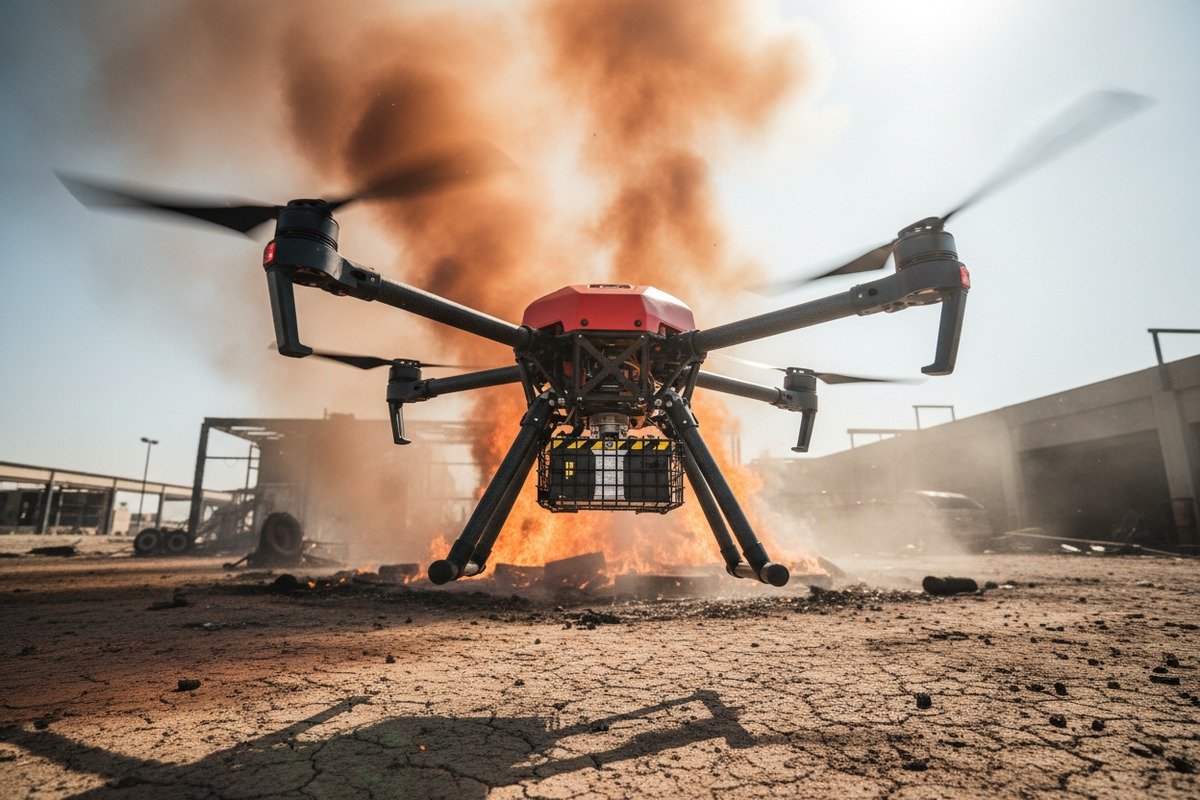
Aprendimos esta lección durante las pruebas de validación de campo en Arizona. Las baterías que funcionaron sin problemas en nuestra cámara de pruebas con clima controlado mostraron caídas alarmantes de capacidad después de solo unas semanas de despliegue en el desierto. El calor es el asesino silencioso de la vida útil de la batería.
El calor extremo acelera la descomposición química dentro de las baterías de litio, reduciendo la vida útil del ciclo en un 40–60% con un funcionamiento sostenido a 50–60°C. La resistencia interna aumenta aproximadamente 1–2% por grado Celsius por encima de los 25°C, causando una caída de voltaje que compromete el rendimiento y la seguridad del vuelo.
La Química del Daño por Calor
El calor descompone el electrolito líquido dentro de las baterías de litio convencionales. Esta descomposición crea acumulación de gas, aumenta la resistencia interna y reduce el material activo disponible para el almacenamiento de energía.
A 55 °C, las reacciones químicas se aceleran exponencialmente en comparación con la operación a 25 °C. Nuestras pruebas muestran que las baterías que operan continuamente a temperaturas elevadas pierden capacidad casi el doble de rápido que las que se mantienen frías.
Métricas Térmicas Críticas a Solicitar
Al evaluar proveedores, exija estas especificaciones térmicas específicas:
| Métrica Térmica | Lo que te dice | Rango Aceptable |
|---|---|---|
| Temperatura Máxima de Operación Continua | Límite de operación sostenida segura | 55–60 °C |
| Tolerancia a la Temperatura Pico | Límite de exposición breve | 65–70 °C |
| Temperatura de Inicio de Fuga Térmica 6 | Punto de fallo de seguridad | >150 °C |
| Aumento de la resistencia interna por °C | Tasa de degradación del rendimiento | <2% por °C |
| Caída de voltaje a 50°C | Entrega de potencia bajo calor | Caída de <0.5V |
La tecnología de separadores salva vidas
El separador dentro de las baterías previene cortocircuitos internos. Los separadores tradicionales de poliolefina se vuelven inestables a altas temperaturas. Separadores cerámicos recubiertos de alúmina 7 mantienen la integridad incluso durante el estrés térmico.
Nuestras líneas de producción ahora utilizan exclusivamente tecnología de separadores cerámicos para aplicaciones de extinción de incendios. Las pruebas muestran un riesgo de cortocircuito interno inferior al 2% en comparación con más del 20% para alternativas de poliolefina. Esta diferencia puede prevenir una fuga térmica catastrófica durante las operaciones de supresión de incendios.
Integración de gestión térmica
Los sistemas avanzados de baterías incluyen gestión térmica activa. Esto puede incluir:
- Materiales de cambio de fase que absorben el exceso de calor
- Sistemas de refrigeración activa con pequeños ventiladores o refrigeración líquida
- BMS consciente de la temperatura que reduce las tasas de carga cuando está caliente
- Integración de imágenes térmicas para monitoreo en tiempo real
Solicitar documentación sobre cómo el sistema de gestión térmica del proveedor extiende la vida útil del ciclo bajo operación a alta temperatura. Solicitar datos comparativos de vida útil del ciclo con y sin enfriamiento activo activado.
Consideraciones de almacenamiento
El envejecimiento por calendario ocurre incluso cuando las baterías están inactivas. Las altas temperaturas de almacenamiento aceleran esta degradación. Solicitar datos de vida útil por calendario que muestren la retención de capacidad después de 6, 12 y 24 meses a varias temperaturas de almacenamiento.
Los sistemas estándar de iones de litio pierden entre 2 y 3% de capacidad por mes en almacenamiento. Las condiciones óptimas de almacenamiento suelen requerir un estado de carga del 30 al 50% y temperaturas entre 15 y 25 °C. Las flotas de bomberos a menudo almacenan baterías durante meses entre temporadas altas. Este envejecimiento por calendario se acumula.
¿Qué informes de prueba específicos debo solicitar para verificar la durabilidad de la batería de mis drones industriales?
Durante las auditorías de proveedores en nuestras instalaciones, hemos revisado cientos de hojas de especificaciones de baterías. Muchas contienen números impresionantes sin evidencia de respaldo. La validación de terceros separa las afirmaciones de marketing de la realidad de ingeniería.
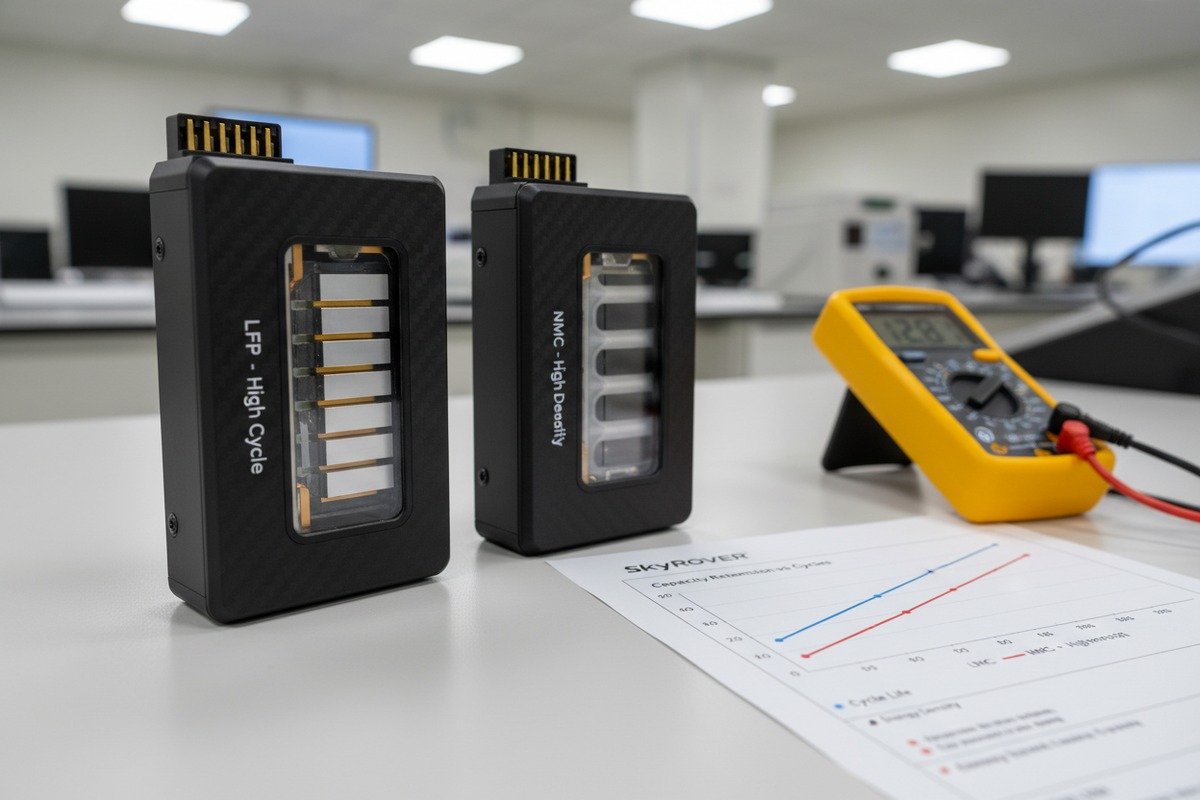
Solicitar informes de prueba certificados por la IEC 61960 de laboratorios acreditados que muestren curvas de vida útil a múltiples temperaturas, datos de caída de voltaje bajo carga máxima, resultados de pruebas de fuga térmica y documentación del tiempo de respuesta del BMS. Verificar que los informes incluyan datos brutos, no solo estadísticas resumidas.
Certificaciones esenciales de terceros
Los laboratorios de pruebas independientes brindan verificación imparcial. Busque estos estándares de certificación:
| Certificación | Qué cubre | Por qué es importante |
|---|---|---|
| IEC 61960 | Vida útil del ciclo y rendimiento | Estándar internacional para baterías secundarias de litio |
| UL 2054 | Pruebas de seguridad | Requerido para el cumplimiento del mercado de EE. UU. |
| UL94 V0 | Carcasa ignífuga | Se autoextingue en 10 segundos |
| UN 38.3 8 | Seguridad en el transporte | Requerido para envíos aéreos y terrestres |
| Marcado CE | Conformidad europea | Requerido para entrar en el mercado de la UE. |
Requisitos del informe de prueba de ciclo de vida
Los informes completos de ciclo de vida deben incluir curvas de degradación graficadas frente al número de ciclo a múltiples temperaturas. Solicite datos a 25 °C (línea de base), 40 °C (operación en caliente) y 55 °C (condiciones de extinción de incendios).
Las curvas deben mostrar porcentajes de retención de capacidad a 100, 200, 500 y 1.000 ciclos. La degradación lineal sugiere una química estable. La aceleración de la degradación indica posibles problemas de fiabilidad.
Documentación del BMS
Los sistemas de gestión de baterías evitan fallos catastróficos. Solicite documentación que cubra:
- Tiempo de respuesta a condiciones de fallo (debe ser inferior a 100 milisegundos)
- Resolución de monitorización de temperatura y ubicación de los sensores
- Precisión y metodología del balanceo de celdas
- Umbrales de protección contra sobrecarga y sobredescarga
- Protocolos de detección y apagado por fuga térmica
Nuestro equipo de ingeniería revisa las especificaciones del BMS para cada batería que integramos. Los sistemas sin detección de fuga térmica no son adecuados para aplicaciones de extinción de incendios donde la exposición al calor está garantizada.
Pruebas por lotes y control de calidad
Las pruebas individuales de baterías solo demuestran que una muestra funciona bien. Las pruebas por lotes revelan la consistencia de la fabricación. Solicite datos de control estadístico de procesos que muestren la varianza en las series de producción.
Haga estas preguntas a los proveedores:
- ¿Qué porcentaje de baterías de cada lote se someten a pruebas?
- ¿Cuál es la desviación estándar en el rendimiento de la vida útil del ciclo entre lotes?
- ¿Mantiene la trazabilidad del número de serie para reclamaciones de garantía?
- ¿Puede proporcionar datos históricos de rendimiento de lotes anteriores?
Revisión de la documentación de garantía
Los términos de la garantía revelan la confianza del proveedor en sus productos. Las garantías sólidas especifican garantías de recuento de ciclos, compromisos de vida útil en calendario y expectativas de tasa de fallos.
Esté atento a las exclusiones de garantía. Algunos proveedores anulan la cobertura por uso de carga rápida u operación a alta temperatura. Si sus operaciones de extinción de incendios requieren estas condiciones, la garantía puede no tener valor.
Solicite confirmación por escrito de que la cobertura de la garantía se aplica a su caso de uso específico, incluidas las temperaturas y los protocolos de carga esperados.
¿Cómo puedo calcular los costos de reemplazo a largo plazo para mi flota de drones de extinción de incendios basándome en los datos del proveedor?
Cuando ayudamos a los clientes a planificar despliegues de flotas, los cálculos del costo total a menudo los sorprenden. La batería más barata al principio se convierte con frecuencia en la opción más cara con el tiempo. La adquisición inteligente requiere matemáticas del ciclo de vida.
Calcule el costo por ciclo dividiendo el costo total de la batería por el número esperado de ciclos en sus condiciones de operación. Una batería de $500 que dura 1,000 ciclos cuesta $0.50 por ciclo, mientras que una batería de $800 que dura 2,500 ciclos cuesta $0.32 por ciclo. Incluya los costos del cargador, los módulos de BMS de reemplazo y los gastos por tiempo de inactividad.

La fórmula del costo por ciclo
Esta sencilla fórmula revela la verdadera economía de las baterías:
Costo por Ciclo = Costo Total de la Batería ÷ Ciclos hasta el 80% de Capacidad (a su temperatura de operación)
Utilice los datos de ciclos proporcionados por el proveedor para sus condiciones de operación reales, no las clasificaciones ideales de laboratorio. Si los proveedores solo proporcionan datos a 25 °C, reduzca las expectativas de ciclos en un 40-50% para los cálculos de extinción de incendios.
Comparación de costos integral
Aquí hay una comparación realista utilizando datos reales del mercado:
| Factor de costo | Batería económica | Batería de gama media | Batería premium |
|---|---|---|---|
| Costo unitario | $400 | $650 | $950 |
| Ciclos (a 55 °C) | 350 | 700 | 1,200 |
| Costo por Ciclo | $1.14 | $0.93 | $0.79 |
| Conteo de reemplazo de 5 años (se necesitan 2000 ciclos) | 6 baterías | 3 baterías | 2 baterías |
| Costo total en 5 años | $2,400 | $1,950 | $1,900 |
La batería premium cuesta más del doble por adelantado, pero ofrece el menor costo total durante cinco años.
Costos ocultos a incluir
Los costos de reemplazo de la batería van más allá del precio de la unidad:
- Costos de inactividad: Cada reemplazo pone los drones fuera de servicio. Para las operaciones de respuesta a emergencias, esta indisponibilidad tiene consecuencias reales.
- Envío y logística: El envío internacional agrega $50–150 por batería según el tamaño y el destino.
- Costos de eliminación: Muchas regiones requieren reciclaje certificado de baterías, lo que agrega $20–50 por unidad.
- Costos de mano de obra: El cambio de baterías, la actualización del firmware y la recalibración de los sistemas requieren tiempo de técnico.
- Desgaste del cargador: Los ciclos de carga rápida aceleran la degradación de los componentes del cargador.
Cálculos a escala de flota
Para flotas con múltiples drones, multiplique los costos de una sola batería en toda su operación. Una flota de 10 drones que opera 3.000 ciclos totales anualmente podría necesitar de 3 a 5 reemplazos de batería por año con celdas económicas frente a 1 a 2 con alternativas premium.
Tenga en cuenta su ritmo operativo. Las operaciones de extinción de incendios durante la temporada alta de incendios forestales pueden comprimir los recuentos del ciclo anual en solo unos pocos meses. Este uso concentrado genera estrés térmico que acelera la degradación más allá de las proyecciones estándar.
Trabajar con proveedores sobre datos de costos
Solicite desgloses de precios detallados que incluyan:
- Costo base del paquete de baterías
- Sistemas de cargador compatibles
- Módulos BMS de reemplazo (si están disponibles por separado)
- Primas de garantía extendida
- Descuentos por compra al por mayor
Pida a los proveedores que calculen el costo por ciclo utilizando sus propios datos. Los proveedores seguros de sus productos proporcionarán este análisis. Aquellos que se nieguen pueden estar ocultando números desfavorables.
Nuestro equipo de ventas proporciona estos cálculos para cada cotización de cliente. La transparencia genera confianza y ayuda a los gerentes de adquisiciones a justificar las compras ante sus superiores.
Conclusión
La adquisición de baterías para drones de extinción de incendios exige datos más allá de las afirmaciones de marketing. Solicite la vida útil del ciclo específica de la temperatura, métricas de estabilidad térmica, certificaciones de terceros y cálculos de costo por ciclo. Esta información protege su inversión y garantiza la confiabilidad de la misión cuando las vidas dependen de su equipo.
Notas al pie
1. Norma internacional oficial para baterías secundarias de litio. ↩︎
2. Proporciona información completa sobre la química de las baterías de Níquel Manganeso Cobalto. ↩︎
3. Explica el estándar de la industria para el final de la vida útil de las baterías y sus implicaciones. ↩︎
4. Define y explica el concepto de profundidad de descarga de la batería. ↩︎
5. Ofrece información detallada sobre la química de las baterías de Litio Hierro Fosfato. ↩︎
6. Explica la fuga térmica y sus implicaciones críticas de seguridad para las baterías. ↩︎
7. Detalla la tecnología y los beneficios de los separadores de baterías con recubrimiento cerámico. ↩︎
8. Fuente autorizada sobre el estándar obligatorio de seguridad para el transporte de baterías de litio. ↩︎

 English
  Español de México
  Deutsch
  Français
  Русский
  العربية
