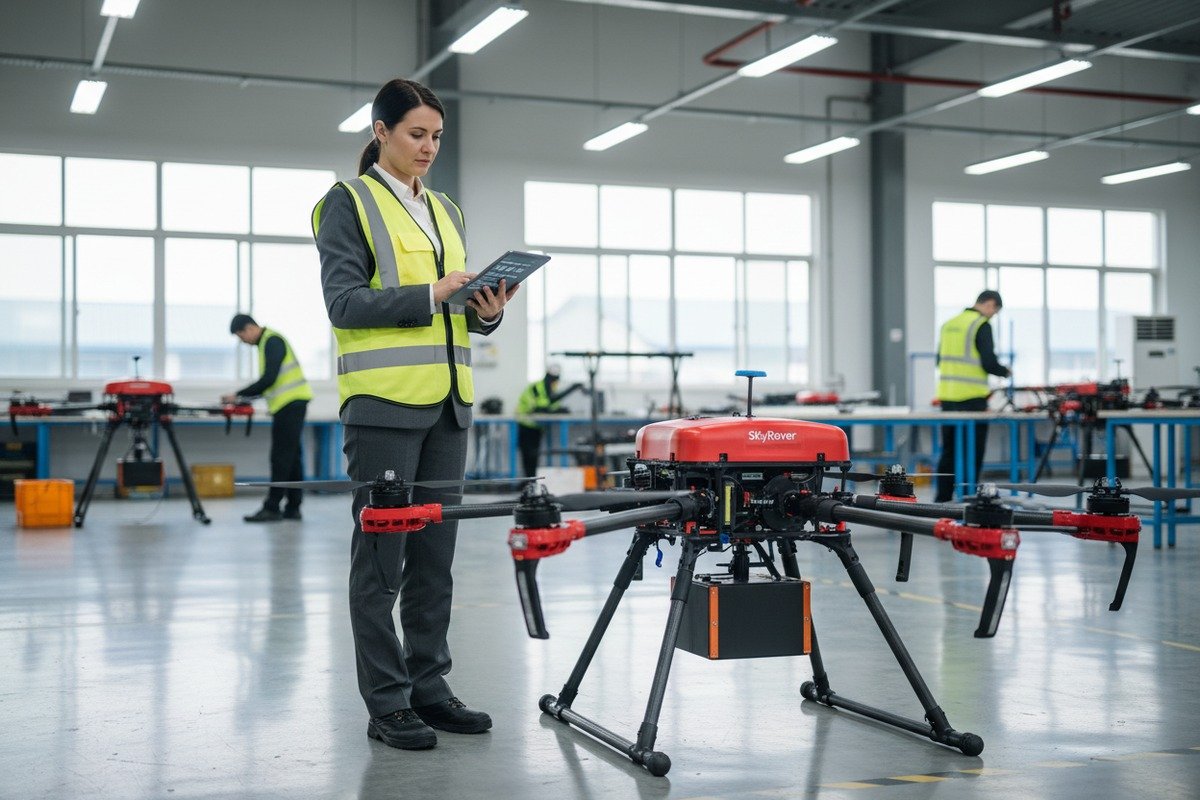
En nuestras líneas de producción en Xi’an, hemos visto a los departamentos de bomberos luchar con el tiempo de inactividad de los drones durante misiones críticas Clasificaciones IP 1. Un solo sensor defectuoso puede dejar inoperativa a toda una unidad durante días. Esta frustración impulsa a los gerentes de compras a buscar mejores soluciones.
Para evaluar el diseño modular para el mantenimiento y las actualizaciones de drones de extinción de incendios, evalúe el tiempo medio de reparación (MTTR), verifique la estandarización de componentes, valide la capacidad de intercambio en caliente, pruebe la durabilidad en condiciones extremas y confirme la documentación del proveedor para piezas de repuesto. Estos cinco criterios determinan el verdadero valor de la modularidad.
Esta guía lo guiará a través de cada paso de evaluación. Aprenderá métodos prácticos para probar las afirmaciones de modularidad antes de la compra. Comencemos con los fundamentos.
¿Cómo puedo evaluar si un diseño de dron modular realmente reducirá mi tiempo de inactividad de mantenimiento?
Cuando calibran los controladores de vuelo en nuestras instalaciones, registramos cada minuto de tiempo de mantenimiento. Los departamentos de bomberos no pueden permitirse reparaciones prolongadas durante la temporada de incendios forestales. La verdadera pregunta es si la modularidad cumple su promesa.
Para evaluar si un diseño de dron modular reduce el tiempo de inactividad del mantenimiento, mida el MTTR mediante cambios de componentes cronometrados, verifique el desmontaje sin herramientas, compruebe la accesibilidad del puerto de diagnóstico y confirme la disponibilidad de piezas de repuesto. Objetivo de MTTR inferior a 15 minutos para cambios de batería y sensor.
Comprensión del Tiempo Medio de Reparación (MTTR)
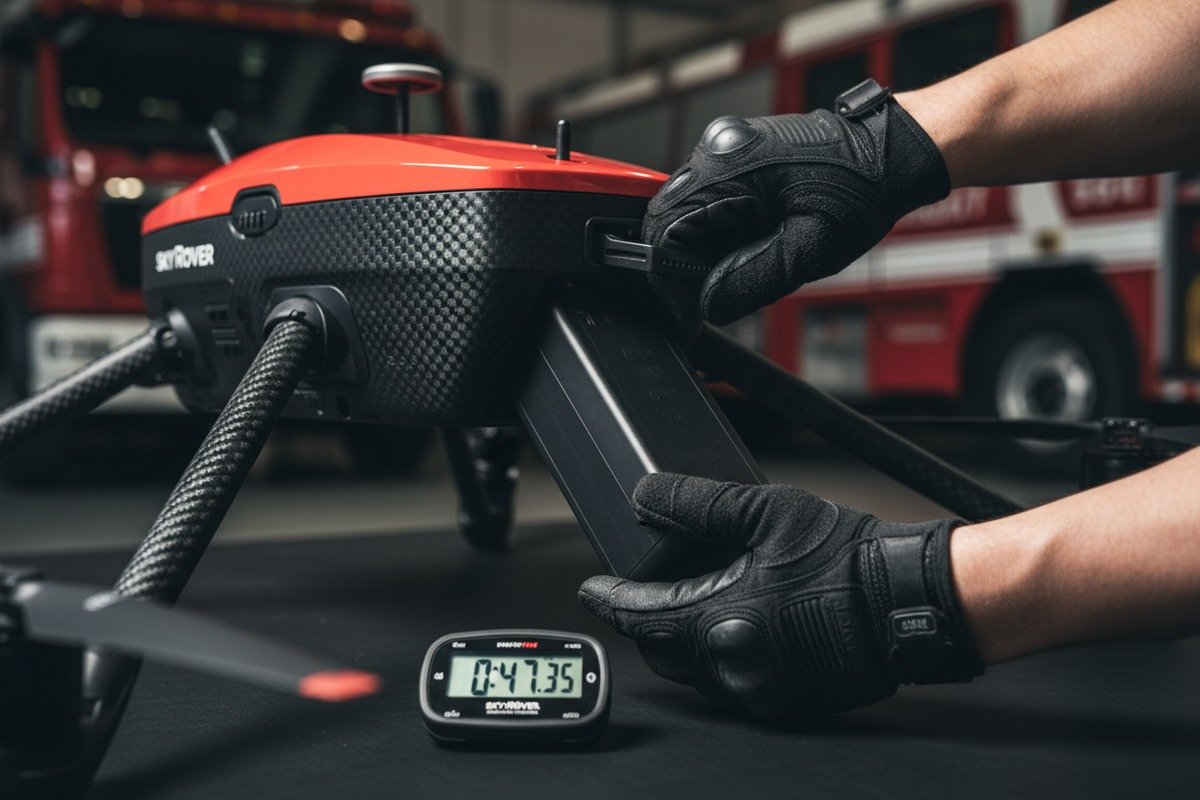
El MTTR es su métrica más importante. Mide el tiempo promedio necesario para restaurar un dron a su estado operativo. tiempo medio de reparación (MTTR) 2 Nuestro equipo de ingeniería recomienda probar esto usted mismo antes de comprar.
Aquí le mostramos cómo realizar una prueba práctica de MTTR:
- Solicite una unidad de demostración al proveedor
- Mida su tiempo al cambiar baterías, cámaras y módulos de carga útil
- Repita cada cambio tres veces y calcule el promedio
- Compare los resultados con el MTTR reclamado por el proveedor
Un dron verdaderamente modular debería permitir el cambio de baterías en menos de 2 minutos. Los cambios de sensores deberían tomar menos de 5 minutos. Los reemplazos de módulos de carga útil deberían mantenerse por debajo de los 10 minutos.
Características de Diseño Clave que Reducen el Tiempo de Inactividad
No todas las afirmaciones de modularidad son iguales. Busque estas características específicas:
| Característica | Por qué es importante | Qué revisar |
|---|---|---|
| Baterías intercambiables en caliente 3 | Cero interrupción de energía durante los cambios | ¿Se puede cambiar mientras el dron está en modo de espera? |
| Pestillos sin herramientas | No hay que buscar herramientas en el campo | ¿Son robustos los mecanismos de liberación rápida? |
| Puertos de diagnóstico | Solución de problemas rápida | ¿Se puede leer el estado del BMS al instante? |
| Conectores codificados por colores | Previene errores de instalación | ¿Son las conexiones a prueba de fallos? |
| Puntos de montaje estandarizados 4 | Compatibilidad universal | ¿Encajan los accesorios de terceros? |
Comparación real: Diseños modulares vs. integrados
Hemos probado ambos enfoques exhaustivamente. Esto es lo que muestran los datos:
| Métrica | Diseño Modular | Diseño Integrado |
|---|---|---|
| MTTR Promedio | 8-15 minutos | 45-120 minutos |
| Capacidad de reparación en campo | 85% de los problemas | 20% de los problemas |
| Herramientas requeridas | Ninguna a mínima | Kit de herramientas especializado |
| Tiempo de capacitación del técnico | 4-8 horas | Más de 40 horas |
| Costo del inventario de repuestos | Menor (estandarizado) | Mayor (piezas únicas) |
Los números cuentan una historia clara. Los diseños modulares reducen el tiempo de reparación en un 40-60%. Esto se traduce directamente en más horas de vuelo durante emergencias.
Calculando sus ahorros reales de tiempo de inactividad
Antes de comprar, calcule sus ahorros esperados. Utilice esta fórmula:
Costo anual de tiempo de inactividad = (Reparaciones promedio por año) × (MTTR en horas) × (Costo operativo por hora)
Para un departamento de bomberos que realiza 200 misiones anuales con 10 reparaciones requeridas, la diferencia es significativa. Un dron modular con un MTTR de 15 minutos frente a un dron integrado con un MTTR de 90 minutos ahorra más de 12 horas operativas al año.
¿Qué características debo comprobar para asegurarme de que mi dron de extinción de incendios es compatible con futuras actualizaciones de sensores?
Nuestro equipo de I+D desarrolla constantemente nuevas integraciones de sensores. Sabemos que la tecnología de supresión de incendios evoluciona rápidamente. Su inversión en drones debe adaptarse a las innovaciones del mañana.
Asegure la compatibilidad futura de las actualizaciones de sensores verificando la arquitectura abierta de la bahía de carga útil, comprobando la estandarización de la interfaz eléctrica, confirmando las vías de actualización de software y probando la compatibilidad con versiones anteriores. Busque capacidades de carga útil modulares de 10-25 kg con sistemas de montaje universales.

Evaluación de la arquitectura del compartimento de carga útil
El compartimento de carga útil es su puerta de entrada a las actualizaciones. Su diseño determina qué sensores puede agregar más adelante. Al inspeccionar un dron, examine estos elementos:
Factores de compatibilidad física:
- Dimensiones y patrones de los rieles de montaje
- Capacidad máxima de peso de la carga útil
- Rango de ajuste del centro de gravedad
- Calidad de aislamiento de vibraciones
Las plataformas de elevación pesada como la YSF-150 ofrecen una capacidad total de 150 kg con 23 kg por módulo extintor. Este margen permite importantes actualizaciones futuras.
Estándares de interfaz eléctrica y de datos
Las interfaces estandarizadas evitan el bloqueo del proveedor. Pregunte a los proveedores sobre sus protocolos de conexión:
| Tipo de interfaz | Estándar de la industria | Riesgo propietario |
|---|---|---|
| Conexiones de alimentación | XT60/XT90 | Bajo |
| Protocolos de datos | MAVLink 5, DJI SDK | Medio |
| Salida de vídeo | HDMI, transmisión IP | Bajo |
| Soportes para sensores | Rieles tipo Picatinny | Medio |
| Interfaces de cardán | Varía ampliamente | Alto |
Solicite documentación sobre especificaciones eléctricas. Los rangos de voltaje, los límites de amperaje y los protocolos de comunicación deben indicarse claramente.
Vías de actualización de software
El hardware no significa nada sin soporte de software. Los drones modernos de extinción de incendios integran IA para la evaluación de incendios en tiempo real. Verifique estas capacidades de software:
Características esenciales del software:
- Actualizaciones de firmware por aire
- API abierta 6 para la integración de sensores de terceros
- Arquitectura de software modular
- Registro de vuelos basado en la nube
Drones como la serie DOFEC ofrecen IA a bordo que se adapta automáticamente a nuevos sensores. Esto reduce el tiempo de reconfiguración al actualizar.
Lista de verificación para la preparación para el futuro
Utilice esta lista de verificación al evaluar el potencial de actualización:
- ¿El fabricante publica las especificaciones de la interfaz?
- ¿Las actualizaciones de firmware son gratuitas durante la vida útil esperada del dron?
- ¿Se pueden integrar sensores de terceros sin anular la garantía?
- ¿Existe una ruta de actualización documentada para los próximos 3-5 años?
- ¿El proveedor ofrece servicios de instalación de actualizaciones?
Nuestra experiencia demuestra que el 70% de los nuevos modelos de drones ahora presentan verdadera modularidad. Sin embargo, solo alrededor del 40% ofrecen arquitecturas abiertas genuinas para actualizaciones de terceros.
Análisis de Costos de Actualización de Sensores
Planifique su presupuesto de actualización cuidadosamente:
| Tipo de Sensor | Costo típico | Complejidad de la integración |
|---|---|---|
| Actualización de cámara térmica | $3,000-8,000 | Bajo |
| Sensor de detección de gas | $2,000-5,000 | Medio |
| Unidad de mapeo LiDAR | $8,000-15,000 | Alto |
| Procesador avanzado de IA | $4,000-10,000 | Medio |
| Radio de largo alcance | $1,500-4,000 | Bajo |
Los drones modulares suelen ahorrar entre un 30 y un 50% en la instalación de actualizaciones en comparación con los diseños integrados. Los ahorros provienen de la reducción de mano de obra y la eliminación de modificaciones del fuselaje.
¿Cómo verifico la fiabilidad de los componentes modulares cuando operan en condiciones extremas de incendio?
En nuestras instalaciones de prueba, simulamos entornos hostiles que los drones enfrentan durante incendios reales. El calor, el humo, el agua y los escombros desafían cada punto de conexión. Su evaluación debe tener en cuenta estos extremos.
Verificar la fiabilidad de los componentes modulares realizando pruebas de estrés en condiciones simuladas de incendio, comprobando las clasificaciones IP de resistencia al agua y al polvo, revisando los rangos de temperatura de funcionamiento (mínimo de -20 °C a 60 °C) y solicitando datos de pruebas de ciclo que muestren una durabilidad de más de 100 intercambios de componentes.

Calificaciones de Temperatura y Ambientales
Las escenas de incendios presentan desafíos térmicos extremos. Un dron que se cierne cerca de las llamas experimenta fluctuaciones rápidas de temperatura. Las conexiones modulares deben mantener la integridad en todo momento.
Especificaciones ambientales mínimas para la lucha contra incendios:
| Parámetro | Requisito mínimo | Especificación preferida |
|---|---|---|
| Temperatura de operación | -10°C a 50°C | -20°C a 60°C |
| Resistencia al agua | IP54 | IP67 |
| Protección contra el polvo | IP5X | IP6X |
| Tolerancia a la vibración | Aceleración de 2G | Aceleración de 5G |
| Rango de humedad | 20-80% HR | 10-95% HR |
El DJI Matrice 300 RTK, por ejemplo, sobrevive a sitios de alta temperatura con un rendimiento documentado. Solicite documentación similar a cualquier proveedor.
Pruebas de durabilidad de conectores y juntas
Las juntas modulares representan posibles puntos de falla. Nuestro proceso de control de calidad incluye pruebas rigurosas de conectores. Debe solicitar evidencia de:
Resultados de pruebas de ciclo:
- Mínimo 100 ciclos de inserción/extracción de batería
- Mínimo 50 ciclos de intercambio de carga útil
- Mediciones de resistencia de contacto del conector
- Pruebas de fatiga del mecanismo de pestillo
Algunos críticos argumentan que las juntas modulares pueden fallar bajo estrés de alta vibración o térmico. Esta preocupación es válida para sistemas mal diseñados. Los drones modulares de calidad utilizan conectores de grado aeroespacial 7 que superan los requisitos mil-spec.
Consideraciones de durabilidad en el mundo real
Recomendamos estas pruebas prácticas antes de la compra:
Protocolo de simulación de campo:
- Exponer el dron a un rociado directo de agua durante 5 minutos
- Operar a temperaturas superiores a 40 °C durante 30 minutos
- Someter a exposición simulada a humo
- Realizar intercambios rápidos de componentes mientras se usan guantes de bombero
- Verificar la resistencia a la corrosión de todas las conexiones eléctricas
Documentar todo. Compare sus hallazgos con las afirmaciones del fabricante. Las discrepancias revelan exageraciones de marketing.
Compensaciones de peso y rendimiento
Los diseños modulares añaden peso de conectores y carcasas. Esto afecta el tiempo de vuelo y la capacidad de carga útil. Aquí está la evaluación honesta de la compensación:
| Factor | Impacto modular | Estrategia de mitigación |
|---|---|---|
| Peso añadido | +5-15% vs. integrado | Elija materiales de conector ligeros |
| Reducción del tiempo de vuelo | -5-10% típico | Seleccione baterías de mayor capacidad |
| Riesgo de fallo del conector | Existe en cada unión | Diseños de conexión redundantes de demanda |
| Aumento de la velocidad de reparación | +40-60% más rápido | Supera la penalización de peso para la mayoría de los usuarios |
Para los departamentos de bomberos de alto uso, la ventaja de velocidad de mantenimiento supera con creces la modesta penalización de peso. Los departamentos pequeños con misiones limitadas pueden preferir diseños integrados más simples.
BMS y detección predictiva de fallos
Moderno sistemas de gestión de baterías (BMS) 8 transformar el mantenimiento de reactivo a predictivo. Las funciones avanzadas de BMS incluyen:
- Monitorización de voltaje de celda en tiempo real
- Detección de anomalías de temperatura
- Seguimiento del recuento de ciclos
- Estimación de la vida útil restante
Estos sistemas pueden predecir fallos antes de que ocurran, extendiendo la vida útil de la batería en un 20-30%. Al evaluar drones, pregunte sobre las capacidades del BMS y la accesibilidad de los datos.
¿Puede mi proveedor ofrecer la documentación técnica y las piezas que necesito para reparaciones modulares?
Cuando enviamos drones a Estados Unidos y Europa, incluimos completos paquetes de documentación. Entendemos que su equipo de mantenimiento necesita una guía clara. No todos los proveedores cumplen con este estándar.
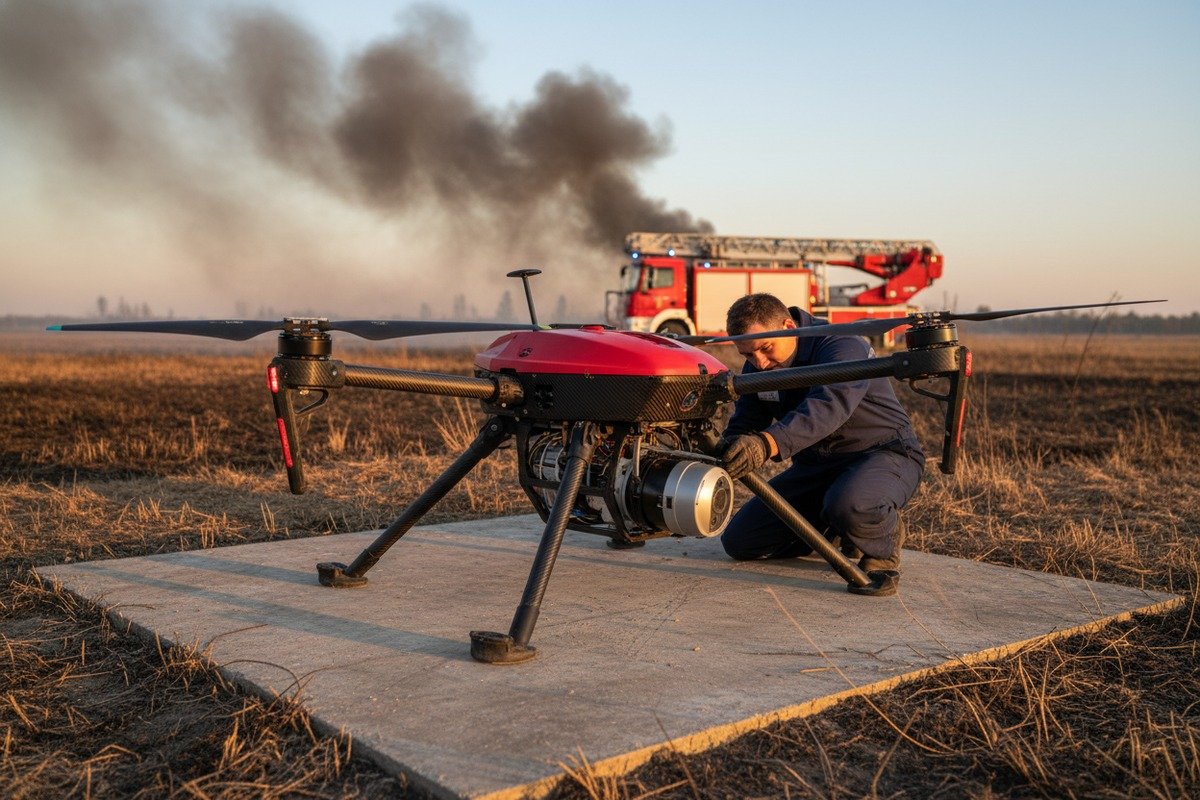
Verifique la capacidad de documentación del proveedor solicitando manuales de mantenimiento completos, catálogos de repuestos con precios, diagramas de cableado, procedimientos de actualización de software y materiales de capacitación. Confirme las garantías de disponibilidad de piezas y los tiempos máximos de entrega para componentes críticos.
Requisitos de documentación esenciales
Antes de firmar cualquier acuerdo de compra, exija estos documentos:
Paquete de documentación requerido:
- Manual de mantenimiento completo con procedimientos paso a paso
- Diagramas de piezas desglosadas con números de pieza
- Diagramas de cableado eléctrico
- Guías de instalación y actualización de software
- Diagramas de flujo de solución de problemas
- Certificados de cumplimiento de seguridad
Los proveedores que carecen de esta documentación no pueden satisfacer adecuadamente sus necesidades de mantenimiento. Aléjese de las ofertas incompletas.
Evaluación de la disponibilidad de piezas de repuesto
La disponibilidad de piezas separa a los buenos proveedores de los malos. Evalúe cuidadosamente el programa de repuestos:
| Criterios de evaluación | Estándar Mínimo | Estándar Ideal |
|---|---|---|
| Completitud del catálogo de piezas | 80% de componentes listados | 100% de cobertura |
| Disponibilidad en stock | Entrega en 60 días | Envío la misma semana |
| Transparencia de precios | Presupuesto en 48 horas | Lista de precios publicada |
| Cantidades mínimas de pedido | Razonable para departamentos pequeños | Pedido de unidad única |
| Garantía de piezas | 90 días | 1 año |
Solicite el catálogo de piezas del proveedor antes de la compra. catálogos de repuestos 9 Verifique que los componentes críticos como motores, ESCs y controladores de vuelo estén fácilmente disponibles.
Evaluación de capacitación y soporte técnico
Su equipo de mantenimiento necesita capacitación adecuada. Evalúe las ofertas de soporte:
Elementos del programa de capacitación:
- Certificación inicial del operador
- Capacitación de técnicos de mantenimiento
- Capacitación en administración de software
- Cursos de actualización anuales
- Soporte de solución de problemas remoto
Nuestra empresa ofrece entrega a domicilio con paquetes de formación. También ofrecemos soporte técnico remoto a través de videollamada. Este nivel de soporte debería ser estándar.
Compromisos de soporte a largo plazo
La tecnología de drones evoluciona rápidamente. Asegúrese de que su proveedor se comprometa a un soporte a largo plazo:
Preguntas clave que debe hacer:
- ¿Cuánto tiempo fabricará piezas de repuesto para este modelo?
- ¿Cuál es su plazo de soporte de firmware?
- ¿Ofrecen rutas de actualización a modelos más nuevos?
- ¿Puede proporcionar visitas de técnicos in situ si es necesario?
- ¿Cuáles son sus garantías de tiempo de respuesta?
Obtenga estos compromisos por escrito. Las promesas verbales no tienen valor cuando su dron está inactivo.
Cálculos del Costo de Propiedad
Calcule los costos totales de mantenimiento durante la vida útil esperada del dron:
| Categoría de costos | Año 1 | Año 2 | Año 3 | Año 4 | Año 5 |
|---|---|---|---|---|---|
| Mantenimiento programado | $500 | $500 | $500 | $500 | $500 |
| Piezas de repuesto (estimado) | $1,000 | $1,500 | $2,000 | $2,500 | $3,000 |
| Actualizaciones de capacitación | $300 | $0 | $300 | $0 | $300 |
| Suscripciones de software | $200 | $200 | $200 | $200 | $200 |
| Total anual | $2,000 | $2,200 | $3,000 | $3,200 | $4,000 |
Los drones modulares con piezas estandarizadas suelen mostrar costos de ciclo de vida un 30-40% más bajos que los sistemas propietarios. Esta ventaja aumenta con la propiedad a lo largo de varios años.
Lista de verificación para la evaluación de proveedores
Utilice esta lista de verificación final para evaluar la capacidad del proveedor:
- Documentación completa proporcionada antes de la compra
- Catálogo de repuestos con precios transparentes
- Disponibilidad garantizada de piezas durante un mínimo de 5 años
- Programa de capacitación para técnicos de mantenimiento
- Soporte técnico remoto incluido
- Términos de garantía y procedimientos de reparación claros
- Soporte de documentación y certificación de exportación
- Referencias de clientes existentes
Los proveedores que cumplen todos estos criterios merecen una seria consideración. Aquellos que no pueden deben ser eliminados de su evaluación.
Conclusión
La evaluación del diseño modular requiere pruebas sistemáticas de MTTR, compatibilidad de actualización, fiabilidad en condiciones extremas y soporte del proveedor. Exija demostraciones prácticas y documentación escrita. Su inversión en una evaluación adecuada hoy evita costosos fallos operativos mañana.
Notas al pie
1. Wikipedia proporciona una explicación completa y autorizada de las clasificaciones IP (códigos de protección de ingreso) según lo define la norma IEC 60529. ↩︎
2. Proporciona una definición y explicación completa del MTTR como una métrica de mantenimiento clave. ↩︎
3. Explica la tecnología y los beneficios de las baterías intercambiables en caliente para el funcionamiento ininterrumpido del dispositivo. ↩︎
4. Ilustra la importancia de los sistemas de montaje estandarizados para integrar diversas cargas útiles y accesorios de drones. ↩︎
5. Guía oficial para desarrolladores de MAVLink, un protocolo de mensajería ligero para drones. ↩︎
6. Define la API abierta y su importancia para habilitar integraciones de software y sensores de terceros. ↩︎
7. Detalla las especificaciones y la fiabilidad de los conectores diseñados para aplicaciones aeroespaciales y militares exigentes. ↩︎
8. Wikipedia ofrece una visión general completa y autorizada de los sistemas de gestión de baterías (BMS), incluidas sus funciones, capacidades de monitorización e importancia. ↩︎
9. Destaca el papel fundamental de los catálogos de repuestos para optimizar el mantenimiento y garantizar la continuidad operativa. ↩︎

 English
  Español de México
  Deutsch
  Français
  Русский
  العربية
