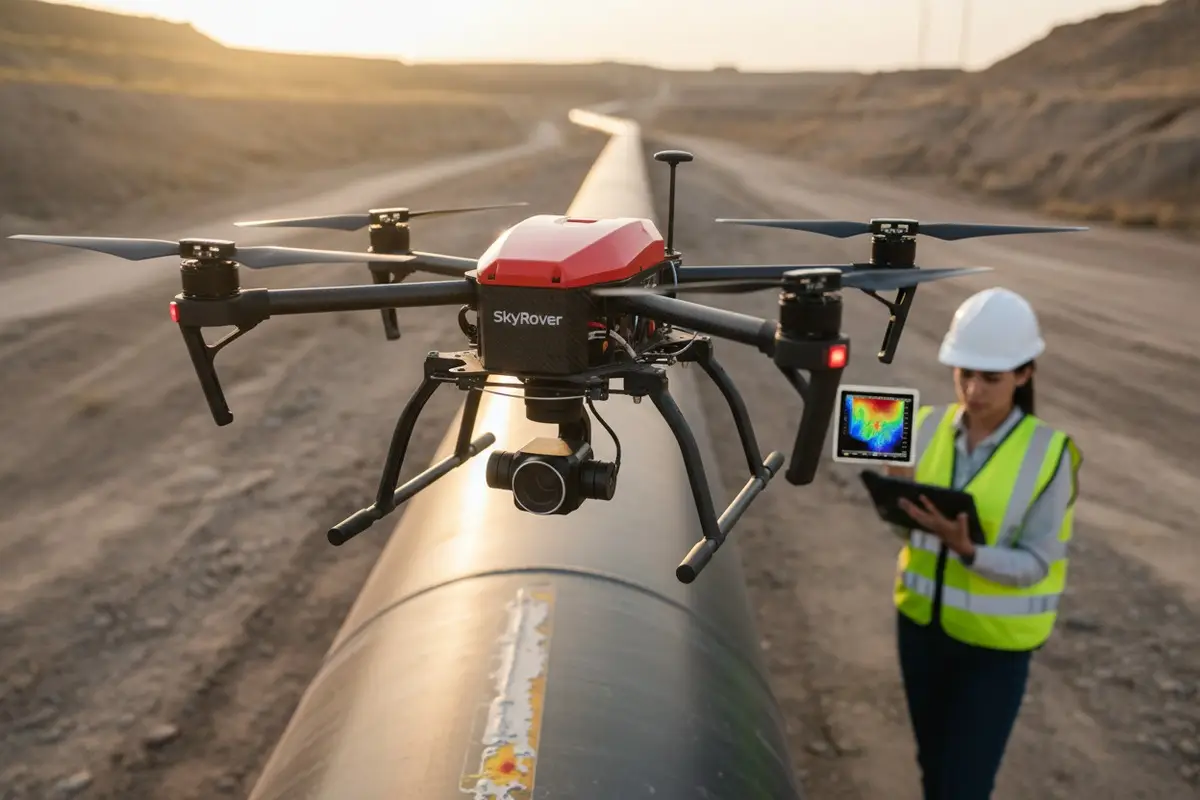

Cuando nuestro equipo de ingeniería probó por primera vez cámaras térmicas en drones de extinción de incendios sobre una instalación de gas natural 1, descubrimos una verdad aleccionadora. Pequeñas variaciones de temperatura, a veces de solo 2 °C, pueden indicar la diferencia entre una tubería segura y un desastre inminente. Sin embargo, muchos operadores confían ciegamente en sus lecturas térmicas sin comprender qué las hace precisas o imprecisas.
Para evaluar la precisión de las cámaras térmicas de drones de extinción de incendios para la inspección de tuberías de energía, evalúe la resolución térmica (mínimo 640 × 512 píxeles), verifique la calibración del fabricante con referencias de cuerpo negro, tenga en cuenta los factores ambientales como el viento y la humedad, y valide las salidas del software con sensores de temperatura de verdad del terreno. La calibración regular en campo reduce los errores de medición de 14 °C a menos de 2 °C.
En esta guía, le guiaré a través de cada factor crítico que determina si su dron térmico proporciona datos confiables o lecturas falsas peligrosas. Permítame compartir lo que hemos aprendido de años de construcción y prueba de drones industriales.
¿Cómo evalúo si la resolución térmica es lo suficientemente alta como para detectar fugas pequeñas en mis tuberías de energía?
Nuestro equipo de producción somete los sensores térmicos a pruebas rigurosas antes de que salgan de fábrica. Hemos visto de primera mano cómo las limitaciones de resolución hacen que los operadores pasen por alto fugas críticas. El problema empeora cuando los drones vuelan a altitudes más altas para una cobertura más amplia.
Una cámara térmica necesita una resolución de al menos 640 × 512 píxeles y un NEDT por debajo de 50 mK para detectar pequeñas fugas en las tuberías. Aplique la regla de los 3 × 3 píxeles: su objetivo debe cubrir un área mínima de 9 píxeles para una medición precisa de la temperatura. Calcule su altitud de vuelo máxima en función del FOV de la cámara y la distancia de muestreo terrestre requerida.

Comprensión de los conceptos básicos de resolución térmica
La resolución térmica 2 determina cuántos detalles captura su cámara. Un mayor número de píxeles significa que las anomalías de temperatura más pequeñas se vuelven visibles. Para la inspección de tuberías, esto es importante porque las fugas en etapa temprana a menudo crean firmas térmicas sutiles.
Nuestros ingenieros recomiendan estas especificaciones mínimas para diferentes escenarios de inspección de tuberías:
| Tipo de inspección | Resolución mínima | NEDT recomendado | Altitud de vuelo típica |
|---|---|---|---|
| Detección de fugas pequeñas | 640 × 512 | <40mK | 15-30m |
| Inspección general | 320 × 256 | <50mK | 30-50m |
| Monitoreo de puntos calientes | 640 × 512 | <35mK | 20-40m |
| Evaluación de aislamiento | 640 × 512 | <40mK | 10-25m |
La regla de los 3×3 píxeles explicada
Esta regla proviene de los estándares de termografía. Cuando un objetivo cubre menos de 9 píxeles, la cámara promedia las temperaturas de las áreas circundantes. Este promedio puede enmascarar fugas pequeñas por completo.
Calcula tu distancia de muestreo en tierra 3 usando esta fórmula: GSD = (Altitud de vuelo × Ancho del sensor) / (Distancia focal × Píxeles horizontales). Para un sensor de 640×512 con una distancia focal de 13 mm a una altitud de 30 m, obtienes aproximadamente 4.5 cm por píxel. Un área de 3×3 píxeles cubre aproximadamente 13.5 cm, lo que es adecuado para detectar fugas que crean anomalías térmicas más grandes que este tamaño.
Consideraciones sobre el campo de visión
Las lentes con FOV estrecho proporcionan mejores detalles a distancia pero requieren más pasadas de vuelo. El FOV amplio cubre más terreno pero sacrifica la resolución. Nuestros drones de extinción de incendios cuentan con cámaras térmicas duales con capacidad de zoom 2x y 8x, logrando una magnificación combinada de 32x para la inspección de puntos calientes distantes.
Adapta tu elección de FOV a tus objetivos de inspección. Para inspecciones rutinarias de tuberías que cubren grandes áreas, un FOV más amplio con menor altitud funciona bien. Para investigar ubicaciones de fugas sospechosas, las opciones de teleobjetivo con FOV estrecho proporcionan la precisión necesaria.
¿Qué métodos puedo utilizar para verificar la precisión de la calibración térmica del fabricante para sensores de grado industrial?
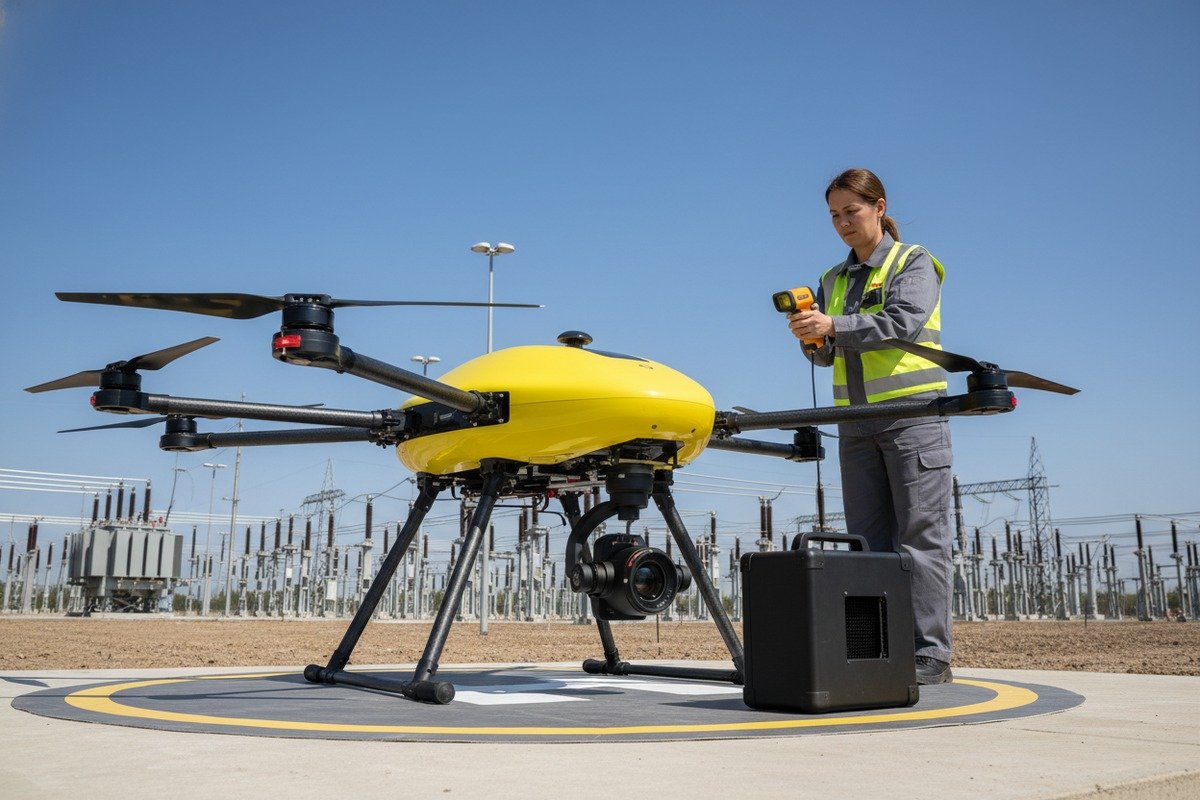
Cuando calibran los sensores térmicos en nuestras instalaciones, utilizamos referencias de cuerpo negro de grado de laboratorio referencias de cuerpo negro 4 trazables a estándares internacionales. ¿Pero qué sucede después de meses de uso en campo? La calibración se desvía. El estrés ambiental pasa factura. Sin verificación, sus lecturas se vuelven poco fiables.
Verifique la calibración térmica utilizando tres métodos: compare las lecturas con una fuente de referencia de cuerpo negro portátil, cruce la información con cámaras térmicas terrestres calibradas o utilice piscinas de agua con temperatura controlada como referencias de campo. La calibración de campo adecuada reduce los errores de medición de 14 °C RMSE a menos de 2 °C RMSE, una mejora del 94% en la precisión.
Estándares de Calibración de Laboratorio
La calibración de fábrica establece la precisión de referencia. Los fabricantes deben proporcionar certificados de calibración que muestren el rango de temperatura probado, los valores de incertidumbre y la trazabilidad a estándares NIST o equivalentes 5. Solicite esta documentación antes de la compra.
Nuestros sensores térmicos se someten a calibración en múltiples puntos de temperatura en todo su rango operativo. Esta calibración multipunto tiene en cuenta las respuestas no lineales del sensor que la calibración de un solo punto omite.
Métodos de Calibración de Campo
Las condiciones de laboratorio difieren de los entornos de inspección del mundo real. La calibración de campo cierra esta brecha. Aquí hay métodos probados:
| Método de Calibración | Equipo necesario | Precisión Alcanzable | Nivel de costos |
|---|---|---|---|
| Referencia de cuerpo negro | Fuente portátil de cuerpo negro | ±0.5°C | Alto |
| Método de piscina de agua | Recipientes aislados, termómetros | ±1.5°C | Bajo |
| Verificación cruzada de cámara terrestre | Cámara térmica portátil calibrada | ±2°C | Medio |
| Validación del registrador de temperatura | Termómetros de contacto de precisión | ±1°C | Medio |
Implementación de un Programa de Calibración
Recomendamos verificaciones de calibración trimestrales para drones utilizados en la inspección de infraestructura crítica. Se necesitan verificaciones más frecuentes después de actualizaciones de firmware, impactos físicos o períodos de almacenamiento prolongados.
Documente cada sesión de calibración. Registre las condiciones ambientales, las temperaturas de referencia utilizadas y cualquier corrección aplicada. Esta documentación resulta valiosa cuando surgen preguntas sobre la validez de los datos históricos de inspección.
Factores de corrección atmosférica
El aire entre su dron y la tubería absorbe algo de radiación infrarroja 6. Esta absorción aumenta con la distancia y la humedad. Las cámaras térmicas avanzadas incluyen modelos de transmisión atmosférica. Verifique que estos modelos funcionen correctamente comparando las lecturas del dron con las mediciones de un termómetro de contacto en secciones accesibles de la tubería.
¿Cómo afectarán los factores ambientales como el viento y el calor ambiental a la precisión de las lecturas térmicas de mi dron?
Nuestros pilotos de prueba han realizado misiones de inspección térmica en condiciones que van desde el calor del desierto hasta entornos costeros húmedos. Cada entorno presenta desafíos únicos. Los factores ambientales pueden introducir errores superiores a 10 °C si no se gestionan adecuadamente.
El viento enfría las superficies de las tuberías por convección, reduciendo las temperaturas aparentes en 3-8°C. La alta humedad absorbe la radiación infrarroja, provocando una subestimación de los objetivos distantes. La carga solar crea puntos calientes falsos en las superficies expuestas al sol. Planifique las inspecciones durante condiciones atmosféricas estables —temprano en la mañana o días nublados— y aplique los factores de corrección apropiados para influencias ambientales inevitables.

Efectos del viento en la temperatura de la superficie
El viento crea una capa límite de aire enfriado alrededor de las tuberías. Este efecto de enfriamiento varía con la velocidad del viento, el diámetro de la tubería y la rugosidad de la superficie. Una fuga que se muestra claramente en condiciones de calma podría volverse invisible con viento moderado.
| Velocidad del viento | Efecto de enfriamiento de la superficie | Idoneidad de la inspección |
|---|---|---|
| 0-5 km/h | Mínimo (<1°C) | Excelente |
| 5-15 km/h | Moderado (1-4°C) | Bueno con correcciones |
| 15-25 km/h | Significativo (4-8°C) | Marginal |
| >25 km/h | Severo (>8°C) | No recomendado |
Humedad y Transmisión Atmosférica
El vapor de agua en la atmósfera absorbe la radiación infrarroja en bandas de longitud de onda específicas. Esta absorción se vuelve problemática a distancias más largas y niveles de humedad más altos. Nuestras cámaras térmicas operan en la banda infrarroja de onda larga de 8-14μm, que ofrece una mejor transmisión atmosférica que las alternativas de onda corta.
Monitoree la humedad relativa antes de los vuelos. Por encima del 80% de humedad, considere posponer las inspecciones o limitar la altitud de vuelo para reducir la longitud del camino atmosférico.
Complicaciones de Carga Solar
La luz solar calienta las superficies de las tuberías de manera desigual según la orientación, el color y el material. Las secciones orientadas al sur en el hemisferio norte absorben más energía solar que las secciones orientadas al norte. Este calentamiento diferencial puede enmascarar o imitar las firmas de fugas.
Realice inspecciones críticas durante las primeras horas de la mañana antes de que ocurra un calentamiento solar significativo. Alternativamente, espere a condiciones nubladas que proporcionen temperaturas de superficie más uniformes.
Variaciones de Emisividad
Los diferentes materiales de las tuberías emiten radiación infrarroja a diferentes velocidades. El acero, el aislamiento y las superficies pintadas tienen cada uno valores de emisividad 7. La configuración incorrecta de la emisividad causa errores sistemáticos de temperatura.
Programe su cámara térmica con valores de emisividad específicos del material. Para tuberías de materiales mixtos, cree zonas de inspección con configuraciones apropiadas para cada sección.
¿Puedo confiar en el software integrado para proporcionar datos de temperatura consistentes para las evaluaciones de seguridad de mi tubería?
Cuando desarrollamos software de control de vuelo e imágenes térmicas para nuestros drones, nos enfrentamos a una pregunta fundamental: ¿cuánto se puede confiar en la automatización? La respuesta requiere comprender tanto las capacidades como las limitaciones del software.
El software térmico integrado proporciona datos de temperatura consistentes solo cuando está configurado correctamente con valores de emisividad, parámetros atmosféricos y perfiles de calibración correctos. Valide las salidas del software con mediciones de referencia antes de confiar en las evaluaciones automatizadas. La detección mejorada por IA reduce los falsos positivos, pero requiere entrenamiento en firmas de anomalías específicas de la tubería.

Procesamiento de datos radiométricos
Las cámaras térmicas radiométricas capturan valores de temperatura para cada píxel, no solo patrones de calor visuales. Estos datos se exportan como archivos JPEG o TIFF radiométricos que contienen lecturas de temperatura reales. Herramientas de software como ArcGIS Drone2Map procesan estos archivos en ortomosaicos térmicos con salidas en Celsius o Fahrenheit.
Sin embargo, la precisión de los datos procesados depende completamente de los parámetros de entrada. Basura entra, basura sale. Verifique que su software interprete correctamente los datos de calibración de la cámara y aplique las correcciones atmosféricas apropiadas.
Protocolos de validación de software
Antes de confiar en las lecturas de temperatura automatizadas, valide contra referencias conocidas:
- Coloque registradores de temperatura calibrados en ubicaciones accesibles de la tubería.
- Vuele la misión de inspección y capture datos térmicos.
- Compare las temperaturas reportadas por el software con las lecturas del registrador.
- Calcule el error sistemático y aplique correcciones si es necesario.
Repita esta validación después de las actualizaciones de software o cambios significativos en los parámetros de inspección.
Consideraciones de IA y aprendizaje automático
El software moderno de análisis térmico incorpora cada vez más el aprendizaje automático para la detección de anomalías. Estos algoritmos son excelentes para identificar patrones, pero requieren datos de entrenamiento adecuados. Una IA entrenada con datos de inspección eléctrica podría pasar por alto anomalías específicas de las tuberías.
Asegúrese de que cualquier sistema de detección de IA haya sido validado específicamente para escenarios de inspección de tuberías. Revise los registros de detección para identificar las tasas de falsos positivos y falsos negativos. Ajuste los umbrales de sensibilidad según su tolerancia al riesgo.
Consistencia de los datos entre misiones
La configuración del software debe permanecer constante en todas las misiones de inspección para realizar comparaciones válidas a lo largo del tiempo. Documente todos los parámetros de procesamiento. Utilice plantillas o preajustes para garantizar condiciones de análisis idénticas.
Nuestro equipo de ingeniería recomienda mantener registros detallados de las versiones del software, los perfiles de configuración y cualquier ajuste manual aplicado durante el procesamiento. Esta documentación apoya el cumplimiento normativo y permite la resolución de problemas cuando aparecen anomalías.
Integración con sistemas SIG
La integración de sistemas de información geográfica añade contexto espacial a los datos térmicos. Superponga las lecturas de temperatura en los mapas de las tuberías para identificar con precisión las ubicaciones de inspección. Rastree las anomalías a lo largo del tiempo para detectar tendencias de degradación.
Verifique la precisión de las coordenadas comparando las posiciones reportadas por el dron con puntos de referencia conocidos. Los errores de GPS pueden desubicar las anomalías térmicas, causando confusión durante las inspecciones terrestres de seguimiento.
Conclusión
La evaluación precisa de la cámara térmica requiere atención a las especificaciones de resolución, la verificación de la calibración, la compensación ambiental y la validación del software. Siguiendo protocolos de evaluación sistemáticos, puede asegurarse de que su dron de extinción de incendios proporcione datos de temperatura fiables para las decisiones de seguridad de las tuberías.
Notas al pie
1. Fuente gubernamental autorizada sobre seguridad e inspecciones de gasoductos de gas natural. ↩︎
2. Explica la importancia y el impacto de la resolución de la cámara térmica en la calidad de la imagen. ↩︎
3. Reemplazado con un artículo de Wikipedia, una fuente autorizada, que define la distancia de muestreo del suelo. ↩︎
4. FLIR, líder de la industria, explica la calibración de cámaras térmicas utilizando estándares de cuerpo negro. ↩︎
5. Fuente oficial del NIST que detalla los estándares nacionales de termometría y servicios de calibración. ↩︎
6. Reemplazado con un artículo de Wikipedia, una fuente autorizada, que define la radiación infrarroja. ↩︎
7. FLIR explica cómo la emisividad afecta la precisión de la imagen térmica y las mediciones de temperatura. ↩︎
 English
  Español de México
  Deutsch
  Français
  Русский
  العربية
Comments
No comments yet. Be the first to share your thoughts!
Leave a Comment