
Cuando nuestro equipo de ingeniería desarrolló por primera vez baterías de litio de alta capacidad 1 para drones de extinción de incendios, descubrimos rápidamente una realidad preocupante. Muchos operadores no tenían idea de cómo desechar legalmente estas baterías reglas federales de residuos peligrosos RCRA 2. Las multas pueden ascender a 5.000 dólares por infracción en algunos estados. Peor aún, la eliminación inadecuada provoca incendios peligrosos en las instalaciones de reciclaje.
Las baterías de drones de extinción de incendios deben cumplir tanto con las normas federales de residuos peligrosos RCRA como con las leyes estatales de reciclaje. La mayoría de las baterías de iones de litio se clasifican como materiales peligrosos que requieren recicladores certificados. Estados como California y Nueva York imponen mandatos más estrictos que las bases federales, con nuevas regulaciones que entrarán en vigor hasta 2027.
Esta guía desglosa todo lo que los operadores de drones necesitan saber. Cubriremos los requisitos federales, las variaciones estatales, los estándares de certificación y los flujos de trabajo prácticos. Comencemos con el cumplimiento específico del estado.
¿Cómo me aseguro de que las baterías de mi dron de extinción de incendios cumplan con las leyes de reciclaje y eliminación específicas de los estados de EE. UU.?
Nuestros socios de distribución en EE. UU. a menudo hacen esta pregunta primero. Les preocupan las reglas variables en los diferentes estados. La confusión es comprensible. Cada estado puede agregar requisitos más allá de la ley federal. Perderse una sola regulación puede resultar en multas cuantiosas y dañar las relaciones comerciales.
Para cumplir con las leyes estatales, identifique el estado de su generador, regístrese en los programas de gestión requeridos, utilice únicamente recicladores certificados y mantenga registros de eliminación. California requiere el registro del productor para 2025. Nueva York impone multas de hasta $5,000. La mayoría de los estados prohíben por completo la eliminación de baterías de litio en vertederos.
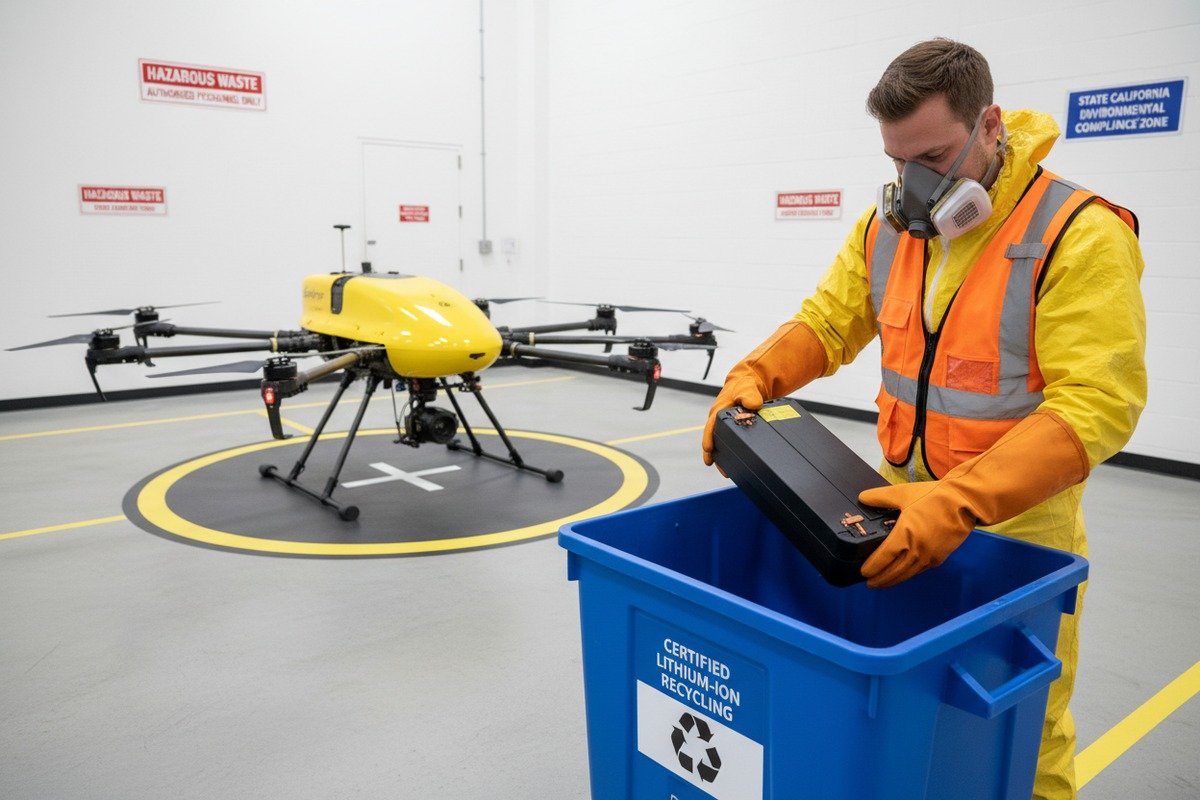
Comprender su estado de generador
El primer paso es conocer su clasificación. Según las reglas RCRA, las empresas caen en diferentes categorías según el volumen de residuos peligrosos. Esto determina sus obligaciones de cumplimiento.
| Tipo de Generador | Límite mensual de residuos | Requisitos clave |
|---|---|---|
| Generador de Cantidad Muy Pequeña (VSQG) 3 | Menos de 100 kg (220 lbs) | Mantenimiento de registros reducido, etiquetado básico |
| Generador de Cantidad Pequeña (SQG) | 100-1.000 kg | Número de identificación de la EPA, límite de almacenamiento de 270 días |
| Generador de Gran Cantidad (LQG) | Más de 1.000 kg | Manifiestos completos, límite de almacenamiento de 90 días, capacitación |
La mayoría de los operadores de drones de extinción de incendios califican como VSQG. Sin embargo, después de las temporadas de incendios forestales importantes, los volúmenes de baterías dañadas pueden llevarlo a categorías más altas. Nuestros clientes rastrean los totales mensuales cuidadosamente para evitar cambios de cumplimiento inesperados.
Requisitos Estado por Estado
Los estados implementan sus propias reglas además de las directrices federales. Aquí están los estados más estrictos para la eliminación de baterías.
| Estado | Regulación Clave | Fecha de entrada en vigor | Penalizaciones |
|---|---|---|---|
| California | AB 2440 Responsabilidad del Productor 4 | 2025 | Multas severas, prohibiciones de productos |
| California | SB 1215 Tarifas de Residuos Electrónicos | 2026 | Tarifas adicionales sobre las ventas |
| Nueva York | Prohibición de eliminación de baterías | 2025 | Hasta $5,000 por infracción |
| Vermont | Requisitos de EPR | 2025 | Mandatos de registro de productores |
| Washington | Responsabilidad de las baterías | 2027 | Participación en el programa de recolección |
California lidera con las reglas más completas. AB 2440 exige a los fabricantes financiar programas de recolección. Nuestro equipo trabajó en estrecha colaboración con los distribuidores de California para prepararse temprano para estos cambios.
Pasos prácticos para el cumplimiento
Comience por ponerse en contacto con la agencia ambiental de su estado. Pregunte específicamente sobre las regulaciones de baterías de iones de litio. Muchas agencias ahora tienen líneas directas dedicadas a la eliminación de baterías.
A continuación, documente su inventario de baterías. Registre las fechas de compra, las clasificaciones de capacidad y el estado de condición. Esto crea un rastro de auditoría si los inspectores visitan.
Finalmente, establezca relaciones con recicladores certificados en su estado. No todos los recicladores aceptan baterías de drones de alta capacidad. Mantenemos una lista de socios aprobados para nuestros clientes en EE. UU.
¿Qué certificaciones ambientales debo exigir a mi fabricante de drones para cumplir con las auditorías regulatorias de EE. UU.?
Cuando preparamos la documentación de exportación para compradores estadounidenses, surgen constantemente preguntas sobre la certificación. Los gerentes de adquisiciones quieren pruebas de que sus proveedores cumplen con los estándares ambientales. Sin las certificaciones adecuadas, las auditorías se convierten en pesadillas. Los productos pueden ser incautados en la aduana o rechazados por los clientes finales.
Exigir a los fabricantes que proporcionen la certificación de transporte UN38.3, las normas de seguridad UL 2054 o IEC 62133, la documentación de cumplimiento de RoHS y los números de registro de la EPA cuando corresponda. Estas certificaciones demuestran que las baterías cumplen los requisitos medioambientales federales y estatales para su importación, uso y eventual eliminación.

Certificaciones esenciales de baterías
Nuestro equipo de control de calidad garantiza que cada paquete de baterías cumpla con estos estándares antes del envío. Cada certificación cumple un propósito regulatorio específico.
La certificación UN38.3 demuestra que las baterías pasaron las pruebas de seguridad de transporte. Certificación de transporte UN38.3 5 Esto incluye pruebas de simulación de altitud, ciclado térmico, vibración, choque y cortocircuito. Sin UN38.3, enviar baterías de litio legalmente es casi imposible.
UL 2054 cubre la seguridad de las baterías domésticas y comerciales en América del Norte. IEC 62133 es el equivalente internacional. Normas de seguridad IEC 62133 6 Ambas abordan la fuga térmica, la protección contra sobrecargas y la resistencia al fuego.
El cumplimiento de RoHS confirma que las baterías no contienen sustancias peligrosas restringidas. Documentación de cumplimiento de RoHS 7 Esto es importante para el reciclaje eventual. Las baterías con materiales restringidos enfrentan requisitos de eliminación más estrictos.
Lista de verificación de documentación del fabricante
Al evaluar proveedores, solicite estos documentos específicos.
| Documento | Objetivo | Periodo de validez |
|---|---|---|
| Resumen de la prueba UN38.3 | Cumplimiento de transporte | Por modelo de batería |
| Certificado UL 2054 / IEC 62133 | Normas de seguridad | Renovación anual típica |
| Declaración RoHS | Límites de sustancias peligrosas | Por lote de producción |
| Hojas MSDS / SDS | Composición química | Se requiere la versión actual |
| Registro EPA (si corresponde) | Identificación del importador | En curso |
Nuestros paquetes de documentación incluyen todos los elementos anteriores. Los actualizamos cada vez que cambian la química o el diseño de la batería. Este enfoque proactivo ahorra a los clientes problemas de auditoría más adelante.
Verificación de la autenticidad de la certificación
Desafortunadamente, existen certificaciones falsas. Hemos visto a competidores presentar informes fraudulentos de la UN38.3. Aquí le mostramos cómo verificar la autenticidad.
Póngase en contacto directamente con el laboratorio certificador. Pídales que confirmen el número del informe de prueba. Los laboratorios legítimos mantienen bases de datos consultables.
Verifique cuidadosamente las fechas de los certificados. Las certificaciones antiguas pueden no cubrir los modelos de batería actuales. Los cambios de fabricación pueden invalidar pruebas anteriores.
Solicite informes de auditoría de fábrica a organismos acreditados. La certificación de gestión ambiental ISO 14001 demuestra el cumplimiento sistemático. Mantenemos la certificación ISO 14001 en nuestras instalaciones de Xi'an específicamente por esta razón.
Preparación para Auditorías Regulatorias
Cuando los auditores visitan sus instalaciones, quieren registros organizados. Cree un archivo de certificación dedicado para cada modelo de batería que importe.
Incluya órdenes de compra que vinculen baterías específicas con documentos de certificación. Muestre la cadena de custodia desde el fabricante hasta su almacén.
Mantenga los registros de eliminación por separado pero accesibles. Los auditores a menudo verifican tanto las certificaciones entrantes como la documentación de residuos salientes en la misma visita.
¿Cómo puedo establecer un flujo de trabajo seguro y conforme para el reciclaje de baterías de mi flota de drones industriales?
Nuestro equipo de soporte técnico ha ayudado a docenas de departamentos de bomberos a construir programas de reciclaje desde cero. El proceso intimida a muchos operadores al principio. Se imaginan procedimientos complejos de materiales peligrosos y equipos costosos. En realidad, un flujo de trabajo sistemático hace que el cumplimiento sea manejable. La clave es establecer protocolos claros antes de que surjan problemas.
Establezca un flujo de trabajo conforme designando personal capacitado, creando un área de almacenamiento segura con supresión de incendios, descargando las baterías a un estado de carga inferior al 30%, asociándose con recicladores certificados y documentando cada paso. Rastree las baterías desde la adquisición hasta la disposición final utilizando formularios estandarizados.

Configuración de Almacenamiento Seguro
Las fallas en el almacenamiento de baterías causan la mayoría de los incidentes relacionados con el reciclaje. Entre el uso en campo y la recogida para reciclaje, las baterías necesitan una contención adecuada.
Elija un área bien ventilada, alejada de materiales inflamables. Los pisos de concreto funcionan mejor. Instale detectores de humo y considere sistemas de supresión de incendios para flotas más grandes.
Utilice contenedores metálicos o resistentes al fuego. Etiquete los contenedores claramente con marcas de residuos peligrosos. Incluya información de contacto de emergencia en cada contenedor.
Separe las baterías dañadas de las sanas inmediatamente. Las baterías dañadas requieren protocolos completos de materiales peligrosos según las regulaciones del DOT. Incluso pequeñas perforaciones o hinchazón descalifican las baterías para el transporte estándar.
Procedimientos de descarga y preparación
Antes de reciclar, descargue las baterías a un estado de carga del 30% o menos. Esto reduce drásticamente el riesgo de incendio durante el transporte y el procesamiento.
Utilice equipos de descarga dedicados diseñados para su tipo de batería. Nuestros clientes a menudo utilizan descargadores simples basados en resistencias. Existen opciones más sofisticadas para operaciones de alto volumen.
Nunca intente descargar completamente las baterías de litio a cero. Esto puede dañar las celdas y crear peligros de seguridad. El umbral del 30% equilibra la seguridad con la practicidad.
Establecimiento de relaciones con recicladores
No todos los recicladores aceptan todos los tipos de baterías. Las baterías de drones de alta capacidad requieren equipos de procesamiento especializados.
Póngase en contacto con varios recicladores antes de generar residuos. Pregunte específicamente sobre las baterías de drones contra incendios. Confirme que tienen los permisos adecuados para su estado.
Negocie los horarios de recogida con antelación. Algunos recicladores solo atienden a ciertas regiones en días específicos. La planificación evita violaciones de los límites de almacenamiento.
Obtenga presupuestos por escrito. Los costos de reciclaje varían significativamente. Hemos visto precios que van desde la recogida gratuita hasta tarifas sustanciales por libra, dependiendo del estado y el volumen de la batería.
Sistemas de documentación y seguimiento
Implemente un sistema de seguimiento desde el primer día. Esto demuestra el cumplimiento durante las auditorías e identifica patrones en fallas de baterías.
Registre estos puntos de datos para cada batería:
- Número de serie y fecha de compra
- Horas totales de vuelo y ciclos de carga
- Motivo de la retirada (fin de vida útil, daño, fallo)
- Fecha de verificación de descarga
- Fecha de recogida del reciclador y número de manifiesto
Las hojas de cálculo funcionan para flotas pequeñas. Las operaciones más grandes se benefician de un software dedicado de gestión de activos. Varios de nuestros clientes empresariales integran el seguimiento de baterías con sus sistemas de gestión de flotas de drones.
Manipulación de baterías dañadas de operaciones contra incendios
Las operaciones de extinción de incendios crean desafíos únicos. Las baterías expuestas a calor extremo pueden volverse inestables. Las baterías que caen de aeronaves necesitan una inspección inmediata.
Aísle cualquier batería que muestre hinchazón, decoloración u olor inusual. Colóquela en un contenedor ignífugo al aire libre si es posible.
Póngase en contacto con su reciclador para obtener instrucciones específicas sobre el transporte de baterías dañadas. Generalmente se aplican los protocolos completos de envío de materiales peligrosos. Esto significa embalaje con clasificación UN, etiquetado adecuado y transportistas de materiales peligrosos certificados.
¿Cuáles son mis responsabilidades legales al desechar baterías de litio de alta capacidad utilizadas en drones de extinción de incendios?
Cuando capacitamos a nuevos distribuidores, las discusiones sobre responsabilidad legal reciben una seria atención. Muchos operadores asumen que la eliminación de baterías es problema del reciclador. Esta idea errónea conduce a violaciones costosas. La ley responsabiliza a los generadores desde la creación hasta la disposición final. Comprender estas obligaciones protege su negocio y el medio ambiente.
Los operadores de drones asumen responsabilidad legal como generadores de residuos peligrosos según la RCRA. Debe identificar los residuos correctamente, almacenarlos de forma segura, utilizar únicamente transportistas y recicladores autorizados, mantener registros durante un mínimo de tres años e informar de inmediato los derrames o liberaciones. Las violaciones pueden resultar en sanciones penales y el cierre de las instalaciones.
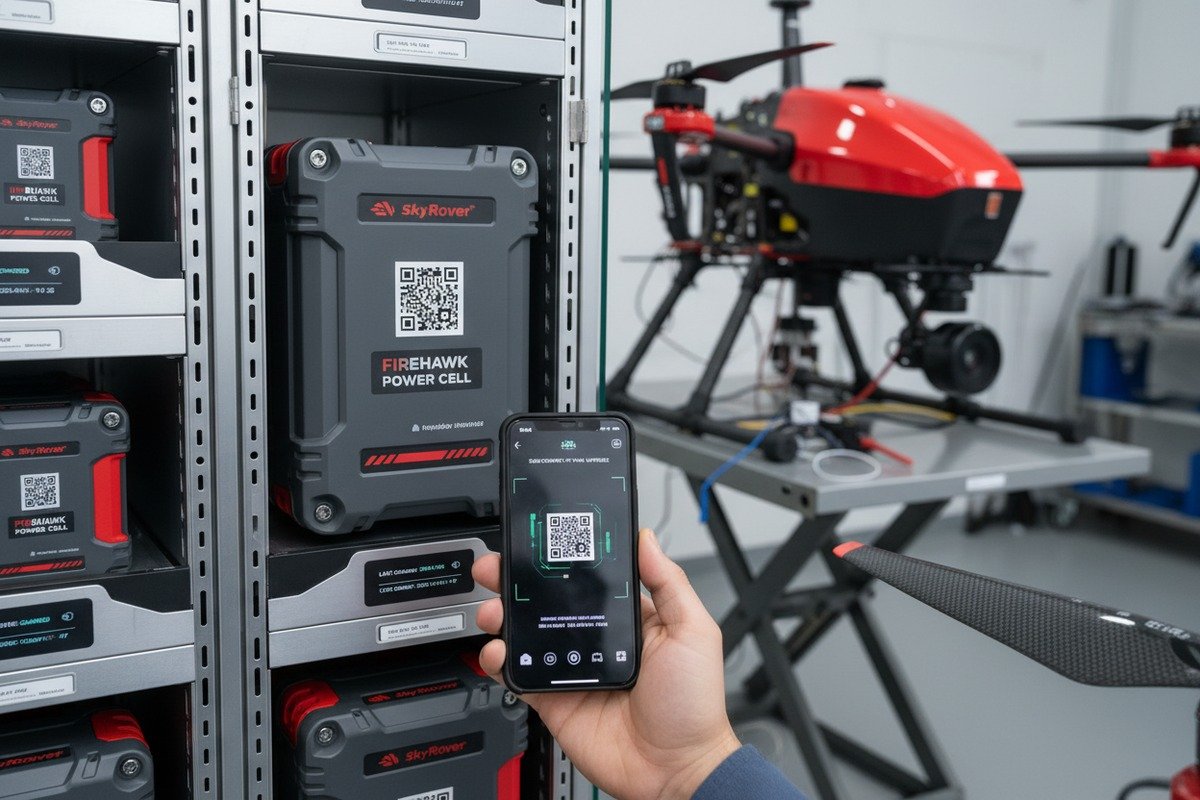
Responsabilidades del Generador según RCRA
La Ley de Conservación y Recuperación de Recursos crea un sistema de responsabilidad "de la cuna a la tumba". sistema de responsabilidad de cuna a tumba 8 Como parte que genera residuos peligrosos, usted permanece legalmente conectado a esas baterías hasta que se verifique su correcta eliminación.
Esto significa elegir transportistas con cuidado. Si su transportista desecha baterías ilegalmente, usted comparte la responsabilidad. Utilice solo transportistas de residuos peligrosos autorizados con números de identificación válidos de la EPA.
De manera similar, los problemas del reciclador se convierten en sus problemas. Si un reciclador pierde permisos o maneja mal los residuos, los generadores se enfrentan a investigaciones. Verifique las credenciales del reciclador anualmente como mínimo.
Requisitos de documentación
Las leyes federales y estatales exigen un registro específico. La falta de documentos puede ser tan perjudicial como el incumplimiento de los requisitos de eliminación.
| Tipo de registro | Período de Retención | Contenido Requerido |
|---|---|---|
| Determinación de residuos | Mínimo 3 años | Cómo clasificó los residuos |
| Manifiestos | 3 años desde el envío | Seguimiento desde el generador hasta el destino final |
| Registros de capacitación | 3 años después de que finalice el empleo | Documentación de capacitación en materiales peligrosos para empleados |
| Registros de inspección | Mínimo 3 años | Registros de inspección del área de almacenamiento |
| Informes de excepción | Mínimo 3 años | Cualquier discrepancia manifiesta |
Mantenga copias en múltiples ubicaciones. Las copias de seguridad digitales protegen contra incendios o robos. Nuestros clientes utilizan cada vez más el almacenamiento en la nube con copias de seguridad automáticas para los registros de cumplimiento.
Obligaciones de respuesta a emergencias
Los incidentes con baterías requieren acción inmediata. Los derrames, incendios o liberaciones activan requisitos de notificación específicos.
Conozca su número de respuesta a emergencias estatal. Los requisitos federales entran en vigor para liberaciones mayores, pero los umbrales estatales suelen ser más bajos.
Capacite a los empleados en procedimientos de emergencia. Todos los que manipulan baterías deben conocer las rutas de evacuación, la ubicación de los extintores y los contactos de emergencia.
Documente todos los incidentes a fondo. Incluso los eventos menores pueden requerir notificación dependiendo de su estado. En caso de duda, notifique de inmediato. La notificación tardía conlleva sus propias sanciones.
Sanciones civiles y penales
Las violaciones de RCRA conllevan graves consecuencias. Las sanciones civiles pueden alcanzar los 70.117 $ por día de violación según la ley federal. Los estados a menudo añaden sus propias sanciones.
Las sanciones penales se aplican a las violaciones intencionadas. Esto incluye el peligro intencionado, el tratamiento o la eliminación intencionados sin permiso y el transporte intencionado a instalaciones no autorizadas.
Los directivos de la empresa pueden enfrentarse a responsabilidad personal. La estructura corporativa no protege automáticamente a las personas que tomaron decisiones de cumplimiento.
Futuros cambios regulatorios
El panorama regulatorio continúa evolucionando. La propuesta de la EPA Normas de Residuos Universales 9 para baterías de iones de litio pueden simplificar algunos requisitos para 2026.
Sin embargo, los mandatos de contenido reciclado a partir de 2030 añadirán nuevas dimensiones de cumplimiento. Las baterías necesitarán porcentajes documentados de contenido reciclado: 4% de litio, 12% de cobalto y 4% de níquel de fuentes recicladas.
Manténgase conectado a las asociaciones industriales y a las actualizaciones regulatorias. Nuestro equipo supervisa los anuncios del Registro Federal y comparte de forma proactiva los cambios relevantes con los clientes de EE. UU.
Conclusión
La eliminación de baterías de drones de extinción de incendios exige una cuidadosa atención tanto a las normas federales de la RCRA como a las regulaciones específicas de cada estado. Cree flujos de trabajo conformes ahora antes de que ocurran infracciones. Nuestro equipo está listo para apoyar a los clientes con documentación de certificación y conexiones de recicladores.
Notas al pie
1. Proporciona orientación sobre el manejo, almacenamiento y eliminación seguros de baterías de litio. ↩︎
2. Explica las categorías de generadores de residuos peligrosos según las regulaciones RCRA de la EPA. ↩︎
3. Hoja informativa de la EPA que detalla los requisitos para generadores de muy pequeñas cantidades de residuos peligrosos. ↩︎
4. Describe la AB 2440 de California, que establece un programa de Responsabilidad Extendida del Productor (REP) para baterías. ↩︎
5. Detalla las pruebas UN38.3 para el transporte seguro de baterías de litio por parte de un organismo de certificación. ↩︎
6. Explica la norma internacional IEC 62133 para pruebas de seguridad de baterías de iones de litio. ↩︎
7. Define la RoHS y su importancia para restringir sustancias peligrosas en las baterías. ↩︎
8. Reemplazó el HTTP 404 con una fuente oficial .gov de la EPA que explica el concepto de ‘de cuna a tumba’ bajo la RCRA. ↩︎
9. Información de la EPA sobre las regulaciones propuestas de Residuos Universales para baterías de litio. ↩︎



 English
  Español de México
  Deutsch
  Français
  Русский
  العربية
Comments
No comments yet. Be the first to share your thoughts!
Leave a Comment