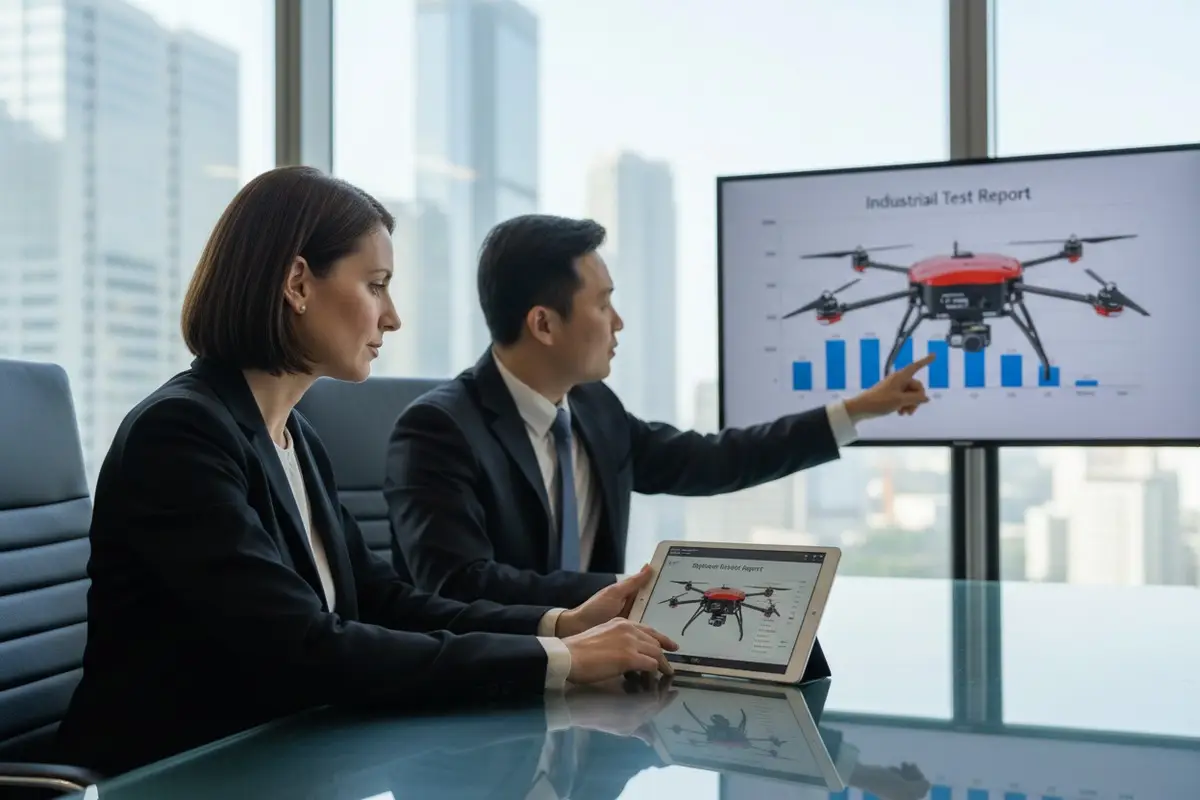
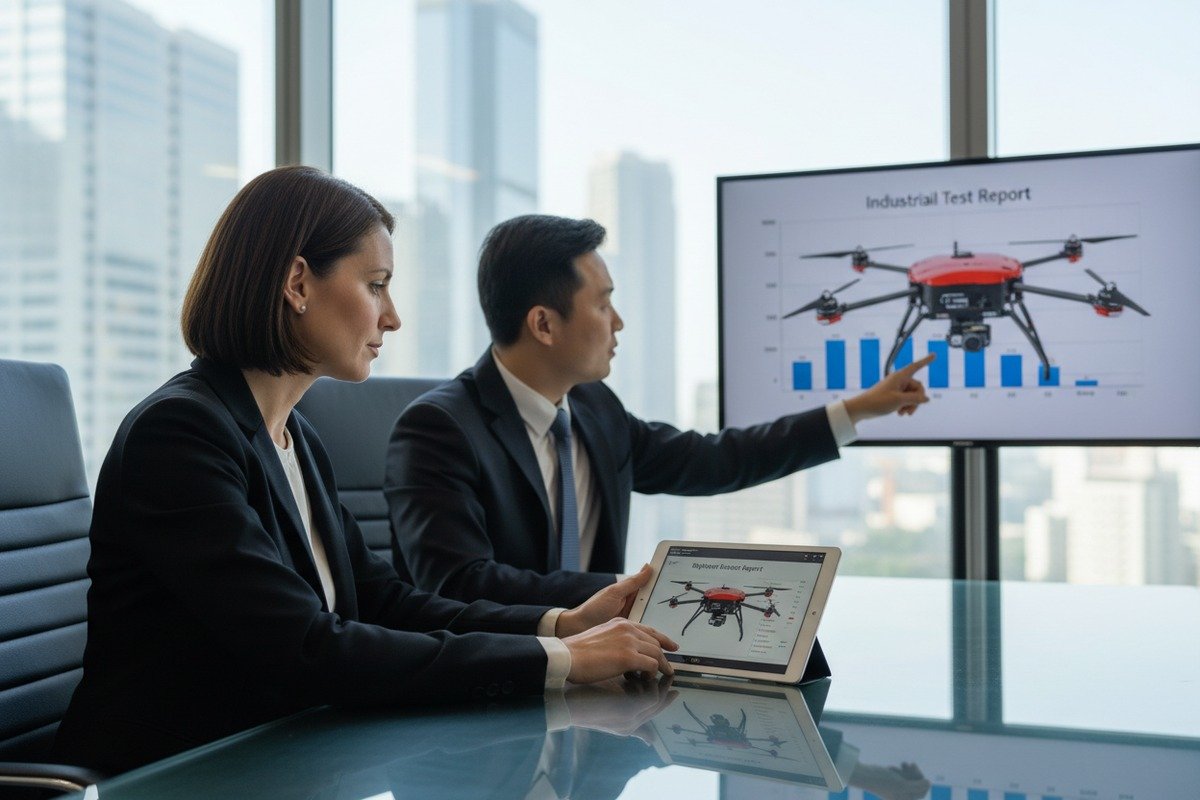
Cada semana, nuestro equipo de ventas recibe la misma pregunta de los distribuidores: “¿Dónde está la prueba de que sus drones realmente funcionan en incendios reales?” Sin datos contundentes, incluso el mejor dron de extinción de incendios 1 permanece sin vender en un almacén. Esta brecha entre la calidad del producto y la confianza del mercado cuesta a las empresas millones anualmente.
Para obtener datos reales de drones de extinción de incendios, asóciese directamente con su fabricante de equipos originales (OEM) para obtener informes de pruebas de campo, solicite registros de vuelo técnicos y certificaciones, colabore con los departamentos de bomberos para obtener comentarios operativos, acceda a registros de respuesta a incendios forestales del gobierno y aproveche estudios de investigación académica que documenten métricas como el tiempo de respuesta y las mejoras en la precisión.
En las secciones siguientes, desglosamos cada fuente de datos paso a paso misiones simuladas de carga útil 2. Aprenderá exactamente cómo recopilar, verificar y presentar esta información para obtener el máximo impacto de marketing.
¿Cómo puedo trabajar con mi fabricante de drones para acceder a los resultados documentados de las pruebas de campo?
Cuando enviamos unidades a nuestros socios de distribución, a menudo escuchamos frustración por la falta de documentación de rendimiento. Los distribuidores quieren mostrar pruebas a los compradores. Sin embargo, muchos nunca preguntan a su OEM 3 por los datos de prueba que ya existen. Esto crea una barrera innecesaria para las ventas.
Trabaje con el fabricante de su dron solicitando informes de prueba previos al envío, registros de control de calidad de fábrica, datos de pruebas de estrés ambiental y documentación de pruebas de campo. La mayoría de los socios OEM mantienen registros detallados del rendimiento de vuelo, la capacidad de carga útil y la precisión de la imagen térmica de escenarios de prueba controlados.

Qué datos ya tiene su fabricante
Nuestro equipo de ingeniería somete cada dron de extinción de incendios a pruebas exhaustivas antes del envío. Esto incluye pruebas en cámara térmica 4, ciclos de estrés del motor y misiones simuladas de carga útil. Estos registros existen. Solo necesita solicitarlos.
Aquí tiene lo que puede solicitar típicamente:
| Tipo de documento | Qué contiene | Uso de marketing |
|---|---|---|
| Informe de prueba previo al envío | Tiempo de vuelo, precisión del GPS, comprobaciones de resolución de la cámara | Verificación de la hoja de especificaciones |
| Registro de estrés ambiental | Rendimiento a temperaturas extremas (-20°C a 60°C) | Declaraciones de durabilidad |
| Prueba de capacidad de carga útil | Elevación máxima, tiempo de vuelo estacionario estable con carga completa | Compatibilidad del equipo de extinción de incendios |
| Informe de motocicleta | Horas de operación continua antes del mantenimiento | Declaraciones de fiabilidad |
| Calibración de imágenes térmicas | Precisión de la detección de calor a varias distancias | Marketing de detección de puntos calientes |
Cómo solicitar esta documentación
Comience con un correo electrónico formal a su contacto OEM. Sea específico. Solicite "el informe de prueba de estrés ambiental para el modelo X, lote Y". Las solicitudes vagas obtienen respuestas vagas.
En nuestras instalaciones en Xi'an, proporcionamos estos documentos en 5-7 días hábiles cuando los socios los solicitan. Recomendamos preguntar durante la fase de negociación del pedido. Incluya los requisitos de documentación en su contrato de compra.
Creación de un acuerdo de intercambio de datos a largo plazo
Las solicitudes únicas funcionan. Pero el intercambio sistemático de datos funciona mejor. Proponga una estructura de informes trimestrales con su fabricante. Esto mantiene sus materiales de marketing actualizados.
Considere incluir:
- Resúmenes mensuales de pruebas de vuelo
- Comparaciones de rendimiento de actualizaciones de firmware
- Registros de quejas y resoluciones de clientes
- Nuevos logros de certificación
Este enfoque convierte a su fabricante en un socio de marketing, no solo en un proveedor.
¿Dónde puedo encontrar datos de rendimiento en el mundo real sobre la autonomía de vuelo y la carga útil durante misiones de extinción de incendios reales?
Nuestros clientes en los Estados Unidos solicitan con frecuencia datos de "fuego real", no resultados de laboratorio. Necesitan pruebas de que los drones funcionan cuando el humo llena el aire y las temperaturas se disparan. Estos datos existen, pero encontrarlos requiere saber dónde buscar.
Encuentre datos reales de autonomía y carga útil de vuelos a través de estudios de caso publicados de departamentos de bomberos, informes gubernamentales de respuesta a incendios forestales, proyectos de investigación de la NASA, grabaciones de demostraciones de proveedores y publicaciones académicas. Las operaciones de incendios forestales en California, por ejemplo, han documentado drones que proporcionan mapas de calor que mejoraron la priorización de la lucha contra incendios en más de un 40%.

Informes públicos del departamento de bomberos
Muchos departamentos de bomberos publican informes anuales que incluyen estadísticas de despliegue de drones. Estos son gratuitos y de acceso público.
Busca:
- Informes posteriores a la acción de las principales respuestas a incendios forestales
- Evaluaciones tecnológicas del departamento de bomberos municipal
- Justificaciones presupuestarias de la autoridad regional de bomberos (a menudo incluyen datos de rendimiento de equipos)
El estudio de caso del dron SafeScout documentó una respuesta a un incendio en varios edificios donde el despliegue del dron condujo a una supresión más rápida, cero lesiones y una reducción de la pérdida de propiedad del 25% en comparación con incidentes pasados. Este tipo de datos específicos transforma las afirmaciones de marketing en hechos verificables.
Fuentes gubernamentales y de investigación
| Tipo de fuente | Dónde encontrarlo | Datos disponibles |
|---|---|---|
| Informes de FEMA | Documentos públicos de fema.gov | Mejoras en el tiempo de respuesta, análisis de costos |
| Investigación de incendios de la NASA | Publicaciones científicas de nasa.gov | Rendimiento de enjambres de IA, precisión del mapeo de incendios |
| Servicio Forestal del USDA | fs.usda.gov | Despliegues de drones en incendios forestales, horas de vuelo |
| Informes del Jefe de Bomberos del Estado | Sitios web individuales del gobierno estatal | Evaluaciones de rendimiento del equipo |
| Revistas académicas | Google Scholar, ResearchGate | Estudios de rendimiento revisados por pares |
Datos de demostración del proveedor
Asista a ferias comerciales de la industria como FDIC International o Wildfire Technology Summit. Los proveedores demuestran productos y comparten métricas de rendimiento. Grabe estas demostraciones. Solicite especificaciones por escrito.
Cuando exhibimos nuestro octocóptero en exposiciones, proporcionamos registros de vuelo detallados de la demostración. Pida a otros proveedores que hagan lo mismo.
Extracción de métricas de marketing
Los datos brutos necesitan traducción. Convierta las especificaciones técnicas en beneficios para el cliente.
Conversiones de ejemplo:
- "45 minutos la autonomía de vuelo 5 con carga útil completa" se convierte en "Supervise un incendio completo en un apartamento desde la ignición hasta la supresión sin cambio de batería"
- "La cámara térmica detecta variaciones de 0,5 °C" se convierte en "Encuentre puntos calientes ocultos que los ojos humanos no ven"
- "Resistencia a la intemperie IP54" se convierte en "Funciona en condiciones de lluvia, humo y polvo"
Documente la fuente de cada afirmación. Los equipos de marketing necesitan esto para el cumplimiento legal.
¿Puede mi socio OEM proporcionarme los registros técnicos y las certificaciones que necesito para demostrar la fiabilidad del producto?
Cuando calibrar nuestros controladores de vuelo 6, cada ajuste se registra. Cuando nuestros drones pasan certificación CE o FCC 7, recibimos prueba documentada. Esta información apoya directamente su marketing de confiabilidad. Sin embargo, muchos distribuidores nunca la solicitan.
Sí, los socios OEM pueden proporcionar registros técnicos de vuelo, registros de garantía de calidad y certificaciones, incluida la documentación de cumplimiento de la FAA, marcado CE, aprobación de la FCC y clasificaciones IP. Estos documentos demuestran el cumplimiento normativo, la calidad de fabricación y la durabilidad del producto para las afirmaciones de marketing.
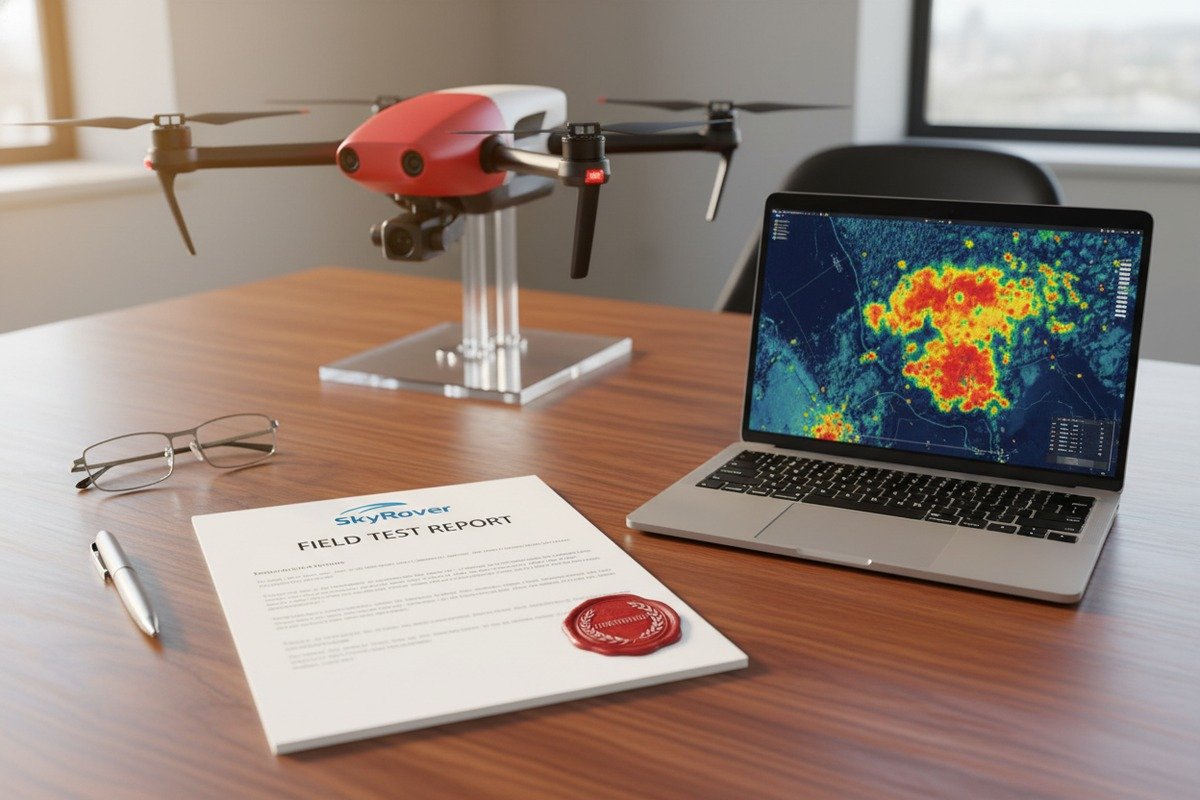
Certificaciones Esenciales para Drones de Extinción de Incendios
Los diferentes mercados requieren diferentes certificaciones. Sepa lo que sus clientes necesitan.
| Certificación | Región | Lo que demuestra | Valor de marketing |
|---|---|---|---|
| Cumplimiento de la Parte 107 de la FAA | Estados Unidos | Legal para operación comercial | Requerido para ventas a departamentos de bomberos de EE. UU. |
| Marcado CE | Unión Europea | Cumple con los estándares de seguridad de la UE | Entrada a los mercados europeos |
| Certificación FCC | Estados Unidos | Cumplimiento de las normas de radiofrecuencia | Sin interferencia con las comunicaciones de emergencia |
| Clasificación IP (IP54+) | Global | Resistencia al polvo y al agua | Operacional en condiciones de incendio severas |
| DO-160G (si aplica) | Aviación | Calificación ambiental | Credibilidad de grado profesional |
| ISO 9001 | Global | Sistema de gestión de calidad | Consistencia de fabricación |
Registros técnicos que respaldan las afirmaciones de confiabilidad
Nuestras instalaciones de producción mantienen registros completos. Estos incluyen:
Registros de calibración del controlador de vuelo
El controlador de vuelo de cada dron se somete a calibración. Los registros muestran la fecha, el técnico, los parámetros ajustados y los resultados de los vuelos de prueba. Esto demuestra una calidad de fabricación consistente.
Pruebas de ciclo de batería
Probamos los paquetes de baterías a través de ciclos de carga y descarga. Los registros documentan la retención de capacidad a lo largo del tiempo. Estos datos respaldan las afirmaciones de duración del vuelo.
Seguimiento de horas del motor
Cada motor funciona durante horas especificadas durante el control de calidad. Los registros demuestran que los componentes cumplen con los estándares de durabilidad antes del envío.
Historial de versiones de firmware
Las actualizaciones de software se documentan con registros de cambios. Esto muestra la mejora continua del producto y las correcciones de errores.
Cómo solicitar estos documentos
Estructure su solicitud claramente. Aquí hay una plantilla:
"Por favor, proporcione la siguiente documentación para [Número de modelo], [Número de lote/serie]:
- Copias de certificación CE/FCC
- Informe de inspección previa al envío
- Registro de calibración del controlador de vuelo
- Resultados de la prueba de capacidad de la batería
- Informe de prueba de clasificación IP"
Los socios OEM profesionales responden a solicitudes específicas de manera eficiente. Las solicitudes vagas generan retrasos.
Uso de certificaciones en marketing
Muestre los logotipos de certificación en las páginas de productos. Incluya los números de certificación cuando sea necesario. Cree una sección de "Cumplimiento" en su sitio web que enumere todas las aprobaciones relevantes.
Para ventas al departamento de bomberos, enfatice Cumplimiento de la FAA 8 y cualquier norma relevante de la NFPA. Los funcionarios de adquisiciones gubernamentales buscan esto específicamente.
¿Cómo recopilo comentarios operativos auténticos de los departamentos de bomberos para fortalecer mis afirmaciones de marketing?
Nuestros socios de distribución que venden la mayor cantidad de drones comparten un hábito: recopilan y utilizan los comentarios de los clientes de manera sistemática. Los departamentos de bomberos brindan los testimonios más creíbles. Sus respaldos tienen un peso que ninguna hoja de especificaciones puede igualar.
Recopile comentarios auténticos del departamento de bomberos estableciendo programas piloto, realizando encuestas posteriores al despliegue, asistiendo a conferencias de bomberos, uniéndose a asociaciones de la industria y construyendo relaciones directas con los jefes de bomberos. Documente métricas específicas como mejoras en el tiempo de respuesta, resultados de seguridad y ahorros de costos para testimonios de marketing convincentes.

Establecimiento de programas piloto
Ofrezca a departamentos de bomberos seleccionados períodos de prueba con sus drones. Esto crea oportunidades para obtener comentarios documentados.
Estructure cuidadosamente los programas piloto:
- Defina la duración de la prueba (típicamente 60-90 días)
- Establezca los requisitos de presentación de informes
- Proporcione capacitación y soporte técnico
- Solicite permiso para usar los comentarios en marketing
Durante los pilotos, los departamentos generan datos operativos reales. Documentan las horas de vuelo, los tipos de misiones y los resultados. Esto se convierte en su contenido de marketing.
Marco de encuestas posteriores al despliegue
Cree encuestas estandarizadas para los clientes. Preguntas consistentes generan datos comparables.
| Categoría de encuesta | Preguntas de ejemplo | Uso de datos |
|---|---|---|
| Rendimiento | "¿El tiempo de vuelo cumplió con las expectativas? Califique del 1 al 10." | Verificación de especificaciones |
| Fiabilidad | "¿Cuántos eventos de mantenimiento no planificados ocurrieron?" | Declaraciones de durabilidad |
| Facilidad de uso | "¿Cuánto tiempo tomó la capacitación del operador?" | Requisitos de formación |
| Éxito de la misión | "¿Ayudó el dron a localizar puntos calientes? Sí/No" | Afirmaciones de efectividad |
| Recomendación | "¿Recomendaría este dron? Sí/No/Tal vez" | Elegibilidad para testimonios |
| Métricas específicas | "Estime el tiempo ahorrado por incidente utilizando datos del dron." | Cálculos de ROI |
Construir relaciones con departamentos de bomberos
Asista a conferencias donde se reúnan profesionales de bomberos. FDIC International, Firehouse Expo y asociaciones regionales de jefes de bomberos brindan oportunidades de networking.
En estos eventos:
- Demostrar productos
- Recopilar tarjetas de presentación
- Hacer seguimiento dentro de una semana
- Ofrecer sesiones de capacitación en sus instalaciones
- Solicitar referencias a otros departamentos
Los departamentos de bomberos comparten información entre sí. Una relación sólida puede abrir múltiples puertas.
Convertir comentarios en contenido de marketing
Los comentarios brutos necesitan una presentación profesional. Trabaje con los departamentos de bomberos para crear:
Estudios de caso
Documente incidentes específicos en los que su dron marcó una diferencia medible. Incluya:
- Descripción del incidente
- Detalles del despliegue del dron
- Resultados (tiempo ahorrado, lesiones prevenidas, propiedad preservada)
- Citas directas del personal de bomberos
Testimonios en video
Grabe a jefes de bomberos u operadores de drones describiendo su experiencia. El video genera confianza más rápido que el texto.
Métricas cuantificadas
Convierta los comentarios generales en números específicos. "El dron ayudó mucho" se convierte en "El despliegue del dron redujo el tiempo de evaluación de la escena de 15 minutos a 3 minutos"."
Manejo de comentarios negativos
No todos los comentarios serán positivos. Los comentarios negativos siguen siendo valiosos.
Úselos para:
- Mejorar productos (enviar a su socio OEM)
- Identificar brechas de capacitación
- Establecer expectativas realistas del cliente
- Demostrar compromiso con la mejora
Nunca oculte comentarios negativos a su fabricante. Nuestro equipo de ingeniería en SkyRover utiliza las quejas del campo para priorizar las actualizaciones de firmware y las mejoras de diseño.
Conclusión
Obtener datos reales de drones de extinción de incendios requiere un esfuerzo sistemático a través de múltiples fuentes. Asóciese con su OEM para la documentación de pruebas. Acceda a informes públicos gubernamentales y de investigación. Recopile certificaciones que demuestren el cumplimiento. Construya relaciones con los departamentos de bomberos para obtener testimonios auténticos. Estos datos transforman las afirmaciones de marketing en puntos de venta creíbles.
Notas al pie
1. Fuente autorizada sobre drones en la gestión de incendios forestales. ↩︎
2. Explora métodos de control para misiones de carga útil de drones, mejorando la precisión y la ejecución. ↩︎
3. Definición autorizada de Fabricante de Equipo Original. ↩︎
4. Explica el propósito y los beneficios de las pruebas en cámara térmica para la confiabilidad del producto. ↩︎
5. Discute las innovaciones tecnológicas destinadas a extender los tiempos de vuelo y las capacidades de los drones. ↩︎
6. Describe la función y la importancia de los controladores de vuelo en la estabilidad y operación de los drones. ↩︎
7. Explica los requisitos oficiales y la importancia del marcado CE para los productos en la UE. ↩︎
8. Proporciona información oficial sobre las regulaciones de la FAA para operaciones comerciales de drones (Parte 107). ↩︎
 English
  Español de México
  Deutsch
  Français
  Русский
  العربية
Comments
No comments yet. Be the first to share your thoughts!
Leave a Comment