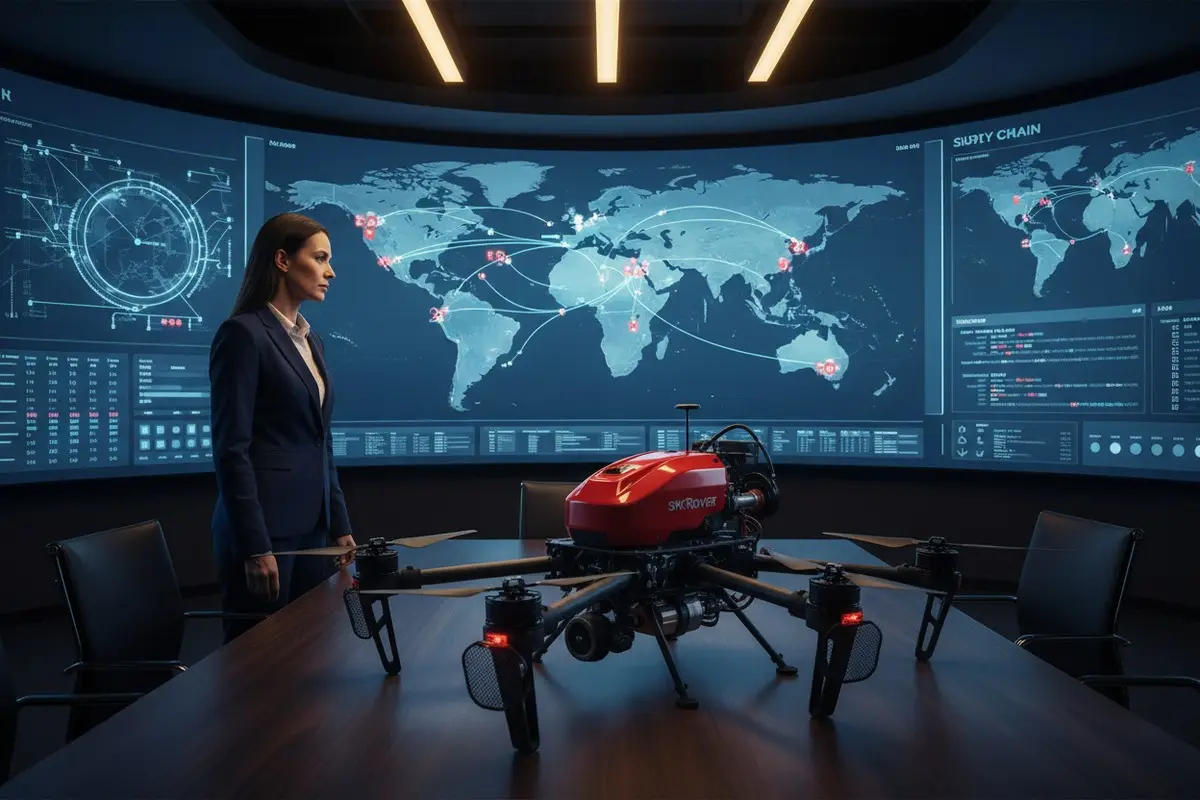

El mes pasado, nuestra planta de producción sufrió una interrupción inesperada certificaciones de exportación 1. Un proveedor clave de sensores fue repentinamente incluido en la lista negra. Los pedidos se acumularon. Los departamentos de bomberos de tres continentes esperaban ansiosamente.
Evaluar el impacto geopolítico en las cadenas de suministro de drones de extinción de incendios requiere un mapeo sistemático de los orígenes de los componentes, la puntuación de la exposición al riesgo en cada nodo, el monitoreo de los cambios regulatorios en tiempo real y el desarrollo de escenarios de contingencia. Este enfoque de múltiples capas ayuda a identificar vulnerabilidades antes de que las interrupciones paralicen las capacidades de respuesta a emergencias.
La realidad es cruda. Las agencias de lucha contra incendios dependen de drones que dependen de componentes globales redes de envío multimodales 2. Cuando la política cambia, las cadenas de suministro se rompen. Permítanme guiarlos a través de cómo proteger sus operaciones de estas amenazas invisibles.
¿Cómo protejo mi cadena de suministro de drones de extinción de incendios de cambios repentinos en las políticas de comercio internacional?
Cuando enviamos drones de lucha contra incendios de Xi'an a California, cambios en la política comercial 3 pueden convertir un pedido rutinario en un dolor de cabeza de meses. Un anuncio de aranceles puede duplicar los costos de la noche a la mañana.
Proteger su cadena de suministro de drones de extinción de incendios de los cambios en la política comercial requiere diversificar proveedores en varios países, mantener reservas estratégicas de componentes, construir relaciones con fabricantes que posean múltiples certificaciones de exportación y establecer términos contractuales claros para el reparto de costos relacionados con aranceles.

Comprendiendo sus puntos de exposición
El primer paso es saber dónde residen sus vulnerabilidades. La mayoría de los drones comerciales de lucha contra incendios contienen componentes de al menos cinco países diferentes. Nuestro equipo de ingeniería rastrea cada pieza.
Las baterías a menudo provienen de Corea del Sur o China. Los controladores de vuelo se fabrican en China, Taiwán o, cada vez más, en Vietnam. Los sensores de imagen térmica pueden originarse en Francia, Israel o Estados Unidos. Las estructuras de fibra de carbono suelen provenir de China, Japón o Alemania.
Cada punto de origen conlleva diferentes niveles de riesgo. Un componente de un país que enfrenta sanciones crea un peligro inmediato. Una pieza de un aliado políticamente estable conlleva menos riesgo.
Construyendo una matriz de evaluación de riesgos
| Componente | Fuente primaria | Fuente de respaldo | Nivel de riesgo arancelario | Impacto del tiempo de entrega |
|---|---|---|---|---|
| Celdas de batería de litio | China | Corea del Sur | Alto (arancel 170%) | +4-6 semanas |
| Thermal Sensors | China | Israel | Alto | +3-4 semanas |
| Carbon Fiber Frame | China | Japón | Alto | +2-3 semanas |
| Controladores de vuelo | China | Vietnam | Alto | +4 semanas |
| Motores de propulsión | China | India | Alto | +5 semanas |
| Módulos GPS | Taiwán | EE. UU. | Medio | +2 semanas |
Estrategias de protección prácticas
Almacene componentes críticos antes de que los necesite. Mantenemos un inventario de 90 días de artículos de alto riesgo. Este colchón ha salvado varios pedidos de clientes durante cambios repentinos de política.
Negociar cláusulas arancelarias en contratos. Especificar quién asume los costos adicionales si los aranceles aumentan. Términos claros evitan disputas posteriores.
Trabajar con fabricantes que ya sirven a múltiples mercados. Nuestro equipo se encarga de las exportaciones a más de 30 países. Esta experiencia significa que entendemos los requisitos de documentación en todas partes.
Considerar opciones de nearshoring. Algunos clientes ahora obtienen ensamblajes parciales de Turquía o India. Estas ubicaciones enfrentan menos restricciones mientras mantienen la calidad.
Sistemas de Monitoreo y Respuesta
Configurar alertas para noticias de política comercial. Servicios como trade.gov y los feeds de las agencias aduaneras proporcionan advertencias tempranas. Incluso una advertencia de 48 horas puede ayudarle a ajustar los pedidos.
Unirse a asociaciones industriales. A menudo reciben avisos anticipados de cambios regulatorios. La ventaja de la información vale las cuotas de membresía.
¿Qué debo buscar en las cualificaciones de exportación de un fabricante para evitar retrasos en la aduana de mis pedidos de drones?
Nuestro departamento de exportación maneja cientos de envíos al año. Hemos visto pedidos atascados en aduanas durante semanas porque la documentación era incorrecta. Las calificaciones adecuadas marcan la diferencia entre una entrega fluida y retrasos costosos.
Las cualificaciones clave de exportación a verificar incluyen licencias de exportación de tecnología de doble uso, certificaciones de cumplimiento específicas del país, relaciones con agentes aduanales, paquetes completos de documentación técnica y un historial verificado de envíos exitosos a su país de destino sin rechazos o retenciones prolongadas.

Certificaciones Esenciales de Exportación
No todos los fabricantes pueden exportar legalmente drones a todos los países. Los drones de extinción de incendios contienen tecnología sensible. Las cámaras térmicas, los sistemas GPS y los controladores de vuelo a menudo requieren permisos especiales.
En China, los fabricantes necesitan licencias de exportación específicas para la tecnología de drones. Desde abril de 2025, los nuevos controles de exportación endurecieron aún más los requisitos. Pida a los proveedores potenciales que muestren sus licencias actuales.
Para las importaciones a EE. UU., los fabricantes deben comprender las regulaciones ITAR y EAR 4. Aunque los drones de extinción de incendios son productos comerciales, ciertos componentes activan requisitos de revisión.
Lista de verificación de documentación
| Tipo de documento | Objetivo | Quién Proporciona | Método de verificación |
|---|---|---|---|
| Licencia de exportación | Autoridad legal para exportar | Fabricante | Solicitar número de licencia, verificar con la agencia emisora |
| Especificaciones técnicas | Clasificación aduanera | Fabricante | Comparar con códigos HS 5 |
| Certificado de origen | Determinación de aranceles | Fabricante | Debe coincidir con la ubicación real de producción |
| Certificado de usuario final | Cumplimiento de seguridad | Comprador + Fabricante | Se requiere plantilla emitida por el gobierno |
| Declaración de Cumplimiento UFLPA | Evaluación de trabajo forzoso | Fabricante | Registros de auditoría de la cadena de suministro |
| Certificación CE/FCC | Acceso al mercado | Fabricante | Informes de pruebas de terceros |
Señales de alerta a tener en cuenta
Tenga cuidado con los fabricantes que no pueden proporcionar documentación clara. Si dudan o dan respuestas vagas, surgirán problemas.
Solicite registros de envío a su país de destino. Un fabricante que nunca ha enviado a los EE. UU. tendrá dificultades con los requisitos de aduanas de EE. UU. La experiencia importa enormemente.
Verifique si el fabricante aparece en alguna lista de entidades. La Oficina de Industria y Seguridad de EE. UU. mantiene listas de empresas restringidas. Comprar a empresas incluidas en la lista negra crea graves riesgos legales.
Construyendo un Proceso de Verificación
Solicite referencias de otros clientes en su país. Contáctelos directamente. Pregunte sobre experiencias aduaneras.
Comience con un pequeño pedido de prueba. Esto prueba el proceso de exportación sin un riesgo financiero importante. Nuestro equipo recomienda este enfoque para nuevos clientes.
Revise toda la documentación antes del envío. Los errores detectados a tiempo se corrigen fácilmente. Los errores detectados en la aduana causan retrasos costosos.
Considere usar un agente de aduanas externo familiarizado con las importaciones de drones. Su experiencia evita errores comunes. El costo es pequeño en comparación con los posibles gastos de retraso.
¿Cómo puedo verificar que mi socio chino de drones tiene la profundidad de ingeniería para adaptarse a los nuevos requisitos regulatorios?
Cuando las regulaciones cambian, nuestro equipo de ingeniería trabaja durante la noche para actualizar el firmware. Rediseñamos el hardware cuando es necesario. No todos los fabricantes pueden responder tan rápido. Elegir el socio equivocado significa quedarse atascado con productos no conformes.
Verifique la profundidad de ingeniería de un socio chino de drones examinando el tamaño y las credenciales de su equipo interno de I+D, revisando ejemplos pasados de adaptación regulatoria, probando la capacidad de respuesta de su soporte técnico, verificando sus capacidades de desarrollo de software y confirmando su voluntad de proporcionar modificaciones personalizadas de firmware o hardware.

Evaluación de capacidades técnicas
La diferencia entre una empresa comercial y un fabricante real se hace evidente durante una crisis. Las empresas comerciales no pueden modificar productos. Solo pueden esperar a que actúen sus proveedores.
Pregunte directamente a los socios potenciales: ¿Cuántos ingenieros trabajan en su departamento de I+D? ¿Cuáles son sus especializaciones? Nuestro equipo en Xi'an incluye 70 personas, con grupos dedicados para software de control de vuelo 6, ingeniería mecánica y cumplimiento normativo.
Solicite ejemplos de adaptaciones regulatorias pasadas. Cuando la UE actualizó los requisitos de registro de drones, ¿cómo respondieron? Cuando surgieron preocupaciones sobre la privacidad de datos en EE. UU., ¿qué cambios hicieron?
Indicadores Clave de Ingeniería
| Área de Capacidad | Preguntas que hay que hacer | Respuesta de Bandera Verde | Respuesta a la bandera roja |
|---|---|---|---|
| Software de Control de Vuelo | ¿Puede modificar los parámetros de vuelo para regulaciones específicas? | "Sí, desarrollamos nuestro propio firmware" | "Utilizamos controladores de terceros" |
| Diseño de Hardware | ¿Puede personalizar soportes de carga útil o integración de sensores? | Muestra archivos CAD y ejemplos de modificación | "Nuestros diseños son fijos" |
| Actualizaciones de cumplimiento | ¿Qué tan rápido puede implementar nuevos requisitos de geovallas? | "2-4 semanas de tiempo de respuesta típico" | "No podemos modificar el software" |
| Asistencia técnica | ¿Proporcionan diagnósticos remotos? | "Sí, a través de nuestra plataforma en la nube" | "Póngase en contacto con su distribuidor local" |
| Documentación | ¿Puede proporcionar especificaciones técnicas completas para aduanas? | Hojas de datos detalladas disponibles | Especificaciones vagas o incompletas |
Prueba de capacidad de respuesta antes de comprometerse
Envía preguntas técnicas antes de realizar pedidos. ¿Qué tan rápido responden? ¿Las respuestas son detalladas y precisas?
Solicita un recorrido virtual por la fábrica. Los fabricantes legítimos muestran con orgullo sus instalaciones. La vacilación sugiere que pueden ser intermediarios.
Solicita una unidad de muestra para evaluación. Prueba no solo el producto sino también el proceso de soporte. Llama a su equipo técnico con preguntas. Mide el tiempo de respuesta y la calidad.
Consideraciones para asociaciones a largo plazo
Las regulaciones seguirán cambiando. Tu socio debe evolucionar con ellas.
Los requisitos de seguridad de datos se están endureciendo a nivel mundial. Los drones de extinción de incendios capturan imágenes sensibles. Asegúrate de que tu socio pueda implementar cifrado de datos y opciones de almacenamiento localizadas.
Los mandatos de identificación remota se están expandiendo. Los drones deben transmitir identificación en muchas jurisdicciones. Confirma que los sistemas de tu socio admiten estos requisitos o se pueden actualizar.
Las capacidades de mantenimiento y reparación también son importantes. Cuando los componentes fallan, ¿puede tu socio suministrar reemplazos rápidamente? ¿Tienen piezas en stock para modelos más antiguos?
Nuestro enfoque implica el desarrollo colaborativo. Trabajamos con los clientes para personalizar funciones y software. Esta flexibilidad ha ayudado a los socios a navegar por los cambios regulatorios en diferentes mercados.
¿Cuáles son mis opciones para garantizar una entrega fiable puerta a puerta cuando las tensiones geopolíticas afectan a la logística global?
El año pasado, las interrupciones en el transporte marítimo del Mar Rojo añadieron tres semanas a nuestras entregas europeas. Los clientes con pedidos urgentes para la temporada de incendios forestales sufrieron. Aprendimos lecciones difíciles sobre la resiliencia logística. Ahora nuestras estrategias de entrega tienen múltiples planes de respaldo.
La entrega confiable puerta a puerta durante las interrupciones geopolíticas requiere el uso de fabricantes con redes de envío multimodales establecidas, el mantenimiento de relaciones con múltiples transitarios, la consideración del transporte aéreo para pedidos críticos, el preposicionamiento de inventario en almacenes aduaneros y la selección de socios con experiencia en la navegación de la complejidad aduanera en diversas rutas.

Comprensión de los desafíos logísticos actuales
La volatilidad del transporte marítimo ha aumentado drásticamente. Los ataques hutíes desviaron los envíos Asia-Europa a través del Cabo de Buena Esperanza. Esto añadió un 10-20% a los costos y dos semanas a los tiempos de tránsito.
La congestión portuaria sigue siendo impredecible. Las disputas laborales, la escasez de equipos y los retrasos en las inspecciones crean demoras sin previo aviso.
Los tiempos de procesamiento de aduanas se han extendido a medida que se intensifica el escrutinio de seguridad. Los envíos de drones reciben atención particular debido a tecnología de doble uso 7 preocupaciones.
Comparación de opciones de envío
| Método | Tiempo de tránsito (China a EE. UU.) | Nivel de costos | Fiabilidad durante las interrupciones | Ideal para |
|---|---|---|---|---|
| Flete marítimo (estándar) | 25-35 días | Bajo | Pobre – vulnerable a desvíos | Pedidos a granel grandes, no urgentes |
| Flete marítimo (exprés) | 18-22 días | Medio | Moderado | Reposición planificada |
| Transporte aéreo | 5-7 días | Alto | Bueno – más flexibilidad de ruta | Pedidos urgentes, volúmenes pequeños |
| Ferrocarril (China-Europa) | 15-20 días | Medio | Moderado | Destinos europeos |
| Multimodal | Varía | Medio-alto | Bueno – adaptable | Necesidades equilibradas de costo/velocidad |
Construyendo resiliencia logística
Trabaje con transitarios que se especialicen en productos tecnológicos. Entienden los requisitos aduaneros para drones. Los transportistas genéricos a menudo cometen errores de clasificación.
Establezca relaciones con varios transitarios. Cuando una red enfrenta problemas, existen alternativas. Trabajamos con tres socios logísticos diferentes para redundancia.
Considere el inventario en almacenes fiscales. La pre-ubicación de existencias en los países de destino elimina el envío internacional de los plazos urgentes. Varios clientes mantienen pequeños inventarios en zonas de libre comercio de EE. UU.
Carga Aérea como Seguro
Para pedidos críticos, la carga aérea proporciona un seguro contra las interrupciones del transporte marítimo. Sí, los costos son más altos. Pero las agencias de extinción de incendios que enfrentan incendios forestales activos no pueden esperar meses por el equipo.
Negocie las tarifas de carga aérea con anticipación. Los precios del mercado al contado durante las crisis aumentan drásticamente. Las tarifas pre-acordadas brindan certeza de costos.
Mezcle los métodos de envío estratégicamente. Envíe las unidades iniciales por aire para necesidades inmediatas. Siga con pedidos a granel por mar para reabastecimiento.
Documentación y Estrategias Aduaneras
La documentación completa previene retenciones aduaneras. El papeleo incorrecto causa más retrasos que los problemas de ruta de envío.
Utilice códigos HS consistentes en todos los envíos. Las inconsistencias activan revisiones.
Proporcione especificaciones técnicas detalladas de forma proactiva. Los funcionarios de aduanas que no están familiarizados con la tecnología de drones pueden tener preguntas. Responderlas con anticipación acelera el despacho.
Trabaje con agentes de aduanas tanto en el origen como en el destino. La coordinación entre ellos previene errores de traspaso.
Nuestro servicio de entrega puerta a puerta incluye soporte para el despacho de aduanas. Nos encargamos de la preparación de la documentación y coordinamos con los agentes. Este enfoque integrado ha mantenido la fiabilidad de la entrega incluso durante los períodos más desafiantes.
Conclusión
Riesgos geopolíticos para las cadenas de suministro de drones de extinción de incendios 8 son reales y crecen. La evaluación requiere mapeo sistemático, puntuación de riesgos y planificación de contingencias. Los fabricantes y socios que elija determinan su resiliencia. Actúe ahora para auditar su cadena de suministro antes de que ocurra la próxima interrupción.
Notas al pie
1. Fuente autorizada (SGS) que proporciona información general sobre certificaciones de importación y exportación para lograr el cumplimiento normativo en diversas industrias. ↩︎
2. Define y explica los beneficios del transporte multimodal en la logística. ↩︎
3. Analiza el impacto de las políticas de comercio global en la estrategia y operaciones de la cadena de suministro. ↩︎
4. Fuente oficial de las Regulaciones Internacionales sobre Tráfico de Armas (ITAR) que rigen los artículos de defensa. ↩︎
5. Resumen oficial del Sistema Armonizado para la clasificación de mercancías en el comercio internacional. ↩︎
6. Recurso para un software de control de vuelo de piloto automático de código abierto utilizado en drones. ↩︎
7. Explica los controles de exportación sobre artículos con aplicaciones tanto civiles como militares. ↩︎
8. Proporciona una guía detallada sobre el uso de drones en la extinción de incendios. ↩︎
 English
  Español de México
  Deutsch
  Français
  Русский
  العربية
Comments
No comments yet. Be the first to share your thoughts!
Leave a Comment