
When our production team ships drones agrícolas 1 overseas, we often hear one concern above all others. Service providers worry about what happens after the sale engineering support capabilities 2. Downtime during spraying season costs real money. A single day without a working drone can mean lost crops and frustrated customers.
US service providers evaluate domestic after-sales support by examining four key areas: engineering support capabilities, parts availability and cost, remote technical assistance quality, and documentation with training programs. Providers who excel in rapid response times, maintain large parts inventories, and offer comprehensive training consistently earn higher trust from American partners.
This guide walks through each evaluation area. You will learn specific questions to ask, red flags to watch for, and practical methods to verify supplier claims before signing any agreement.
How can I verify if a drone manufacturer provides the engineering support I need for complex field repairs?
Our engineers receive calls at midnight from Texas ranchers with downed drones total cost of ownership 3. These moments taught us what real engineering support looks like. The gap between promised support and actual delivery frustrates many service providers FAA compliance guidance 4.
Verify engineering support by requesting documented case studies of past complex repairs, testing response times with technical questions before purchase, confirming availability of certified technicians, and checking if the manufacturer provides remote diagnostic tools. Strong suppliers offer 24/7 access to engineers who understand both hardware and agricultural applications.

Why Engineering Support Matters More Than Price
Field repairs for agricultural drones differ from consumer drone fixes. You deal with chemical-resistant seals, high-capacity pumps, and precision nozzle systems 5. A technician who only knows basic electronics cannot help when a flow sensor fails mid-application.
Our experience exporting to the US market shows that service providers need three levels of engineering support. First, they need real-time remote diagnostics. Second, they need detailed repair procedures for specific failure modes. Third, they need escalation paths to factory engineers for unusual problems.
Testing Support Before You Commit
Send technical questions before you buy. Ask about specific failure scenarios. Time how long it takes to get a useful answer. A good supplier responds within hours, not days.
| Support Test | Qué buscar | Red Flag |
|---|---|---|
| Response time to email query | Under 4 hours on business days | More than 48 hours |
| Technical depth of answers | Specific part numbers, procedures | Generic responses |
| Weekend availability | Some level of emergency access | No weekend contact |
| Language clarity | Clear English documentation | Machine-translated text |
| Video support option | Screen sharing for diagnostics | Phone-only support |
Certified Technician Networks
Ask your potential supplier how many certified technicians 6 operate in your region. Request their locations. A manufacturer with partners in Texas, California, and the Midwest provides better coverage than one with a single support center in Florida.
When we calibrate our flight controllers, we create detailed calibration records. Good manufacturers share these records with authorized repair partners. This transparency speeds up troubleshooting because the technician knows exactly how your specific unit was configured at the factory.
What are the best ways for me to assess the availability and cost of replacement parts for my agricultural drone fleet?
Parts shortages during peak spraying season destroy profitability. We have watched service providers lose entire contracts because a single motor took three weeks to arrive. Parts strategy separates successful operations from struggling ones.
Assess parts availability by requesting complete parts lists with current stock levels, verifying domestic warehouse locations, comparing shipping times during peak season, and calculating total cost of ownership including replacement components. Suppliers maintaining US-based inventory with same-day shipping capability provide the lowest operational risk.

Building Your Parts Evaluation Framework
Start by getting a complete bill of materials for your drone model. Identify which parts fail most often. Motors, propellers, spray pumps, and nozzles top the list for agricultural applications. These items need to be available immediately.
Our production line tests every component before assembly. We track failure rates across thousands of flight hours. This data helps us stock the right parts in the right quantities. Ask your supplier for similar failure rate data. If they cannot provide it, their parts stocking may be guesswork.
Comparing Inventory Claims
Many suppliers claim large inventories. Verify these claims with specific tests.
| Método de verificación | How to Execute | What It Reveals |
|---|---|---|
| Order a common part | Place a small order, time delivery | Actual shipping speed |
| Request stock photos | Ask for dated warehouse images | Real inventory levels |
| Check dealer feedback | Contact existing US dealers | Consistent availability |
| Peak season test | Order during busy months | Surge capacity |
| Emergency order test | Request expedited shipping | Crisis response ability |
Understanding True Parts Cost
The sticker price on a part tells only part of the story. You need to calculate total cost including shipping, customs, and downtime while waiting.
When we design our agricultural drones, we use standardized components where possible. This approach means you can sometimes source parts locally. A motor that uses common bearing sizes costs less to maintain than a proprietary design requiring factory-only replacements.
Domestic vs. International Parts Sources
US-based parts warehouses eliminate customs delays. They also reduce shipping damage risk because packages travel shorter distances. However, some specialized components must come from the factory.
| Parts Type | Best Source | Plazo de entrega habitual | Cost Impact |
|---|---|---|---|
| Hélices | US warehouse | Same day to 2 days | Bajo |
| Motores | US warehouse | 1-3 days | Medio |
| Flight controllers | Factory or US distributor | 3-7 days | Alto |
| Spray system pumps | Specialized distributor | 2-5 days | Medio |
| Frame components | Factory | 7-14 days | Alto |
| Sensors | US electronics distributor | 1-4 days | Medio |
How do I evaluate whether a supplier's remote technical assistance is sufficient for my local service operations?
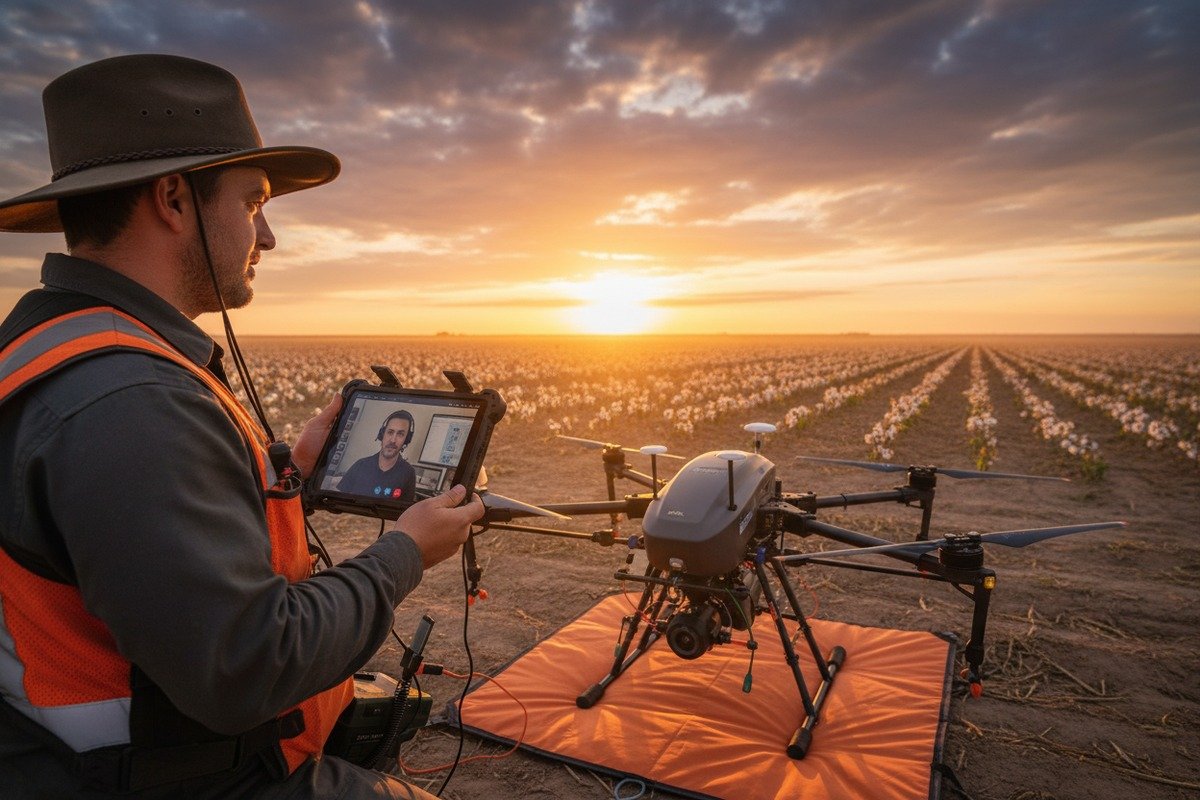
Remote support technology has transformed how we help our US partners. A video call with screen sharing can solve in ten minutes what once required shipping a drone back to the factory. But not all remote support delivers equal value.
Evaluate remote technical assistance by testing actual support sessions before purchase, confirming time zone coverage for your operating hours, verifying the availability of remote diagnostic software, and checking if support staff have agricultural application experience. Effective remote support combines technical drone knowledge with understanding of farming operations and seasonal urgency.
What Effective Remote Support Looks Like
Good remote support starts before problems occur. When we configure drones for US agricultural customers, we establish baseline telemetry profiles. These profiles let our engineers spot anomalies remotely. We can often predict failures before they happen.
The best remote support includes these elements. First, real-time flight data access so engineers see what you see. Second, video calling with annotation tools so technicians can circle specific components on your screen. Third, remote firmware updating capability to push fixes without shipping hardware.
Testing Remote Support Quality
Run a trial support session with any potential supplier. Create a realistic problem scenario. Time how long it takes to reach a qualified technician. Evaluate their communication clarity and problem-solving approach.
Ask these specific questions during your test:
- Can you access my drone's flight logs remotely?
- What diagnostic software do you use?
- How do you handle situations requiring physical intervention?
- What is your average resolution time for common issues?
- Do you offer support in my time zone?
Time Zone and Language Considerations
Agricultural emergencies do not follow business hours. A pest outbreak requires immediate spraying. If your drone fails at 6 AM and your supplier operates on the other side of the world, you lose critical treatment windows.
Our team maintains support staff across multiple time zones. We learned this necessity from American customers who needed help during their early morning pre-flight checks. Ask your supplier about their actual staffing, not just their advertised hours.
Remote Diagnostics Technology
Modern agricultural drones transmit extensive telemetry data 7. Battery health, motor temperatures, pump pressures, and GPS accuracy all flow through the system. Advanced suppliers capture this data and use it for remote troubleshooting.
When evaluating suppliers, ask to see their remote diagnostic interface. If they cannot show you real examples, their remote support capability may be limited to basic phone conversations.
Can I rely on my drone partner to provide the necessary documentation and training to support my domestic after-sales commitments?
Documentation and training determine whether your team can actually deliver the service you promise customers. We have seen capable service providers fail because their supplier provided equipment without proper knowledge transfer. This gap hurts everyone.
Rely on documentation and training from partners who provide comprehensive operator manuals, maintenance schedules, FAA compliance guidance, hands-on training programs, and ongoing certification updates. Strong suppliers treat training as a continuous relationship, not a one-time event, and they update materials as regulations and technology evolve.

Documentation That Actually Helps
Useful documentation goes beyond basic operating instructions. Service providers need troubleshooting decision trees, wiring diagrams 8, calibration procedures, and parts cross-reference guides.
When we develop documentation for our agricultural drones, we start with common failure scenarios. We photograph actual repairs step by step. We include torque specifications, fluid types, and safety warnings specific to agricultural chemicals. This practical approach creates documents that technicians actually use.
Lista de verificación de documentación esencial
| Tipo de documento | Por qué es importante | Quality Indicators |
|---|---|---|
| Operator manual | Daily operations guidance | Clear procedures, local regulations |
| Maintenance schedule | Preventive care planning | Hour-based intervals, seasonal checks |
| Troubleshooting guide | Quick problem resolution | Decision trees, error code definitions |
| Parts catalog | Ordering accuracy | Part numbers, photos, compatibility notes |
| Wiring diagrams | Electrical repairs | Color-coded, connector pinouts |
| Calibration procedures | Performance optimization | Step-by-step with verification tests |
| FAA compliance guide | Legal operation | Current regulations, waiver processes |
Evaluación del programa de capacitación
Training programs vary widely in quality and depth. Some suppliers offer a single afternoon orientation. Others provide multi-day intensive courses with hands-on practice and certification testing.
Ask potential suppliers about their training structure. Who teaches the courses? What are their qualifications? Do they understand American agricultural practices, or do they only know the equipment? The best trainers combine technical expertise with practical farming knowledge.
Our training programs for US partners include these elements:
- Pre-flight inspection procedures specific to agricultural applications
- Chemical handling safety integrated with drone operations
- FAA Part 107 compliance with agricultural exemptions
- Emergency procedures for equipment failures during spraying
- Maintenance intervals based on chemical exposure levels
Ongoing Support and Updates
Regulations change. Software updates modify procedures. New best practices emerge from field experience. Your supplier should provide continuous learning opportunities, not just initial training.
Ask about update mechanisms. Do they send revised documentation when procedures change? Do they offer refresher training? Do they maintain online resources that stay current?
The best partners notify you proactively when changes affect your operations. They do not wait for you to discover outdated information through costly mistakes.
FAA Compliance Support
Operating agricultural drones commercially in the US requires specific FAA authorizations. Part 107 certification is the baseline. Certificación FAA Parte 107 9 Many agricultural operations also need waivers for operations beyond visual line of sight or over certain altitudes.
Suppliers with US market experience understand these requirements. They can guide you through the waiver application process. They provide the technical documentation FAA reviewers need to approve your operations.
Conclusión
Evaluating domestic after-sales support requires systematic testing across engineering support, parts availability, remote assistance, and documentation quality. Service providers who verify these capabilities before purchase avoid costly surprises during critical spraying seasons. The right manufacturing partner becomes an extension of your service team.
Notas al pie
1. Wikipedia provides a comprehensive overview of agricultural drones and their applications. ↩︎
2. Explains the importance and scope of engineering support in product development and lifecycle. ↩︎
3. Defines Total Cost of Ownership (TCO) and its importance in evaluating product costs. ↩︎
4. This is a direct and authoritative .gov source from the Federal Aviation Administration (FAA) that guides individuals on how to become a certificated remote pilot, which is central to FAA compliance for commercial drone operations, including agricultural drones. ↩︎
5. Details innovations in agricultural nozzles for precision spraying and efficiency in farming. ↩︎
6. Discusses the role of skilled personnel in operating and maintaining agricultural drones. ↩︎
7. Elastic is an authoritative company in data and observability, providing a clear and comprehensive definition of telemetry data. ↩︎
8. Wikipedia provides a clear, concise, and widely accepted definition of a wiring diagram, making it an authoritative and accessible source for general information. ↩︎
9. Official FAA page detailing requirements for commercial drone operations under Part 107. ↩︎

 English
  Spanish
  German
  French
  Dutch
Dutch  Arabic
