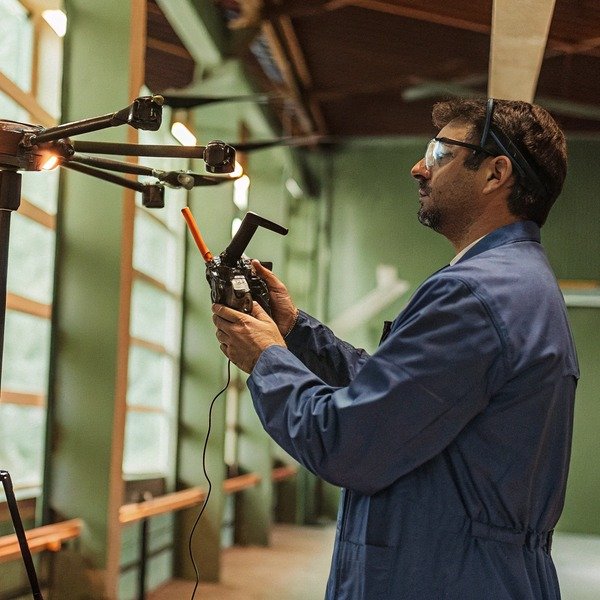
Ver un dron fallar a mitad de misión durante una simulación de incendio en un almacén enseñó a nuestro equipo de ingeniería que las especificaciones teóricas a menudo colapsan bajo el estrés térmico del mundo real.
Para probar rigurosamente la disipación de calor, ejecute una prueba estática en banco de duración completa al brillo máximo para identificar el punto de atenuación automática, seguido de simulaciones en túnel de viento para replicar el flujo de aire de vuelo. Simultáneamente, monitoree la caída de voltaje de la batería y use cámaras radiométricas externas para garantizar que el calor de la carcasa no comprometa el cardán o los sensores de vuelo.
Aquí está la hoja de ruta práctica para validar el rendimiento térmico antes de su implementación.
¿Qué pasos específicos debo seguir para poner a prueba el sistema de enfriamiento bajo carga máxima de iluminación?
Cuando validamos cargas útiles personalizadas para nuestros socios estadounidenses, descubrimos que omitir la fase de “prueba de tortura” a menudo conduce a fallas de hardware en el campo.
Debe comenzar con una prueba estática de “cero flujo de aire” al 100% de brillo para determinar el umbral de estrangulamiento térmico en el peor de los casos, luego pasar a una simulación dinámica utilizando ventiladores industriales. Este enfoque de dos fases revela si los ventiladores de enfriamiento activo pueden mantener temperaturas de funcionamiento seguras sin la asistencia del movimiento de vuelo hacia adelante.
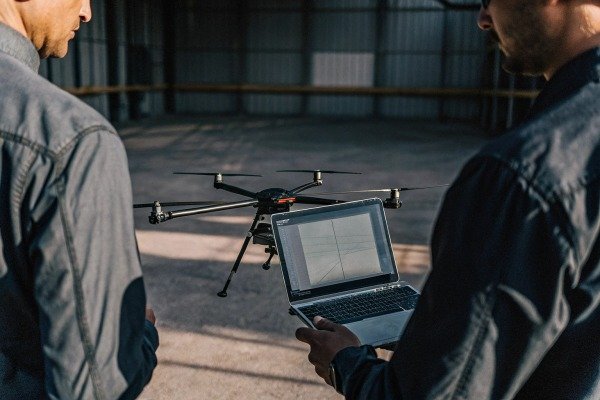
Probar el sistema de enfriamiento de un cuadricóptero grande no se trata solo de encender la luz y esperar. Requiere un enfoque sistemático para estresar el hardware más allá de lo esperado en una misión estándar. En nuestras instalaciones de Xi'an, hemos desarrollado un protocolo que separa la disipación pasiva de la eficiencia del enfriamiento activo.
Fase 1: La Prueba de Saturación Estática
El primer paso es el más duro. Coloque el dron en una habitación con una temperatura ambiente controlada de 25 °C (77 °F). Active la matriz de iluminación de alta intensidad a plena potencia mientras el dron está estacionario en el banco. Debido a que no hay viento por el movimiento de vuelo, los ventiladores internos deben hacer todo el trabajo.
Está buscando el Tiempo hasta el estrangulamiento (TtT). Esta es la duración exacta que tarda la lógica de protección térmica interna de la luz en activarse y atenuar automáticamente los LED para proteger los circuitos. Si una luz afirma tener 10,000 lúmenes pero se atenúa a 2,000 lúmenes después de solo tres minutos en el banco, puede que no sea adecuada para operaciones prolongadas de búsqueda y rescate donde el dron permanece suspendido en el aire.
Fase 2: Simulación Dinámica de Flujo de Aire
Las pruebas estáticas son necesarias para la seguridad, pero son poco realistas. En vuelo, el aire se mueve sobre las aletas de enfriamiento. aletas de enfriamiento 1 Para simular esto, utilice un ventilador industrial de suelo dirigido a la carga útil desde el frente, generando una velocidad del viento de aproximadamente 5-10 m/s.
Compare los datos térmicos de la Fase 1 y la Fase 2. Un sistema de enfriamiento bien diseñado mostrará una caída significativa en la temperatura de la carcasa una vez que se introduzca el flujo de aire. Si la temperatura permanece críticamente alta incluso con flujo de aire, es probable que el diseño del disipador de calor sea defectuoso.
Fase 3: Resistencia al Choque Térmico
Los drones de extinción de incendios se enfrentan a cambios rápidos de temperatura. Recomendamos una simulación de "prueba de salpicadura". Mientras la unidad está a temperatura máxima de funcionamiento, sométala a una ligera niebla de agua. Esto simula el dron volando cerca de mangueras de incendios o a través de lluvia ligera. Las unidades mal selladas o el vidrio de baja calidad se agrietarán debido al choque térmico choque térmico 2 o permitirán que el vapor penetre en la carcasa, empañando las lentes permanentemente.
Tabla Comparativa del Protocolo de Pruebas
| Fase de Prueba | Condición de Configuración | Métrica Crítica a Medir | Indicador de falla |
|---|---|---|---|
| Inmersión Estática | Cero flujo de aire, brillo 100% | Tiempo hasta que ocurra la atenuación automática | Atenúa en < 5 minutos; la carcasa supera los 90°C |
| Flujo Dinámico | 5-10 m/s de velocidad del viento | Caída de temperatura vs. Prueba estática | Caídas de temperatura < 10%; los ventiladores crean vibración |
| Choque térmico | Pulverización de niebla en lente caliente | Integridad del sello y durabilidad del vidrio | Grieta en la lente; empañamiento por condensación interna |
¿Cómo puedo determinar si el calor de las luces afecta la estabilidad de vuelo o la eficiencia de la batería del dron?
Nuestro análisis de registros de vuelo de diversos mercados de exportación revela que los focos de calor localizados a menudo causan un comportamiento inesperado en la Unidad de Medición Inercial (IMU).
Supervise los registros de vuelo del dron en busca de deriva de la IMU y verifique las advertencias de bajo voltaje prematuras causadas por el consumo de energía combinado de los LED y los ventiladores de refrigeración. El alto calor aumenta la resistencia interna de la batería, lo que lleva a una caída de voltaje que puede activar un aterrizaje forzoso incluso cuando la capacidad permanece.
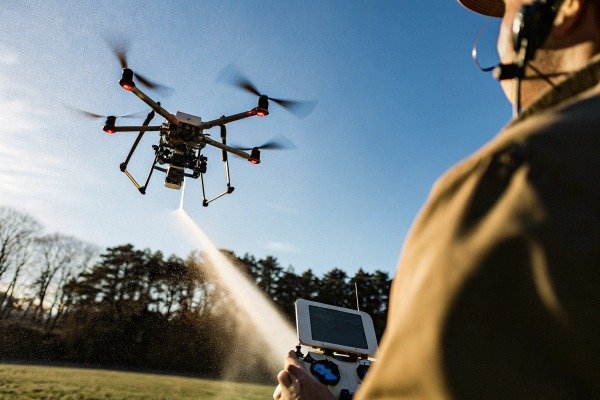
El calor no solo daña la electrónica; cambia la forma en que vuela el dron. Cuando integramos iluminación de alta potencia en nuestros marcos SkyRover, buscamos interferencias sutiles que indiquen una fuga térmica.
Caída de voltaje de la batería y resistencia interna
Las luces de alta intensidad consumen una corriente significativa. Cuando se combina con la energía necesaria para los motores del dron y los ventiladores de refrigeración activa de la luz, la carga es inmensa. El calor exacerba este problema. Si la batería está ubicada demasiado cerca del módulo de iluminación caliente, o si la luz consume energía de la batería de vuelo principal, verá una "Caída de voltaje"."
Esto ocurre cuando el voltaje cae temporalmente bajo carga. Si la batería se calienta debido al calor externo de la luz, su resistencia interna cambia. resistencia interna 3 Es posible que vea que el dron inicia un "Retorno a casa por batería baja" con una capacidad del 40% porque el voltaje cayó por debajo del umbral de seguridad. Durante las pruebas, registre la curva de voltaje con la luz APAGADA frente a la luz ENCENDIDA. Una caída pronunciada cuando la luz se enciende indica una mala gestión de la energía o ineficiencia térmica.
Deriva de la IMU y el giroscopio
La Unidad de Medición Inercial (IMU) depende de una calibración precisa. Unidad de Medición Inercial (IMU) 4 Los cambios rápidos de temperatura pueden deformar ligeramente el material del armazón del dron o afectar el silicio dentro de los sensores. Si la carga útil de luz expulsa calor directamente sobre la carcasa del controlador de vuelo, la IMU puede experimentar "deriva térmica"."
Para probar esto, mantenga el dron en vuelo estacionario a baja altitud (2-3 metros) con la luz a máxima potencia. Observe los datos de telemetría. Si el dron comienza a desviarse horizontalmente sin entrada de palanca, o si el horizonte artificial en su controlador comienza a inclinarse mientras el dron está nivelado, es probable que el calor esté interfiriendo con los sensores.
Interferencia Electromagnética (EMI) de los Ventiladores de Refrigeración
Los sistemas de refrigeración activa utilizan ventiladores de alta velocidad de rotación. Si estos ventiladores no están blindados correctamente, generan ruido electromagnético. Esto puede interferir con la transmisión de video Interferencia Electromagnética (EMI) 5 señal o el bloqueo del GPS. Aconsejamos a nuestros clientes que monitoreen la Relación Señal-Ruido (SNR) de la señal de video. Si el video se vuelve granulado o lento específicamente cuando la luz se calienta y los ventiladores giran a su máxima velocidad, el sistema de refrigeración está creando problemas de EMI.
Problemas comunes de vuelo inducidos por el calor
| Síntoma | Causa | Acción de diagnóstico |
|---|---|---|
| Aterrizaje prematuro | Caída de voltaje debido a alta carga/calor | Verifique los registros de voltaje; busque caídas >0.5V al activar la luz |
| Desviación horizontal | Expansión/deriva térmica de la IMU | Monitoree la retención del modo GPS/Actitud durante el vuelo estacionario |
| Estática de video | EMI de ventiladores de refrigeración sin blindaje | Pruebe el rango de video con los ventiladores a RPM máximas frente a los ventiladores apagados |
¿Cuáles son los puntos de referencia de temperatura críticos que necesito monitorear durante las pruebas de tierra de larga duración?
Nuestros ingenieros priorizan el establecimiento de techos térmicos estrictos, ya que la falla del aislamiento es una causa principal de reclamaciones de garantía en aplicaciones industriales de alta resistencia.
Debe monitorear la temperatura de la unión del LED para asegurarse de que se mantenga por debajo de 85 °C para evitar cambios de color permanentes, y verificar que la superficie exterior de la carcasa no exceda los 60 °C donde contacta con el marco del dron. Exceder estos puntos de referencia corre el riesgo de derretir componentes plásticos y degradar la integridad estructural del cardán.
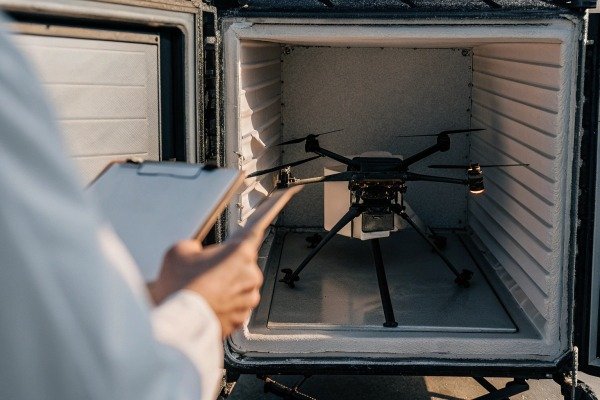
Los números son el único lenguaje que importa en las pruebas térmicas. "Se siente caliente" no es una métrica válida. Necesita puntos de referencia precisos para aceptar o rechazar una carga útil de iluminación.
El Principio Delta-T
Observamos el "Delta-T" ($\Delta T$), que es el aumento de temperatura por encima del ambiente. Si su temperatura ambiente es de 25 °C y la carcasa de la luz alcanza los 75 °C, su $\Delta T$ es de 50 °C.
Para equipos de grado aeronáutico, generalmente buscamos un $\Delta T$ de no más de 40-50 °C en la carcasa exterior. Si la carcasa se calienta más que esto, representa un riesgo para el tren de aterrizaje del dron, los motores del cardán e incluso las manos del operador durante los cambios de batería.
Temperatura de la Unión del LED y Cambio de Color
El punto de referencia interno más crítico es la temperatura de la unión del LED. Temperatura de la unión del LED 6 Si bien no puede medir esto directamente sin desmontar la unidad, puede medir su efecto: Cambio de color.
Los LED de alta calidad mantienen un balance de blancos consistente (por ejemplo, 5600 K). Cuando los LED se sobrecalientan, experimentan un "desplazamiento hacia el azul" o pierden intensidad rápidamente (depreciación de lúmenes). Depreciación de lúmenes 7
- Prueba: Apunte la luz a una pared blanca y mida la temperatura del color con un espectrómetro o una cámara calibrada cada 10 minutos durante una hora.
- Fallo: Si la luz se desplaza significativamente hacia el azul o el verde, la disipación de calor interna está fallando y la vida útil del LED se está acortando drásticamente.
Seguridad de Componentes Adyacentes
El calor de la luz no permanece en la luz. Irradia. Utilice una cámara termográfica (como una unidad portátil FLIR) cámara de imagen térmica 8 para escanear la Motores de cardán y el Placa posterior del sensor de la cámara.
- Motores del cardán: No debe exceder los 50 °C. El sobrecalentamiento hace que la grasa de los rodamientos se licúe y gotee, arruinando la estabilización.
- Sensor de la cámara: Si la cámara térmica o la cámara visual junto a la luz se calientan demasiado, verá un aumento del ruido en la imagen. Para las cámaras térmicas, esto es catastrófico; el sensor quedará "ciego" debido a su propio ruido térmico.
Umbrales de seguridad de temperatura
| Componente | Temp. máx. de funcionamiento seguro | Consecuencia del sobrecalentamiento |
|---|---|---|
| Carcasa externa | 60 °C – 70 °C | Riesgo de quemaduras para el operador; derretimiento de soportes de plástico |
| Motores de cardán | 50°C | Fallo de la grasa del rodamiento; vídeo entrecortado |
| Controlador de vuelo | 60 °C | Reducción de la CPU; comportamiento de vuelo errático |
| Superficie de la batería | 60 °C | Degradación química; riesgo de incendio; hinchazón |
¿Necesito simular entornos operativos de alta temperatura para validar completamente las capacidades de disipación de calor?
Al exportar a regiones como California o el sur de Europa, aconsejamos a los clientes que las pruebas a temperatura ambiente son insuficientes para predecir el rendimiento en caso de incendio forestal.
Sí, es necesario realizar pruebas de estrés ambiental en una cámara calentada a al menos 40 °C (104 °F) para simular el efecto combinado del calor ambiental y la carga térmica interna. Esto valida que el sistema de refrigeración tiene suficiente margen para funcionar cerca de incendios activos, donde las temperaturas de entrada de aire están significativamente elevadas.
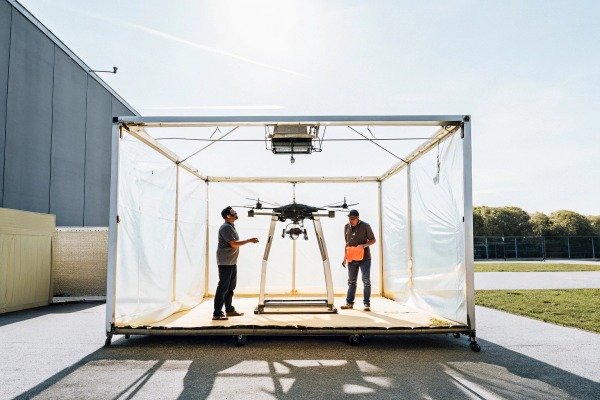
Un dron que se enfría perfectamente en un laboratorio con aire acondicionado a 20 °C puede fallar catastróficamente cerca de un incendio forestal donde el aire ambiente es de 45 °C o más. La eficiencia de enfriamiento de los ventiladores depende de la diferencia de temperatura entre el aire y el disipador de calor. Si el aire está caliente, el enfriamiento es menos efectivo.
La prueba de cámara de alto ambiente
Para validar una calificación de "lucha contra incendios", colocamos el dron en una cámara térmica configurada a la temperatura máxima de funcionamiento nominal (generalmente 40 °C o 50 °C). Luego realizamos la prueba de carga de iluminación.
- Objetivo: ¿Se apaga la luz? ¿El dron fuerza un aterrizaje?
- Comprobación de la Realidad: En un escenario de incendio, el dron también recibe calor radiante del fuego de abajo. Aunque es difícil de simular perfectamente sin un fuego real, la cámara de alto ambiente ayuda a imitar la capacidad de enfriamiento reducida del aire.
Calor radiante frente a enfriamiento convectivo
Los drones de lucha contra incendios a menudo utilizan materiales como el aislamiento de aerogel aislamiento de aerogel 9 para proteger los componentes internos del calor radiante del fuego. Sin embargo, la luz de alta intensidad genera calor interno que debe ser expulsado.
Esto crea un conflicto: quieres aislar el dron del fuego exterior, pero necesitas ventilar el calor de la luz interior.
- Enfoque de las pruebas: Compruebe si las rejillas de ventilación de entrada de la luz están succionando aire caliente. Si el dron está flotando sobre un punto caliente, el aire de "enfriamiento" podría ser de 60 °C o más. Verificamos esto utilizando pistolas de calor para dirigir aire caliente a las rejillas de ventilación de entrada durante la prueba de banco. Si la luz se reduce inmediatamente, el diseño de enfriamiento activo es insuficiente para escenas de incendios.
Validación para operaciones de incendios forestales
Para zonas silvestres extinción de incendios forestales 10 en la lucha contra incendios, el "tiempo de remojo" es más largo. Las misiones pueden durar más de 30 minutos.
- La prueba de calor de resistencia: Ejecute el dron y la luz a máxima potencia en la cámara con calefacción durante toda la duración de una carga de batería (por ejemplo, 40 minutos).
- Análisis de datos: Descargue los archivos de registro. Busque las marcas de "CPU Throttling" en la computadora de vuelo. Si el procesador del dron se ralentizó para gestionar el calor, la latencia de transmisión de video aumentaría, lo que es peligroso para un piloto que intenta navegar a través del humo.
Conclusión
Probar la disipación de calor no se trata solo de proteger la luz; se trata de garantizar la seguridad de toda la aeronave y la misión. Al aplicar rigurosamente pruebas estáticas en banco, monitorear la caída de voltaje y simular entornos de alta temperatura ambiente, puede verificar si las afirmaciones de un fabricante se mantienen frente a la física del fuego. En SkyRover, creemos que solo la validación basada en datos garantiza que su equipo esté listo cuando suene la alarma.
Notas al pie
1. Recurso educativo que explica la física de la convección forzada y los disipadores de calor. ↩︎
2. Norma ISO que hace referencia a las condiciones ambientales y las pruebas para equipos de vehículos. ↩︎
3. Resumen educativo de la resistencia interna de la batería y sus efectos en el voltaje. ↩︎
4. Información general sobre la tecnología y los componentes de la IMU. ↩︎
5. Definición y explicación de la EMI por parte de la Comisión Electrotécnica Internacional. ↩︎
6. Documentación técnica de un importante fabricante de LED sobre gestión térmica. ↩︎
7. Explicación del Departamento de Energía sobre la vida útil y la pérdida de intensidad de los LED. ↩︎
8. Guía del fabricante sobre el uso de cámaras térmicas para la inspección de productos electrónicos. ↩︎
9. Entrada enciclopédica que describe las propiedades y usos del aerogel. ↩︎
10. Página oficial del Servicio Forestal de EE. UU. sobre investigación y tecnología contra incendios. ↩︎
 English
  Español de México
  Deutsch
  Français
  Русский
  العربية
Comments
No comments yet. Be the first to share your thoughts!
Leave a Comment