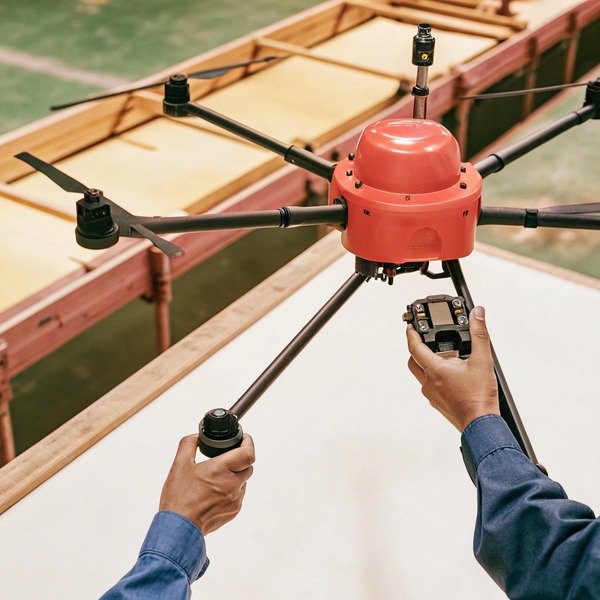
Al integrar módulos de transmisión en nuestra fábrica de Chengdu, a menudo vemos que los clientes se preocupan por la interceptación de señales durante operaciones críticas de rescate contra incendios.
Para confirmar el cifrado del enlace de datos en drones de extinción de incendios, debe verificar las especificaciones técnicas para los estándares AES-256, solicitar certificaciones de cumplimiento específicas como FIPS 140-2 o Blue UAS, y realizar pruebas de campo independientes utilizando herramientas de análisis de paquetes para garantizar que las transmisiones de video no se envíen en texto plano.
Aquí le explicamos exactamente cómo recomendamos verificar estas medidas de seguridad antes de firmar el contrato de adquisición.
¿Qué estándares de cifrado específicos como AES-256 debo buscar en las especificaciones técnicas?
Nuestro equipo de I+D selecciona específicamente chips que admiten estándares criptográficos avanzados porque las especificaciones genéricas a menudo ocultan protocolos de seguridad débiles que ponen en peligro los datos de la misión. datos de la misión 1
Debe buscar específicamente AES-256 (Estándar de Cifrado Avanzado con claves de 256 bits) listado en las secciones de transmisión o radiofrecuencia. Además, verifique si el sistema admite AES-128 para necesidades de menor latencia y revise los protocolos TLS/DTLS para asegurar las transmisiones de comandos de control.
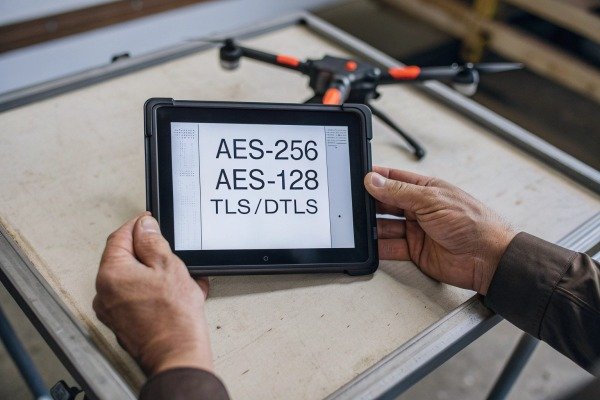
Al revisar la hoja de datos de un nuevo dron industrial, la terminología puede ser confusa. Sin embargo, saber exactamente qué buscar es crucial para la seguridad. No solo está buscando la palabra "cifrado". Necesita conocer la fortaleza de ese cifrado.
Entendiendo los Estándares AES
El estándar de oro para las operaciones de extinción de incendios es AES-256. Esto significa Estándar de Cifrado Avanzado con una clave de 256 bits. Actualmente es virtualmente imposible de descifrar mediante métodos de fuerza bruta. A menudo decimos a nuestros clientes que, si bien AES-128 es más rápido y utiliza un poco menos de energía de la batería, AES-256 proporciona el nivel máximo de seguridad requerido por las agencias gubernamentales.
Si una hoja de especificaciones simplemente dice "Protocolo Privado" o "Cifrado Propietario" sin mencionar AES, tenga mucho cuidado. Los métodos propietarios a menudo son solo "seguridad por oscuridad"." seguridad por oscuridad 2 No son rigurosamente probados por la comunidad de seguridad global.
Mecanismos de Intercambio de Claves
También debe verificar cómo el dron administra sus claves. Un sistema robusto utiliza claves de sesión dinámicas. claves de sesión dinámicas 3 Esto significa que el dron y el controlador negocian un nuevo código secreto cada vez que los enciende. Si el sistema utiliza una clave estática (la misma contraseña para siempre), un dron pirateado podría comprometer toda su flota.
Consulte la siguiente tabla para comprender la jerarquía de los estándares de cifrado que se encuentran en las especificaciones modernas de drones.
| Estándar | Nivel de seguridad | Caso de uso recomendado | Impacto de la Latencia |
|---|---|---|---|
| AES-256 | Alto (Grado Militar) | Gobierno, Policía, Rescate de Incendios Sensible | Mínimo |
| AES-128 | Medio (Estándar) | Inspección General, Entrenamiento | Muy bajo |
| Propietario | Bajo (Desconocido) | Aficionado, Tareas no críticas | Varía |
| Texto plano | Ninguno | No Usar para Lucha contra Incendios | Ninguno |
¿Cómo puedo verificar la seguridad de la transmisión de video en tiempo real durante una prueba de campo?
Durante las pruebas de vuelo en nuestras instalaciones, alentamos a los clientes a intentar piratear la transmisión de video, ya que la seguridad teórica a menudo falla contra las herramientas de intercepción del mundo real.
Para verificar la seguridad del video en tiempo real, utilice una radio definida por software (SDR) o un analizador de paquetes como Wireshark durante un vuelo de campo. Capture los paquetes aislados y confirme una alta entropía de señal, lo que demuestra que la transmisión de video está codificada y no se transmite como una transmisión de texto plano visible.

Confiar en el folleto no es suficiente. Necesita ver el comportamiento del enlace de datos en el mundo real. Siempre recomendamos realizar una prueba de "Análisis de paquetes" durante la fase de demostración. Captura de paquetes 4 Esto no requiere que seas un hacker, pero sí algunas herramientas básicas de TI.
La prueba de Wireshark
Puedes usar una computadora portátil con un adaptador Wi-Fi capaz de modo monitor, o una herramienta especializada de Radio Definida por Software (SDR). Radio Definida por Software 5 Cuando el dron está volando y enviando video al controlador, usas el software para "capturar" los datos que viajan por el aire.
Si el sistema es seguro, los datos que captures parecerán basura aleatoria (alta entropía). Verás caracteres revueltos que no tienen sentido. Esto confirma que el cifrado AES está funcionando.
La bandera roja de texto plano
Si el sistema no es seguro, es posible que puedas reconstruir la transmisión de video directamente de los paquetes capturados. O, podrías ver texto legible en los datos de comando, como coordenadas GPS o números de altitud. Coordenadas GPS 6 Esto es un fallo importante. Significa que cualquiera con equipo similar cerca del lugar del incendio podría ver tu transmisión térmica o localizar a tu equipo.
Vulnerabilidades del enlace físico
No olvides las conexiones por cable. A veces, el enlace aéreo entre el dron y el controlador es seguro, pero el cable HDMI o USB del controlador a tu tableta de visualización no está cifrado. Verificamos esto asegurándonos de que toda la ruta de datos, desde el sensor de la cámara hasta la pantalla del piloto, siga un protocolo seguro.
Lista de verificación para verificación de campo
- Escaneo de frecuencia SDR: Asegúrate de que la señal se extienda por toda la banda de frecuencia (saltando) y no sea una simple señal analógica estática.
- Captura de paquetes: Verificar que las cargas útiles no sean legibles.
- Prueba de desconexión: Asegúrese de que el dron regrese automáticamente a casa si el enlace se interrumpe o se falsifica.
¿Qué certificaciones de terceros o informes de prueba debo solicitar para validar la seguridad del enlace de datos?
Cuando exportamos a socios de EE. UU., descubrimos que la dependencia de las autodeclaraciones de fábrica es insuficiente en comparación con los informes de validación de terceros reconocidos.
Debe solicitar certificados de validación válidos de FIPS 140-2 o FIPS 140-3 para módulos criptográficos y verificar el cumplimiento de la NDAA o la autorización Blue UAS. Además, solicite informes independientes de pruebas de penetración de empresas de ciberseguridad acreditadas que validen el firmware contra vulnerabilidades conocidas.

El papeleo importa. En el mundo de la contratación gubernamental, la promesa de un fabricante no es una garantía legal. Necesita verificación independiente. El estándar más importante a buscar en los Estados Unidos y las naciones alineadas es FIPS (Estándares Federales de Procesamiento de Información).
FIPS 140-2/3 Explicado
FIPS 140 es un estándar de seguridad informática del gobierno de EE. UU. utilizado para aprobar módulos criptográficos. FIPS 140 7 Un dron no necesita ser fabricado en EE. UU. para usar chips validados por FIPS. Utilizamos módulos de cifrado validados por FIPS en nuestros sistemas de gama alta para garantizar que cumplan con los estándares globales. Al solicitar este informe, verifique el número de certificado con la base de datos del NIST (Instituto Nacional de Estándares y Tecnología).
Blue UAS y NDAA
Para los compradores de EE. UU., la Ley de Autorización de Defensa Nacional (NDAA) es fundamental. Ley de Autorización de Defensa Nacional 8 Prohíbe equipos de telecomunicaciones y videovigilancia de proveedores específicos considerados un riesgo de seguridad. Ser "Conforme a la NDAA" significa que el dron no contiene componentes prohibidos. "Blue UAS" es un estándar más alto, lo que significa que el dron ha sido completamente examinado y aprobado por el Departamento de Defensa.
Pruebas de penetración independientes
Más allá de las listas gubernamentales, pregunte al proveedor si ha contratado a una empresa privada de ciberseguridad para hackear sus propios drones. Un "Informe de prueba de penetración" muestra que los profesionales intentaron infiltrarse en el sistema. Informe de prueba de penetración 9 y fallaron (o que las fallas fueron corregidas). Esto a menudo es más valioso que un certificado genérico porque prueba la versión de firmware específica que está comprando.
| Certificación / Informe | Organismo emisor | Lo que valida |
|---|---|---|
| FIPS 140-2 / 140-3 | NIST (EE. UU.) / CSEC (Canadá) | Seguridad e integridad del módulo criptográfico. |
| Cumplimiento de la NDAA | Gobierno de EE. UU. (Autodeclarado) | Verificación de la cadena de suministro (sin componentes prohibidos). |
| Blue UAS | DIU (Unidad de Innovación de Defensa) | Autorización completa de ciberseguridad física. |
| Informe de prueba de penetración | Firmas de seguridad privadas | Resiliencia contra intentos activos de hackeo. |
¿Puedo personalizar los protocolos de cifrado para cumplir con los requisitos de seguridad específicos de mi gobierno local?
Nuestros ingenieros modifican frecuentemente el firmware para contratos gubernamentales para asegurar que las coordenadas sensibles del terreno de incendios nunca se filtren a servidores en la nube no autorizados.
Sí, los fabricantes de renombre pueden personalizar los protocolos de cifrado integrando algoritmos específicos exigidos por el gobierno o habilitando Modos de Datos Locales. Esto asegura que los datos permanezcan fuera de línea y permite a las agencias cargar sus propias claves de cifrado privadas en lugar de depender de la configuración predeterminada de fábrica.

Una talla no sirve para todos, especialmente para las agencias gubernamentales. Los fabricantes de drones industriales de alta gama, incluidas nuestras propias líneas de producción, ofrecen servicios de personalización (OEM/ODM) que van más allá de cambiar el color del plástico.
Modo de Datos Local (LDM)
El mayor temor para muchos departamentos de bomberos es que los datos se filtren a un servidor extranjero. Debe solicitar un "Modo de Datos Local" o "Modo sin Conexión"." Modo de datos local 10 Cuando esto está activo, el dron crea un circuito cerrado con el controlador. No se envían datos a Internet. Las actualizaciones deben realizarse manualmente a través de una tarjeta SD o USB. Esto evita físicamente la fuga de datos, independientemente de la fortaleza del cifrado.
Inyección de Clave Personalizada
Los drones estándar vienen con claves de fábrica. Si bien son seguras, el fabricante técnicamente las conoce. Para una seguridad de primer nivel, pregunte si el sistema admite la "Inyección de Clave de Usuario". Esto permite que su departamento de TI genere sus propias claves de cifrado y las cargue en el dron. Una vez que haga esto, ni siquiera nosotros, el fabricante, podremos acceder a sus datos.
Adaptación de Frecuencia y Algoritmo Regional
Diferentes países tienen diferentes frecuencias permitidas y algoritmos de cifrado aprobados. Por ejemplo, algunas regiones requieren algoritmos criptográficos nacionales específicos en lugar de AES. Un fabricante flexible puede ajustar el firmware para cambiar el motor de cifrado y cumplir con estas leyes locales. Esto garantiza que usted cumpla no solo con las mejores prácticas de seguridad, sino también con las leyes locales de transmisión de radio.
Matriz de Capacidad de Personalización
| Característica | Dron estándar | Dron Industrial Personalizable | Beneficio |
|---|---|---|---|
| Gestión de Claves | Claves Estáticas de Fábrica | Claves Dinámicas Generadas por el Usuario | Propiedad total del acceso a la seguridad. |
| Flujo de Datos | Sincronización en la Nube por Defecto | Modo sin Conexión / Local | Previene la exfiltración de datos no autorizada. |
| Algoritmo | Fijo (por ejemplo, AES-128) | Modular / Actualizable | Se adapta a futuras amenazas cuánticas. |
| Puertos | Puertos Abiertos Estándar | Deshabilitado/Asegurado Físicamente | Previene la manipulación física. |
Conclusión
Para garantizar la seguridad de su flota de extinción de incendios, exija pruebas de cifrado AES-256, verifique la documentación de cumplimiento FIPS o NDAA y valide la integridad de la transmisión de video con herramientas independientes de análisis de paquetes.
Notas al pie
1. Documentación del fabricante sobre la protección de datos sensibles de vuelo y misión. ↩︎
2. Antecedentes sobre el concepto de depender de la confidencialidad del diseño en lugar de métodos criptográficos sólidos. ↩︎
3. Explicación de cómo se utilizan claves únicas para cada sesión de comunicación para mejorar la seguridad. ↩︎
4. Sitio oficial del analizador de protocolos de red estándar de la industria utilizado para verificar el cifrado de datos. ↩︎
5. Resumen académico de la tecnología de radio definida por software y sus aplicaciones en el procesamiento de señales. ↩︎
6. Información oficial del gobierno sobre señales GPS civiles y estándares de seguridad de datos. ↩︎
7. Publicación oficial del NIST para los requisitos de seguridad de los módulos criptográficos utilizados en equipos gubernamentales. ↩︎
8. Regulación federal que rige la prohibición de ciertos servicios o equipos de telecomunicaciones y videovigilancia. ↩︎
9. Guía completa para probar la seguridad de aplicaciones y firmware contra amenazas cibernéticas. ↩︎
10. Anuncio oficial de funciones de privacidad de datos que permiten a los drones operar sin conexión a Internet. ↩︎

 English
  Español de México
  Deutsch
  Français
  Русский
  العربية
