
Al diseñar sistemas de control de vuelo, vemos lo crítico que es cada segundo durante un rescate. sistemas de control de vuelo 1 Los bomberos necesitan herramientas que hagan más que solo observar las llamas desde arriba; necesitan soluciones activas.
Sí, la mayoría de los proveedores modernos de drones industriales ofrecen módulos dedicados para el lanzamiento aéreo de suministros de rescate. Estos sistemas se conectan a través de puertos estándar y permiten a los pilotos liberar de forma remota kits médicos, chalecos salvavidas o radios de comunicación directamente a través de la interfaz del controlador de vuelo.
Antes de invertir en una flota, debe comprender las capacidades específicas de estos sistemas de lanzamiento.
¿Cuál es el peso máximo de carga útil que puedo transportar con el módulo de lanzamiento aéreo de rescate?
Nuestros ingenieros a menudo debaten el equilibrio entre la potencia de elevación y el tiempo de vuelo. Las cargas pesadas agotan las baterías rápidamente, dejando a los pilotos con decisiones difíciles durante misiones críticas.
Los pesos máximos de carga útil suelen oscilar entre 3 kilogramos para cuadricópteros estándar y más de 50 kilogramos para hexacópteros de elevación pesada. Sin embargo, transportar el peso máximo reduce significativamente la resistencia del vuelo, a menudo cortando el tiempo total de vuelo en más de la mitad en comparación con los vuelos sin carga.
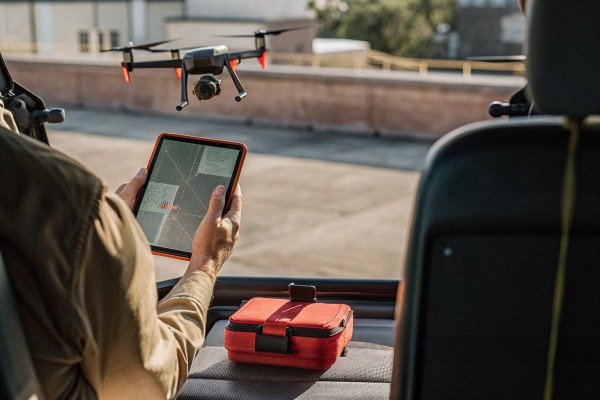
Comprender la capacidad de carga útil es el factor más crítico al seleccionar un dron de extinción de incendios. En nuestras instalaciones de prueba, clasificamos los drones según su potencial de elevación, pero los compradores deben darse cuenta de que el "peso máximo" no es lo mismo que el "peso operativo". Un dron podría técnicamente levantar 50 kg, pero si agota la batería en cinco minutos, es inútil para una misión de rescate ubicada a tres millas de distancia. misión de rescate 2
La física de la elevación pesada
Cuando se agrega un módulo de lanzamiento aéreo pesado, los motores del dron deben trabajar más para mantener el vuelo estacionario. Esto genera más calor y consume amperaje a una tasa mucho mayor. Para escenarios de extinción de incendios estándar, generalmente recomendamos una carga útil en el "punto óptimo". Esto permite un tiempo de vuelo suficiente para llegar al objetivo, mantener el vuelo estacionario para precisión y regresar de manera segura.
Por ejemplo, un dron de clase media podría transportar una carga útil de 5 kg que consiste en un botiquín de primeros auxilios y una radio. botiquín de primeros auxilios 3 Este peso es manejable y permite un vuelo estable. Si empujas el límite a 10 kg en el mismo armazón, el dron se vuelve lento. Lucha contra la inercia. Esto hace que sea más difícil detenerse o girar rápidamente, lo cual es peligroso en zonas de incendios turbulentas.
Tecnología de Batería y Tiempo de Vuelo
El tipo de batería dicta cuánto tiempo puedes transportar estas cargas. Las baterías de polímero de litio de alto voltaje son estándar, pero su voltaje cae bajo carga pesada. baterías de polímero de litio 4 A continuación, se detalla cómo los diferentes pesos de carga útil impactan la resistencia de vuelo de un dron industrial típico para incendios.
| Clase de dron | Carga útil máxima | Tiempo de Vuelo (Vacío) | Tiempo de Vuelo (Carga Máxima) | Tipo de Misión Recomendado |
|---|---|---|---|---|
| Explorador Ligero | 1 – 2 kg | 45 minutos | 20 minutos | Lanzamiento de radios de emergencia o chalecos salvavidas individuales. |
| Utilidad Media | 5 – 10 kg | 55 minutos | 25 minutos | Entrega de botiquines médicos, desfibriladores o mangueras pequeñas. |
| Elevación Pesada | 25 – 50 kg+ | 40 minutos | 15 minutos | Transportando bombas de agua, grandes cajas de suministro o retardante. |
Consideraciones de Estabilidad
Llevar una carga pesada cambia el centro de gravedad. centro de gravedad 5 Si la carga útil se balancea, el controlador de vuelo tiene que sobrecompensar. Por eso recomendamos asegurar las cargas firmemente. Una carga que se desplaza puede confundir a los sensores, lo que lleva a un vuelo inestable. Al elegir un módulo, asegúrese de que esté clasificado para la clase de peso específica del armazón de su dron para evitar que los motores se quemen.
¿Puedo personalizar el diseño del mecanismo de liberación para equipos de emergencia específicos?
Los clientes preguntan frecuentemente a nuestro equipo de I+D si una radio específica o una bola extintora encaja en nuestros drones. Los ganchos estándar rara vez encajan perfectamente en cada herramienta de rescate única sin modificaciones.
Sí, la personalización es posible a través de SDK abiertos y puertos de montaje modulares. Los fabricantes pueden diseñar soportes especializados, cajas de liberación de varias etapas o adaptadores impresos en 3D para sujetar y soltar de forma segura artículos únicos como desfibriladores externos automáticos o dispositivos de flotación de forma irregular.

La realidad de la fabricación de drones industriales es que no hay dos departamentos de bomberos que tengan exactamente las mismas necesidades. Un departamento podría necesitar soltar un extintor de incendios cilíndrico preciso, mientras que otro necesita soltar una bolsa suave y voluminosa de chalecos salvavidas. Un solo "gancho universal" a menudo es insuficiente.
Aprovechando la Arquitectura Abierta
La mayoría de los drones profesionales de extinción de incendios ahora cuentan con "arquitectura abierta"." arquitectura abierta 6 Esto significa que la interfaz de hardware (donde se conecta el accesorio) y el protocolo de comunicación de software son accesibles para los desarrolladores. A menudo trabajamos con distribuidores que desean desarrollar un contenedor propietario. Al utilizar el SDK de carga útil (PSDK) del dron, podemos programar el dron para que reconozca un nuevo dispositivo. SDK de Carga Útil 7 Esto permite al piloto ver el estado de la caja de descenso personalizada (abierta, cerrada o atascada) directamente en la pantalla remota.
Soluciones de Ingeniería Personalizadas
Si no puede encontrar un módulo listo para usar, podemos modificar diseños existentes. Por ejemplo, un gancho de servo estándar podría no ser lo suficientemente fuerte para un generador de 20 kg. En este caso, mecanizaríamos un pestillo de aluminio reforzado.
Hay tres tipos principales de solicitudes de personalización que manejamos:
- Adaptación de Forma: Crear una "cuna" que se ajuste al artículo específico para que no se tambalee durante el vuelo.
- Lógica de Liberación: Programar una secuencia de múltiples lanzamientos. Por ejemplo, soltar tres chalecos salvavidas en tres ubicaciones diferentes en lugar de todos a la vez.
- Protección: Construir cajas con protección térmica para componentes electrónicos sensibles que necesiten ser lanzados cerca de zonas de alta temperatura.
Comparación de Mecanismos de Liberación
La elección del mecanismo adecuado depende de lo que esté lanzando. A continuación, se presenta una comparación de las opciones de personalización comunes disponibles en el mercado.
| Tipo de mecanismo | Ideal para | Nivel de personalización | Ventajas | Contras |
|---|---|---|---|---|
| Gancho de Servo | Bolsas, cajas con asas | Bajo | Sencillo, barato, fiable. | La carga puede oscilar; requiere un asa/lazo. |
| Caja/Bahía de Lanzamiento | Artículos sueltos, esferas | Alto | Aerodinámico; protege la carga útil. | Más pesado; limita el tamaño del artículo a las dimensiones de la caja. |
| Pinza robótica | Formas irregulares | Medio | Agarre versátil. | Complejo; pesado; requiere control preciso. |
Siempre recomendamos probar plataformas personalizadas en un entorno controlado. Un pestillo personalizado mal diseñado puede atascarse, dejando al dron cargando un peso peligroso del que no puede deshacerse.
¿Cómo garantizo la precisión del lanzamiento al operar el dron de forma remota?
Perder una zona de entrega con vientos fuertes desperdicia suministros y tiempo valiosos. Calibramos nuestros cardanes para ayudar a los pilotos a ver exactamente dónde aterrizará el paquete.
Para garantizar la precisión de la entrega, los pilotos confían en cámaras orientadas hacia abajo y miras de cardán que alinean la carga útil con el objetivo. Los controladores de vuelo avanzados también utilizan algoritmos de seguimiento de IA y mantenimiento de posición para estabilizar el dron contra el cizallamiento del viento en el momento de la liberación.
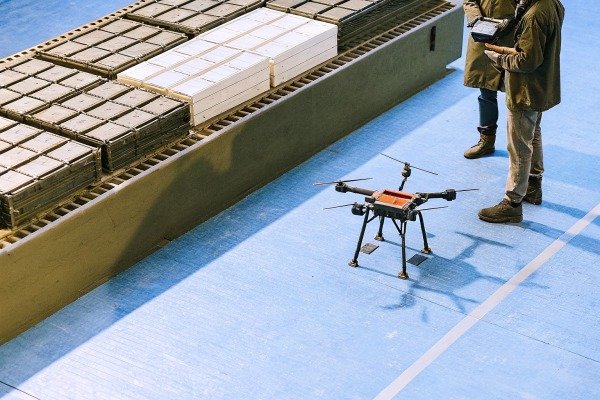
Dejar caer un paquete desde 50 metros de altura no es tan simple como presionar un botón. El viento, el impulso y el retraso de la señal juegan un papel. Cuando probamos drones en nuestros túneles de viento, vemos con qué facilidad un paquete ligero puede desviarse de su curso.
El papel de las ayudas visuales
El requisito más básico para la precisión es una cámara orientada hacia abajo. cámara orientada hacia abajo 8 En nuestros mandos, el piloto puede cambiar la transmisión de vídeo para mirar directamente hacia abajo. A menudo superponemos una retícula digital en la pantalla. Esto actúa como una mira de francotirador. El piloto alinea la retícula con la víctima o la línea de defensa contra incendios. Sin esta ayuda visual, la percepción de la profundidad es complicada, especialmente si el dron está muy lejos.
Lidiar con el "choque de caída"
Cuando se libera una carga pesada, el dron de repente se vuelve mucho más ligero. La física dicta que el dron querrá disparar hacia arriba porque los motores giran con fuerza para soportar el peso que ya no está allí. Esto se llama "ballooning"."
Nuestros controladores de vuelo utilizan algoritmos específicos para contrarrestar esto. controladores de vuelo 9 En el momento en que se activa el servo de liberación, el software reduce instantáneamente la potencia del motor. Esto mantiene el dron estable. Si el dron salta o se tambalea violentamente, el piloto podría entrar en pánico o perder la orientación.
Factores Ambientales
El viento es el enemigo de la precisión. El fuego crea sus propios patrones climáticos, incluidas fuertes corrientes ascendentes.
- Cargas útiles con peso: Aconsejamos a los clientes que añadan serpentinas o pesos a los paquetes ligeros. Un botiquín médico ligero saldrá volando como una pluma en una corriente ascendente de fuego.
- Caídas a baja altitud: Cuanto más bajo vuele, más precisa será la caída. Sin embargo, volar bajo corre el riesgo de enredarse con árboles o cables eléctricos.
- Telémetros láser: Los módulos de gama alta incluyen láseres que indican al piloto la distancia exacta al suelo. Esto ayuda a calcular la trayectoria de la caída.
Lista de verificación de herramientas de precisión
Para maximizar el éxito, los operadores deben utilizar las siguientes tecnologías:
- Posicionamiento RTK: Mantiene el dron fijo en coordenadas XY a pocos centímetros.
- Integración de cardán: Permite que la cámara apunte hacia abajo mientras el dron se mantiene nivelado.
- Bloqueo de objetivo con IA: La visión por computadora se fija en una persona o firma de calor y posiciona automáticamente el dron sobre ellos.
¿Es el módulo de lanzamiento aéreo desmontable si necesito reconfigurar el dron para otras tareas?
El equipo fijo limita el valor de un dron a un solo propósito. Construimos nuestros marcos para aceptar varias herramientas, de modo que una inversión cubra múltiples tipos de misiones.
Sí, la mayoría de los módulos de lanzamiento aéreo cuentan con conectores de liberación rápida, lo que los hace completamente desmontables en cuestión de minutos. Esta modularidad permite a los operadores intercambiar rápidamente el sistema de lanzamiento por cámaras térmicas, focos o megáfonos, según las necesidades cambiantes de la misión de respuesta a emergencias.
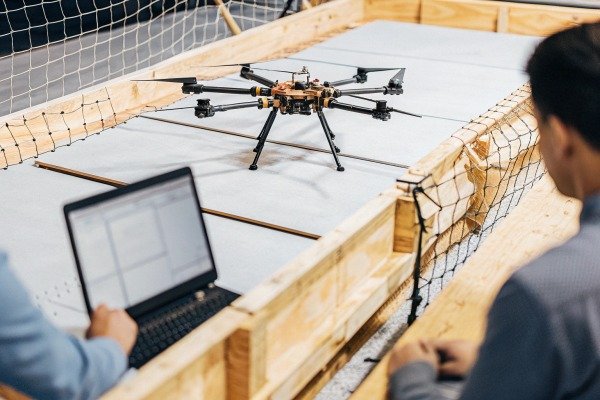
En el campo, la adaptabilidad es clave. Un comandante de bomberos podría necesitar un reconocimiento térmico a las 08:00, un lanzamiento de suministros a las 09:00 y una búsqueda con foco a las 20:00. Si el módulo de lanzamiento aéreo estuviera soldado permanentemente al armazón, el departamento necesitaría tres drones diferentes. Eso no es rentable.
El Mecanismo de Modularidad
Utilizamos interfaces industriales estándar. Los diseños más comunes implican un riel deslizante o un anillo de giro y bloqueo.
- Conexión Mecánica: Clips mecánicos aseguran el módulo al armazón. Deben ser a prueba de vibraciones.
- Conexión Eléctrica: Los pines transfieren energía y datos.
Un técnico capacitado generalmente puede cambiar un módulo en menos de dos minutos. Es similar a cambiar el objetivo de una cámara. Apagas el dron, desbloqueas el módulo, lo desconectas y colocas el nuevo. El firmware del dron detecta automáticamente el nuevo dispositivo.
Capacidad Multimisión
Esta desmontabilidad transforma el dron en una plataforma en lugar de una herramienta única.
- Fase de Búsqueda: Adjunte una cámara térmica de alto zoom para encontrar la fuente del incendio o personas desaparecidas. El peso es bajo, la autonomía es alta.
- Fase de Acción: Regreso a la base. Cambie la cámara por el módulo de lanzamiento cargado con bolas retardantes de fuego o agua.
- Fase de Comunicación: Vuelva a cambiar por un altavoz para dirigir a los equipos terrestres o calmar a las víctimas.
Consideraciones operativas para el cambio
Si bien el cambio es fácil, requiere cuidado. Los conectores son sensibles. El polvo, la ceniza y el agua, comunes en las escenas de incendios, pueden dañar los pines. Aconsejamos a nuestros clientes que mantengan las cubiertas de los puertos puestas cuando no estén en uso.
Además, el cambio de módulo altera las características de vuelo. El piloto debe asegurarse de que se recalibre el centro de gravedad. Algunos drones avanzados lo hacen automáticamente (Autoajuste), pero otros requieren una "Calibración IMU" manual en el menú de configuración.
Tabla de compatibilidad de módulos
Así es como los módulos típicos interactúan con la plataforma del dron.
| Tipo de módulo | Tiempo de intercambio | Consumo de energía | Función principal |
|---|---|---|---|
| Caja de lanzamiento aéreo | < 2 minutos | Bajo (solo servo) | Entrega de bienes físicos. |
| Cámara Térmica | < 1 minuto | Medio | Detección de calor/Búsqueda. |
| Foco | < 2 minutos | Alto | Iluminación nocturna. |
| Altavoz | < 2 minutos | Medio | Control de multitudes/Comunicación. |
Conclusión
Los proveedores ofrecen módulos de lanzamiento aéreo versátiles y desmontables para drones de extinción de incendios, que van desde ganchos ligeros hasta cajas de carga pesada. drones contra incendios 10 Al comprender los límites de carga útil y utilizar ayudas visuales, puede entregar suministros críticos de forma segura.
Notas al pie
1. Regulaciones y estándares oficiales de la FAA para operaciones de vuelo de drones comerciales e industriales. ↩︎
2. Orientación oficial del gobierno del Reino Unido sobre operaciones de drones para servicios de emergencia. ↩︎
3. Información general sobre el contenido y el propósito de los botiquines de emergencia médica. ↩︎
4. Resumen completo de investigación sobre la tecnología de baterías de polímero de litio y sus características de rendimiento. ↩︎
5. Norma ISO para el diseño y la estabilidad de sistemas de aeronaves no tripuladas. ↩︎
6. Investigación del IEEE sobre los beneficios de la arquitectura modular y abierta en el diseño de UAV. ↩︎
7. Documentación oficial para desarrolladores para integrar cargas útiles de terceros con drones industriales. ↩︎
8. Antecedentes sobre los ángulos de cámara nadir utilizados en fotografía aérea y cartografía. ↩︎
9. Documentación técnica sobre software de control de vuelo de nivel empresarial para drones industriales. ↩︎
10. Informe de noticias sobre la creciente adopción de la tecnología de drones en la gestión activa de incendios forestales. ↩︎

 English
  Español de México
  Deutsch
  Français
  Русский
  العربية
