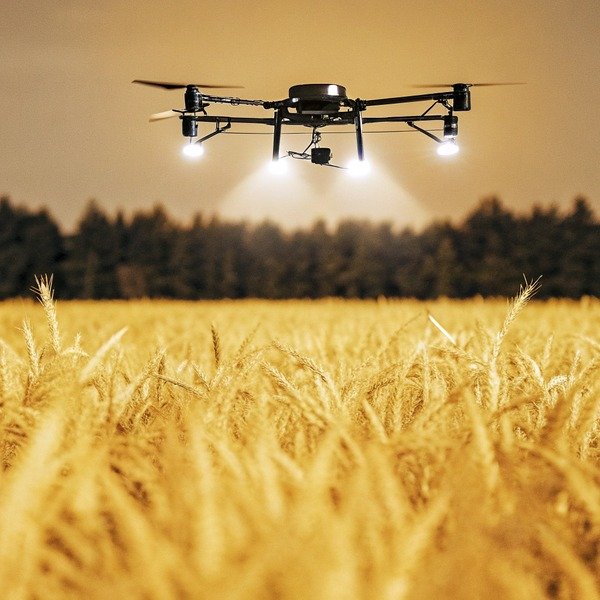
En nuestras instalaciones de Xi’an, a menudo vemos a los agricultores luchar cuando el calor del verano los obliga a cambiar las operaciones de fumigación a las horas más frescas de la noche. Sin una iluminación adecuada, no solo se enfrenta al riesgo de estrellar equipos costosos contra obstáculos invisibles, sino también a multas cuantiosas de las autoridades de aviación. multas de las autoridades de aviación 1 Volar de noche sin capacidades de iluminación verificadas es una apuesta que ninguna operación profesional debería correr.
Para confirmar la capacidad nocturna, debe verificar que la hoja técnica del dron enumere explícitamente la iluminación anticolisión visible a tres millas náuticas. También debe verificar un modo nocturno dedicado en el software de control terrestre que active focos descendentes y sincronice las luces estroboscópicas con la cámara FPV para evitar la ceguera del piloto.
Examinemos los detalles técnicos específicos y los pasos de verificación que debe seguir antes de firmar esa orden de compra.
¿Qué especificaciones técnicas debo revisar para asegurar que el dron tenga iluminación adecuada para tareas nocturnas?
Cuando diseñamos sistemas de vuelo para nuestros clientes de EE. UU. y Europa, priorizamos parámetros de iluminación específicos que van más allá del simple brillo. Muchos compradores miran un dron y ven luces, pero no verifican si esas luces cumplen con los rigurosos estándares técnicos requeridos para el trabajo agrícola real en condiciones de poca luz.
Debe revisar la hoja técnica del fabricante para una especificación de luz estroboscópica anticolisión de al menos 700 lúmenes que parpadee entre 40 y 100 veces por minuto. Además, confirme la presencia de focos LED de alta intensidad con una clasificación de protección de ingreso IP67 o superior para resistir las nieblas químicas corrosivas durante la operación.

Comprendiendo la Diferencia Entre Luces de Navegación y de Operación
Cuando mire la hoja de especificaciones, no confunda las luces de navegación con las luces de operación. Las luces de navegación son los LED rojos y verdes en los brazos. Estos le indican hacia dónde está mirando el dron. Sin embargo, son inútiles para iluminar un campo o cumplir con las reglas legales de vuelo nocturno.
Para trabajos agrícolas, necesita otros dos tipos específicos de luces. Primero, necesita luces estroboscópicas anticolisión. luces estroboscópicas anticolisión 2 Estas son luces blancas de alta intensidad. Deben ser visibles desde millas de distancia para advertir a otras aeronaves. Segundo, necesita luces de trabajo. Estos son focos que apuntan hacia el cultivo. Le ayudan a ver el rendimiento de la boquilla de pulverización y la distancia al dosel.
Indicadores Clave de Rendimiento (KPI) para Iluminación
Recomendamos verificar el consumo de energía de estas luces. Los LED de alta intensidad consumen energía de la batería principal de vuelo. Si las luces son ineficientes, reducirán su tiempo de vuelo. En nuestras unidades SkyRover, nuestro objetivo es un consumo de energía inferior al 5% de la capacidad total de la batería por hora.
También debe verificar el "Ángulo del Haz" de las luces de trabajo. Un haz estrecho crea un punto caliente difícil de ver. Un haz ancho (120 grados o más) le brinda una mejor vista del campo.
Lista de Verificación de Especificaciones del Fabricante
Utilice esta tabla para comparar modelos de drones. Si un fabricante no puede proporcionar estos números, su sistema de iluminación puede no ser de grado profesional.
| Característica | Especificación requerida | Objetivo |
|---|---|---|
| Estroboscopio Anticolisión | > 3 Millas Estatutarias de Visibilidad | Cumplimiento legal (FAA/EASA) |
| Tasa de destello | 40–100 ciclos por minuto | Estándar de seguridad de aviación |
| Brillo de la Luz de Trabajo | > 2000 Lúmenes (Combinados) | Visibilidad de cultivos y obstáculos |
| Clasificación IP | IP67 o superior | Protección protección contra el glifosato 3 contra la corrosión por pesticidas |
| Consumo de energía | < 50 Vatios | Conserva el tiempo de vuelo |
¿Cómo puedo confirmar que el sistema de iluminación se integra bien con la cámara FPV para una visión nocturna clara?
Durante nuestras pruebas de campo en Chengdu, descubrimos que las luces potentes pueden cegar a las cámaras del dron si no se calibran correctamente. Una luz brillante que se refleja en la niebla o el polvo puede saturar la pantalla del piloto, haciendo que el dron sea inmanejable justo cuando más se necesita visibilidad.
Verifique que el dron utilice tecnología de pulso inteligente o bloqueo de exposición basado en software que sincronice la frecuencia de iluminación con la velocidad de obturación de la cámara. También debe confirmar que la cámara FPV tenga una clasificación de sensibilidad de baja luminosidad inferior a 0.01 lux o incluya superposiciones de imágenes térmicas para mantener la conciencia situacional a pesar del deslumbramiento.

El problema de la "ceguera por destello"
Imagina tomar una foto con un flash frente a un espejo. El deslumbramiento te ciega. Esto también le sucede a los drones. Si el estroboscopio anticolisión parpadea en el momento exacto en que la cámara captura un fotograma, la alimentación de video se vuelve blanca. Esto es peligroso.
Los drones agrícolas profesionales utilizan la sincronización. El controlador de vuelo se comunica con las luces y la cámara. Le dice a la cámara que capture la imagen en la diminuta fracción de segundo cuando el estroboscopio está apagado. Esto le da al piloto una alimentación de video suave y clara sin parpadeos blancos. Debe preguntar al proveedor si su sistema admite la "sincronización de atenuación PWM" o tecnología similar.
Fusión de sensores térmicos y de poca luz
Las luces por sí solas a menudo no son suficientes para operaciones nocturnas profundas. Los agricultores inteligentes utilizan sistemas híbridos. Equipamos nuestros modelos de gama alta con "fusión de sensores". Esto combina la alimentación visual del foco con datos térmicos.
Incluso si el foco falla o está bloqueado por una densa niebla de pulverización, la cámara térmica ve la firma de calor de los obstáculos. la cámara térmica ve 4 Los árboles, postes y ganado brillan en la alimentación térmica. Al comprar un dron, pregunte si el sistema de iluminación funciona de forma independiente o si está integrado con estos sensores.
La ubicación importa
El diseño físico afecta la visión. Si las luces están montadas demasiado cerca de la lente de la cámara, se produce "retrodispersión". Esto es como conducir con niebla con las luces altas encendidas. La luz se refleja en las gotas de agua en el aire y ciega la lente.
Busque drones donde las luces de trabajo estén montadas en el tren de aterrizaje o en los brazos del motor, lejos de la cámara FPV central. Este amplio ángulo de separación reduce el deslumbramiento y permite que la cámara vea a través de la niebla.
Características de integración de cámara y luz
| Característica | Mala implementación | Implementación Profesional |
|---|---|---|
| Sincronización de estroboscopio | El parpadeo aleatorio causa parpadeo de video | Sincronizado con el obturador para video claro |
| Posición de la luz | Al lado de la cámara (alto brillo) | En brazos/piernas (bajo brillo) |
| Interfaz de control | Solo interruptor de encendido/apagado | Control deslizante de brillo ajustable |
| Modo Sensor | Solo color estándar | Blanco y Negro Alta ISO / Térmico |
¿Cumplen las luces instaladas con los estándares de cumplimiento de seguridad aérea para operaciones nocturnas en mi país?
Pasamos meses trabajando con los organismos reguladores para garantizar que nuestras exportaciones a EE. UU. y Europa no sean puestas a tierra por las leyes locales. Muchos drones baratos tienen luces que parecen brillantes pero técnicamente violan los estatutos de aviación con respecto al color, la ubicación o la intensidad, dejando al piloto responsable de sanciones legales.
Asegúrese de que las luces anticolisión del dron sean distintas de sus luces de navegación y estén montadas en la parte superior de la estructura del avión para proporcionar visibilidad de 360 grados. Debe confirmar el cumplimiento de los estándares de rendimiento de la Parte 107.29 de la FAA en los EE. UU. o los requisitos de la Categoría Específica de EASA en Europa con respecto a la tasa de destello y el color.
El Requisito de 3 Millas Náuticas
En los Estados Unidos, la FAA es muy estricta bajo la Parte 107.29. FAA Parte 107.29 5 La regla dice que sus luces anticolisión deben ser visibles a al menos 3 millas náuticas. Esto no es una sugerencia; es una regla estricta.
Muchos drones de consumo tienen pequeños LEDs que se desvanecen después de media milla. Cuando construimos unidades para el mercado estadounidense, utilizamos LEDs CREE de alta potencia. Los probamos para asegurarnos de que atraviesen la neblina atmosférica. No puede simplemente confiar en una etiqueta que diga "Listo para la noche". Necesita ver la declaración de cumplimiento específica que se refiere a 3 millas náuticas.
Estándares de color y tasa de parpadeo
La aviación tiene un lenguaje de luces. Rojo significa babor (izquierda), Verde significa estribor (derecha). Los estroboscopios blancos significan "avión aquí"."
Si un fabricante de drones coloca luces rojas intermitentes en la parte superior, está confundiendo a otros pilotos. Un piloto de aeronave tripulada podría pensar que su dron se está alejando cuando en realidad se está acercando.
La tasa de parpadeo estándar también es crítica. Típicamente cae entre 40 y 100 ciclos por minuto. Demasiado lento, y un avión podría no verlo. Demasiado rápido, y parece una farola parpadeante. Los drones profesionales bloquean esta tasa en el firmware para garantizar que nunca se desvíe.
Diferencias de cumplimiento regional
Las regulaciones cambian a través de las fronteras. En Europa, EASA tiene reglas similares pero pone un gran énfasis EASA tiene reglas similares 6 en la "Categoría Específica" para trabajos agrícolas. A menudo requieren una "Evaluación de visibilidad"."
Esto significa que el dron debe ser visto contra el fondo del suelo. Las luces verdes contra un campo de cultivo verde son invisibles. Es por eso que los estroboscopios blancos montados en la parte superior son innegociables. Proporcionan contraste contra el suelo oscuro.
Lista de verificación de cumplimiento por región
| Región | Reglamento | Requisito Clave |
|---|---|---|
| Estados Unidos | FAA Parte 107.29 | Visibilidad de 3 SM, estroboscopio anticolisión |
| Europa (EASA) | UE 2019/947 | Verde intermitente distinto de las luces de navegación |
| China | CAAC | Luz estroboscópica visible por la noche, frecuencia específica en Hz |
| Global | Anexo 2 de la OACI | Colores estándar de iluminación de navegación |
¿Qué videos o documentos de prueba específicos debo solicitar al fabricante para verificar el sistema de iluminación?
Nuestros ingenieros documentan cada etapa de las pruebas porque sabemos que una hoja de especificaciones en papel no es prueba de rendimiento. Los compradores inteligentes piden pruebas contundentes. Siempre animamos a nuestros clientes a exigir grabaciones sin editar que demuestren que las luces funcionan en entornos agrícolas reales, no solo en un laboratorio limpio.
Solicite un video de registro de vuelo sin editar que demuestre la visibilidad del dron a una distancia de tres millas y un informe de prueba de interferencia espectral. También debe exigir una certificación de protección de ingreso específicamente para la carcasa de iluminación para verificar que puede resistir la corrosión de productos químicos agrícolas como fertilizantes y pesticidas.
El informe de "Interferencia Espectral"
Este es un documento técnico que pocas personas solicitan, pero es vital. Los drones agrícolas a menudo utilizan cámaras multiespectrales para verificar la salud de los cultivos (NDVI). salud de los cultivos (NDVI) 7 Estas cámaras miden la reflexión de la luz de las plantas.
Si las luces nocturnas de su dron emiten luz en el espectro incorrecto, pueden corromper sus datos. Las luces podrían "engañar" al sensor haciéndole creer que las plantas están más sanas o más enfermas de lo que realmente están. Un informe de interferencia espectral demuestra que la longitud de onda del LED no se superpone con los sensores que está utilizando para la recopilación de datos.
Validación de la resistencia química (clasificaciones IP)
Las granjas son entornos hostiles. Los productos químicos que rocía a menudo son corrosivos. Una clasificación IP67 estándar es para agua y polvo. clasificación IP67 estándar 8 Clasificación IP67 9 No garantiza la protección contra el glifosato o el fertilizante líquido.
Pregunte al fabricante si la carcasa de iluminación está hecha de materiales resistentes a los productos químicos como el policarbonato. materiales como policarbonato 10 o aleaciones específicas. Realizamos "pruebas de niebla salina" y pruebas de inmersión química en las carcasas de nuestras luces SkyRover. Solicitar un video o informe de esta prueba específica garantiza que sus luces no se cortocircuitarán después de una temporada de rociado.
La demostración de visibilidad de 3 millas
No acepte una foto del dron brillando en una habitación oscura. Cualquiera puede tomar una foto de larga exposición para hacer que una luz tenue parezca brillante.
Pida un video grabado desde 3 millas de distancia. Debería mostrar el dron volando de noche. Si el fabricante no puede proporcionarlo, o si duda, es una señal de alerta. Es posible que no hayan probado el alcance real.
Además, pida un video de la iluminación del suelo. Ver cómo los focos iluminan las hileras de cultivos en un video le dará una expectativa realista de lo que verá en la pantalla de su controlador.
Lista de solicitudes de documentos
- Video de prueba de visibilidad de 3 millas: Grabación sin cortar de un observador terrestre.
- Informe de interferencia espectral: Gráfico que muestra la longitud de onda de la luz frente a la sensibilidad del sensor.
- Certificado de resistencia química: Resultados de laboratorio del material de la carcasa.
- Informe de disipación de calor térmico: Prueba de que las luces no sobrecalientan el marco.
- Sección del manual del usuario: Instrucciones claras sobre cómo activar los modos nocturnos.
Conclusión
Comprar un dron agrícola para operaciones nocturnas requiere mirar más allá de las fotos de marketing. Debe verificar las especificaciones técnicas para una visibilidad de 3 millas, asegurarse de que la iluminación se sincronice con su cámara FPV para evitar el deslumbramiento y confirmar el cumplimiento de las leyes de aviación como la Parte 107.29 de la FAA. Al exigir informes de prueba específicos y certificaciones de resistencia química, protege su inversión y garantiza que sus turnos nocturnos sean seguros, legales y productivos.
Notas al pie
1. Organismo internacional oficial que establece estándares globales para la seguridad de la aviación y la iluminación. ↩︎
2. Cita la regulación específica de la FAA que requiere luces anticolisión para operaciones nocturnas. ↩︎
3. Datos ambientales oficiales sobre las propiedades químicas y la naturaleza corrosiva de los herbicidas comunes. ↩︎
4. Recurso técnico que explica cómo los sensores térmicos ayudan en la detección de obstáculos en baja visibilidad. ↩︎
5. Regulación oficial del gobierno de EE. UU. que rige la operación de aeronaves pequeñas no tripuladas por la noche. ↩︎
6. Autoridad europea oficial de aviación que proporciona el marco regulatorio para las operaciones de drones. ↩︎
7. Explicación científica de los índices de vegetación utilizados en el análisis multiespectral de drones agrícolas. ↩︎
8. Definición estandarizada de los niveles de protección de ingreso para la durabilidad del equipo electrónico. ↩︎
9. Estándar internacional oficial que define los códigos de Protección de Ingreso (IP) para recintos. ↩︎
10. Resumen de ciencia de materiales de polímeros resistentes a productos químicos utilizados en componentes de drones industriales. ↩︎

 English
  Español de México
  Deutsch
  Français
  Русский
  العربية
