
At our production facility in Xi’an, we often see international clients focus heavily on payload capacity while overlooking payload capacity 1 how the tank actually keeps chemicals mixed during flight.
You should specifically ask if the drone relies solely on passive vibration from motors or includes active mixing features like baffles or independent spinners. Request data on how the system handles heavy wettable powders and whether the vibration frequency affects tank sensors or structural integrity during long flights.
Here is a detailed guide to help you verify these critical systems before you sign a purchase order.
How does the vibration agitation system ensure consistent chemical mixing throughout my flight?
When we test flight control algorithms on our test fields, we notice that simple motor vibration varies significantly depending on wind resistance and battery load.
The system should use motor-induced resonance or dedicated internal spinners to keep liquids in motion, preventing separation. Ask if the vibration frequency is continuous or interval-based, and request flight data showing consistent spray concentration levels from takeoff to the last drop, especially for suspension concentrates.
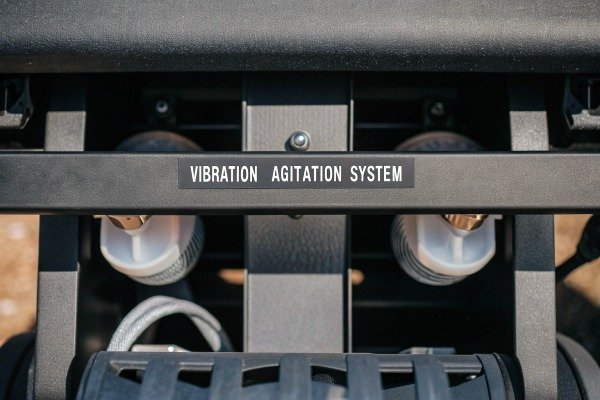
Achieving a uniform spray pattern is not just uniform spray pattern 2 about the nozzles uniform spray pattern 3; it starts inside the tank. If the chemical mixture separates during the 15 to 20 minutes a drone is in the air, the first acre you spray might get a diluted dose, while the last acre gets a toxic, concentrated sludge. This is a common pain point we discuss with our US distributors who manage large-scale operations.
Passive vs. Active Agitation Mechanics
Most agricultural drones on the market use "passive" agitation. This means the drone relies on the natural vibration generated by the propellers and motors to shake the tank. While this saves weight, it is not always reliable. In our engineering lab, we have found that passive vibration is often insufficient for thicker liquids. You need to ask the supplier if they have added "active" elements. Active systems might use a small internal impeller or a bypass flow from the pump to create turbulence.
Flight Dynamics and Mixing
You must also consider how the drone flies. When a drone hovers, the vibration is steady. However, when it tilts forward to fly at high speeds, the liquid shifts. A good agitation system must work regardless of the flight angle. Ask the manufacturer if their tank design includes internal baffles. Baffles help wave energy move through the liquid rather than just sloshing it against the walls.
Table: Comparison of Agitation Methods
Here is a breakdown of what you might encounter in the market:
| Agitation Type | Mecanismo | Ventajas | Contras |
|---|---|---|---|
| Passive Vibration | Uses natural frame vibration from motors. | Lightweight; no extra power draw. | Inconsistent; fails with thick liquids. |
| Hydraulic Bypass | Uses pump pressure to circulate liquid. | Effective mixing; reliable. | Reduces pressure available for nozzles. |
| Mechanical Spinner | Dedicated small motor inside the tank. | Best for heavy powders; constant mixing. | Adds weight; drains battery faster. |
When you speak to a supplier, do not settle for "it vibrates." Ask for the specific mechanism. If they cannot explain the fluid dynamics, they may not understand fluid dynamics 4 the needs of professional agriculture.
Can the tank's agitation feature effectively prevent sediment buildup and nozzle clogging for my crops?
We frequently receive feedback from field operators where improper tank mixing ruined an entire day’s spraying schedule due to stubborn clogs in the filtration system.
Effective agitation prevents sediment buildup by maintaining suspension velocity, but passive vibration often struggles with heavy powders. You must verify if the system can handle high-viscosity fluids without manual shaking and ask for proof of performance with wettable powders to ensure nozzles remain clear during operation.

Sediment buildup is the silent killer of agricultural drone efficiency. When we design our systems, we pay close attention to the "dead zones" in a tank—corners where liquid does not move. If you are using Wettable Powders (WP) or Suspension Concentrates (SC) Concentrados en Suspensión (SC) 5, these particles will settle quickly if the agitation stops or is too weak.
The Physics of Clogging
When sediment settles, it forms a paste at the bottom of the tank. As the tank empties, this paste is sucked into the pump. It then hits the filters and nozzles. Once a nozzle clogs mid-flight, the drone must land, be cleaned, and recalibrated. This destroys your Return on Investment (ROI). Return on Investment 6 You need to ask the seller: "Does the agitation system target the bottom of the tank specifically?"
H3 – Testing for Sedimentation
Before you buy, ask the supplier for a sedimentation test report. If they do not have one, ask them to perform a live demo. Request that they mix a heavy ratio of lime or a visually distinct powder, fly the drone for 10 minutes, and then show you the bottom of the tank. If there is residue, the agitation is failing.
H3 – Filtration Integration
Agitation must work in harmony with filtration. If the agitation is too aggressive, it can break down certain encapsulated chemicals, causing them to clog filters faster. If it is too weak, the chemicals clump. The following table outlines common chemical types and the risks associated with poor agitation.
| Chemical Formulation | Agitation Need | Riesgo de obstrucción | Pregunta Clave a Hacer |
|---|---|---|---|
| Soluble Liquids (SL) | Bajo | Muy bajo | "Does vibration cause foaming?" |
| Emulsifiable Concentrates (EC) | Moderado | Bajo | "Is the tank material resistant to solvents?" |
| Polvos Mojables (WP) | Alto | Alto | "Does the system prevent settling at the intake?" |
| Concentrados en Suspensión (SC) | Muy alto | Muy alto | "Is there active recirculation for SCs?" |
In our experience, clients who skip these questions often end up buying expensive aftermarket mixing equipment to compensate for the drone's deficiencies.
Is the vibration mechanism compatible with the corrosive fertilizers and pesticides I plan to use?
During our material selection process, we reject many components that cannot withstand long-term exposure to harsh agricultural chemicals and constant mechanical stress.
Vibration mechanisms must use corrosion-resistant materials like reinforced polymers or stainless steel to withstand aggressive fertilizers. Ask about the specific material composition of internal tank components and whether the constant vibration could accelerate stress cracking or seal failure when exposed to acidic or alkaline mixtures.

Corrosion is not just about rust; it is about chemical stress cracking chemical stress cracking 7. chemical stress cracking 8 When we manufacture drones for export to the US and Europe, we know that farmers use a wide variety of aggressive inputs. Vibration adds physical stress to the chemical stress. If the tank or the agitation mechanism is made of inferior plastic, it will micro-crack over time.
Material Compatibility and Stress
You need to ask about the materials used in the agitation system. If the system uses a mechanical spinner, is the shaft stainless steel or cheap alloy? If it uses passive vibration, are the tank mounts reinforced? Vibration acts like a hammer. Over hundreds of hours, it attacks the weakest points of the tank. If the plastic has been weakened by chemical absorption, the tank can crack mid-flight.
H3 – The Foam Factor
Another chemical issue is foaming. Vibration creates bubbles. Some surfactants foam aggressively when agitated. If the tank fills with foam, the liquid level sensors will give false readings. The drone might think it is empty and return home with half a tank of foam.
- Pregunta: "Does the agitation intensity adjust as the tank empties to reduce foaming?"
- Pregunta: "Are the level sensors shielded from the splashing caused by agitation?"
H3 – Sensor Protection
Modern drones use radar or ultrasonic sensors to measure liquid levels. These sensors are sensitive. Corrosive fumes combined with high-frequency vibration can damage them. We coat our critical electronics, but not all manufacturers do. You should ask if the sensors inside the tank are rated for the specific pH levels of the fertilizers you plan to use.
A failure here is dangerous. If the sensor fails, the pump might run dry, burning out the motor. Or worse, the drone might continue flying without spraying, leaving gaps in your field protection.
What specific technical parameters should I look for regarding the agitation motor's power and stability?
Our design team spends months tuning motor mounts to ensure vibration helps mixing without destabilizing the drone’s flight core or draining the battery excessively.
Look for specific power draw metrics to ensure the agitation doesn’t significantly reduce flight time per battery charge. You should also verify that the vibration frequency avoids the drone’s resonant frequency to prevent structural damage, and check if the system includes fault detection for abnormal motor behavior.

This is the technical heart of the matter. As a buyer, you might focus on flight time and payload, but the power consumption of auxiliary systems matters. If an active agitation motor draws too much power, it eats into your flight time. If it is passive, you need to know if the vibration is "tuned."
Power Draw vs. Efficiency
If the drone uses an active mixing motor, ask for its wattage. A high-efficiency agitator should consume minimal power.
- Check: Does the agitator have its own battery, or does it draw from the main flight battery?
- Check: Can you turn the agitation off via software when spraying simple water-based liquids to save power?
H3 – Resonance and Structural Safety
Vibration is useful for mixing but bad for airframes. Every physical object has a resonant frequency 9 "resonant frequency." resonant frequency 10 If the agitation vibration matches the natural frequency of the drone arm or tank mount, it can cause catastrophic failure.
- Pregunta: "Has the frame been tested for resonance fatigue caused by the agitation system?"
- Pregunta: "Are there rubber dampeners isolating the tank from the flight controller?"
This is crucial because the flight controller relies on gyroscopes. Excessive vibration from the tank can confuse the drone, leading to instability or "toilet bowling" (where the drone swirls in circles).
Table: Technical Red Flags
When reviewing the spec sheet, watch out for these warning signs:
| Parámetro | Estándar Aceptable | Bandera Roja (Señal de Advertencia) |
|---|---|---|
| Consumo de Energía | < 5% of total hover power | > 10% or undisclosed |
| Control | Adjustable speed or On/Off toggle | Always On (Non-adjustable) |
| Montaje | Isolated with dampeners | Direct rigid mounting to frame |
| Diagnóstico | App alerts if agitator stalls | No feedback loop |
H3 – Fault Detection
Finally, ask about smart diagnostics. If the agitation motor jams (perhaps due to dried chemical), does the remote controller alert you? In our advanced models, we ensure the software monitors the resistance of the pump and agitator. If there is a blockage, the pilot knows immediately. Without this, you might fly a whole mission with a jammed mixer, resulting in settled chemicals and a failed application.
Conclusión
Asking the right questions about vibration agitation protects your investment and your crops. Ensure the system handles your specific chemicals, does not compromise structural safety, and offers verifiable consistency.
Notas al pie
1. ISO standard defining operational requirements for unmanned aircraft systems. ↩︎
2. ISO standard specifying environmental requirements for agricultural sprayers. ↩︎
3. FAO guidelines on achieving uniform application and safety in pesticide spraying. ↩︎
4. Background on the physics of liquid movement and mixing in industrial applications. ↩︎
5. WHO manual defining specifications for pesticide formulations like suspension concentrates. ↩︎
6. USDA data on farm income and the economic impact of equipment efficiency. ↩︎
7. Standard test method for environmental stress-cracking of plastics. ↩︎
8. ISO standard for testing environmental stress cracking in plastic materials. ↩︎
9. ISO vocabulary standard defining mechanical vibration and resonance terms. ↩︎
10. Scientific explanation of resonance and its impact on mechanical structures. ↩︎

 English
  Español de México
  Deutsch
  Français
  Русский
  العربية
