
A menudo vemos que distribuidores talentosos pierden contratos clave porque carecen de capacidades de servicio inmediatas. Sin un equipo de reparación local, una simple falla del motor puede arruinar toda la temporada de fumigación de un agricultor. falla del motor 1
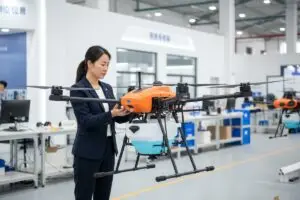
Construir un equipo de mantenimiento local requiere reclutar técnicos con experiencia en electrónica, almacenar piezas de alto desgaste como hélices y bombas, y equipar un taller con herramientas antiestáticas. electricidad estática 2 herramientas. También debe implementar protocolos de capacitación dirigidos por el fabricante y establecer un acuerdo de nivel de servicio para garantizar tiempos de reparación de 48 horas para sus clientes agrícolas.
Aquí le mostramos cómo puede establecer un centro de servicio confiable para impulsar su negocio de drones.
¿Qué inventario de repuestos necesito tener en stock para reparaciones eficientes de drones agrícolas?
Durante nuestros meses de mayor producción en Chengdu, priorizamos el envío de repuestos porque sabemos que el tiempo de inactividad mata la credibilidad. Una boquilla faltante o una hélice rota es un desastre para los plazos de cosecha.
Para garantizar reparaciones eficientes, necesita un sistema de inventario de tres niveles centrado en consumibles de alta frecuencia como boquillas, hélices y trenes de aterrizaje. También debe almacenar componentes electrónicos críticos como módulos ESC y bombas, además de una reserva más pequeña de brazos de estructura para manejar daños por colisión de inmediato.

La Estrategia de Inventario de Tres Niveles
En el sector agrícola, el tiempo lo es todo. Si el dron de un cliente se avería durante un brote de plagas, no puede esperar dos semanas brote de plagas 3 para un envío desde China. Siempre aconsejamos a nuestros socios que organicen su stock en función de la frecuencia y el impacto de las fallas. Este enfoque minimiza su capital inmovilizado en inventario y maximiza su capacidad para resolver problemas al instante.
Consumibles de alta frecuencia (Nivel 1)
Estos son artículos que se degradan naturalmente con el uso o son los primeros en romperse en incidentes menores. Los entornos agrícolas son duros; los productos químicos causan corrosión y el polvo desgasta las piezas móviles. Su equipo debe tener estos a mano para realizar mantenimiento al estilo "pit-stop".
- Hélices y Clips: Estos sufren el mayor daño por escombros.
- Boquillas de Pulverización: Los pesticidas a menudo obstruyen o corroen estas puntas.
- Tren de Aterrizaje: Los despegues y aterrizajes frecuentes en campos irregulares provocan fracturas por estrés.
- Filtros y Juntas: Esenciales para mantener el sistema de pulverización funcionando limpiamente.
Componentes Electrónicos Críticos (Nivel 2)
Estos componentes son el corazón del dron. Si bien fallan con menos frecuencia que las hélices, su falla deja la máquina inútil. Tener estos en stock diferencia a un centro de servicio profesional de una tienda de pasatiempos.
- Bombas de Agua: Estas funcionan bajo alta presión y exposición química.
- ESC (Controladores Electrónicos de Velocidad): Gestionan cargas de energía pesadas y pueden sobrecalentarse.
- Motores: La entrada de polvo puede acortar su vida útil con el tiempo.
- Módulos de Radar: Esencial para el seguimiento del terreno y la evitación de obstáculos.
Artículos Estructurales y de Alto Valor (Nivel 3)
No necesita un almacén lleno de estructuras, pero necesita suficientes para reconstruir una unidad después de un accidente.
- Brazos de Fibra de Carbono: Estos se rompen durante colisiones importantes.
- Controladores de Vuelo: El "cerebro" rara vez falla, pero es crítico si lo hace.
- Tanques: Pueden agrietarse si se caen o se manipulan incorrectamente.
Niveles de Stock Recomendados para una Flota de 10 Drones
Hemos analizado datos de nuestras reparaciones globales para crear una recomendación de referencia. Esta tabla le ayuda a evaluar cuántas piezas debe tener si está dando soporte a una flota de aproximadamente 10 drones agrícolas.
| Categoría de pieza | Componente Específico | Cantidad Recomendada | Frecuencia de reemplazo |
|---|---|---|---|
| Nivel 1 | Hélices de fibra de carbono | 20 Pares | Alto (Mensual) |
| Nivel 1 | Boquillas y Puntas de Pulverización | 40 Unidades | Alto (Mensual) |
| Nivel 1 | Filtros de Bomba | 15 Unidades | Medio (Trimestral) |
| Nivel 2 | Motores sin escobillas | 4 Unidades | Bajo (Anual) |
| Nivel 2 | Bombas de Alta Presión | 3 Unidades | Medio (Estacional) |
| Nivel 2 | Módulos ESC | 2 Unidades | Bajo (Raro) |
| Nivel 3 | Brazos de Fibra de Carbono | 2 Unidades | Dependiente del Accidente |
| Nivel 3 | Patines del tren de aterrizaje | 4 Juegos | Dependiente del Accidente |
Al adherirse a esta estructura, usted reduce el riesgo de decirle a un cliente: "Estamos esperando piezas". En nuestra experiencia, la capacidad de reparar un dron el mismo día es la herramienta de venta más poderosa que tiene. Demuestra fiabilidad mejor que cualquier folleto.
¿Cómo puedo obtener capacitación técnica y certificación para mi personal de mantenimiento de drones?
Invitamos a los distribuidores a nuestra sede porque leer un manual nunca es suficiente. Ver la línea de montaje cambia la forma en que los técnicos abordan las reparaciones e infunde una profunda confianza en el producto.
Puede obtener la certificación inscribiendo al personal en series de seminarios web dirigidos por el fabricante o en talleres presenciales que cubren el ensamblaje, la calibración del firmware y los protocolos de seguridad. Muchos proveedores de drones industriales ahora ofrecen portales de aprendizaje digital con niveles de certificación escalonados niveles de vibración 4, asegurando que su equipo esté calificado para manejar reparaciones que cumplan con la garantía y diagnósticos complejos.

Construyendo Competencia a Través del Aprendizaje Estructurado
Reclutar a las personas adecuadas es el primer paso, pero la formación específica en nuestras plataformas es innegociable. Los drones agrícolas no son juguetes; son maquinaria industrial pesada que transporta líquidos peligrosos. líquidos peligrosos 5 Un error en la calibración puede provocar accidentes o peligrosos derrames químicos peligrosos 6 derrames químicos. Estructuramos nuestra formación para pasar del manejo básico a la lógica de ingeniería avanzada.
Nivel 1: Mantenimiento Operacional
Esta es la base para todo el personal, incluidos los representantes de ventas. Cubre lo que el usuario final debería saber pero a menudo olvida.
- Inspecciones previas al vuelo: Comprobación de tornillos sueltos y grietas en el marco.
- Protocolos de limpieza: Cómo neutralizar los residuos de pesticidas en el marco.
- Cuidado de la batería: Ciclos de carga adecuados y voltaje de almacenamiento (crucial para las baterías de litio).
Nivel 2: Reemplazo de Componentes
Esto es para sus técnicos dedicados. Aprenden a cambiar piezas sin dañar la electrónica circundante.
- Habilidades de soldadura: Muchos drones de carga pesada utilizan conexiones soldadas para mayor estabilidad.
- Calibración de la bomba: Asegurar que el caudal coincida con la configuración del software.
- Balanceo del motor: Reducir las vibraciones que confunden al controlador de vuelo.
Nivel 3: Diagnóstico Avanzado y Análisis de Datos
Este nivel es para su ingeniero principal. Trabajan directamente con nuestro equipo de I+D para resolver problemas "misteriosos".
- Análisis de registros: Leer los datos de la caja negra para entender por qué ocurrió un accidente.
- Actualización de firmware: Forzar actualizaciones o revertir software para corregir errores.
- Pruebas de circuitos: Usar un multímetro para encontrar cortocircuitos en la placa base.
El Modelo "Capacitar al Capacitador"
Enviar a todo su personal a China para recibir capacitación es costoso y a menudo poco práctico. En su lugar, abogamos por un modelo de "Capacitar al Capacitador". Usted envía a su técnico principal a nuestra fábrica para un curso intensivo de dos semanas. Regresan no solo con un certificado, sino con el plan de estudios para capacitar a su equipo local. Esto crea una base de conocimiento sostenible dentro de su empresa.
Niveles de Certificación y Requisitos
Para darle una hoja de ruta clara, así es como solemos categorizar la preparación del técnico. Esto le ayuda a planificar su presupuesto de contratación y formación.
| Nivel de Certificación | Rol Objetivo | Competencias Clave Requeridas | Duración de la Formación |
|---|---|---|---|
| Operador Básico | Soporte de Ventas / Campo | Comprobación previa al vuelo, limpieza, seguridad de la batería, uso básico de la aplicación. | 1 Día (En línea) |
| Técnico Certificado | Personal de Taller | Reemplazo de piezas modulares, soldadura, calibración de flujo, actualizaciones de firmware. | 1 Semana (Híbrido) |
| Ingeniero Maestro | Gerente de Servicio | Análisis de caja negra, ajuste de control de vuelo, reparación estructural, validación de garantía. | 2 Semanas (Fábrica) |
Contar con personal certificado también lo protege legalmente. Si un dron se estrella y causa daños, poder demostrar que la máquina fue mantenida por un profesional certificado según los estándares del fabricante es un importante escudo de responsabilidad.
¿Qué herramientas y equipos de diagnóstico específicos se requieren para dar servicio a drones industriales?
En nuestro laboratorio de I+D, utilizamos llaves dinamométricas precisas y estaciones de soldadura. Su taller necesita el mismo estándar para evitar que tornillos sueltos o cableado defectuoso causen fallos en pleno vuelo.
El equipo esencial incluye un juego completo de destornilladores hexagonales, llaves dinamométricas para un ensamblaje preciso y estaciones de soldadura de alta calidad para reparaciones de cableado. También necesita una computadora dedicada con el software de diagnóstico del fabricante instalado, tapetes de trabajo antiestáticos para proteger la electrónica sensible y una estación de carga segura para baterías de litio de alta capacidad.

Creación de un entorno de taller profesional
No se pueden reparar drones industriales en una mesa de café desordenada. El entorno debe ser controlado. Los drones agrícolas transportan sensores sensibles como módulos RTK y radares de onda milimétrica. radares de onda milimétrica 7 Los módulos RTK 8 La electricidad estática o el polvo en un conector pueden causar fallos intermitentes que son increíblemente frustrantes de diagnosticar.
Herramientas manuales de precisión
El problema más común que vemos son las cabezas de tornillo dañadas o los brazos sueltos porque los técnicos usaron las herramientas incorrectas.
- Juegos de llaves hexagonales: Las llaves métricas de alta calidad son esenciales. Evite las llaves baratas que redondean los pernos.
- Llave dinamométrica: La fibra de carbono se agrieta si se aprieta demasiado y los motores salen volando si se aprietan poco. Necesita ajustes de torque específicos para cada perno.
- Estación de soldadura: Los drones de carga pesada utilizan cables de calibre grueso (8AWG o 10AWG) para la distribución de energía. Necesita un soldador de alta potencia (mínimo 80W) para calentar estos cables rápidamente sin derretir el aislamiento.
Hardware de diagnóstico
Más allá de las herramientas físicas, necesita equipo para "ver" lo que está pensando el dron.
- Fuente de alimentación regulada: Se utiliza para alimentar el dron en el banco de trabajo sin usar una batería de vuelo. Esto previene accidentes si un motor gira accidentalmente.
- Multímetro: Esencial para verificar caídas de voltaje y continuidad en los mazos de cables.
- Osciloscopio (Opcional): Para el diagnóstico avanzado de ruido de señal en ESCs o sensores.
Infraestructura de seguridad
La seguridad es primordial, especialmente en lo que respecta a las baterías.
- Gabinete a prueba de fuego para baterías: Las baterías de litio pueden incendiarse si se dañan. Un cubo de arena y un extintor de Clase D deben estar cerca.
- Ventilación: Soldar y limpiar con disolventes produce humos. Asegúrese de que su taller tenga buena ventilación.
Lista de verificación de herramientas esenciales para el taller
Esta lista de verificación le ayudará a equipar un área de servicio funcional por aproximadamente $1,500 – $2,500 USD.
| Categoría de herramienta | Nombre del artículo | Requisito específico / Propósito |
|---|---|---|
| Herramientas manuales | Juego de destornilladores hexagonales métricos | Tamaños 1.5mm, 2.0mm, 2.5mm, 3.0mm (punta de titanio preferida) |
| Herramientas manuales | Llave dinamométrica digital | Rango de 2Nm a 20Nm para pernos de cuadro y clips de propulsión |
| Electrónica | Estación de soldadura | 80W+ temperatura ajustable con puntas de cincel anchas |
| Electrónica | Multímetro digital | Rango automático con zumbador de continuidad |
| Software | Portátil dedicado | Sistema operativo Windows (generalmente requerido para herramientas de configuración) |
| Seguridad | Alfombrilla antiestática | Alfombrilla conectada a tierra para prevenir daños por ESD en PCBs |
| Seguridad | Gafas de seguridad | Obligatorio al hacer girar motores o soldar |
| Químicos | Alcohol isopropílico (99%) | Para limpiar placas de circuito impreso y eliminar residuos de adhesivo |
| Químicos | Fijador de roscas (Azul) | Loctite 243 o equivalente para asegurar pernos de metal con metal |
Invertir en estas herramientas desde el principio indica a sus clientes que usted es una operación seria. Cuando un cliente entra en su taller y ve una configuración profesional, su confianza en su capacidad para apoyarlo aumenta significativamente.
¿Cómo apoya el fabricante a mi equipo local con solución de problemas remota y actualizaciones de software?
Cuando un cliente en Europa se enfrenta a un fallo de software, nuestros ingenieros inician sesión de forma remota para solucionarlo. Este enlace inmediato le permite resolver complejos problemas técnicos al instante sin necesidad de enviar unidades de vuelta.
Los fabricantes apoyan a los equipos locales proporcionando acceso exclusivo a plataformas de diagnóstico basadas en la nube que analizan los registros de vuelo en busca de códigos de error. También envían actualizaciones de firmware por aire para corregir errores y ofrecen canales de comunicación directa, como mensajería instantánea o videollamadas con ingenieros de I+D, para resolver rápidamente complejos problemas técnicos.

Acortando la Distancia con Tecnología
El mayor temor de cualquier importador es quedarse solo con una máquina averiada. Entendemos esto. Por eso, acortamos la brecha geográfica entre China y su mercado local utilizando herramientas digitales. Vemos a su equipo de mantenimiento como una extensión de nuestro propio piso de fábrica.
Análisis de Registros de Vuelo Basado en la Nube
Cada vez que un dron vuela, registra gigabytes de datos: voltaje, ubicación GPS ubicación GPS 9 ubicación GPS 10, velocidad del motor y niveles de vibración. Cuando un cliente informa de un problema como "el dron se desvía hacia la izquierda", a menudo es imposible ver la causa visualmente.
- El Proceso: Usted extrae el archivo de registro y lo carga en nuestro servidor.
- El Análisis: Nuestro sistema automatizado o un ingeniero revisa los datos. Podríamos ver que "el motor #3 gira 5% más rápido que los otros", lo que indica una hélice dañada o un ESC defectuoso.
- La solución: Le decimos exactamente qué pieza reemplazar, ahorrándole horas de conjeturas.
Actualizaciones de firmware Over-The-Air (OTA)
El software nunca está terminado; evoluciona. Refinamos constantemente los algoritmos de vuelo para manejar mejor el viento o rociar con mayor precisión.
- Corrección de errores: Si encontramos un error, podemos enviar una solución a nivel mundial en cuestión de horas.
- Habilitación de funciones: A veces podemos habilitar nuevas capacidades, como caudales más rápidos o una mejor evasión de obstáculos, puramente a través de código.
- Bloqueo remoto: Si un dron es robado o un cliente no paga (si ofrece financiación), algunos sistemas permiten el bloqueo remoto, protegiendo sus activos.
Canales de soporte de ingeniería directa
El correo electrónico suele ser demasiado lento para reparaciones urgentes en campo. Normalmente establecemos grupos de mensajería instantánea (a través de WhatsApp, WeChat o Slack) dedicados a su equipo técnico.
- Guía en tiempo real: Su técnico puede enviar un video de un LED parpadeante, y nuestro ingeniero puede responder de inmediato: "Es un error de brújula, por favor recalibre"."
- Videollamadas: Para reparaciones complejas, podemos realizar una videollamada para guiar sus manos.
Diagrama de flujo de resolución de problemas: Local vs. Fabricante
Es eficiente saber cuándo resolverlo usted mismo y cuándo llamarnos. Esta jerarquía mantiene sus operaciones fluidas.
Protocolo de colaboración para problemas técnicos
| Severidad del problema | Responsabilidad | Objetivo de tiempo de respuesta | Método de Resolución |
|---|---|---|---|
| Nivel 1 (Rutina) | Equipo Local | Inmediato (0-4 Horas) | Manuales, repuestos básicos, limpieza. |
| Nivel 2 (Complejo) | Equipo Local + Datos de Fábrica | Mismo Día (24 Horas) | Subir registros al portal, esperar análisis de datos. |
| Nivel 3 (Crítico) | I+D de Fábrica | 24-48 Horas | Videollamada directa, parche de firmware personalizado. |
Esta estructura de soporte es un importante punto de venta. Cuando se presenta a una granja, no solo se vende un dron; se vende una red de soporte que se extiende desde su campo hasta nuestro laboratorio de ingeniería en Xi'an.
Conclusión
Construir un equipo de mantenimiento local requiere esfuerzo, pero asegura su posición en el mercado y genera confianza. Comience poco a poco con piezas esenciales, invierta en herramientas adecuadas y aproveche nuestro soporte de fábrica para hacer crecer su negocio de manera efectiva.
Notas al pie
1. Estándares IEEE para la fiabilidad y el mantenimiento de motores eléctricos en aplicaciones industriales. ↩︎
2. Organismo de estándares de la industria para el control de descargas electrostáticas. ↩︎
3. Autoridad internacional en manejo de plagas agrícolas. ↩︎
4. Información general sobre la física de la vibración y su medición en sistemas mecánicos. ↩︎
5. Regulaciones oficiales de seguridad para el manejo de materiales peligrosos. ↩︎
6. Directrices oficiales de la EPA para la gestión de la seguridad de pesticidas y derrames químicos en entornos agrícolas. ↩︎
7. Especificaciones técnicas para sensores de radar de onda milimétrica utilizados en la evasión de obstáculos. ↩︎
8. Definición de la técnica específica de navegación por satélite. ↩︎
9. Descripción general de la tecnología del Sistema de Posicionamiento Global y su papel en la navegación de drones. ↩︎
10. Fuente oficial del gobierno de EE. UU. para información del Sistema de Posicionamiento Global. ↩︎
 English
  Español de México
  Deutsch
  Français
  Русский
  العربية
Comments
No comments yet. Be the first to share your thoughts!
Leave a Comment