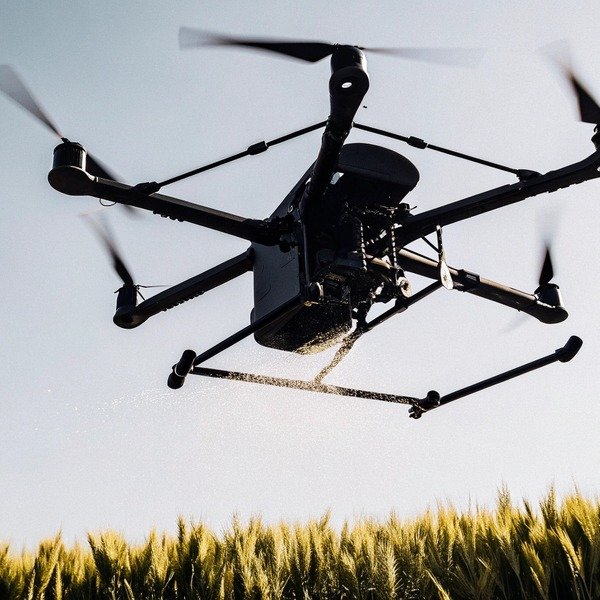
Dealing with US customs regulations can feel overwhelming when we ship our latest SkyRover sprayers from our factory in Xi'an código HS 8806 1. Delays hurt your harvest timeline and disrupt the supply chain.
You can find a reliable US customs broker by using the CBP's active broker search tool to verify licenses and checking for specific experience with HS code 8806 for unmanned aircraft. Look for brokers offering ISF filing, remote location filing, and expertise in agricultural equipment to ensure smooth clearance.
Let’s explore the essential steps and specific qualifications involved in securing the right partner for your drone imports.
What specific qualifications should I look for when choosing a customs broker for agricultural drone imports?
We have seen shipments get stuck at the border because generalist brokers misunderstood the specifications of our flight control systems. Using the wrong partner risks expensive storage fees and compliance headaches.
Look for a licensed broker with a National Permit for remote filing and specific experience with Section 301 tariffs affecting Chinese technology. They must understand Partner Government Agency requirements, specifically FAA drone registration and FCC radio frequency certifications, to prevent seizure of your agricultural equipment at the border.

Verifying the License and National Permit Status
When we export our industrial drones to the United States, the first hurdle is often logistical geography. You might be based in Iowa or California, but your shipment might arrive at a port in Seattle or Los Angeles. This is where a National Permit becomes critical. A standard broker license may only allow a broker to file entries at their local port. However, a broker with a National Permit can file paperwork remotely for goods arriving at any port of entry in the US. This capability, known as Remote Location Filing (RLF), ensures that no matter where our cargo lands Remote Location Filing (RLF) 2, your broker can clear it without needing to hand it off to a sub-agent, which often slows down the process.
You must verify their status directly through the U.S. Customs and Border Protection (CBP) website. An active license is non-negotiable, but for agricultural drones, general licensing is not enough. You need a partner who understands the distinction between a hobbyist toy and an industrial tool. Our agricultural drones are high-value assets, and misclassification can lead to significant financial penalties.
Expertise in Partner Government Agencies (PGAs)
Importing drones is not just about customs; it involves multiple federal agencies. Our engineering team spends months ensuring our radio transmission systems meet global standards radio transmission systems 3, but if your broker fails to file the correct FCC (Federal Communications Commission) forms, that effort is wasted.
A qualified broker for this industry must have a proven track record with:
- FCC (Federal Communications Commission): Drones use radio frequencies for remote control and telemetry. radio frequencies 4 The broker must know how to file Form 740 or its electronic equivalent.
- FAA (Federal Aviation Administration): While registration often happens post-import, the broker must ensure the import manifests match the technical specifications required for eventual Part 107 operations. operaciones de la Parte 107 5
- EPA (Environmental Protection Agency): While our drones are electric, some hybrid agricultural models have gas engines. A broker must know when EPA forms are required to avoid holds.
Understanding Section 301 Tariffs
Since our manufacturing base is in China, your broker must be highly competent in navigating US-China trade policies. Many industrial products are subject to Section Aranceles de la Sección 301 6 301 tariffs, which add significant duties on top of standard rates. A qualified broker will know if there are any current exclusions for agricultural technology or how to properly declare the value to ensure you are not overpaying duties on accessories or software components that might be invoiced separately.
Checklist for Vetting Brokers
Use this table to evaluate potential brokers during your initial consultation.
| Qualification Criteria | Why It Matters for Ag Drones | verification Method |
|---|---|---|
| National Permit (RLF) | Allows clearance at any US port (e.g., LAX, Long Beach) regardless of your office location. | Ask if they handle "Remote Location Filing" in-house. |
| HTS Code 8806 Mastery | Prevents misclassification as toys or general aircraft, which carries different duty rates. | Ask for their history with "Unmanned Aircraft" imports. |
| PGA Competency | Ensures FCC and FAA compliance for radio/flight systems. | Request examples of previous FCC Form 740 filings. |
| Section 301 Knowledge | Critical for calculating accurate landed costs for Chinese-origin goods. | Ask how they handle trade remedies for China-origin tech. |
How much does it typically cost to hire a US customs broker for clearing industrial drone shipments?
When we quote DDP (Delivered Duty Paid) prices, hidden brokerage fees often surprise our clients and complicate the final invoice. Unpredictable costs can quickly erode your profit margins on high-value machinery.
Customs broker fees typically range from $150 to $300 per entry for standard clearance services, excluding duties and taxes. Additional charges often apply for ISF filing ($25-$50), customs bonds (min $500/year or single transaction fees), and handling complex agency declarations for FAA or FCC compliance.

The Breakdown of Brokerage Fees
Understanding the cost structure is vital for procurement managers like yourself. When we ship a container of SkyRover drones, the "brokerage fee" is just one line item on a larger invoice. The base fee usually covers the administrative work of preparing and submitting the entry summary (CBP Form 7501) to Customs. However, because agricultural drones are complex, brokers often charge extra for the additional data entry required for government agencies.
You should expect the following fee structure:
- Cuota de inscripción: This is the flat fee for their service. For a simple shipment, it might be $150. for a complex shipment with multiple drone models and spare parts, it could rise to $300 or more.
- PGA Surcharges: Because drones require FCC and sometimes FDA (if equipped with lasers/sensors) or EPA data, brokers often charge $15-$50 per additional agency declaration.
- ISF Filing Fee: For ocean freight, the Importer Security Filing must be submitted 24 hours before the vessel leaves Importer Security Filing 7 China. Brokers typically charge $25 to $50 for this.
Customs Bonds: Continuous vs. Single Entry
To import commercial goods into the US, you must post a Customs Bond. This acts as an insurance policy guaranteeing that the US government gets paid its duties and taxes.
- Fianza de Entrada Única: If you are buying just one of our drones for a trial run, a single entry bond might suffice. The cost is usually calculated as a percentage of the shipment value (e.g., $5.00 per $1,000 of value), with a minimum fee often around $50-$60.
- Fianza Continua: If you are a distributor or a large farm planning regular imports (e.g., more than 3-4 shipments a year), a continuous bond is far more economical. It typically costs a flat fee of $450-$600 per year and covers all your shipments for 12 months. We strongly recommend this for our recurring partners as it speeds up clearance.
Duties and Taxes (The Hidden Bulk)
While not a "broker fee," the broker facilitates this payment. Agricultural drones generally fall under HTS code 8806.21.00 (or similar subheadings depending on weight). While the general duty rate might be low or zero for some aircraft, Section 301 tariffs on Chinese goods can add a substantial 25% tax. Your broker may also charge a Disbursement Fee (usually 2-3% of the total amount advanced) if they pay these duties on your behalf and bill you later. To save money, you can set up an ACH account with CBP to pay duties directly, bypassing the broker's disbursement fee.
Estimated Cost Scenario
Here is a hypothetical cost breakdown for importing a shipment of agricultural drones valued at $50,000 via ocean freight.
| Tipo de tarifa | Costo estimado | Notas |
|---|---|---|
| Customs Brokerage Entry Fee | $150 – $250 | Flat fee for processing the entry. |
| ISF Filing Fee | $25 – $50 | Mandatory for ocean freight security. |
| PGA (FCC) Handling | $25 – $50 | Fee for filing radio frequency compliance data. |
| Customs Bond (Single) | $250 – $350 | Based on value + duties (approx. $5-7 per $1k). |
| Tarifa de Procesamiento de Mercancías (MPF) | ~$170 | 0.3464% of value (Min $31 / Max $614 for formal entry). |
| Tarifa de Mantenimiento del Puerto (HMF) | ~$62 | 0.125% of value (Sea freight only). |
| Disbursement Fee | ~$100 | If broker pays duties for you (avoidable via ACH). |
| TOTAL FEES (Excl. Duty) | $782 – $1,032 | Does not include the actual tariff/duty amount. |
Do I need a broker with specialized experience in electronics or batteries to import my drones safely?
Our lithium batteries are powerful, but they are also classified as hazardous materials during transport. Improper documentation for these components can ground your shipment indefinitely.
Yes, specialized experience is crucial because high-capacity lithium batteries fall under strict HAZMAT and DOT regulations. A knowledgeable broker ensures correct labeling and documentation (like UN3480) to avoid dangerous goods penalties, while also managing complex FCC radio frequency filings required for the drone's electronic components.

The High Stakes of Lithium Battery Imports
The battery is the heart of our agricultural drones, providing the endurance needed to spray large acreages. However, in the eyes of logistics and customs regulators, these high-capacity Lithium Polymer (LiPo) or Lithium-Ion batteries are dangerous goods. They are classified under UN3480 (batteries shipped alone) or UN3481 (batteries contained in equipment). UN3480 8
A generalist broker might treat a drone shipment like a shipment of furniture or clothing. This is a critical mistake. If the documentation does not explicitly state the Watt-hour (Wh) rating and compliance with UN 38.3 testing standards, the shipment can be flagged by the Department of Transportation (DOT) or held by CBP. We provide Material Safety Data Sheets (MSDS) with every shipment, but your broker must know how to present this data to the authorities. If a broker fails to declare hazardous materials correctly, the cargo can be rejected at the port, leading to massive fines and return-shipping costs that you, the importer, would have to bear.
Electronics and Radio Frequency Compliance
Beyond the batteries, the "brains" of our drones involve sophisticated electronics. The flight controller, the radar for terrain following, and the remote control unit all emit radio frequencies. In the US, the FCC strictly regulates these devices.
An experienced broker knows that every piece of radio-emitting hardware requires an FCC declaration. They will ask us for the ID de la FCC number for each component. If you hire a broker who only deals in raw agricultural commodities like grain or fertilizer, they may not be aware of these electronics-specific requirements. We have seen cases where equipment was detained because the broker didn't file the "Form 740" data, assuming the drone was just "farm machinery."
Preocupaciones sobre tecnología de doble uso
Advanced industrial drones can sometimes be scrutinized as "dual-use" technology—meaning they could theoretically be used for military purposes. While our products are strictly for agricultural and firefighting use, a specialized broker will know how to navigate the Export Administration Regulations (EAR) and Commerce Control List (CCL) Regulaciones de Administración de Exportaciones (EAR) 9. They can effectively argue against incorrect classifications that might label a harmless crop sprayer as a restricted item.
Generalist vs. Specialist Broker Comparison
| Característica | Generalist Broker | Electronics/Tech Specialist Broker |
|---|---|---|
| Battery Knowledge | May miss HAZMAT labels; views batteries as standard cargo. | Understands UN3480/UN3481; checks MSDS and Wh ratings proactively. |
| Cumplimiento de la FCC | Often overlooks radio frequency filings. | Demands FCC IDs upfront; files Form 740 automatically. |
| Evaluación de Riesgos | Reacts to customs holds after they happen. | Anticipates holds due to tech specs; prepares explanations in advance. |
| Clasificación | Might use generic "machinery" codes. | Uses specific 8806 codes for "Unmanned Aircraft." |
What documents will my customs broker require from me to avoid delays at the US border?
We prepare extensive paperwork for every export, yet missing one single form can cause weeks of delay. Incomplete documentation triggers inspections that stop your farm operations cold.
Your broker will require a commercial invoice, packing list, bill of lading, and the arrival notice. For drones specifically, you must also provide FCC certification forms, FAA registration data, and a Toxic Substance Control Act (TSCA) certificate proving the electronics contain no banned chemical substances.

The Foundation: Standard Shipping Documents
To initiate the clearance process, your broker needs the standard "commercial set" of documents. When we ship your order, we send these to you digitally, and you must forward them to your broker immediately.
- Factura comercial: This is the most critical document. It must list the buyer and seller, a detailed description of the drones (e.g., "Agricultural Sprayer Drone, Model X1"), the value per unit, the country of origin (China), and the Incoterms (e.g., CIF, FOB, or DDP). A vague description like "Agricultural Equipment" is insufficient and invites inspection.
- Lista de empaque: This details the gross and net weight, dimensions, and exactly which box contains which items (drones, batteries, propellers).
- Bill of Lading (B/L): Issued by the carrier (shipping line or airline), this acts as the receipt for the cargo and the title of ownership.
- Aviso de llegada: The carrier sends this when the goods are approaching the US port. It triggers the broker to file the entry.
The Specifics: Drone Compliance Documents
This is where the specialized nature of our products comes into play. To clear SkyRover drones, your broker will demand technical certifications that we provide, but you must ensure they are included in the filing package.
- FCC Form 740 Data: Your broker needs the FCC ID printed on our remote controllers and telemetry modules. This proves the device is authorized for use in the US spectrum.
- TSCA Certification (Toxic Substance Control Act): This is a "negative declaration." The broker must certify that the imported chemical substances (in the plastics, glues, and electronics) comply with TSCA rules TSCA rules 10. For finished electronics like ours, it is usually a standard form stating compliance, but it deber be filed.
- Lithium Battery Test Summary (UN 38.3): As mentioned earlier, this proves the batteries are stable. While usually for the carrier, Customs may request it during a HAZMAT inspection.
- Lacey Act Declaration (If applicable): If the drone shipment includes wooden crates or pallets, a Lacey Act declaration regarding the wood packaging material might be required, though we typically use plywood or plastic pallets to avoid this.
The Importance of Consistency
A common pitfall we see is a mismatch between documents. For example, the Commercial Invoice says "10 Drones," but the Packing List says "10 Cartons" (which might contain 10 drones plus 10 battery packs). If the weight on the Bill of Lading doesn't match the Packing List, Customs will flag it.
We recommend creating a "Compliance Folder" for every order. As soon as you receive the digital documents from our team, review them against your purchase order. If you see a discrepancy, tell us immediately so we can correct it before the ship arrives. Giving your broker accurate data 4-5 days before arrival allows them to pre-clear the goods, meaning your drones can be on a truck to your warehouse the moment they are offloaded.
Required Document Checklist
| Nombre del documento | ¿Quién lo proporciona? | Critical Data Points |
|---|---|---|
| Factura comercial | Fabricante (SkyRover) | HS Code, Value, Country of Origin, Incoterms. |
| Lista de empaque | Fabricante (SkyRover) | Net/Gross Weight, Package Count, Battery Details. |
| Conocimiento de embarque | Carrier / Freight Forwarder | Port of Loading/Discharge, Consignee Name. |
| FCC ID / Form 740 Info | Fabricante (SkyRover) | FCC ID Number for Controller & Drone. |
| Certificación TSCA | Importer (You) / Broker | Statement of chemical compliance (Negative Declaration). |
| MSDS / UN 38.3 Test | Fabricante (SkyRover) | Battery safety data and hazardous classification. |
Conclusión
Choosing the right broker ensures your SkyRover drones arrive ready for the field. Prioritize compliance expertise to protect your investment and streamline your farming operations.
Notas al pie
1. Official US International Trade Commission search for harmonized tariff codes for unmanned aircraft. ↩︎
2. Official CBP page defining the Remote Location Filing program. ↩︎
3. International Telecommunication Union standards for global radio communication and transmission systems. ↩︎
4. IEEE standards for radio frequency and wireless communication protocols used in electronic devices. ↩︎
5. Official FAA regulations for the commercial operation of small unmanned aircraft systems. ↩︎
6. Background on trade regulations and tariffs imposed on goods imported from China. ↩︎
7. Official CBP guide on ISF (10+2) requirements. ↩︎
8. International standards for the safe transport of lithium ion batteries by air and sea. ↩︎
9. Official Bureau of Industry and Security regulations page. ↩︎
10. Official EPA page on TSCA import compliance. ↩︎

 English
  Español de México
  Deutsch
  Français
  Русский
  العربية
