
When we test new flight controllers at our facility in Xi’an, we often see how standard GPS signals drift on windy days. This inconsistency causes drift on windy days 1 significant frustration for operators who need to spray expensive chemicals with absolute precision.
Purchasing an RTK-equipped agricultural drone is essential for operations requiring centimeter-level accuracy to prevent chemical overlap and gap errors. While standard GPS fluctuates by meters, RTK ensures precise flight paths, reduces input waste by up to 20%, and enables fully autonomous workflows necessary for modern precision farming.
Let’s examine the specific technical and economic reasons why this technology is transforming the industry.
What are the tangible performance benefits of RTK versus standard GPS for my daily operations?
Our engineers spend countless hours refining flight algorithms, yet even the best code cannot compensate for poor satellite data. Without high-precision correction, we frequently observe field edges being sprayed incorrectly.
RTK technology improves performance by offering 1–3 centimeter positioning accuracy compared to the 2–5 meter variance of standard GPS. This precision eliminates gaps and overlaps during spraying, ensures consistent flight altitude over uneven terrain, and allows for rapid deployment without manually setting ground control points.
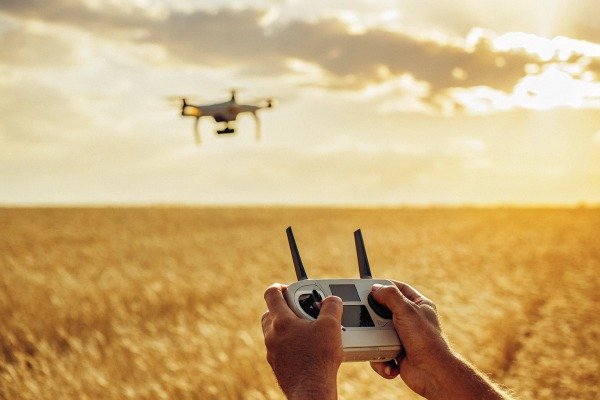
When we discuss performance with our clients in the United States, the conversation often starts with accuracy. However, "accuracy" translates directly into operational flow. Standard GPS modules rely on standalone satellite signals. standalone satellite signals 2 These signals are subject to atmospheric distortion, resulting in a margin of error that can drift several meters. In a large open field, this might seem acceptable, but for precision agriculture, it is fatal.
The Elimination of Overlap and Gaps
The most immediate benefit you will notice is the straightness of the flight lines. With standard GPS, a drone might think it is flying in a straight line, but it is actually drifting left or right. To compensate, operators must set a wider overlap percentage for the spray width. This means you are spraying the same area twice just to ensure coverage.
- With RTK: The drone knows its exact position. You can minimize overlap to the bare minimum required for the nozzle type.
- The Result: You stop burning crops with double doses of chemicals, and you stop leaving untreated strips where pests can survive.
Vertical Precision and Terrain Following
Most people focus on horizontal accuracy (latitude and longitude), but RTK also corrects vertical (Z-axis) positioning. Agricultural drones use radar to follow the terrain and maintain a constant height above crops. If the GPS vertical data is erroneous, the drone may fluctuate in altitude. This changes the spray width and droplet density. RTK stabilizes this vertical data, allowing the terrain-following radar to work perfectly terrain-following radar 3 even on complex slopes.
Improved Anti-Interference
Our technical teams have found that RTK modules provide stronger resistance to magnetic magnetic interference 4 interference. magnetic interference 5 Standard compasses can be confused by high-voltage power lines or metal structures near the field. Because RTK uses a dual-antenna setup to determine heading (direction) rather than relying solely on a magnetic compass, the drone flies significantly more stably in environments with high electromagnetic interference.
| Feature | Standard GPS System | RTK System | Operational Impact |
|---|---|---|---|
| Positioning Accuracy | 2–5 Meters | 1–3 Centimeters | Determines if you spray the crop or the ditch. |
| Drift Risk | High (Drifts with time/weather) | Negligible | RTK remains stable for long-duration missions. |
| Setup Requirements | Requires Ground Control Points (GCPs) for mapping | No GCPs needed | Saves hours of manual labor per field. |
| Heading Reference | Magnetic Compass | Dual Antennas | RTK is safer near power lines and metal barns. |
Is the higher cost of an RTK-equipped drone justified by the long-term value for my business?
We know price is a major friction point when we negotiate with distributors, as RTK modules add to the bill of materials. However, buying cheaper hardware often leads to much higher operational costs down the line.
The higher initial cost of RTK drones is justified by substantial long-term savings on fertilizers and pesticides through precise application. By eliminating overlap-induced waste and reducing labor costs via automation, most commercial operations achieve a full return on investment within the first two operating seasons.

The sticker price of an RTK drone is indeed higher than a standard model. However, experienced procurement managers know that the purchase price is only one part of the equation. We must look at the Total Cost of Ownership (TCO). The value of RTK comes from two main sources: material savings and labor efficiency.
Chemical Input Reduction
This is the math that convinces most farm owners. Let us assume a standard GPS drone requires a 20% overlap safety margin to avoid gaps. An RTK drone might only require a 5% overlap. That 15% difference is pure waste.
If a farm spends $100,000 annually on fungicides, pesticides, and foliar fertilizers, a 15% reduction saves $15,000 in one year. This savings alone often covers the cost difference of the RTK hardware within a single season.
Labor Efficiency and Setup Time
Time is money, especially during the short planting or spraying windows. Without RTK, creating an accurate field map requires a surveyor to walk the field and place Ground Control Points (GCPs) Ground Control Points (GCPs) 6 to tie the map to reality. This is slow and labor-intensive.
With RTK, the drone provides its own georeferencing. You can arrive at a new field, fly a quick mapping mission, and start spraying immediately. For service providers charging by the acre, this speed allows them to cover more ground per day.
Equipment Longevity and Resale Value
In the secondary market, non-RTK agricultural drones depreciate very quickly. Professional buyers rarely want used units that lack precision capabilities. By investing in our RTK-equipped models, you are protecting your asset's future value. Furthermore, because RTK drones fly more stable paths, they experience fewer "panic stops" and corrections, which reduces wear and tear on the motors and battery systems over time.
| Cost Factor | Standard Drone Scenario | RTK Drone Scenario | Annual Financial Impact |
|---|---|---|---|
| Chemical Waste | High (due to required overlap) | Low (precise application) | Savings of 10%–20% on inputs. |
| Mapping Labor | High (requires manual GCPs) | Low (RTK direct georeferencing) | Reduces labor hours by 30%+. |
| Crash Risk | Moderate (GPS drift errors) | Low (high stability) | Lower repair and replacement costs. |
| Resale Value | Low demand | High demand | Higher asset recovery after 3 years. |
For which specific crops or terrains do I absolutely need high-precision positioning capabilities?
When we customize flight parameters for clients in mountainous regions, we often see standard sensors fail to track the ground accurately. Certain complex environments simply demand the stability that only RTK data can provide.
High-precision positioning is absolutely required for high-value row crops where overlap causes damage, and for operations on steep, terraced terrains. RTK provides the vertical accuracy needed for terrain following, ensuring the drone maintains a constant height above the canopy in complex environments like vineyards or orchards.

Not every farm needs RTK. If you are broadcasting grass seeds over a flat, empty pasture, standard GPS is likely sufficient. However, for specialized agriculture, RTK is not optional—it is mandatory.
High-Value Row Crops
Consider crops like cotton or specialized vegetables. These plants are often planted in precise rows. If a drone drifts by one meter, it might spray the bare earth between rows instead of the canopy, or worse, spray a neighboring crop that is not tolerant to that specific chemical. RTK ensures the drone stays exactly centered over the crop row. This is critical for "spot spraying" where the drone targets weeds spot spraying 7 spot spraying 8 without killing the crop.
Orchards and Vineyards
Orchards present a difficult environment for drones. The trees block satellite signals, and the rows are narrow. A standard GPS drone risks drifting into the tree branches, causing expensive crashes. RTK provides the confidence needed to fly between tree rows.
Furthermore, vineyards are often located on hills. As mentioned earlier, the vertical (Z-axis) accuracy of RTK is vital here. A standard drone might rely on a barometer for height, which drifts with air pressure changes. An RTK drone knows its exact elevation, allowing it to hug the slope of a hill perfectly.
Terraced Fields
Terraced farming is common in Asia and parts of Europe. These fields look like steps on a staircase. To spray them effective, the drone must adjust its height rapidly at the edge of each "step." Standard GPS lags behind in these calculations. RTK allows the flight controller to anticipate these changes, keeping the spray height consistent. If the spray height varies, the application rate varies, leading to ineffective pest control.
Suitability Matrix
To help you decide, we have categorized common scenarios based on our customer feedback:
| Scenario / Crop | Standard GPS Sufficiency | RTK Requirement | Reason |
|---|---|---|---|
| Broad-acre Wheat/Corn | Moderate | Recommended | Efficiency gains are high, but errors are less fatal. |
| Vineyards/Orchards | Low | Critical | Risk of collision and need for terrain following. |
| Terraced Fields | Very Low | Critical | Vertical accuracy is needed for step-like terrain. |
| Pasture Seeding | High | Optional | Precision is less critical for broadcasting seeds. |
| Spot Spraying (Weeds) | Very Low | Critical | You must hit the weed, not the crop. |
How does RTK technology enhance the automation and obstacle avoidance of my drone fleet?
Our R&D team integrates RTK modules to unlock advanced features that standard GPS hardware simply cannot support. Without this precise data foundation, true automation remains risky and unreliable for the operator.
RTK technology enhances automation by enabling precise swarm operations where multiple drones fly in coordinated patterns without collision. It improves obstacle avoidance reliability by providing exact location data relative to mapped hazards, allowing for safer return-to-home functions and fully autonomous landing on charging stations.

Automation is the future of scaling up your business. You cannot scale if one pilot can only fly one drone. RTK is the key that unlocks advanced automation features.
Swarm Operations
"Swarming" allows one pilot to control up to three or five drones simultaneously. This multiplies productivity massively. However, for drones to fly close to each other without colliding, they need to know their positions relative to each other within inches.
Standard GPS has a variance of meters. If you try to fly a swarm with standard GPS, you must keep the drones very far apart, which is inefficient. With RTK, our flight controllers can manage tight formations, ensuring that Drone A and Drone B cover adjacent strips of land perfectly without hitting each other.
Precision Landing and Charging
For a drone to be fully autonomous, it must be able to land on a charging pad or a "drone in a box" system without human help drone in a box 9. Standard GPS is not accurate enough for this. A standard drone might miss the charging pad by two meters, landing in the mud.
RTK ensures the drone lands on the exact center of the charging connector every single time. This capability is essential for large farms that want to deploy drones remotely without sending a crew to the field every day.
Boundary Protection and Obstacle Avoidance
When you map a field, you mark obstacles like telephone poles or irrigation pumps. During the mission, the drone uses this map to avoid them.
If your positioning is off by two meters (standard GPS), the drone might think it is safe when it is actually about to hit the pole. RTK aligns the drone's real-time position perfectly with the obstacle map. This gives the obstacle avoidance system a "safety buffer" obstacle avoidance system 10 that is reliable. It reduces the mental load on the pilot, who no longer needs to stare nervously at the drone during the entire flight.
Conclusion
In summary, while the upfront cost is higher, RTK is not a luxury—it is a necessary investment for efficiency, safety, and profitability. If you are serious about precision agriculture, the ROI is clear.
Footnotes
1. Official government guidance on pesticide drift risks and environmental impact. ↩︎
2. Official US government source explaining GPS signal accuracy and atmospheric factors. ↩︎
3. Manufacturer documentation describing radar technology used in agricultural drones. ↩︎
4. General background information on electromagnetic interference affecting electronics. ↩︎
5. Authoritative technical overview of magnetic interference in engineering systems. ↩︎
6. Official definition and explanation of GCPs by the US Geological Survey. ↩︎
7. University research on targeted application techniques and weed management. ↩︎
8. University extension resource discussing precision agriculture techniques like spot spraying. ↩︎
9. Product documentation for autonomous drone docking and charging systems. ↩︎
10. Technical overview of obstacle avoidance technologies in robotics and automation. ↩︎

 English
  Español de México
  Deutsch
  Français
  Русский
  العربية
