
When our engineering team first tested hexacopter prototypes for the European market, we discovered that noise compliance was far more complex than expected EASA oversight 1. Many distributors face rejected shipments. Customs delays cost money. And the confusion around which decibel limits actually apply keeps growing.
Sound power level measured in decibels (dB) is the primary noise metric for agricultural drones in Europe. Under EU Delegated Regulation 2019/945, drones must display guaranteed sound power levels based on C-class labels (C1-C4). Agricultural drones typically require compliance with these harmonized limits plus operational category requirements under EASA oversight.
This guide breaks down exactly what you need to know. We cover verification steps, specific limits, customization options, and certification documents. Let us walk through each critical area together.
How do I verify that my agricultural drone's noise levels comply with the latest EASA regulations?
Our export team handles dozens of European shipments monthly. The most common question we hear from distributors is simple: how can I confirm my drone actually meets EASA noise rules? Without clear verification, you risk customs rejection and costly delays.
To verify compliance, check your drone’s C-class label for the guaranteed sound power level declaration. Cross-reference this value against EU 2019/945 limits for your drone class. Request the Declaration of Conformity from your manufacturer and confirm testing followed EASA-approved measurement procedures.

Understanding the C-Class Labeling System
Since January 2024, all new drones sold in Europe must carry C-class identification labels. These labels indicate noise performance directly. The classification runs from C0 to C4, with each class having different weight limits and operational privileges.
For agricultural drones, most monitoring units fall under C2 or lighter classes. Spraying drones often need specific category authorization regardless of class. The label itself must display the guaranteed sound power level 2 in dB(A).
Step-by-Step Verification Process
Here is a practical approach we recommend to our partners:
- Locate the C-class label on the drone frame
- Read the guaranteed sound power level value
- Match the value against the table below
- Request supporting test documentation
- Verify the testing laboratory credentials
C-Class Noise Limits Reference Table
| Drone Class | Maximum Takeoff Mass | Sound Power Level Limit | Typische landwirtschaftliche Nutzung |
|---|---|---|---|
| C0 | < 250g | No specific limit | Light monitoring sensors |
| C1 | < 900g | 81 dB(A) initial, phased reduction | Small crop scouts |
| C2 | < 4kg | 83 dB(A) initial, phased reduction | Field mapping drones |
| C3 | < 25kg | Declared only | Medium sprayers |
| C4 | < 25kg | Declared only | Heavy agricultural work |
What Testing Standards Apply?
EASA has published voluntary guidelines for noise measurement. These guidelines ensure consistent testing across manufacturers. The test involves standardized flyover procedures at specified heights and speeds.
When we test our hexacopters at the factory, we follow these exact protocols. The measurements capture noise during hover, transition, and forward flight. This gives a complete picture of acoustic performance.
Documentation You Should Review
Your verification process should include reviewing these documents:
- Konformitätserklärung 3 (DoC)
- Test report from accredited laboratory
- Technical file excerpts showing noise data
- Manufacturer's instructions with dB declaration
If any document is missing or unclear, ask your supplier directly. At our facility, we provide complete documentation packages for every unit shipped to Europe.
What specific sound power level limits should I look for when sourcing drones for the European market?
During recent trade discussions with our European partners, we noticed confusion about exact numbers. Buyers want clear thresholds. They need to compare products from different suppliers. Without specific limits, sourcing decisions become guesswork.
For C1 drones under 900g, the initial limit is 81 dB(A) with phased reductions. C2 drones under 4kg start at 83 dB(A). Heavier agricultural drones in C3 and C4 classes require declared sound power levels but have no fixed maximum. All values must be measured using EASA-harmonized test procedures.
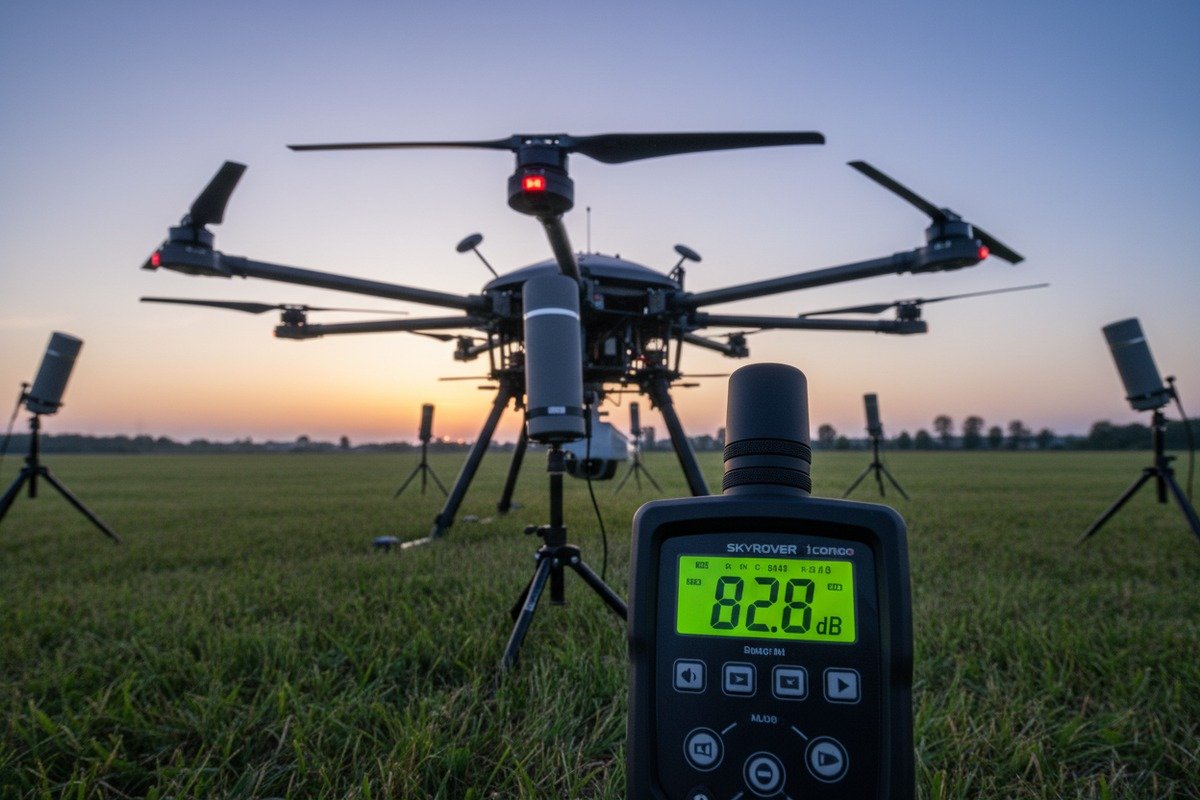
The Phased Reduction Schedule
EU regulations implement gradual noise reduction over time. This gives manufacturers time to improve designs. The schedule applies primarily to C1 and C2 classes where limits are quantified.
When our R&D team designs new agricultural monitoring drones, we target values well below current limits. This future-proofs products against upcoming reductions.
Detailed Sound Power Limits by Year
| Year | C1 Class Limit | C2 Class Limit | Anmerkungen |
|---|---|---|---|
| 2024 | 81 dB(A) | 83 dB(A) | Initial implementation |
| 2025 | 80 dB(A) | 82 dB(A) | First reduction phase |
| 2026 | 79 dB(A) | 81 dB(A) | Second reduction phase |
| 2027+ | TBD | TBD | Further reductions expected |
Understanding Sound Power vs. Sound Pressure
Many buyers confuse these two metrics. Sound power level measures the total acoustic energy a drone emits. Sound pressure level measures what you hear at a specific distance. EU regulations focus on sound power because it allows standardized comparison.
Our test reports include both values. Sound power tells you about the drone itself. Sound pressure helps predict real-world impact at various distances.
What About Heavier Agricultural Drones?
Most agricultural spraying drones exceed 4kg. They fall into C3 or C4 classes. Here, the regulation does not set fixed dB limits. Instead, manufacturers must declare the measured sound power level.
This declaration appears on the drone and in documentation. Buyers can then compare different products. Lower declared values indicate quieter operation.
Psychoacoustic Considerations
Future regulations may go beyond simple dB measurements. EASA is researching psychoacoustic factors 6 like tonality and impulsivity. These factors affect how annoying a noise sounds, not just how loud it is.
Drones with high-frequency tones from small propellers may face stricter future scrutiny. Our larger hexacopter designs naturally produce lower-frequency sounds that humans tolerate better.
Practical Sourcing Checklist
When comparing suppliers, ask for:
- Guaranteed sound power level for each model
- Test conditions and methodology
- Comparison against current and future limits
- Any psychoacoustic test data available
This information helps you choose products with long-term compliance potential.
Can my supplier help me customize drone components to meet strict European noise emission standards?
We receive customization requests weekly from European distributors. They want quieter drones without sacrificing performance. The question is whether your supplier has the engineering capability to deliver meaningful modifications.
Yes, qualified manufacturers can customize propellers, motor configurations, ESC tuning, and frame damping to reduce noise emissions. At our development center, we modify blade pitch, tip design, and motor RPM profiles specifically for European noise compliance. OEM partnerships allow branded products meeting your exact acoustic requirements.

Key Components Affecting Drone Noise
Drone noise comes from several sources. Understanding each helps prioritize modifications.
Propellers: The primary noise source. Blade tip speed, pitch angle, and blade count all matter. Slower-spinning, larger propellers generally produce less noise.
Motors: Brushless motors vary in acoustic signature. Higher-quality bearings reduce mechanical noise. Motor timing affects electromagnetic noise.
Frame: Vibrations from motors transfer through the frame. Carbon fiber construction with proper damping reduces resonance.
ESC (Electronic Speed Controller): Switching frequency affects motor noise. Higher frequencies reduce audible noise but increase heat.
Customization Options We Offer
| Komponente | Standard Version | Quiet Customization | Noise Reduction Potential |
|---|---|---|---|
| Propeller | 2-blade standard | 3-blade low-RPM design | 3-5 dB(A) |
| Motoren | Standard bearings | Premium low-noise bearings | 1-2 dB(A) |
| ESC tuning | 8kHz switching | 32kHz switching | 1-2 dB(A) |
| Frame damping | Basic mounts | Vibration-isolating mounts | 1-3 dB(A) |
| Overall package | Factory standard | Full quiet optimization | 5-10 dB(A) |
The Engineering Process
When a partner requests noise optimization, our process follows clear steps:
- Baseline testing: Measure current noise levels
- Analysis: Identify dominant noise sources
- Design modification: Engineer component changes
- Prototype building: Manufacture test units
- Validation testing: Confirm improvements
- Production: Scale to full manufacturing
This process takes 4-8 weeks depending on complexity. We maintain regular communication throughout.
Trade-offs to Consider
Quieter drones sometimes sacrifice other performance aspects. Larger propellers need more powerful motors. Lower RPM may reduce lift efficiency. Your supplier should explain these trade-offs clearly.
Our engineering team balances noise reduction with practical performance. We never recommend changes that compromise flight safety or payload capacity beyond acceptable limits.
OEM Branding and Documentation
Custom quiet drones can carry your brand. We handle all documentation updates including new noise test reports. Your Declaration of Conformity reflects the actual modified product, not generic specifications.
This ensures your European customers receive accurate compliance data for the exact drone they purchase.
Which noise certification documents must I request from my manufacturer to ensure smooth customs clearance in Europe?
Our logistics team has seen shipments delayed for weeks due to missing paperwork. European customs authorities check documentation carefully. Without the right certificates, your drones sit in warehouses while you lose money and customers.
Request the EU Declaration of Conformity (DoC), noise test report from an accredited laboratory, C-class certificate showing guaranteed sound power level, technical documentation file, and manufacturer’s instructions with noise declarations. These documents prove compliance with EU 2019/945 and enable smooth customs processing.
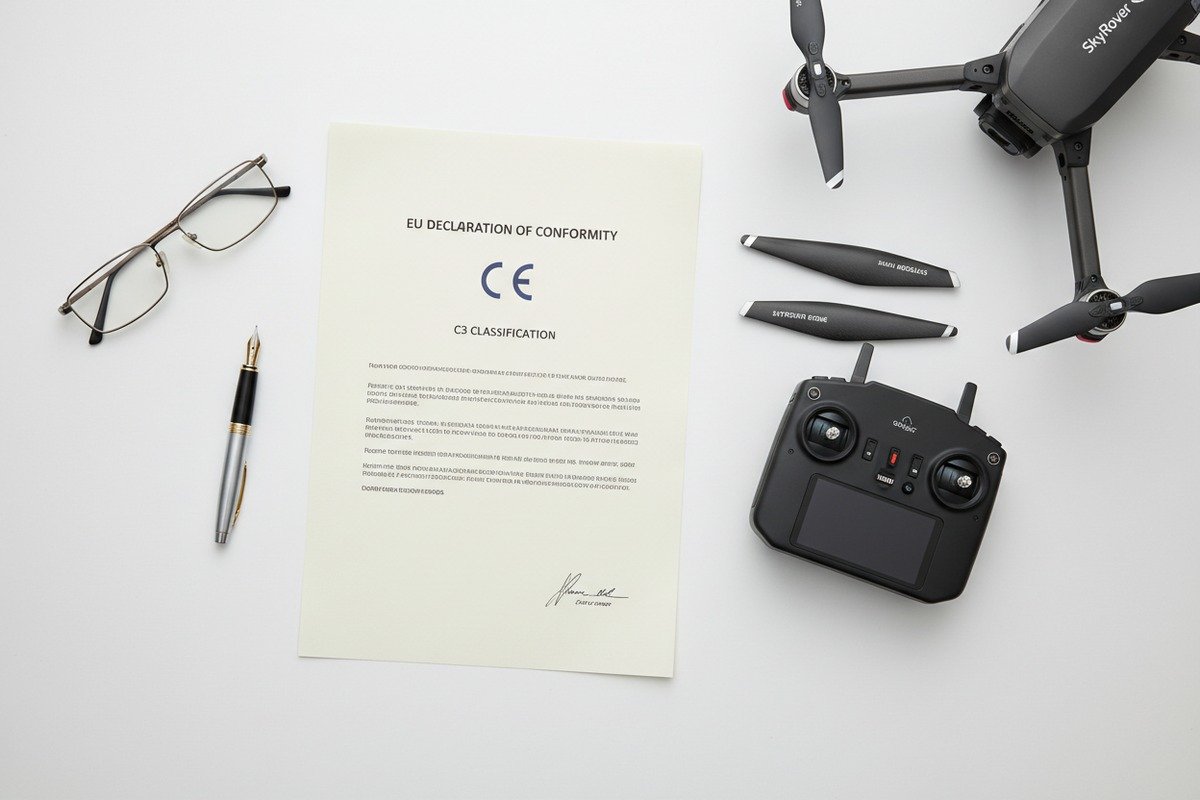
The Complete Documentation Package
Each document serves a specific purpose in demonstrating compliance. Missing even one can trigger customs inquiries.
EU Declaration of Conformity (DoC): This legal document states the product meets all applicable EU requirements. It must be signed by an authorized representative and reference specific regulations including 2019/945.
Noise Test Report: Contains actual measurement data from standardized testing. Shows test conditions, methodology, equipment used, and results. Must come from a laboratory with appropriate accreditation.
C-Class Certificate: Confirms the drone's classification and associated noise limits. Shows the guaranteed sound power level that appears on the drone label.
Technical Documentation File: A comprehensive file held by the manufacturer. Customs may request excerpts. Contains design drawings, calculations, and quality control procedures.
Manufacturer's Instructions: Must include the declared noise level. This user-facing document confirms the drone's acoustic specifications.
Document Requirements Summary
| Dokument | Required For | Issuer | Key Content |
|---|---|---|---|
| Konformitätserklärung | All EU drone sales | Manufacturer | Legal compliance statement, regulation references |
| Noise Test Report | Verification of dB claims | Accredited laboratory 8 | Test methodology, conditions, results |
| C-Class Certificate | Market classification | Notified body or manufacturer | Class designation, noise limit compliance |
| Technical File | Regulatory audit | Manufacturer | Complete technical specifications |
| Instructions Manual | End user information | Manufacturer | Declared sound power level |
How to Verify Document Authenticity
Fraudulent documentation exists in the drone market. Protect yourself by checking:
- Laboratory accreditation numbers (searchable in official databases)
- Notified body identification numbers
- Consistent serial numbers across all documents
- Manufacturer registration details
- Date stamps showing current validity
When we prepare documentation packages, every document includes traceable reference numbers. Our quality management system maintains records for ten years minimum.
What Customs Officers Actually Check
Based on our export experience, customs officers typically verify:
- DoC presence and completeness
- Matching model numbers across documents
- CE marking on the physical product
- C-class label with noise declaration
- Coherence between claimed and documented specifications
Having organized documentation ready speeds clearance significantly.
Pre-Shipment Documentation Checklist
Before any European shipment leaves our facility, we verify:
- DoC signed and dated
- Test report matches product batch
- C-class label affixed to each unit
- Instructions include noise data
- All serial numbers aligned
- Digital copies available for customs queries
We recommend our partners maintain identical checklists for incoming shipments.
Working with Your Customs Broker
Share documentation with your customs broker before shipment arrival. They can pre-clear many requirements. Experienced brokers know which documents European authorities prioritize.
Our logistics partners in major European ports understand agricultural drone requirements. We can connect you with brokers who specialize in this product category.
Schlussfolgerung
European noise regulations for agricultural drones center on sound power level declarations under the C-class system. Verify your drone's compliance through proper documentation. Work with suppliers who understand customization options. Request complete certification packages before shipping. These steps protect your business and ensure market access.
Fußnoten
1. Details the role of EASA in regulating drone operations in Europe. ︎
2. Defines the acoustic metric used for drone noise regulation. ︎
3. HTTP 404 ︎
4. Explains the classification system for drones in the European Union. ︎
5. Official EU regulation for drone operations and market access. ︎
6. Explains how human perception influences noise annoyance beyond decibels. ︎
7. Discusses how propeller design impacts drone noise emissions. ︎
8. Ensures testing validity and reliability for regulatory compliance. ︎

 English
  Spanish
  German
  French
  Dutch
Dutch  Arabic
