
When our production team finishes assembling a firefighting drone, the real challenge begins UN38.3 test reports 1. Buyers often struggle to know which documents prove their drones meet safety standards. Without proper reports, your shipment could face customs delays or legal issues.
To verify firefighting drone compliance, you should request internal quality control reports, flight stability and thermal resistance test results, export compliance and safety certifications like FAA Part 107 and CE marking, and detailed component inspection reports covering material traceability and durability standards.
This guide breaks down exactly which factory inspection reports matter most EASA compliance statements 2. We will cover each document type, explain what to look for, and help you avoid common procurement mistakes.
Which internal quality control reports should I ask for to verify the factory's manufacturing standards?
Our quality assurance team runs checks at every stage of production. Yet many buyers never ask for these records. This leaves gaps in your compliance chain and creates risk when products reach end users.
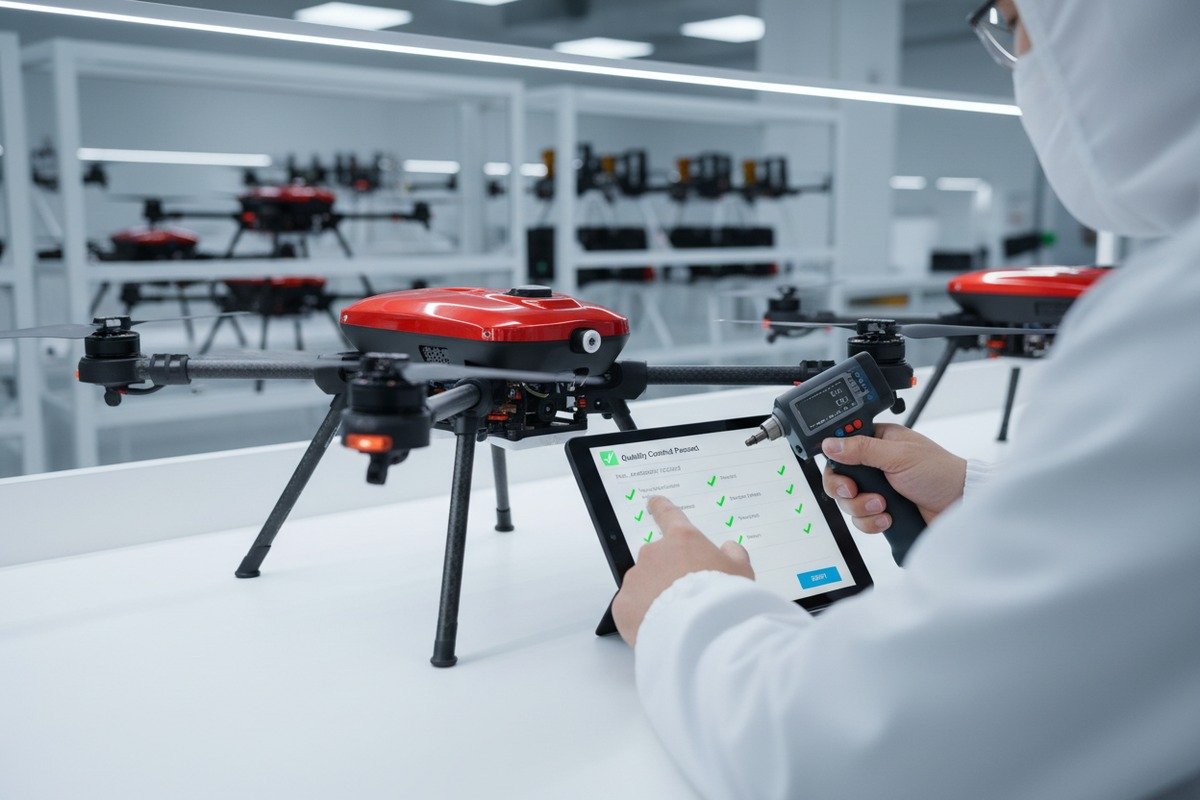
Request manufacturing quality control reports that include in-process inspection records, final assembly checklists, component verification logs, and engineering specification adherence documents. These reports prove the factory follows consistent standards throughout production.
What QC Reports Should Cover
Quality control reports form the backbone of compliance verification. When we audit our production line, we generate multiple document types. Each serves a specific purpose.
In-process inspection records track quality at each assembly stage. These show that workers checked components before moving to the next step. Final assembly checklists confirm the complete drone meets design specifications.
Key QC Documents to Request
| Dokumenttyp | What It Verifies | Warum es wichtig ist |
|---|---|---|
| In-Process Inspection Records | Component quality at each stage | Catches defects early |
| Final Assembly Checklist | Complete unit meets specs | Ensures consistent output |
| Visual Inspection Reports | Surface defects, wiring integrity | Prevents field failures |
| Dimensional Verification Logs | Parts fit within tolerances | Guarantees interchangeability |
| Non-Conformance Reports | Defects found and resolved | Shows corrective action process |
Reading QC Reports Correctly
Look for specific details in these reports. Generic statements like "passed inspection" mean little. You want to see actual measurements, inspector signatures, and dates.
Our engineers document exact torque values for motor mounts. We record battery connector resistance readings. We note propeller balance measurements. These specifics prove thorough inspection occurred.
Ask for sample sizes too. A factory that inspects one unit per hundred differs greatly from one that checks every unit. For firefighting drones, 100% inspection of critical systems is standard practice.
Red Flags in QC Documentation
Watch for missing dates or unsigned reports. These suggest rushed or incomplete inspections. Also question reports that show zero defects across large batches. Every manufacturing process finds some issues.
Our factory maintains a 2-3% rework rate on final assembly. This shows our inspection catches problems. A 0% defect rate often means inspections are not thorough enough.
How do I check the flight stability and thermal resistance test results for my firefighting drones?
When we developed our thermal imaging payload system, we learned that standard flight tests fall short. Firefighting drones face extreme conditions. Your test reports must reflect these real-world demands.
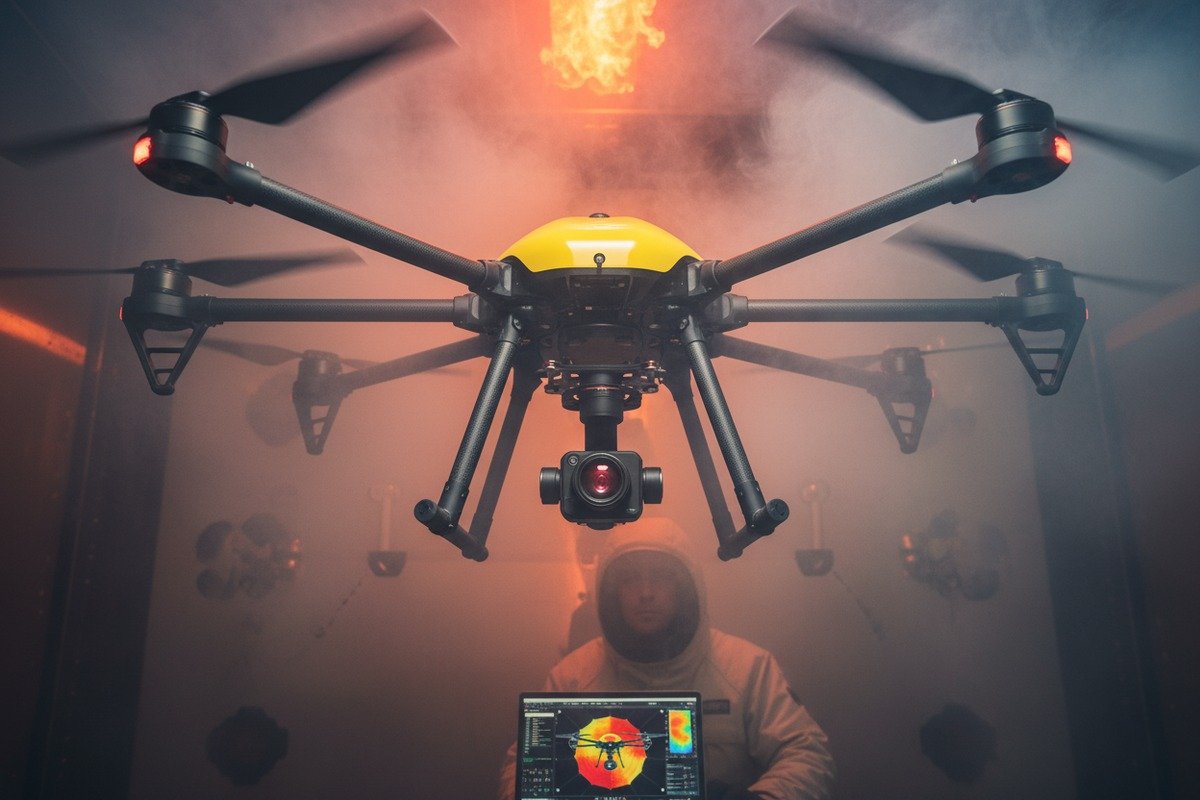
Check flight stability test results for GPS accuracy, motor function under load, gimbal performance, and hover precision. For thermal resistance, request documentation showing operation at temperatures above 150°F, smoke exposure tests, and water/retardant resistance verification.
Flight Stability Testing Essentials
Flight stability goes beyond basic hover tests. Our test pilots run drones through specific maneuvers that mimic firefighting scenarios. Rapid altitude changes, obstacle avoidance, and payload deployment all stress the flight controller differently.
GPS accuracy matters critically for firefighting. Smoke and heat create interference. Your test reports should show GPS performance under degraded conditions, not just clear sky tests.
Performance Test Parameters
| Test Kategorie | Standard Conditions | Firefighting Conditions |
|---|---|---|
| GPS Accuracy | ±1.5m, clear sky | ±3m, with interference simulation |
| Hover Stability | Wind <10 mph | Wind 15-25 mph, turbulent |
| Motor Response | Room temperature | 120-180°F ambient |
| Battery Drain | Standard flight profile | High-power emergency maneuvers |
| Payload Stability | Level flight | Banking turns, rapid descent |
Thermal Resistance Documentation
Firefighting environments push drones to their limits. Our testing chamber simulates conditions near active fires. We document performance at elevated temperatures, under smoke exposure, and after water contact.
Request test reports that specify exact temperature ranges tested. Generic "high temperature" claims mean nothing. Look for specific readings like "maintained flight control at 165°F ambient for 15 minutes."
Stress Testing Beyond Basics
Ask about stress test protocols. Our drones undergo drop tests, vibration tests, and rapid thermal cycling. These simulate rough handling and temperature swings common in emergency response.
Die NIST Unmanned Systems Test Methods 3 provide standardized benchmarks. Factories following these protocols deliver more reliable data. Our test reports reference specific NIST USTM procedures where applicable.
Interpreting Test Data
Review test results critically. A drone that passes at 150°F may fail at 160°F. Know your operational requirements and ensure tests match or exceed them.
We provide test videos alongside written reports. These show actual flight behavior under stress. Request video documentation for critical tests when possible.
What specific export compliance and safety certifications are required for me to clear customs in the US or Europe?
In our experience exporting to the US and Europe, certification requirements differ significantly. Missing one document can delay your shipment for weeks. Knowing exact requirements saves time and money.
For US customs, request FAA compliance documentation, FCC certification for radio equipment, and battery UN38.3 test reports. For Europe, require CE marking declarations, EASA compliance statements, and WEEE/RoHS certifications. Both regions need detailed customs classification documents.

US Import Requirements
The FAA does not directly certify imported drones. However, drones must be capable of meeting Part 107 requirements. FAA Teil 107 4 This means weight under 55 lbs, proper registration capability, and remote ID compliance readiness.
FCC-Zertifizierung 5 proves radio equipment meets US standards. Every drone transmitter and receiver needs this certification. Request the FCC ID number and test reports for all wireless components.
Essential US Certifications
| Zertifizierung | Issuing Body | Was wird abgedeckt? |
|---|---|---|
| FCC ID | Federal Communications Commission | All radio transmitters |
| UN38.3 | Certified Test Lab | Lithium battery safety |
| TSCA Compliance | EPA | Chemical substance compliance |
| DOT Shipping Classification | Department of Transportation | Hazardous materials (batteries) |
| Country of Origin Certificate | Manufacturer/Chamber | Trade agreement eligibility |
European Union Requirements
CE-Kennzeichnung 6 is mandatory for EU market entry. This declaration confirms the drone meets all applicable EU directives. For drones, this typically includes the Radio Equipment Directive 7, EMC Directive, and Machinery Directive.
EASA has drone-specific regulations under EU 2019/947. While operator registration happens in Europe, your drone must be built to enable compliance. Documentation proving class identification readiness helps customs clearance.
Battery Documentation Critical Path
Lithium batteries face the strictest scrutiny. UN38.3 testing proves batteries are safe for air transport. Without this report, your shipment cannot fly. Ship delays add weeks to delivery.
We test every battery model through certified labs. The UN38.3 report includes eight specific tests covering altitude simulation, thermal cycling, vibration, shock, short circuit, impact, overcharge, and forced discharge.
Working with Customs Brokers
Provide your customs broker with complete documentation packages. We prepare export documentation sets that include:
- Commercial invoice with proper HS codes
- Packliste mit Gewichten und Abmessungen
- All applicable certifications
- Material Safety Data Sheets 8 for batteries
- Declaration of Conformity documents
This complete package prevents customs holds. Our standard lead time for export documentation is 3-5 business days after order confirmation.
Can I request a detailed component inspection report to ensure my drones are built with durable, high-end parts?
When we source motors and flight controllers, we verify every supplier's quality claims. This diligence shows in our component inspection reports. You should expect the same transparency from any factory you work with.
Yes, request component inspection reports covering material certifications, supplier quality audits, incoming inspection records, and traceability documentation. These reports verify that critical parts like motors, frames, batteries, and electronics meet durability and performance standards.
Why Component Traceability Matters
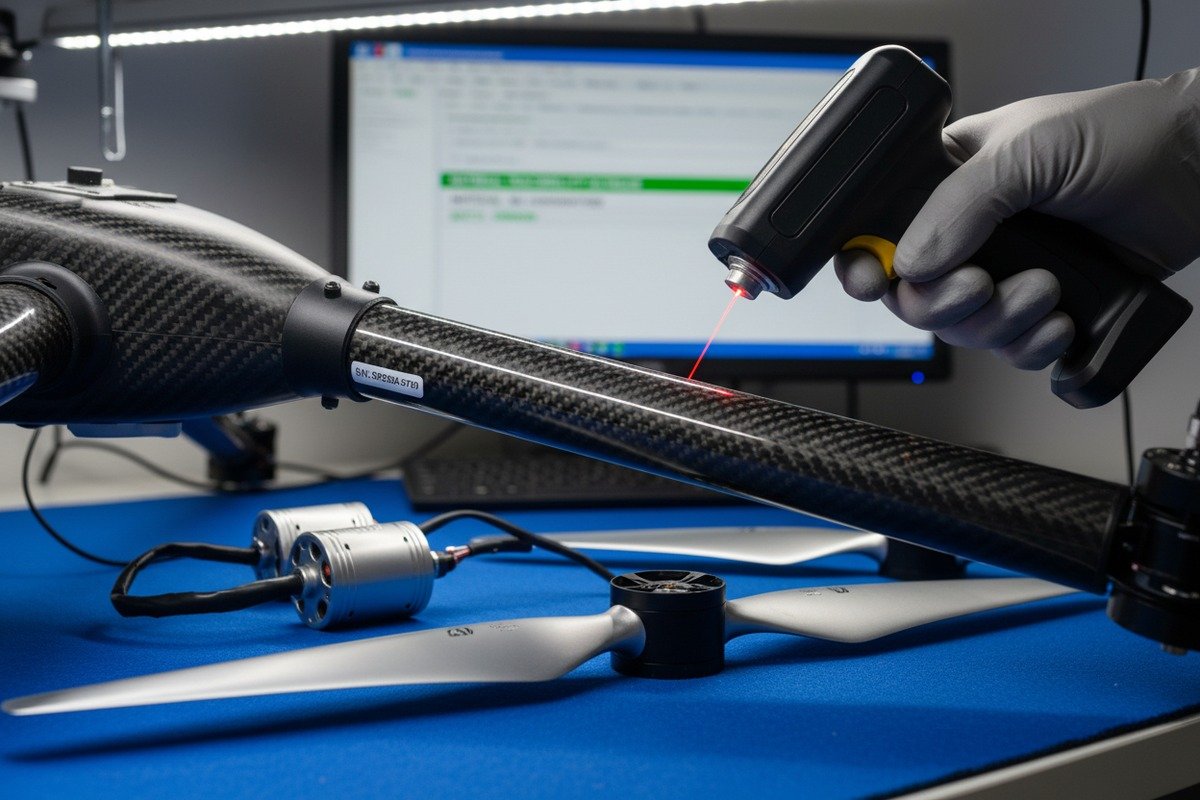
Every part in a firefighting drone faces extreme demands. A motor that fails during a rescue mission costs more than money. Traceability lets you verify component origins and quality certifications.
Our component inspection system tracks parts from supplier to final assembly. Each motor carries a serial number linked to incoming inspection data. This allows root cause analysis if field issues occur.
Critical Components to Verify
| Komponente | Key Specifications | Überprüfungsmethode |
|---|---|---|
| Motoren | KV rating, max temp, bearing type | Supplier cert + incoming test |
| Propeller | Material, balance tolerance | Visual + dynamic balance test |
| Flugregler | Processor spec, firmware version | Bench test + calibration log |
| Frame | Material grade, joint strength | Material cert + load test |
| Battery Cells | Capacity, cycle rating, origin | Cell test + UN38.3 report |
| ESCs | Current rating, thermal protection | Bench test + burn-in record |
Material Certification Documentation
Carbon fiber frames require material certifications. These prove the fiber grade, resin system, and manufacturing process meet aerospace-quality standards. Generic carbon fiber varies wildly in quality.
Our frames use aerospace-grade prepreg carbon fiber. Material certifications trace back to the fiber manufacturer. This documentation proves we are not using lower-grade materials that could fail under stress.
Supplier Audit Reports
Ask for supplier audit reports. These show the factory evaluates its component sources regularly. A drone maker that never audits suppliers cannot guarantee consistent quality.
We audit critical component suppliers annually. These audits check quality systems, production processes, and output consistency. Audit reports become part of our documentation package for OEM customers.
Testing Beyond Supplier Claims
Incoming inspection should verify supplier claims, not just accept them. Our receiving process includes functional testing of motors, capacity testing of batteries, and calibration checks of sensors.
Request incoming inspection records that show actual test results. A factory that only does visual receiving inspection cannot catch specification drift or counterfeit components.
Long-Term Durability Data
Component durability matters for total cost of ownership. Ask for lifecycle testing data on critical parts. Motor bearing life, battery cycle counts, and frame fatigue testing all predict real-world durability.
We maintain test units running continuous cycles. These provide durability data beyond manufacturer claims. This testing data helps procurement managers calculate true lifecycle costs.
Schlussfolgerung
Verifying firefighting drone compliance requires specific documentation. Request internal QC reports, performance test results, export certifications, and component inspection records. These documents protect your investment and ensure operational safety. Contact our team for sample documentation packages.
Fußnoten
1. Details UN38.3 testing for safe transport of lithium batteries. ︎
2. Official EASA portal for drone regulations and compliance information. ︎
3. Official NIST resource for standard test methods for sUAS. ︎
4. Official FAA regulations for small unmanned aircraft systems operations. ︎
5. Official FCC information on equipment authorization and compliance. ︎
6. Official European Commission guidance on CE marking requirements. ︎
7. Official European Commission page detailing the Radio Equipment Directive. ︎
8. Official OSHA guidance on Safety Data Sheets and hazard communication. ︎

 English
  Spanish
  German
  French
  Dutch
Dutch  Arabic
