
Watching a shipment of high-value octocopters leave our factory floor in Xi’an brings a sense of accomplishment, but for you, the long ocean transit can trigger anxiety about delays or mishandling. Without a robust monitoring strategy, you risk discovering critical sensor damage or missing delivery deadlines only after the container arrives.
To effectively monitor your cargo, you must combine carrier-based tracking using the Master Bill of Lading with independent IoT data loggers placed inside the container. These methods allow you to track the vessel’s real-time location while simultaneously verifying that internal environmental conditions, such as humidity and shock, remain within safe limits for sensitive electronics.
By implementing a multi-layered tracking approach, you can maintain visibility over your assets and proactively manage logistics risks.
What are the best tools for tracking my drone shipment in real-time?
When we coordinate logistics for our US clients, we often see them relying solely on email updates, which leaves them in the dark between messages. This passive approach creates unnecessary stress when a vessel encounters port congestion or route deviations.
The most effective tracking tools combine third-party vessel aggregators like MarineTraffic for external location data with independent IoT data loggers placed inside the crates. Additionally, utilizing your freight forwarder’s digital dashboard provides a centralized view of customs clearance progress and document verification, ensuring you have total situational awareness of your shipment.
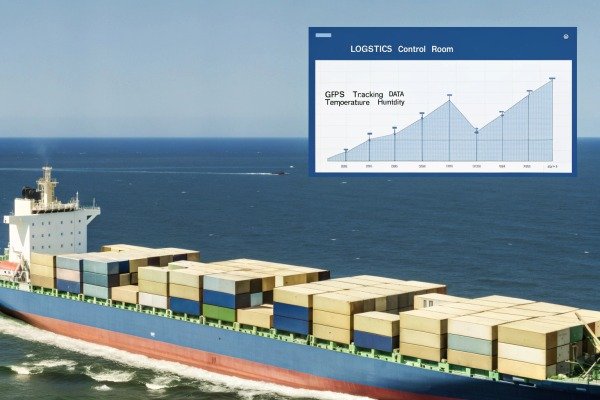
The Hierarchy of Tracking Technologies
In the industrial drone sector, relying on a simple "shipped" notification is insufficient. We recommend a tiered approach to tracking that moves from general vessel location to granular cargo condition monitoring. general vessel location 1 This distinction is vital because knowing where the ship is does not tell you if your delicate thermal cameras are being subjected to saltwater corrosion or excessive G-force impacts.
Carrier and Aggregator Platforms
The first layer of visibility comes from the shipping line itself. shipping line 2 By inputting the Master Bill of Lading (MBL) or Container Number into the carrier’s carrier’s website 3 website (e.g., Maersk, COSCO, MSC), you receive the authoritative status of the container. However, carrier sites can be clunky. Third-party aggregators like MarineTraffic or VesselFinder offer a better visual experience MarineTraffic 4, allowing you to see the ship's live GPS position on a map. ship's live GPS position 5 This is particularly useful for anticipating delays caused by weather or port strikes.
Independent IoT Data Loggers
For high-value equipment like our firefighting drones, we strongly advise clients to install independent IoT devices. These small units, often magnetic, attach to the container wall or sit inside the pallet. They transmit data via cellular networks (GSM) when near land and store data while at sea. cellular networks (GSM) 6 Advanced versions use satellite uplinks to provide true global real-time visibility. They monitor:
- GPS Location: Independent of the ship's reported position.
- Temperature: Critical for ensuring LiPo batteries do not overheat.
- Humidity: To detect container rain or seal breaches.
- Shock/Tilt: To see if the crate was dropped or tipped.
Comparing Tracking Ecosystems
Choosing the right tool depends on your budget and the granularity of data you require. Below is a comparison of common methods used by our procurement partners.
| Merkmal | Carrier Website | Third-Party Aggregator | Independent IoT Logger |
|---|---|---|---|
| Quelle der Primärdaten | Official Terminal/Vessel Scans | AIS (Automatic Identification System) | Internal Device Sensors |
| Real-Time Accuracy | Delayed (Milestone-based) | High (Vessel Position) | High (Cargo Condition & Location) |
| Environmental Data | Keine | Keine | Temp, Humidity, Shock, Light |
| Kosten | Kostenlos | Freemium / Subscription | Hardware + Data Plan Cost |
| Bester Anwendungsfall | Official Status Confirmation | ETA Prediction | Protecting High-Value Electronics |
By integrating these tools, you move from guessing where your shipment is to knowing exactly how your investment is being treated at sea.
How often should I request shipping updates from my Chinese drone supplier?
Our logistics team understands that constant pestering for updates drains energy, yet silence during a three-week Pacific crossing is terrifying for a buyer. Finding the balance between micromanagement and negligence is key to a smooth procurement experience.
You should structure your communication around critical logistics milestones rather than a fixed daily frequency. Request immediate notifications upon factory departure, port loading, and customs clearance, while establishing a protocol for “exception alerts” that triggers instant communication only if the shipment encounters unforeseen delays, inspections, or route changes.

Establishing a Communication Protocol
Efficiency in logistics communication is not about the volume of emails but the relevance of the information. When we export our octocopters, we establish a "Milestone vs. Exception" protocol with our clients. This prevents inbox fatigue while ensuring you are alerted immediately when action is required.
The Milestone Approach
Instead of asking "Where is it?" every Monday, agree on specific triggers that require an update from your supplier or freight forwarder. This standardizes the flow of information.
- Gate In: Confirmation that the goods have arrived at the port of origin (e.g., Shanghai or Shenzhen).
- Vessel Loaded: Confirmation that the container is physically on the ship, including the vessel name and voyage number.
- Arrival Notice: Usually sent 3-5 days before the vessel reaches the destination port (e.g., Long Beach or Rotterdam).
- Customs Release: The most critical update, signaling the cargo is cleared for final delivery.
Exception Management
The most important updates are the ones you didn't plan for. You must instruct your supplier to prioritize "Exception Alerts." These are non-routine updates triggered by problems. For example, if a "roll" occurs (cargo is bumped to the next ship due to overbooking) or if there is a customs hold for an X-ray inspection.
Influence of Incoterms on Communication
Your chosen Incoterm dictates who is responsible for generating these updates. Incoterm 7 gewählter Incoterm 8
| Incoterm | Primary Communicator | Responsibility Level | Recommended Update Request |
|---|---|---|---|
| EXW (ab Werk) | Your Freight Forwarder | You control the entire chain. | You must push your forwarder for all updates; the supplier is passive. |
| FOB (Frei an Bord) | Supplier -> Forwarder | Supplier handles origin; you handle transit. | Supplier updates until loading; Forwarder updates during sea transit. |
| CIF/DDP | Anbieter | Supplier manages transit to destination. | Supplier is your sole contact. Request weekly summaries + immediate exception alerts. |
Understanding these distinctions ensures you are asking the right person for the right information at the right time.
How do I use the Bill of Lading to check the current location of my cargo?
We scrutinize every digit on shipping documents because a single typo can leave a container stranded at the terminal. The Bill of Lading is not just a receipt; it is the fundamental key to unlocking visibility into your cargo’s journey across the ocean.
To track your cargo effectively, locate the Master Bill of Lading (MBL) number or the 11-digit Container Number on your document and enter it into the shipping line’s official website. This direct access allows you to bypass intermediaries and view the raw terminal data, confirming if your drones have been loaded, transshipped, or discharged.
Decoding the Bill of Lading (B/L)
For a procurement manager, the Bill of Lading is the source of truth. However, raw data on carrier websites can often be cryptic, filled with industry jargon and codes. To use this document effectively for location tracking, you need to understand what you are looking for.
Identifying the Tracking Numbers
There are two critical numbers on the top right of the document:
- Bill of Lading Number: usually a combination of letters and numbers (e.g., COSU123456789 for COSCO). This tracks the document and the shipment as a whole.
- Container Number: Always 4 letters followed by 7 numbers (e.g., MSKU1234567). This tracks the physical metal box.
Using the Container Number is often more reliable for location tracking because the container may be transferred between different vessels (feeders and mother vessels), while the B/L number remains administrative.
Interpreting Status Codes
When you enter these numbers into a site like MSC or CMA CGM, you will see a timeline of events. Here is how to interpret the critical status updates relevant to drone shipments:
- Gate In / Full: The container has entered the terminal and is ready for loading.
- Load on Board: The container is physically on the ship. This is when the "Shipped on Board" date is stamped.
- Transshipment: If your cargo stops in a hub like Singapore or Busan, you will see "Discharged" followed by "Loaded" onto a new vessel. This is a common point for delays.
- Discharged: The container has been taken off the ship at your destination port.
- Gate Out / Full: The container has been picked up by a trucker for final delivery.
MBL vs. HBL
Be aware of the difference between the Master Bill of Lading (MBL) issued by the shipping line and the House Bill of Lading (HBL) issued by the freight forwarder. Master Bill of Lading 9 The MBL is used on the carrier's website. The HBL can usually only be tracked on the freight forwarder's specific portal. If you try to track an HBL number on a Maersk or Evergreen website, it will return "No Record Found," causing unnecessary panic.
How can I verify that my firefighting drones are protected from humidity and shock during transit?
Our engineers devote hundreds of hours to ensuring the stability of flight controllers and gimbals, so the thought of rough sea handling compromising that precision is a valid concern. Physical monitoring is just as important as location tracking for sensitive equipment.
You should verify protection by mandating the use of 3-axis shock recording labels and humidity indicator cards inside the crate before sealing. Furthermore, request photographic evidence of Volatile Corrosion Inhibitor (VCI) packaging and confirm that lithium batteries are documented at the optimal 30% state of charge to prevent degradation or thermal risks.

The Invisible Risks of Sea Freight
Firefighting drones are robust machines, but they are also precision instruments. The salt air, temperature fluctuations of "container rain," and the mechanical shocks of crane operations pose significant risks. Monitoring these factors requires physical indicators that travel with the cargo.
Shock and Impact Monitoring
Industrial drones feature complex gimbal mechanisms and calibrated sensors. A drop of just a few inches during loading can misalign these components.
- ShockWatch Labels: These are cost-effective stickers placed on the outer packaging. If the box receives an impact beyond a specific G-force threshold (e.g., 25G or 50G), the vial turns red. This provides indisputable proof that handling protocols were violated.
- Tilt Indicators: These stickers reveal if a crate that must remain upright was tipped over or laid flat, which could damage internal mounting brackets.
Humidity and Corrosion Control
The temperature inside a container can fluctuate between 0°C and 50°C as it crosses climatic zones. This causes condensation, known as "container rain," which can corrode exposed circuit boards and connectors.
- VCI Technology: We use Volatile Corrosion Inhibitor bags which release a molecular layer of protection onto metal surfaces.
- Desiccant Calculation: Ensuring the correct amount of silica gel or clay desiccant is used based on the volume of the crate and the duration of the voyage.
- Indicator Cards: A simple card inside the plastic wrap that changes color (e.g., from blue to pink) if humidity levels exceed 40% or 60%. This tells you immediately upon opening if the moisture barrier was compromised.
Battery Safety Monitoring
Lithium Polymer (LiPo) batteries are Class 9 Dangerous Goods. Gefährliche Güter 10 They are the heart of the drone but also a primary risk vector.
- State of Charge (SoC): Batteries must be shipped at approximately 30% SoC. Storing them fully charged for weeks at sea can lead to swelling (puffing) and permanent capacity loss. Storing them empty can cause cell collapse.
- Dokumentation: We provide battery test reports showing voltage levels prior to packing.
Protective Measures Checklist
Before your supplier seals the container, use this checklist to ensure all monitoring and protection systems are in place.
| Protection Category | Device/Method | Zweck | Inspection Action |
|---|---|---|---|
| Impact | 3-Axis Shock Label | Detect drops/impacts | Check for red dye upon receipt. |
| Orientation | Neigungsanzeiger | Detect tipping | Ensure beads/dye indicate upright travel. |
| Moisture | Humidity Indicator Card | Detect high humidity | Verify color matches "Safe" zone. |
| Corrosion | VCI Bag & Desiccants | Prevent rust/oxidation | Check for bag tears or saturation. |
| Strom | Voltage Log / Multimeter | Monitor Battery Health | Check voltage is ~3.8V per cell (storage level). |
Schlussfolgerung
Monitoring a firefighting drone shipment requires more than just watching a dot on a map; it demands a proactive strategy that combines digital tracking tools, clear communication protocols, and physical environmental sensors. By utilizing the Master Bill of Lading, deploying IoT loggers, and enforcing strict packaging standards, you ensure that your equipment arrives in the same precision-calibrated condition as when it left our factory, ready for immediate deployment in critical emergency operations.
Fußnoten
1. Technical background on systems used to track and identify vessels at sea. ︎
2. Official information about the Federal Maritime Commission, which regulates US oceanborne international transportation. ︎
3. Official tracking portal for Maersk, a primary global carrier for containerized drone shipments. ︎
4. Official website of the vessel tracking service mentioned. ︎
5. International standards for vessel identification and the Automatic Identification System (AIS). ︎
6. Official organization representing the worldwide mobile communications industry. ︎
7. Official International Chamber of Commerce rules defining Incoterms. ︎
8. Official International Chamber of Commerce rules defining buyer and seller responsibilities in global trade. ︎
9. Comprehensive overview of the Bill of Lading’s role as a document of title. ︎
10. Official IMO regulations for transporting dangerous goods by sea. ︎

 English
  Spanish
  German
  French
  Dutch
Dutch  Arabic
