
Inflated drone quotes drain emergency budgets fast. emergency budgets 1 When we analyze competitor bids for our clients, hidden markups on thermal thermal resolution 2 payloads and proprietary accessories are everywhere. Here is how to spot them.
To filter inflated costs, normalize quotes by calculating the total cost of ownership over three years, specifically isolating thermal sensor pricing, unbundling proprietary accessories, and rejecting unnecessary enterprise software fees. Always require itemized breakdowns for training, maintenance, and battery replacement cycles to reveal hidden markups.
Let’s break down exactly where suppliers hide these extra costs so you can negotiate better deals.
What specific line items in a firefighting drone quote often hide unnecessary markups?
We frequently review competitor invoices sent to us by clients. It is shocking to see how basic accessories are often rebranded and marked up by 300% or more.
Commonly inflated line items include thermal payloads bundled at premium rates, proprietary battery charging stations, and annual software licensing fees for features you may never use. Additionally, look for excessive markup on basic consumables like propellers and hard-shell transport cases.

When you look at a quote for a firefighting drone, the base price of the airframe often looks reasonable. This is a common strategy. Suppliers keep the “sticker price” low to get your attention, then make their profit on the add-ons. In our assembly facility, we know exactly what components cost, and the retail markups on peripherals can be aggressive.
The first place to look is the thermal payload. A high-end radiometric camera is expensive, but some quotes bundle these with unnecessary software features. For example, a supplier might list a “Firefighting Analysis Package” for $3,000. Often, this is just a software unlock code for features the camera already has. You should ask if the camera hardware itself differs or if you are paying for a software license you might not need immediately.
Another hidden cost lies in proprietary accessories. Batteries and charging stations are major profit centers. charging stations 4 Some brands lock you into their ecosystem, charging $800 for a battery that costs a fraction of that to manufacture. While we prioritize safety in our battery designs, we see competitors charging huge premiums for “smart cases” that offer little utility over a standard hard case. Always check if the quote includes generic items like landing pads or cables at inflated prices.
Comparison of Standard vs. Inflated Line Items
| Line Item | Reasonable Market Price (Est.) | Inflated Quote Signal | Was ist zu prüfen? |
|---|---|---|---|
| Thermal Payload | $5,000 – $8,000 | >$10,500 | Is software unbundled? |
| Battery Station | $800 - $1.200 | >$2,500 | Is it just a plastic case with a charger? |
| Transport Case | $200 - $400 | >$1,000 | Is it a standard IP67 Pelican-style case? |
| Ausbildung | $1,500 (2 days) | >$5,000 | Is travel and lodging included? |
Finally, look closely at software subscriptions. Many quotes now include recurring annual fees for fleet management or live streaming. If your department already uses an Incident Command System (ICS), you might not need the drone manufacturer’s proprietary cloud platform. Incident Command System 5 Ask for these to be removed from the initial quote so you can evaluate the hardware cost purely on its own merits.
How do I determine if a higher price actually reflects better thermal imaging and flight stability?
Our engineering team tests dozens of sensors annually. Often, the price difference between a standard sensor and a “pro” version is marketing, not physics, which can mislead buyers.
Verify thermal quality by requesting raw radiometric resolution specs rather than marketing terms, and assess flight stability through wind resistance wind resistance 6 ratings in Level 5+ conditions. True value comes from high-resolution 640×512 sensors and redundant IMU systems, not just a higher brand price tag.

It is easy to get confused by technical jargon in a quote. A higher price tag does not always mean the drone sees better through smoke. To validate the price, you must look at the thermal resolution. For firefighting, anything below 320×256 is effectively a toy. A professional standard is 640×512. If a supplier quotes you $8,000 for a camera but the resolution is only 320×256, that is an inflated cost. You are paying for the brand, not the capability.
You also need to check if the camera is radiometrisch. A radiometric camera measures specific temperatures for every pixel, which is vital for finding hotspots. Non-radiometric cameras only show relative heat differences. The hardware for radiometric imaging costs us more to produce, so a higher price here is justified. radiometric imaging 7 However, ensure the quote specifies “Radiometric” clearly. If it doesn’t, do not pay the premium.
regarding flight stability, price should correlate with wind resistance and redundancy. When we calibrate flight controllers for our larger airframes, we ensure they can handle wind speeds of 12 meters per second (Level 6) or higher. wind speeds 8 Cheaper drones often cap out at Level 4. If a quote is high, check the spec sheet for “Wind Resistance.” If it is below 10 m/s, the drone is not stable enough for serious fireground operations, regardless of the price.
Essential Specs Justifying Higher Costs
| Merkmal | Mindestanforderung | "Premium" Justification |
|---|---|---|
| Thermische Auflösung | 320×256 px | 640×512 px (Justifies +$3k-$5k) |
| Temperature Measurement | Spot Metering | Radiometric (Justifies +$1k-$2k) |
| Windwiderstand | 10 m/s (Level 5) | 15 m/s (Level 7) (Justifies larger motors/battery) |
| Schutz gegen Eindringen | IP43 | IP55 or higher (Justifies sealed airframe cost) |
Also, consider the Ingress Schutzart IP (Ingress Protection) 9 Protection (IP) rating. Firefighting involves water and dust. An IP55 rating requires better sealing and materials than an IP43 drone. If a quote is expensive but lists no IP rating or a low one, the durability does not match the price. You are paying for a fair-weather drone in a severe-weather price bracket.
Shipping directly from our Chengdu facility to US clients eliminates layers of markup. Yet, many buyers unknowingly pay distributors for logistics and support we can handle ourselves.
Middleman premiums often appear as vague “logistics fees,” higher base unit costs, or mandatory support packages. Purchasing directly from the factory removes these layers, allowing you to access OEM pricing, direct engineering support, and faster customization without the distributor’s 30–50% markup.

The supply chain for industrial drones can be long. By the time a drone reaches a local dealer, it may have passed through an importer and a regional distributor. Each step adds 15% to 25% to the final price. If your quote seems high, you are likely funding this chain. Identifying this helps you decide if the local service is worth the extra cost.
Buying from a middleman offers convenience. They handle customs, keep local stock, and offer immediate replacements. If you need a drone tomorrow, this premium is worth it. However, if you are planning a fleet purchase for next quarter, paying a 40% markup for “inventory holding costs” is unnecessary. Many quotes hide this markup in the base unit price. A drone that leaves our factory at $12,000 might appear on a dealer quote for $18,000.
Another sign of middleman inflation is marked-up customization. We offer OEM services where we can modify payload mounts or software for clients. When a middleman handles this, they often charge a “consulting fee” or “integration fee” that can be thousands of dollars. If you deal directly with the manufacturer, these engineering adjustments are often part of the negotiation or charged at a flat engineering rate, not a speculative value-add fee.
Factory Direct vs. Distributor Cost Breakdown
| Kostenkomponente | Factory Direct Model | Distributor/Reseller Model |
|---|---|---|
| Base Airframe | Factory Price (e.g., $15,000) | Factory Price + 25-40% Markup |
| Technische Unterstützung | Direct from Engineers (Remote) | Local Support (Often included in markup) |
| Personalisierung | Low/At Cost | High "Integration Fees" |
| Shipping/Logistics | Freight + Customs (Transparent) | Bundled/Hidden in Unit Price |
Ultimately, ask the supplier about their relationship with the manufacturer. Are they an exclusive agent, or just a reseller? If they are a reseller, ask if they hold stock or if they drop-ship. If they drop-ship, you are paying them a premium just to forward your email to the factory. In that case, you might save significantly by contacting the manufacturer directly.
Should I factor in the cost of future spare parts and technical support when evaluating the total price?
We design our frames for modular repair because we know crashes happen. Ignoring post-sale costs is dangerous; we see departments grounded because they cannot afford replacement arms or motors.
Yes, future costs are critical because proprietary spare parts and mandatory support contracts can double your initial investment within three years. Specific line items for battery replacements, motor repairs, and annual maintenance agreements must be calculated into the Total Cost of Ownership (TCO).
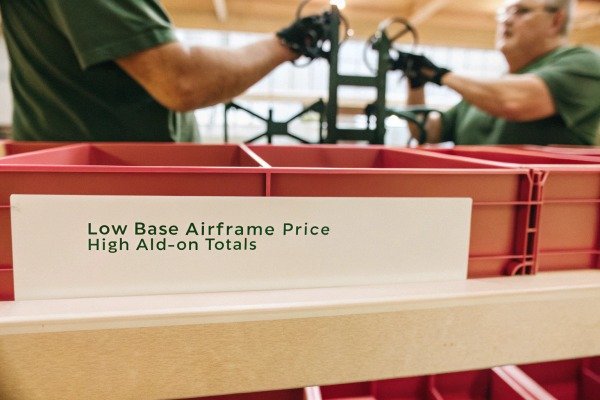
A low initial quote is often a trap. We call this the “razor and blade” model. A supplier sells you the drone cheaply but charges exorbitant prices for Verbrauchsmaterial. For firefighting drones, batteries are the biggest ongoing cost. A typical high-performance battery lasts 200 to 300 cycles. If you fly daily, you will replace your entire battery fleet every year. If a supplier’s proprietary batteries cost $1,000 each and you need eight of them, that is an $8,000 annual recurring cost hidden from the initial quote.
Propellers and motors are also frequent replacements. In rough fireground conditions, props get nicked and motors ingest smoke particles. Check the price list for these parts before you buy. Some US/European brands charge $100 for a single propeller that costs $15 to manufacture. If the drone uses standard carbon fiber props, you can source them cheaply. If they use a proprietary quick-release mechanism, you are locked into their pricing.
Finally, look at maintenance contracts. Some suppliers mandate an annual “health check” to keep the warranty valid. This can cost $1,000 to $2,000 per drone, plus shipping. If you have a fleet of five drones, that is $10,000 a year just to keep warranties active. When calculating the Total Cost of Ownership (TCO), add these mandatory service fees to the purchase price. Gesamtbetriebskosten 10 A cheaper drone with expensive mandatory service is often more costly than a premium drone with user-serviceable parts.
3-Year Total Cost of Ownership (TCO) Calculator
| Ausgabenkategorie | Year 1 (Purchase) | Year 2 (Operations) | Year 3 (Refresh) |
|---|---|---|---|
| Hardware | $20,000 (Drone + Payload) | $0 | $0 |
| Batteries (8x) | $4,000 (Included) | $4,000 (Replacement) | $4,000 (Replacement) |
| Software/Data | $1,000 | $1,000 | $1,000 |
| Wartung | $0 (Warranty) | $1,500 | $1,500 |
| Total Annual | $25,000 | $6,500 | $6,500 |
By mapping this out, you can see that a $20,000 drone actually costs nearly $40,000 over three years. Comparing quotes based on this TCO figure filters out suppliers who front-load discounts but back-load profits.
Schlussfolgerung
Scrutinize every line item. By demanding transparency on sensors and spares, you secure reliable aerial support without overpaying. Smart procurement saves lives and budgets.
Fußnoten
1. News coverage of how fire departments are integrating drones into their operational budgets. ︎
2. General background on thermal imaging technology and resolution standards. ︎
3. Technical explanation of radiometry and its importance in temperature measurement for industrial sensors. ︎
4. Product documentation for enterprise-grade drone battery management and charging systems. ︎
5. Official FEMA resources for the Incident Command System used by emergency response agencies. ︎
6. NIST standards for evaluating the performance of drones in fireground environments. ︎
7. Educational guide on selecting thermal sensors based on imaging capabilities and radiometric features. ︎
8. International standard for testing the flight performance of unmanned aircraft systems in various conditions. ︎
9. Official international standards for the degrees of protection provided by mechanical casings and electrical enclosures. ︎
10. Overview of the financial estimate intended to help buyers determine direct and indirect costs. ︎

 English
  Spanish
  German
  French
  Dutch
Dutch  Arabic

