
Wildfires in Europe are intensifying, yet sourcing compliant drone technology remains complex. We see many buyers struggle with stuck shipments and regulatory grounding during critical fire seasons.
To evaluate a supplier’s European export experience, request verified EASA class identification labels and CE Declarations of Conformity. Audit their logistics for DDP shipping of dangerous goods like lithium batteries, and verify case studies with EU fire brigades to ensure compliance with local data sovereignty and safety regulations.
Let’s look at the specific indicators that prove a supplier is ready for the complex European market.
Which certifications must I check to ensure the firefighting drones meet strict European aviation standards?
Our compliance team spends months aligning Fluglotse 1 flight controllers with EU standards. Without the right paperwork, your expensive equipment might be grounded by local aviation authorities immediately after purchase.
You must verify that the firefighting drone holds a valid CE mark under the Machinery Directive and an EASA Class Identification Label (C0-C6). Additionally, check for RoHS compliance for components and specific radio frequency certifications to ensure the transmission system operates legally within European airspace.

The European market is unlike any other Agentur der Europäischen Union für Flugsicherheit (EASA) 2 when it comes to aviation regulation. In our manufacturing process, we have learned that "compatible" is not the same as "certified." When you are evaluating a supplier for high-stakes operations like firefighting, you cannot rely on generic promises. The European Union Aviation Safety Agency (EASA) has established a harmonized framework that every drone operator must follow. If your supplier cannot provide specific documents, your fleet may never legally leave the ground.
Understanding EASA Class Identification
Since January 2024, the EASA regulations have become fully applicable. This means drones operating in the "Open" category must have a C-class label (C0 through C6). For a large quadcopter used in firefighting, you are likely looking at the "Specific" category due to the weight and nature of the mission. However, having a manufacturer that understands the C5 and C6 standards is crucial for operations like Beyond Visual Jenseits der Sichtlinie (BVLOS) 3 Line of Sight (BVLOS), which is often necessary for monitoring large wildfires.
We advise you to ask for the Konformitätserklärung 4 Declaration of Conformity. This document must reference the specific EU regulations the product meets. If a supplier sends you a generic certificate that only mentions "FCC" (a US standard) or domestic Chinese standards, it shows a lack of experience in the European market.
Radio Frequency and Data Security
Firefighting drones require robust video transmission systems. In Europe, the radio spectrum is heavily regulated. Equipment that blasts signal power at levels acceptable in other regions might be illegal in the EU. You must check that the drone complies with the Radio Equipment Directive (RED).
Furthermore, data privacy is a major GDPR (General Data Protection Regulation) 5 concern. With GDPR (General Data Protection Regulation), how the drone stores and transmits images is critical. Suppliers with true export experience will offer data encryption and ensure that no flight logs or video feeds are routed through servers outside of your control.
Mandatory Certification Checklist
Use this table to audit your potential supplier’s documentation package before signing a contract.
| Certification / Standard | Was zu beachten ist | Warum es so wichtig ist |
|---|---|---|
| CE-Kennzeichnung | Official Declaration of Conformity | Proves compliance with EU health, safety, and environmental protection standards. |
| EASA Class Label | C-label (e.g., C3, C5, C6) on the drone body | Required for legal operation in specific airspace categories without complex exemptions. |
| RoHS | Lab test report | Ensures the product does not contain hazardous materials like lead or mercury. |
| RED (Radio Equipment Directive) | Test report for CE compliance | Ensures the radio transmission frequency and power are legal in Europe. |
How do I verify the supplier's ability to handle DDP shipping and customs clearance for European destinations?
We often see shipments from inexperienced sellers stuck at customs because they mislabel batteries. Ensuring seamless delivery requires deep knowledge of European dangerous goods regulations and tax codes.
Verify the supplier’s ability to execute Delivered Duty Paid (DDP) shipping, which transfers all import risks and tax liabilities to them. Ask for proof of previous high-capacity lithium battery shipments (UN3480) and their specific carrier contracts that comply with ADR regulations for European road transport.

Shipping a large industrial drone is not like shipping a consumer electronic device. The logistics involve complex layers of safety regulations and tax laws. When we export to countries like Germany or France, the logistics plan is often as complex as the manufacturing process itself. If a supplier expects you to handle the customs clearance, they are passing a significant risk onto you.
The Challenge of High-Capacity Batteries
Firefighting drones rely on large, high-voltage Lithium Polymer (LiPo) batteries. In the logistics world, these are classified as Class 9 Dangerous Goods (UN3480). Many standard air freight carriers refuse to carry them, or they have strict limits on the state of charge (SoC) and packaging.
An experienced supplier will have specific contracts with specialized freight forwarders who dangerous goods 6 handle dangerous goods. They will know how to package batteries in UN-rated boxes to prevent fires during transit. You should ask to see photos of their packaging labels. If they don't know what a "Class 9 label" is, that is a major red flag.
Why DDP is Essential for You
DDP stands for Geliefert Verzollt. Under this Incoterm, the seller takes maximum responsibility. They handle export from China, import into the EU, payment of VAT (Value Added Tax) and duties, and final delivery to your door.
For a procurement manager, this is the safest option. If the drone gets stuck in customs because the wood packaging wasn't fumigated properly, or if the batteries lack the MSDS (Material Safety Data Sheet), it is the supplier's problem to solve, not yours. Many new suppliers will offer CIF (Cost, Insurance, and Freight) oder DAP (Geliefert am Ort), but these leave the burden of import clearance and taxes on you. This can lead to unexpected costs that blow your budget.
Comparing Shipping Terms
Understanding the difference between shipping terms can save you thousands of euros and weeks of delay.
| Versandbedingung (Incoterm) | Seller Responsibility | Buyer Responsibility | Risk to Buyer |
|---|---|---|---|
| EXW (ab Werk) | minimal (just packing) | Everything (pickup, export, import, delivery) | Hoch |
| DAP (Geliefert am Ort) | Shipping to destination | Import clearance, Import VAT, Duties | Mittel |
| DDP (Delivered Duty Paid) | Everything (door-to-door, including taxes) | Unloading the goods upon arrival | Niedrig |
What specific case studies or client references should I ask for to prove their experience in the EU?
When we pitch to European agencies, we know a simple spec sheet is never enough. You need concrete proof that the equipment survives real-world operational stress in your specific environment.
Request detailed case studies featuring contactable European municipal fire brigades or government contractors. Look for evidence of interoperability with local command systems like TETRA and specific operational data such as flight hours logged during actual wildfire suppression or search and rescue search and rescue 7 missions in EU weather conditions.

Paperwork proves legality, but case studies prove capability. In the firefighting sector, the environment is hostile. High heat, smoke interference, and water spray can ruin consumer-grade electronics instantly. A supplier with genuine European experience will not just show you a video of a drone flying in a sunny park in Shenzhen; they will show you footage from a training exercise in rainy Manchester or a wildfire watch in Southern Italy.
Analyzing the Depth of References
Do not settle for a logo on a website. Many companies list "partners" who simply bought one unit for testing years ago. You need to ask for specific deployment details. For example, ask about the integration with European emergency protocols.
- Does the drone feed video into software commonly used in the EU, such as specific incident command systems?
- Has the drone been tested alongside European ground teams using TETRA radios to ensure no frequency interference?
Verifying "Dual-Use" Compliance
Europe is increasingly sensitive to dual-use 8 "dual-use" technologies—items that have both civil and military applications. Experienced suppliers understand this landscape. They should be able to share stories of how they navigated export control checks. If a supplier has successfully delivered to a government entity in the EU, it means they have passed stringent background checks regarding supply chain security 9 supply chain security.
Red Flags vs. Green Flags in References
When you review the case studies provided by a manufacturer, use this guide to determine if they are genuine or superficial.
| Merkmal | Green Flag (Trusted Supplier) | Red Flag (High Risk) |
|---|---|---|
| Client Type | Municipal fire departments, search and rescue NGOs, police forces. | unidentified "private clients" or generic "European distributors." |
| Content | Operational data, challenges faced, solutions implemented, weather conditions. | Only polished marketing photos, no mention of specific mission types. |
| Contactability | Supplier offers to connect you with the client for a reference call. | Supplier refuses to share contact details due to "privacy" (often an excuse). |
| Dauer | Long-term contracts or repeat purchases mentioned. | Single pilot project with no follow-up or expansion. |
How can I assess if the manufacturer has an established after-sales support system for European clients?
Our engineers cannot fly to Europe for every minor repair or question. A supplier must have a local infrastructure to keep your fleet operational during emergencies, not just a call center.
Assess whether the manufacturer has established partnerships with European service centers for rapid maintenance and spare parts availability. Confirm they provide localized manuals in EU languages and offer remote technical support during your time zone to minimize downtime during critical firefighting operations.
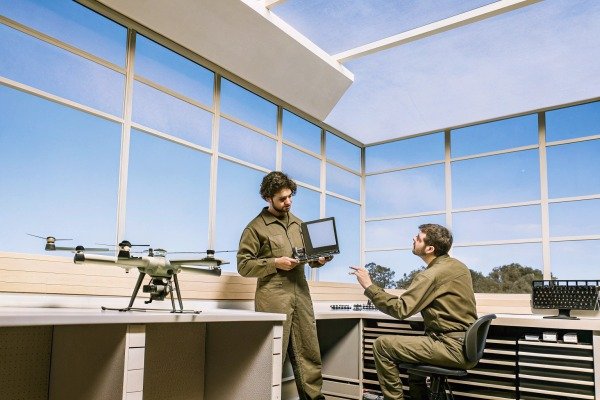
Firefighting drones are tools, not toys. They will sustain damage. A propeller might clip a tree branch, or a landing gear might absorb a hard impact. When this happens, the speed of recovery is vital. If your supplier requires you to ship the drone back to China for repairs, you could be without your equipment for six weeks or more. This is unacceptable for public safety agencies.
The Importance of Local Warehousing
An experienced exporter will have a warehouse or a certified repair partner within the EU. This allows for next-day delivery of critical spare parts like motors, arms, or batteries. During our expansion, we found that establishing a parts depot in Europe was the single biggest factor in building trust with government clients. You should ask the supplier specifically: "Where is the nearest stock of spare parts for this model?" If the answer is "our factory in China," you need to reconsider the risk.
Language and Time Zone Support
Technical issues rarely happen at convenient times. If you are in London and your drone has a software error at 2:00 PM, a support team in China might be asleep (it would be 10:00 PM there).
- Time Zone Coverage: Does the supplier have support staff working shifts that overlap with European business hours?
- Localized Manuals: Are the user manuals and maintenance guides translated into professional English, French, German, or Spanish? Poorly translated manuals can lead to pilot error and liability issues. In Europe, safety documentation must be precise.
Remote Diagnostics and Software Updates
Modern industrial drones are software-defined. Ask if the supplier can perform remote diagnostics 10 remote diagnostics. Can they log into the flight controller remotely to analyze error logs? This capability often solves 80% of issues without shipping hardware. Furthermore, check how they handle firmware updates. Are updates tested against European regulations before release? A bad update could inadvertently reset frequency settings to illegal ranges, so disciplined software management is a key sign of a mature exporter.
Support Tier Evaluation
| Merkmal | Basic Export Supplier | Mature EU-Focused Supplier |
|---|---|---|
| Repair Location | Return to China (4-6 weeks) | Local EU Partner (3-5 days) |
| Ersatzteile | Ships from China (High shipping cost) | Ships from EU Warehouse (Low cost) |
| Tech Support | Email only, 24h delay | Live chat/Phone during EU hours |
| Ausbildung | Video links only | On-site or regional partner training |
Schlussfolgerung
Choosing the right partner ensures safety and compliance. You must rigorously evaluate certifications like CE and EASA, verify DDP logistics capabilities, and confirm local after-sales support to secure a reliable firefighting drone fleet for your agency.
Fußnoten
1. General definition of the component. ︎
2. Official regulatory body for EU aviation safety. ︎
3. Industry leader explanation of BVLOS operations. ︎
4. Official EU commission guide on conformity docs. ︎
5. Comprehensive resource for EU data privacy laws. ︎
6. IATA standards for shipping hazardous materials. ︎
7. University research group specializing in rescue drones. ︎
8. Official EU trade policy on dual-use items. ︎
9. ISO standard for security management systems. ︎
10. Example of remote inspection capabilities by manufacturer. ︎

 English
  Spanish
  German
  French
  Dutch
Dutch  Arabic
