
We often see shipments delayed because buyers overlook how high-voltage batteries are packed, causing significant compliance headaches during transit.
To confirm separate packing, explicitly request adherence to UN3480 regulations and Packing Instruction 965 in your purchase contract. Require photographic proof of separate UN-rated boxes and a packing list that itemizes the drone body and batteries as distinct hazardous goods lines before final payment.
Ensuring your supplier follows these protocols protects your investment and prevents costly logistical nightmares.
Why is it critical for my firefighting drone batteries to be shipped separately from the body?
Our engineers design these power systems for intense heat, but during transport, that stored energy becomes a liability if mishandled.
Shipping batteries separately is critical because it complies with strict IATA Packing Instruction 965 for high-capacity lithium units. This configuration minimizes fire risks from accidental activation or short circuits and prevents the entire drone shipment from being rejected or seized by carriers due to hazardous material violations.
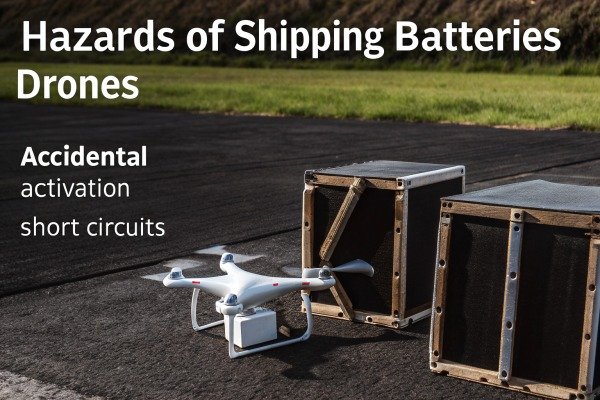
Understanding the Safety Risks
Firefighting drones require immense power. To lift heavy payloads like fire extinguishing balls or hoses, we equip them with high-capacity lithium-ion or lithium-polymer batteries. lithium-ion or lithium-polymer batteries 1 These are not standard consumer batteries; they often exceed 100 watt-hours (Wh) and sometimes even 300Wh. When these batteries are installed inside the drone or packed in the same box installed inside the drone 2, the risk of "thermal runaway" increases thermisches Durchgehen 3. If a battery malfunctions and catches fire, it destroys the expensive drone airframe instantly.
Regulatory Classifications
By shipping batteries separately, you move the shipment from one regulatory category to another. In the world of logistics, this distinction is vital.
- UN3481: This covers batteries packed mit oder contained in equipment. While it sounds convenient, it has strict limits on the net quantity of batteries per package.
- UN3480: This covers lithium-ion batteries shipped separat (on their own). This is the standard for bulk battery transport and requires rigid packaging testing.
When we separate the batteries, we treat the drone body as general cargo (or less regulated cargo) and the batteries as fully regulated Class 9 Dangerous Goods Klasse 9 Gefährliche Güter 4. This separation ensures that if the battery package faces scrutiny or damage, your drone body remains safe and unaffected.
The "Hidden" Danger of Combined Shipping
If a supplier packs loose batteries in the same box as the drone without proper isolation, terminals can touch metal parts or other batteries. This causes short circuits. Separate shipping usually implies using a dedicated dangerous goods box with individual inner packaging for each battery, vastly reducing this risk.
Comparison of Shipping Configurations
| Merkmal | Batteries Shipped Separately (UN3480) | Batteries Packed With Equipment (UN3481) | Batteries Contained In Equipment (UN3481) |
|---|---|---|---|
| IATA Classification | Class 9 (Strict) | Class 9 (Moderate) | Class 9 (Moderate) |
| Packing Instruction | PI 965 | PI 966 | PI 967 |
| State of Charge (Air) | Strictly ≤ 30% | ≤ 30% (Recommended/Mandated) | ≤ 30% (Mandated for >100Wh) |
| Risk of Short Circuit | Lowest (Individual insulation) | Medium (Depends on packing) | High (If switch activates) |
| Carrier Acceptance | Cargo Aircraft Only (Often) | Passenger & Cargo | Passenger & Cargo |
What documentation should I request to verify the batteries are packed independently?
Every time our logistics team prepares a US export, we double-check specific forms to prevent customs rejection.
You must request a valid UN38.3 Test Summary, a current Material Safety Data Sheet (MSDS), and a Dangerous Goods Declaration stating UN3480. Additionally, ask for a commercial invoice that clearly separates the HS codes and values for the drone airframe and the independent battery cases.

The Paper Trail of Safety
Documentation is not just bureaucracy; it is the proof that your supplier is not cutting corners. When you buy a firefighting drone, you are importing a hazardous material. If the paperwork says "Drone Kit" but the X-ray shows high-density batteries, customs will flag it as undeclared dangerous goods. This leads to massive fines.
Essential Documents Breakdown
To verify independent packing, you need to see the "UN3480" code on the paperwork. If you see "UN3481," the supplier is planning to pack them with the drone.
1. Dangerous Goods Declaration (DGD)
This is the most critical document for air freight. It must list the batteries as "Lithium Ion Batteries" under UN3480. It should list the net weight of the batteries separately from the gross weight of the drone.
2. UN38.3 Test Summary
This document proves the battery model has passed 8 critical safety tests, including vibration, shock, and thermal cycling. Without this, no reputable carrier will accept the shipment.
3. Material Safety Data Sheet (MSDS)
Ensure the MSDS is current (dated within the last year). It provides the chemical composition and emergency handling procedures. chemical composition and emergency handling 5
Commercial Invoice Separation
A clear indicator of separate shipping is the Commercial Invoice. Handelsrechnung 6 Ask your supplier to list the drone body and the batteries as two separate line items.
- Line 1: Quadcopter Drone Body (No Battery) – HS Code: 8806.xx
- Line 2: Lithium Ion Battery Pack – HS Code: 8507.60
This separation allows customs to process the drone body easily while the batteries go through hazmat checks.
Critical Document Checklist
| Name des Dokuments | Zweck | Was zu beachten ist |
|---|---|---|
| DGD (Shipper's Declaration) | Declares hazard class | Code UN3480 (indicates separate batteries). |
| UN38.3 Zusammenfassung der Prüfung | Proves safety testing | Pass results for T.1 through T.8 tests. |
| Handelsrechnung | Customs valuation | Separate line items for Body and Batteries. |
| Packliste | Physical count | Two distinct box counts (e.g., Box 1: Drone, Box 2: Batteries). |
| MSDS / SDS | Chemical safety | Date within current year; matches battery model. |
How can I confirm my supplier follows IATA regulations for shipping drone batteries?
Before any pallet leaves our Xi’an facility, we verify labeling compliance to ensure smooth transit through major hubs.
Confirm compliance by demanding photos of the outer packaging showing the Class 9A hazard label and the UN3480 identification number. Ensure the supplier provides a State of Charge (SoC) report verifying levels are at or below 30 percent, which is mandatory for air cargo transport.
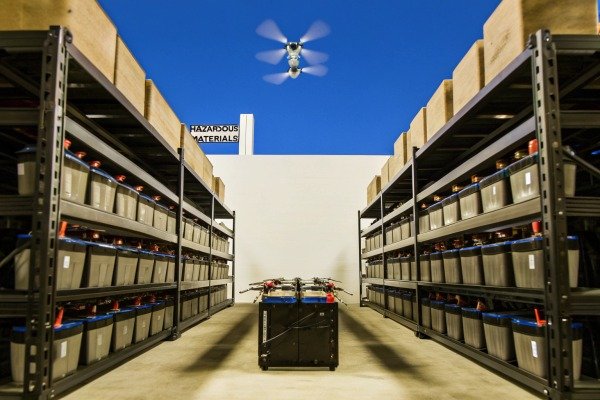
Visual Verification is Key
Do not rely on email promises. We always encourage buyers to ask for "pre-shipment photos." You want to see the actual boxes before they are handed over to the courier (like DHL, FedEx, or a freight forwarder).
The 30% State of Charge (SoC) Rule
Since April 2016, IATA has strictly enforced that lithium-ion batteries shipped alone (UN3480) lithium-ion batteries shipped alone 7 via air cargo must be at a State of Charge (SoC) not exceeding 30% Ladezustand (State of Charge, SoC) 8 of their rated capacity. rated capacity 9
- Warum? At 30% charge, a battery is much less likely to enter thermal runaway if damaged.
- How to check: Ask the supplier for a photo of the battery voltage meter or a screenshot from the battery management software showing the charge level. If they send you a fully charged battery (100%), they are violating international law, and you are liable as the consignee.
Labeling Requirements
Your supplier must apply specific labels to the battery box. If these are missing, the shipment will be stuck at the origin airport.
The Class 9A Label
This is the standard hazard label for lithium batteries. It has a specific design (black and white with battery symbols). It is different from the generic Class 9 label.
The Cargo Aircraft Only (CAO) Label
Because firefighting drone batteries are large (often over 35kg net per package or simply restricted from passenger planes), they must travel on cargo planes. The bright orange "Cargo Aircraft Only" sticker must be visible.
Rigid Packaging
IATA regulations require "rigid outer packaging." IATA regulations require 10 Cardboard boxes must be strong enough to withstand a 1.2-meter drop test without the batteries shifting or the box bursting open. Ask your supplier: "Are you using UN-specification boxes (marked with a UN code like 4G/Y…) or standard cardboard?" For heavy industrial batteries, UN-spec boxes are mandatory.
Rote Flaggen, auf die man achten sollte
- Vague Answers: If the supplier says, "Don't worry, we write 'Toys' on the box," cancel the order. This is smuggling.
- No Hazmat Fee: Shipping UN3480 batteries legally is expensive. It requires a dangerous goods surcharge. If the shipping cost looks too cheap, they are likely cutting corners.
Will shipping the batteries separately improve the customs clearance speed for my order?
We have noticed that clients who split their shipments often clear US customs faster than those with bundled kits.
Separating batteries streamlines customs clearance by allowing the non-hazardous drone body to pass through standard channels quickly. Hazardous batteries undergo stricter inspections independently, preventing the entire shipment from being held up if questions arise regarding the dangerous goods documentation or packaging.
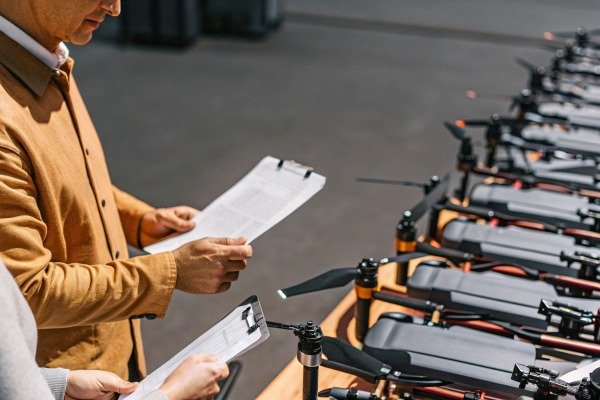
The Logistics of Splitting Shipments
When you ship a firefighting drone with the batteries packed inside the same box, the entire shipment is flagged as "Dangerous Goods." This means every single piece of that shipment—even the propellers and the remote controller—is stuck in the hazmat queue.
By separating them, you create two distinct logistical flows:
- The Drone Body: Classified as general electronics. It flies through customs checks, requires no special handling fees, and is often delivered days earlier.
- The Batteries: Go through the hazardous materials channel. They will be inspected more closely.
Preventing Total Blockage
If customs officers find an issue with the battery paperwork (which is common), they hold the entire shipment. If your drone is in that box, you cannot use it. You are stuck waiting.
If they are separated, and the batteries get held up for a paperwork correction, you still receive the drone body. You can use this time to train your team on the airframe, install software, or mount cameras while waiting for the batteries to clear.
Cost vs. Speed Analysis
Shipping separately is generally more expensive upfront because you are paying for two base shipping rates and separate handling. However, the cost of a delayed project often outweighs the shipping fee.
- Risk Mitigation: If a battery leaks or is damaged in transit, it ruins only the battery box, not the $10,000 drone body.
- Carrier Options: Some carriers (like passenger airlines) will accept the drone body but refuse the large batteries. Separating them opens up more flight options for the main drone unit.
Shipping Mode Impact
| Mode of Transport | Batteries Separately (UN3480) | Speed Impact | Anmerkungen |
|---|---|---|---|
| Luftfracht | Very Strict | Fast but expensive | Best for urgent needs; strict 30% charge limit. |
| Seefracht | Less Restricted | Slow | Best for bulk orders; can ship at higher charge levels safely. |
| Ground (Truck) | Mäßig | Mittel | Common for final delivery; specific labeling required. |
Final Logistics Strategy
For our US clients, we often recommend shipping the drone bodies via express air freight (DHL/UPS) for speed, and shipping a bulk order of spare batteries via sea freight or specialized heavy air cargo. This hybrid approach balances speed, compliance, and budget.
Schlussfolgerung
Confirming that your firefighting drone batteries are packed separately (UN3480) is the single most effective step to ensure safety and compliance. By requesting the correct DGD paperwork, verifying the 30% State of Charge, and insisting on UN-spec packaging, you protect your procurement from seizures and fires.
Fußnoten
1. FAA safety regulations for different types of lithium-based batteries in aviation. ︎
2. Scientific explanation of thermal runaway risks in lithium-ion battery systems. ︎
3. Authoritative explanation of the specific battery failure mode. ︎
4. IATA defines the hazardous materials classification for air transport. ︎
5. Background on the purpose and standard sections of a Safety Data Sheet. ︎
6. Official US Customs guidance on required import documentation. ︎
7. News report on the implementation of international lithium battery shipping regulations. ︎
8. IATA regulations mandate the 30% charge limit for air cargo. ︎
9. Educational resource explaining the relationship between battery charge levels and safety. ︎
10. IATA’s official guidelines for the safe transport of lithium batteries by air. ︎

 English
  Spanish
  German
  French
  Dutch
Dutch  Arabic
