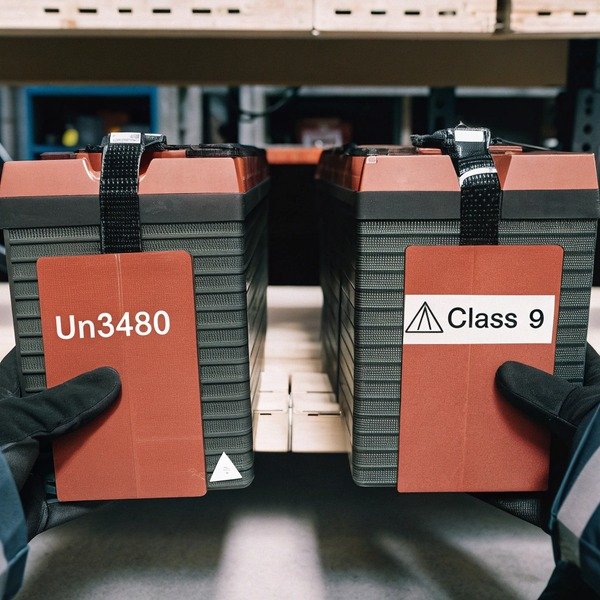
We know the frustration of seeing a critical shipment stalled at customs because of improper battery documentation, which is why our logistics team prioritizes clear classification.
To confirm separation, explicitly ask your supplier if the shipment is classified under UN3480 (standalone batteries) rather than UN3481. Request a separate Bill of Lading, photos of Class 9 labels on distinct boxes, and verification that the batteries are shipped at 30% State of Charge via cargo-only aircraft.
Here is how you can verify these details step-by-step to avoid costly delays.
Why is it necessary for me to ship the batteries separately from the firefighting drone body?
We have found that keeping high-capacity energy packs installed during transit creates unnecessary safety risks that many carriers simply will not accept.
Separating high-capacity firefighting batteries is mandatory under IATA regulations for air cargo. Standalone lithium batteries (UN3480) must be shipped on cargo-only aircraft with a strict 30% State of Charge limit to prevent thermal runaway and ensure compliance with global dangerous goods safety standards.
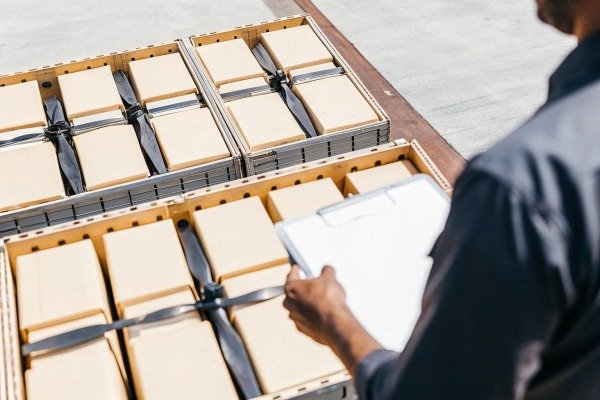
The Regulatory Landscape of Lithium Batteries
When we engineer heavy-lift firefighting drones, the power requirements are immense. These are not small consumer batteries; they are high-voltage, high-capacity industrial units often exceeding 22,000mAh. From a logistics perspective, this places them in a high-risk category.
The core reason for separation lies in the distinction between UN3480 und UN3481:
- UN3480 (Lithium ion batteries): This classification applies when batteries are shipped on their own. This is the strictest category. For air transport, these are forbidden on passenger aircraft and must travel on "Cargo Aircraft Only" flights. They must also be at a State of Charge (SoC) not exceeding 30%.
- UN3481 (Lithium ion batteries packed with or contained in equipment): This allows for slightly more relaxed rules because the equipment provides a layer of physical protection. However, there are strict limits on the Watt-hour (Wh) rating and the net weight of batteries per package.
For our octocopter drones, the batteries are simply too large to qualify for the exemptions often used for smaller electronics. If a supplier tries to ship a massive firefighting drone with batteries installed (or packed in the same box) to bypass the strict UN3480 rules, they are likely violating IATA packing instructions IATA packing instructions 1. IATA packing instructions 2 If a thermal event occurs inside a sealed drone case, the fire suppression systems on a plane may not be able to contain it. By shipping them separately, we ensure that if a battery fails, it is in packaging designed specifically to contain that failure, not inside a valuable flight platform.
Understanding Watt-Hour (Wh) Thresholds
Most logistics complications arise when the battery capacity exceeds 100Wh battery capacity exceeds 100Wh 3. Almost every firefighting drone battery we produce exceeds this limit significantly.
- Standard Limit: >100Wh is considered considered "Undeclared Dangerous Goods" 4 fully regulated Class 9 Dangerous Goods.
- Firefighting Context: A typical battery for our heavy-lift drones might be 22.2V and 22,000mAh, which equals nearly 488Wh.
Shipping a 488Wh battery inside a drone body on a standard flight is often prohibited. Therefore, separation is not just a preference; it is a regulatory necessity to access the global air freight network legally. global air freight network 5
Comparison of Shipping Configurations
| Merkmal | UN3480 (Separate Shipment) | UN3481 (Packed With/In Equipment) |
|---|---|---|
| Primary Classification | Standalone Lithium Ion Batteries | Batteries contained in/packed with equipment |
| Air Transport | Cargo Aircraft Only (Strict) | Passenger & Cargo (Conditional) |
| Ladezustand (State of Charge, SoC) | Strictly ≤ 30% | No strict % limit (but recommended low) |
| Packaging Requirement | Rigid UN-spec packaging | Strong outer packaging + equipment protection |
| Risikoprofil | Higher scrutiny, safer isolation | Lower scrutiny, higher consequence if fire occurs |
| Typical Use Case | Bulk spares, High-capacity drone batteries | Consumer electronics (Laptops, small drones) |
What specific packaging photos and documents should I request to confirm the batteries are separated?
Our warehouse staff is trained to document every hazardous material label before sealing the cartons, ensuring our clients have proof of compliance.
You should request high-resolution photos showing the UN3480 identification number and the Class 9 Dangerous Goods diamond label on the battery box. Additionally, demand the UN38.3 Test Summary and a Material Safety Data Sheet (MSDS) that matches the specific serial numbers of your battery units.

Visual Verification of the "Cargo Aircraft Only" Label
When you are communicating with suppliers, do not settle for a simple "yes." We recommend asking for a "pre-shipment inspection report." In this report, look for the specific visual markers that distinguish a compliant separate battery shipment.
The most critical visual indicator is the Orange "Cargo Aircraft Only" Label. If your supplier claims they are shipping the batteries separately via air, but the box photos do not show this specific orange label featuring a stylized airplane, they might be misdeclaring the cargo. This is a red flag.
Furthermore, the box must carry the Class 9 Miscellaneous Dangerous Goods diamond label. This label has black and white vertical stripes on the top half. Next to it, the UN number UN number 6 UN3480 should be clearly printed. If these labels are pasted on the same box as the drone body, the batteries are not being shipped separately in the eyes of the regulator—they are "packed with." You want to see these labels on a box that is physically distinct from the drone case.
Checkliste für wichtige Unterlagen
Paperwork is just as important as the physical labels. In our export operations, we provide a specific set of documents for the battery shipment that is distinct from the drone body shipment.
- The UN38.3 Test Summary: This proves the battery design has passed tests for altitude simulation, thermal cycling, vibration, shock, external short circuit, impact, overcharge, and forced discharge. Without this, no reputable carrier will touch the cargo.
- Material Safety Data Sheet (MSDS): This document details the chemical composition. chemical composition 7 Ensure the date on the MSDS is current (usually within the last year).
- Shipper's Declaration for Dangerous Goods (DGD): This is the legal contract between the shipper and the airline. It must explicitly state "UN3480" and the net weight of the batteries.
Requesting the "SoC" Evidence
Since April 2016, IATA has mandated that standalone lithium-ion batteries mandated that standalone lithium-ion batteries 8 shipped by air must be at a State of Charge (SoC) of no more than 30% of their rated capacity.
We suggest asking your supplier: "Can you provide a photo of the battery voltage measurement prior to packing?"
For a standard 12S (44.4V) LiPo battery, full charge is 50.4V. A 30% storage charge would be roughly around 45.6V – 46.0V. If the photo shows a fully charged voltage, the shipment is non-compliant and could be rejected by the airline's dangerous goods inspector.
Table: Document & Label Verification Guide
| Item to Request | Was zu beachten ist | Warum es wichtig ist |
|---|---|---|
| Photo of Outer Box | Class 9 Diamond Label + UN3480 | Confirms it is treated as a standalone HazMat shipment. |
| Photo of Labeling | "Cargo Aircraft Only" (Orange) | Essential for air freight of high-capacity batteries. |
| Bill of Lading (B/L) | Separate B/L or Line Item | Proves the batteries are tracked as a distinct cargo piece. |
| Voltage Photo | Voltage corresponding to ~3.8V per cell | Verifies compliance with the 30% SoC safety limit. |
| UN38.3 Report | Matching Model Number | Ensures the battery is legal for transport. |
How will separating the battery shipment affect my total shipping costs and delivery time?
We often advise our clients that while splitting the shipment adds complexity, it is the only way to guarantee the drone arrives on schedule.
Separating shipments typically increases costs because you pay base freight charges for two distinct consignments. Delivery times also diverge; the drone body may arrive via standard air freight in days, while hazardous batteries often require slower specialized cargo flights or sea freight to manage expense.

The "Split-Logistics" Strategy
When we ship a complete system to the US or Europe, we often utilize a "Split-Logistics" model. This involves shipping the drone platform (the airframe, ground station, and non-hazardous accessories) via standard express air freight (like DHL or FedEx Express) or general air cargo. This allows the customer to receive the main equipment quickly—often within 5 to 7 days—so they can begin training on the software, setting up the ground station, and familiarizing themselves with the airframe mechanics.
Meanwhile, the batteries travel via a dedicated Dangerous Goods (DG) channel. There are two main paths for this:
- DG Air Freight: This is fast but expensive. The base rate for DG cargo is significantly higher than general cargo due to the handling surcharges and the limited number of aircraft that accept Class 9 goods.
- DG Sea Freight: This is the most cost-effective method for heavy battery batches. However, it is slow—taking 30 to 45 days to reach the US or Europe.
Cost Implications
Buying the drone and batteries as separate shipments means you will likely pay two "minimum charge" fees. Freight forwarders often have a minimum billing weight (e.g., 21kg or 45kg). If you ship the drone (20kg) and batteries (10kg) separately, you might be paying the minimum fee for both, rather than a combined bulk rate.
Additionally, the Hazardous Goods Surcharge is mandatory for the battery shipment. This covers the extra paperwork, labeling, and specialized handling required by the carrier. You should budget an additional $150–$300 per shipment purely for these DG fees, on top of the actual freight cost per kilogram.
Managing Asynchronous Arrival
The biggest operational challenge is that your drone might arrive three weeks before your batteries. To mitigate this, we recommend:
- Ordering Early: Finalize the battery order 2–3 weeks before the drone production is finished.
- Local Sourcing: In some cases, we advise clients to buy the specific LiPo batteries from a local distributor in their country if available, even if the unit price is slightly higher, to save on shipping complexity.
- Split Air/Sea: Use air freight for one set of batteries (to get flying immediately) and sea freight for the bulk spare batteries to lower the average cost.
Table: Logistics Comparison (Combined vs. Split)
| Faktor | Combined Shipment (If Allowed) | Split Shipment (Air + DG Air) | Split Shipment (Air + Sea) |
|---|---|---|---|
| Gesamtkosten | Medium (One base fee, high DG rate) | High (Two base fees + DG surcharges) | Low/Medium (Air cost + low Sea cost) |
| Drone Arrival | Slow (Held by DG processing) | Fast (Standard Air) | Fast (Standard Air) |
| Battery Arrival | Same time as drone | Same time (approx.) | Slow (30-45 days later) |
| Customs Risk | High (Entire shipment seized) | Low (Only batteries scrutinized) | Low (Modes are separated) |
| Flexibilität | Niedrig | Hoch | Hoch |
What are the risks of customs delays if my supplier does not separate the batteries from the drone?
In our experience helping clients rescue stuck cargo, the most common culprit is a supplier trying to hide batteries inside the equipment to save money.
Failure to separate batteries can lead to immediate seizure or "Return to Origin" orders, as customs scanners easily detect high-density energy packs. This results in heavy fines for undeclared dangerous goods, potential blacklisting of your company by carriers, and critical delays in deploying your firefighting equipment.
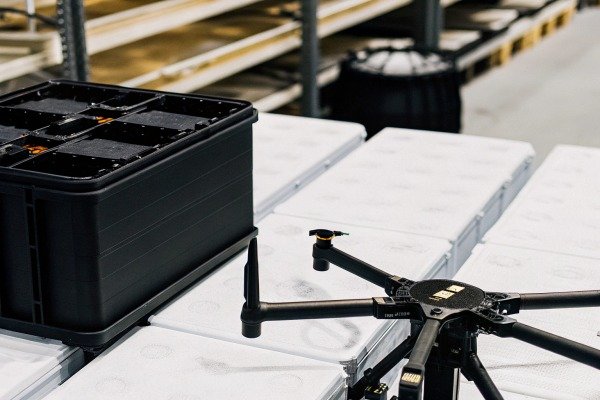
The "Hidden Dangerous Goods" Nightmare
Customs authorities and freight forwarders use sophisticated X-ray scanners that can easily penetrate drone cases. A high-density lithium polymer battery looks very different from a plastic circuit board or carbon fiber frame on an X-ray. lithium polymer battery 9
If a supplier declares the shipment as "Industrial Drone" (General Cargo) but leaves the batteries inside to avoid the Class 9 surcharge, this is considered "Undeclared Dangerous Goods."
The consequences are severe:
- Indefinite Hold: The airline will refuse to carry the cargo further.
- Fines: The importer (you) or the shipper can face thousands of dollars in fines from aviation authorities (like the FAA in the US or EASA in Europe).
- Return to Origin (RTO): This is the worst-case scenario. The airline refuses to fly it forward and may refuse to fly it back unless it is repackaged by a certified hazmat team at the airport—a service that costs a fortune. We have seen clients abandon shipments because the cost to fix the mistake exceeded the value of the goods.
The Impact on Firefighting Preparedness
For our customers in the public safety sector, a delay is not just an inconvenience; it is a capability gap. If you are purchasing these drones for the upcoming wildfire season, a 4-week customs delay due to battery issues could mean missing the window for critical training or deployment.
By separating the batteries, you de-risk the drone body shipment. Even if the batteries are held up for document verification (which happens occasionally with HazMat), your expensive drone platform clears customs as general cargo. You can use this time to perform mechanical inspections, integrate payloads, or train pilots using borrowed or locally sourced test batteries while waiting for the main power packs.
Managing Reverse Logistics
If a battery is found to be defective upon arrival, returning it is exponentially harder than importing it. A "damaged or defective" lithium battery is forbidden from air transport entirely forbidden from air transport entirely 10. By keeping the shipments separate initially, you ensure that the drone body—which might need servicing or updates—can be shipped back and forth to our factory without being legally tethered to a hazardous battery that is impossible to return by air.
Critical Questions to Ask Your Forwarder
To protect yourself, ask your freight forwarder:
- "Do you have a dedicated DG specialist team?"
- "What is your policy if the battery shipment is flagged by customs?"
- "Can we insure the battery shipment separately from the main cargo?"
Schlussfolgerung
Confirming that your firefighting drone batteries are shipped as UN3480 standalone cargo is vital for legal compliance and timely delivery. Always demand a separate Bill of Lading, photos of the Class 9 labels, and SoC verification to ensure your fleet arrives ready for the mission.
Fußnoten
1. Official source for IATA Dangerous Goods Regulations and packing instructions. ︎
2. Offizielle IATA-Richtlinien für den Versand von Lithiumbatterien auf dem Luftweg. ︎
3. FAA regulations defining the 100Wh threshold for lithium batteries. ︎
4. FAA definition and risks of undeclared hazardous materials. ︎
5. Official FAA guidance on lithium battery transport regulations. ︎
6. Wikipedia overview of the UN numbering system for hazardous materials. ︎
7. OSHA standards for hazard communication and chemical safety data. ︎
8. Official IATA mandate regarding standalone lithium battery shipments. ︎
9. General background on lithium polymer battery technology. ︎
10. PHMSA regulations prohibiting air transport of damaged lithium batteries. ︎

 English
  Spanish
  German
  French
  Dutch
Dutch  Arabic
