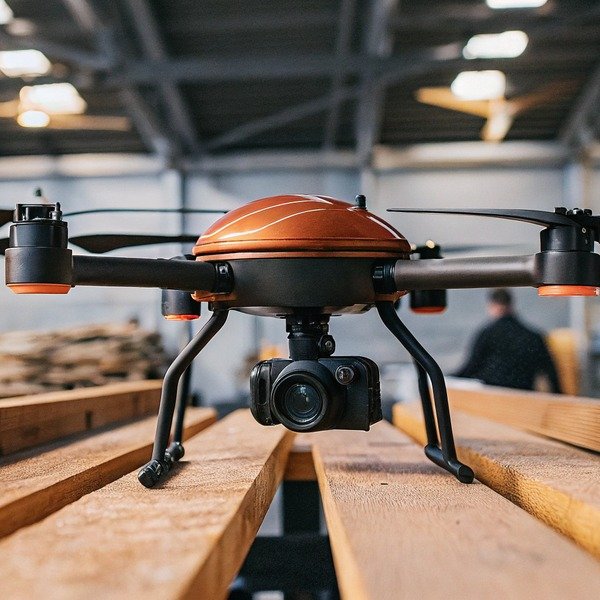
When we configure flight controllers for export Fluglotsen 1, we know that language barriers can turn minor technical glitches into operational disasters. You need support that understands you instantly.
To confirm English fluency, schedule a live video call with the technical team rather than sales staff, request unedited samples of troubleshooting manuals, and simulate a complex technical scenario via email. This multi-channel approach verifies real-time verbal comprehension and technical writing capability.
These steps prevent communication breakdowns when seconds count.
How can I test the technical support team's English proficiency before placing an order?
Our production team often receives panic calls from clients who bought elsewhere and can’t explain their hardware issues. Don’t let a language gap ground your fleet.
Test proficiency by conducting a “terminology stress test.” Ask specific engineering questions about thermal imaging isotherms or payload release actuation. If the support staff can explain these niche mechanics clearly without relying on translation software, they possess the necessary industry-specific language skills.

When you evaluate a supplier, you will likely speak first with a sales representative. In our industry, sales staff are usually hired specifically for their language skills. They are charming and fluent. However, once the deal is signed, you are handed over to the engineering or after-sales department. This is where the "language cliff" often appears. To avoid falling off this cliff, you must bypass the sales rep and test the actual engineers who will handle your tickets.
The Terminology Stress Test
General conversational English is not enough for industrial drone operations. industrial drone operations 2 An engineer might order a coffee in English perfectly but fail to understand "ESC desynchronization" or "gimbal overload." We recommend you prepare a list of specific, industry-standard terms relevant to firefighting missions and ask the support team firefighting missions 3 to explain them.
Do not ask "Do you speak English?" Instead, ask "How do you troubleshoot a sudden voltage drop during a payload release? voltage drop 4" Listen for the specific vocabulary they use. A fluent engineer will use terms like "actuator," "voltage sag," and "circuit breaker." A non-fluent engineer relying on basic translation tools might use vague terms like "drop machine," "electric go down," or "open function."
Detecting Translation Software
During text chats or emails, watch for the "copy-paste delay." If you ask a simple technical question and see the "typing" indicator for two minutes, followed by a perfectly grammatical but slightly unnatural sentence, they are likely using Google Translate or WeChat translation. Real fluency allows for immediate, sometimes imperfect, but technically accurate responses.
Comparison of Language Levels
Use the table below to categorize the responses you receive during your evaluation phase.
| Indikator | Fluent Technical Support | High-Risk Support (Translation Tool User) |
|---|---|---|
| Response Speed | Immediate, conversational pace. | Long pauses before short answers. |
| Vocabulary | Specific: Telemetry, calibration, payload, throttle. | Vague: Data, fix, heavy thing, speed button. |
| Grammar | Natural, may have minor accent but clear logic. | Perfect grammar (copied) or broken "Chinglish." |
| Clarification | Asks: "Do you mean the front-left motor?" | Repeats the same confused sentence. |
Should I request a video conference with the engineering team to evaluate their communication skills?
We insist on Zoom calls during our development phase Zoom calls 5 because email threads often miss nuance. Written text can hide reliance on translation tools, but live video cannot.
Yes, requesting a video conference is essential. It forces the engineering team to demonstrate real-time listening comprehension and verbal fluency without the aid of text-to-speech tools. Observe their ability to understand accents and respond to rapid-fire questions about flight safety protocols immediately.
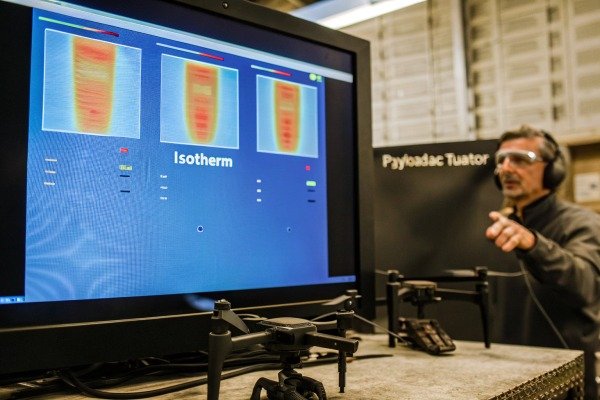
A live video call is the ultimate truth-teller. In our factory, we often see competitors use a "proxy" strategy: a sales manager with excellent English sits next to the silent engineer, translating everything you say. This is dangerous for you. If a fire department drone malfunctions in the field, you cannot wait for a translator to mediate the solution.
Identifying the "Proxy" Trap
When you schedule the call, explicitly state that you want to speak directly to the technical lead or the after-sales manager. During the call, direct your questions specifically to the technical person. If the sales rep constantly interrupts to answer for them, or if you see the engineer looking off-camera or at a typing screen before answering, this is a red flag.
Assessing Listening Comprehension
Speaking is only half the equation; listening is more critical. Firefighting environments are stressful, and your procurement team or pilots may speak fast or with strong regional accents. During the video call, try the following techniques:
- Vary your speed: specific technical questions should be asked quickly.
- Remove visual cues: Turn off your camera for a moment or cover your mouth to ensure they are listening to your words, not lip-reading or guessing based on gestures.
- Use colloquialisms: Use phrases like "The drone is acting up" or "It's drifting." A fluent speaker understands these idioms; a translation tool often fails to interpret them correctly.
Video Call Evaluation Checklist
Use this checklist during your call to score the supplier.
| Assessment Area | Was zu beachten ist | Pass / Fail Criteria |
|---|---|---|
| Direct Interaction | Does the engineer answer you directly? | Fail if they wait for the sales rep to translate. |
| Accent Handling | Do they understand you without asking "Can you type that?" | Fail if they require all questions to be written down. |
| Technical Fluency | Can they describe a repair process step-by-step? | Pass if they use correct verbs (solder, tighten, calibrate). |
| Spontaneity | Can they answer unexpected questions instantly? | Fail if they read from a prepared script. |
How do I verify that the technical manuals and troubleshooting guides are written in clear English?
Our documentation team spends weeks refining maintenance logs maintenance logs 6, yet we still see competitors shipping manuals full of confusing “Chinglish.” Bad instructions lead to dangerous maintenance errors.
Request unedited PDF samples of specific chapters, such as “ESC Calibration” or “Payload Release Logic,” rather than marketing brochures. Review these documents for grammatical precision and natural phrasing. High-quality manuals should use standard aviation terminology and offer clear, step-by-step imperative instructions without ambiguous phrasing.

Marketing brochures are almost always outsourced to professional translation agencies. They look beautiful and read perfectly. However, the user manual—the document that keeps your pilots safe—is often written in-house by the engineers themselves. If those engineers do not speak fluent English, the manual will be riddled with errors that can cause equipment damage or injury.
The "Chinglish" Danger in Technical Ops
We have seen competitor manuals that translate "Arm the motors" as "Open the locking machine." In a calm office, you might figure this out. In a field operation, ambiguity is unacceptable. When you request sample documentation, ask specifically for the "Troubleshooting" and "Maintenance" sections. These require complex logic structures (If X happens, then do Y).
Analyzing Imperative Sentences
Good technical writing uses the imperative mood technical writing 7: "Remove the battery," "Check the voltage," "Tighten the screw." Poorly translated manuals often use passive or descriptive voice: "The battery should be removed by user" or "Please to making tight the screw." This passive voice adds cognitive load to your technicians.
Check for consistency in terminology. If the manual calls a component a "propeller" on page 5, a "blade" on page 10, and a "paddle" on page 12, the supplier lacks a standardized English technical glossary. standardized English technical glossary 8 This inconsistency usually indicates that different chapters were translated by different people or software, with no quality control.
Common Manual Translation Errors
| Phrase Type | Professional English Standard | Poor / Machine Translation (Red Flag) |
|---|---|---|
| Startup | "Power on the drone." | "Open the machine electricity." |
| Sicherheit | "Keep clear of rotating propellers." | "Do not touch the turning leaf." |
| Connection | "Ensure the link is established." | "Make sure connect is good." |
| Aktion | "Calibrate the compass." | "Do the compass correction thing." |
What are the best ways to assess the speed and clarity of their English email responses?
When we support clients across US time zones, we know that waiting 24 hours for a confused reply stops operations. Slow, unclear emails kill mission readiness.
Send a complex, multi-part technical scenario to their support ticket system outside of standard business hours. Evaluate the response time and check if the reply addresses every specific point logically. A fluent team will provide a structured, cohesive answer rather than fragmented sentences or unrelated pre-written templates.
Email is the lifeline of international trade internationaler Handel 9, especially for technical support involving log files technical support 10 and firmware updates. A supplier might be responsive, but if their response is unintelligible, it is useless. You need to test their reading comprehension and their ability to structure a complex answer.
The Multi-Part Question Strategy
Do not send one simple question. Send a scenario that requires logical deduction. For example:
"I have a SkyRover drone. The rear-left motor spins, but the LED is flashing red, and the telemetry shows a 'Compass Error' only when I fly above 50 meters. What should I check first, and does this affect the warranty?"
This email contains three distinct elements:
- The Symptom: Motor spin + Red LED.
- The Condition: Compass error at altitude (which is technically unusual and tests their logic).
- The Administrative Question: Warranty impact.
Analyzing the Response Logic
A fluent, professional support team will break this down. They will address the LED issue, explain why the compass error at altitude is strange (or suggest interference), and clarify the warranty policy.
A team relying on keywords and auto-translate will often latch onto one word, like "Compass Error," and paste a generic template about calibrating the compass, ignoring the motor issue and the warranty question entirely. This "keyword matching" response style indicates they did not understand the full context of your English email.
Evaluating Tone and Clarity
Pay attention to the tone. Is it professional and helpful, or blunt and dismissive? Cultural differences exist, but standard business English should be polite and direct. Also, look for the "Yes/No" trap. If you ask "Should I send it back or repair it here?" and they reply "Yes," they did not understand the question. This is a classic sign of low proficiency.
Schlussfolgerung
Verifying language skills ensures your firefighting drones remain operational. Test their speech, reading, and writing before paying to guarantee safety and reliability.
Fußnoten
1. Official technical specifications from a major drone manufacturer regarding flight control systems. ︎
2. General background on the various industrial applications of unmanned aerial vehicles. ︎
3. Official government report on the use of drones in firefighting and emergency services. ︎
4. Scientific explanation of voltage drop in electrical engineering contexts. ︎
5. Official documentation for the video conferencing tool mentioned for technical evaluations. ︎
6. FAA guidance on aviation maintenance records and logs for safety compliance. ︎
7. Educational resource on the standards and best practices for professional technical writing. ︎
8. International standards for creating and maintaining technical glossaries and terminology. ︎
9. Overview of the principles and importance of global trade for technical suppliers. ︎
10. Industry standard for interface protocols in unmanned aerial systems technical support. ︎

 English
  Spanish
  German
  French
  Dutch
Dutch  Arabic
