
We often see procurement managers focus heavily on the physical airframe—the motors, the carbon fiber, and the battery life—while overlooking the invisible brain of the machine. In our R&D center in Xi’an, we know that a custom autonomy engine or a specialized fire detection algorithm is far more complex to validate than a rotor blade. If you do not have a clear process for accepting these digital deliverables, you risk deploying a high-end drone that fails to communicate with your command center during a critical mission.
To accept customized software, implement a two-phase protocol with Factory Acceptance Tests (FAT) and Site Acceptance Tests (SAT). You must also secure a Service Level Agreement for maintenance, require comprehensive API documentation for integration, and establish liability boundaries in your contract to define responsibility for autonomous logic failures.
Here is a detailed breakdown of how to verify these critical systems before you sign the final receipt.
What specific testing protocols should I request to verify the customized software functions?
When we collaborate with fire departments on custom features, we notice that standard flight tests are rarely enough to catch edge-case bugs in complex software. Simply flying the drone in a circle does not prove that the AI thermal tracking will work when surrounded by heavy smoke and heat interference. You need to push the system to its limits before it leaves the factory.
Request a rigorous testing plan that includes simulation checks for logic errors and field trials in smoke-filled environments. You should demand specific regression testing to ensure new features do not disrupt core flight stability, alongside validating performance metrics like thermal detection accuracy defined in your Scope of Work.
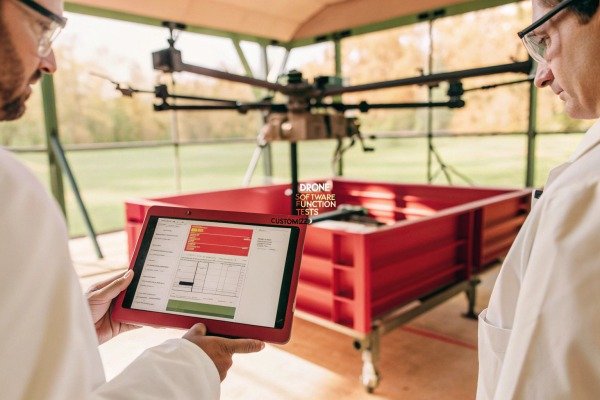
Validating custom software requires a structured approach. You cannot rely on a simple visual inspection. The software controls the mission-critical behavior of the large quadcopter, so the acceptance process must be divided into two distinct stages: the Factory Acceptance Test (FAT) and the Site Acceptance Test Werksabnahmeprüfung (FAT) 1 (SAT).
The Factory Acceptance Test (FAT)
Before the drone ships from our facility, you must review the code logic and core functionality. This happens in a controlled environment. For firefighting drones with custom autonomy, we recommend using “Hardware-in-the-Loop” (HITL) simulations. Hardware-in-the-Loop 2 This allows us to feed the drone fake sensor data—like a virtual fire—to see how the software reacts without risking the hardware. You should verify that the drone triggers the correct payload drop sequences or alarm notifications.
The Site Acceptance Test (SAT)
Once the drone arrives at your location, the real test begins. The SAT verifies that the software works in your specific environment. This is where you test interference handling. Fire grounds often have high radio frequency noise. You must verify that the video feed remains encrypted and stable. You also need to perform “Regression Testing.” This ensures that the new custom code has not broken basic functions, such as Return-to-Home (RTH) or battery management.
Recommended Testing Checklist
Use the following table to structure your testing requirements in the contract.
| Test Phase | Test Typ | Zielsetzung | Success Metric Example |
|---|---|---|---|
| FAT (Factory) | Simulation / Logic | Verify decision-making algorithms (e.g., auto-track fire). | Drone tracks virtual target with >95% accuracy. |
| FAT (Factory) | Core Stability | Ensure custom code does not crash the flight controller. | 100 incident-free flight hours in simulator. |
| SAT (Site) | Umwelt | Test sensors in real heat/smoke conditions. | Obstacle avoidance detects smoke pillars at 10m. |
| SAT (Site) | Integration | Verify connection to your specific controllers. | Video latency remains under 200ms on your tablets. |
By splitting the testing into these phases, you ensure that logic errors are caught early, and environmental issues are solved locally.
Should I require source code or API documentation as part of the final software delivery?
We understand that our clients want full ownership of what they pay for, especially when tax dollars are involved. However, handing over the entire source code of a flight controller poses significant intellectual property risks for us and security risks intellectual property 3 for you. The balance lies in ensuring you have enough access to maintain the system without compromising the proprietary technology that keeps the drone stable.
You should mandate detailed API references and user manuals for all custom features rather than just binaries. While full source code is rare due to intellectual property risks, we recommend setting up a software escrow agreement to ensure you retain access if the vendor ceases operations.
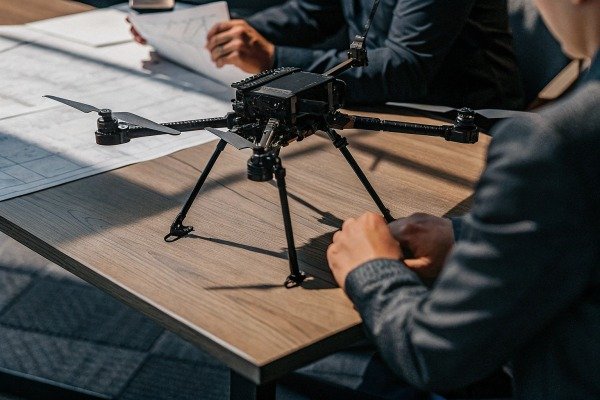
The distinction between “source code” and “deliverable software” is crucial in your purchase agreement. Most manufacturers, including us, will not release the core flight control code because it contains our trade secrets. However, for customized functions, you need specific deliverables to ensure you are not locked out of your own system.
The Importance of API Documentation
If you ordered a custom function—for example, a feature that automatically overlays heat maps onto your tablet screen—you must demand the API (Application Programming Interface) documentation. API (Application Programming Interface) 4 This document explains how your other software systems can talk to the drone. Without this, you cannot integrate the drone with future command software. Do not accept a generic user manual. You need the technical “SDK documentation” that allows your IT team or third-party developers to write new commands if needed.
Software Escrow Agreements
What happens if the manufacturer goes out of business? This is a valid fear for procurement managers. To solve this, we suggest a “Software Escrow” clause. In this arrangement, the manufacturer deposits the full source code with a neutral third-party legal firm. You do not get the code immediately, but if the manufacturer declares bankruptcy or stops supporting the product, the code is released to you. This protects your investment for the long term.
Deliverable Tiers
We categorize software deliverables into three levels. You should aim for Level 2 or Level 3 depending on your budget and security needs.
| Level | Deliverable Items | Profis | Nachteile |
|---|---|---|---|
| Level 1 | Compiled Binaries (Exe/App) + User Manual | Lowest cost; simple to use. | Zero customization; high vendor lock-in. |
| Level 2 | Binaries + SDK/API Docs + Integration Libraries | Allows 3rd-party integration; future-proof. | Requires internal IT skill to utilize APIs. |
| Level 3 | Full Source Code (Escrow) + Developer Guide | Maximum control; safety against vendor bankruptcy. | Most expensive; high liability for changes. |
Choosing Level 2 is usually the sweet spot for fire departments, as it allows integration without the headache of managing raw code.
How will the supplier handle future software updates and bug fixes after the initial delivery?
Our engineering team releases firmware updates regularly, but a custom software build is different from a standard consumer product update. When we build a specific feature for a client, standard global updates might accidentally overwrite that custom function. This creates a unique challenge for maintenance that needs to be addressed before you sign the contract.
The supplier must provide a clear Service Level Agreement (SLA) defining response times for critical bugs and schedules for firmware updates. Ensure they support remote over-the-air updates to minimize downtime and provide a roadmap for long-term compatibility with evolving operating systems or security protocols.
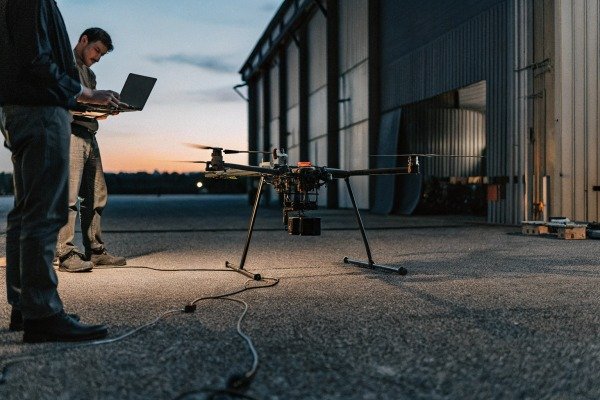
Software is never truly “finished.” New security threats emerge, and operating systems on your ground tablets change. If your custom firefighting drone software is not updated, it will eventually become unusable. You must define the rules of engagement for post-delivery support.
The Service Level Agreement (SLA)
You cannot rely on a handshake for software support. You need a written SLA. This document categorizes bugs and assigns a deadline for fixing them.
* **Critical Severity:** The drone cannot fly, or safety features fail. The supplier must acknowledge this within 4 hours and provide a fix within 24–48 hours.
* **High Severity:** A major feature (like video streaming RTSP (Real-Time Streaming Protocol) 5) is buggy, but the drone flies. Fix required within 5–7 days.
* **Low Severity:** Cosmetic issues or minor glitches. These are usually fixed in the next scheduled quarterly update.
Over-The-Air (OTA) Capabilities
For large quadcopters used in emergencies, shipping the drone back to China or a service center for a software patch is unacceptable. You must verify that the supplier supports OTA updates. This allows us to push a patch to your system remotely via an encrypted internet connection. However, for security reasons, many fire departments prefer “Offline Updates” via SD card. You should clarify which method your IT security team permits.
Liability for “Updates Gone Wrong”
Sometimes, an update fixes one thing but breaks another. Your contract should state that if a vendor-supplied update causes a malfunction, the vendor covers the cost of repair and rollback. This incentivizes the manufacturer to test their updates thoroughly before releasing them to you.
How can I ensure the custom software is fully compatible with my existing ground control systems?
We frequently encounter situations where a client buys a high-end drone, only to find it cannot send data to their command center’s mapping software. It is frustrating for everyone involved. To avoid this, we always ask for the specific software names and versions you use early in the design phase, but verification at the end is equally critical.
Ensure compatibility by requiring adherence to standard data protocols like RTSP for video and common GIS formats for mapping. Conduct validation tests with your specific Incident Command System (ICS) during the Site Acceptance Test phase to guarantee end-to-end encryption and seamless data interoperability before final sign-off.

Firefighting is a team effort, and your drone is just one sensor in a larger network. The data it collects—thermal images, location coordinates, and video—must flow into your Incident Command System (ICS) or GIS (Geographic Information System) software Incident Command System (ICS) 6 instantly. Proprietary, closed systems are a nightmare for interoperability.
Standard Protocols are Key
When defining your software requirements, avoid vague terms like “compatible.” Be specific about protocols.
* **Video Feeds:** Require RTSP (Real-Time Streaming Protocol) or SRT (Secure Reliable Transport). These are universal standards that allow your video to play on almost any command screen or mobile device.
* **Telemetry:** Require MAVLink MAVLink 7 compatibility. This is the standard language for drone communication. If the drone speaks MAVLink, it can likely communicate with third-party mapping tools like ATAK (Android Team Awareness Kit) or other situational awareness ATAK (Android Team Awareness Kit) 8 platforms.
The Integration Test
Do not assume it works until you see it. During the acceptance phase, bring your actual command center laptops or tablets to the field. Connect the drone. Can you see the drone’s icon moving on your own map? Can you measure the distance of a fire line on your own screen? If the data is trapped inside the manufacturer’s proprietary app, the software is not truly compatible.
Data Formats for Post-Mission Analysis
After the fire is out, you need data for investigation. Ensure the software outputs standard file formats.
| Datenart | Proprietary Format (Avoid) | Open Standard (Prefer) | Warum? |
|---|---|---|---|
| 3D Maps | .xyz (Vendor specific) | .LAS / .TIFF | Compatible with standard GIS tools like Esri ArcGIS. Esri ArcGIS 9 |
| Video | Encrypted proprietary | .MP4 / .MOV (H.264 H.264 10) | Playable on any court or insurance computer. |
| Flight Logs | .DAT (Encrypted) | .CSV / .TXT | Allows independent analysis of flight path. |
By insisting on these open standards, you ensure that your drone fleet remains a versatile asset that integrates with your department’s evolving technology stack.
Schlussfolgerung
Purchasing customized software for firefighting drones is about managing risk. You are not just buying a machine; you are buying a capability that must work under pressure. By enforcing strict protocols—Factory and Site Acceptance Tests, API documentation, clear SLAs, and standard data compatibility—you protect your department from operational failure. Treat the software negotiation with the same rigor as the hardware inspection, and you will ensure a deployment that truly enhances your firefighting missions.
Fußnoten
1. Provides an academic definition and engineering context for the acceptance testing process. ︎
2. Technical explanation of HITL simulation methodology by a leading test equipment manufacturer. ︎
3. Official definition from the World Intellectual Property Organization regarding IP rights. ︎
4. Authoritative definition and explanation of APIs by a major technology company. ︎
5. General background information on the standard network control protocol for streaming servers. ︎
6. Official FEMA resource describing the standard command structure used in emergency response. ︎
7. Official documentation for the standard communication protocol used by drones. ︎
8. Official US government website for the Team Awareness Kit software suite. ︎
9. Official product page for the industry-standard GIS software mentioned in the table. ︎
10. Official standard specification from the International Telecommunication Union for video coding. ︎

 English
  Spanish
  German
  French
  Dutch
Dutch  Arabic
