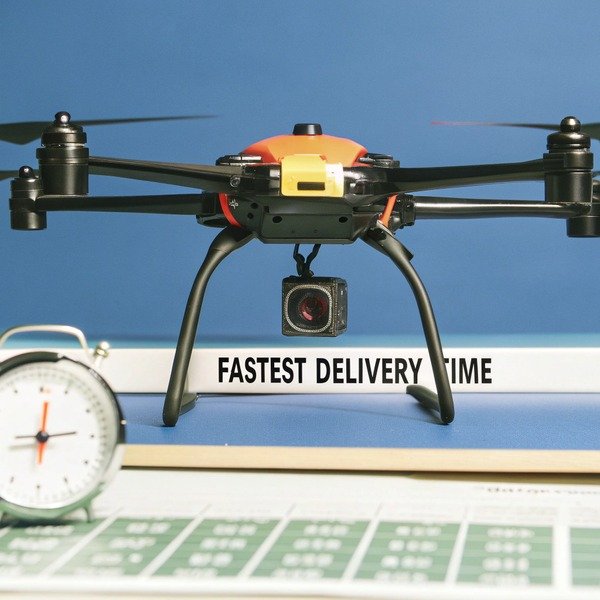
We often see clients facing project delays after trusting vague shipping promises that ignore the complexities of manufacturing Geliefert Verzollt 1. Our production floor schedule tells a different, more realistic story about lead times.
To determine credibility, request recent bill of lading documents proving past delivery speeds and verify if the supplier has ready-to-ship inventory versus a build-to-order schedule. Authentic suppliers can provide production capacity data and confirm if they hold necessary dual-use export licenses to avoid customs delays. dual-use export licenses 2
Here is how you can systematically validate a supplier’s timeline claims before signing a contract.
How can I verify the factory's actual production capacity and inventory levels before placing an order?
We invite clients to video call our assembly lines because seeing active production beats reading a brochure. Trust requires visual proof of existing stock and labor power.
You should demand a live video inspection of the warehouse to see finished stock labeled for immediate shipment. Ask for a comparison between their current order backlog and monthly manufacturing output to mathematically prove they can slot your production run within the promised timeframe.

Many suppliers in the drone industry operate on a "Just-in-Time" model but market themselves as having ready stock. When we receive inquiries for our SkyRover units, we clearly distinguish between what is on the shelf and what needs assembly. A supplier claiming "fastest delivery" must prove the hardware actually exists.
To verify this, do not rely on photos sent via email, which can be outdated or staged. Instead, request a live video walkthrough. Ask the sales representative to walk to the specific model you want to buy and place a piece of paper with today's date on it. If they cannot do this, they likely do not have the inventory they claim.
Differentiating Inventory Types
Understanding the type of inventory is crucial. A "frame" is not a "drone." Some suppliers have the carbon fiber frames in stock but are missing critical electronic components like flight controllers or motors.
- Finished Goods: Packed, tested, and ready for labels.
- Semi-Finished: Assembled but waiting for software or payload integration.
- Raw Materials: Parts in boxes; requires full assembly time.
Calculating True Capacity
If the supplier admits to a "build-to-order" status, you must audit their capacity. Ask for two numbers: their monthly output capacity and their current order queue. If they produce 20 drones a month but have a backlog of 50, a promise to deliver your 10 units in two weeks is mathematically impossible.
Table: Inventory Verification Checklist
| Claim Type | Common Supplier Statement | Überprüfungsmethode | Rote Flagge |
|---|---|---|---|
| Ready Stock | "We have 50 units in the warehouse." | Live video call showing sealed boxes with current date. | "We cannot enter the warehouse due to safety rules." |
| High Capacity | "We can build 100 units in a week." | Request photos of the active assembly line and staff count. | Photos of an empty factory or very few workers. |
| Quick Assembly | "We just need to install the software." | Ask for the specific lead time for "burn-in" testing. | "We can skip testing to ship tomorrow." |
What specific logistics and customs clearance solutions should the supplier demonstrate to guarantee arrival dates?
Our logistics team spends hours daily navigating complex battery regulations, yet many competitors ignore these hurdles in their initial quotes. We know that paperwork delays are often worse than manufacturing delays.
Suppliers must demonstrate expertise in handling Class 9 dangerous goods for high-capacity drone batteries. Class 9 dangerous goods 3 Request proof of DDP (Delivered Duty Paid) experience and specific routing plans that account for hazardous material restrictions, which often disqualify standard air freight options and require specialized carriers.

Firefighting drones typically use high-capacity lithium polymer batteries. Lithium-Polymer-Batterien 4 These are classified as Class 9 Dangerous Goods (DG). Shipping these is not as simple as calling a standard courier. When we export to the US or Europe, we must use specialized logistics channels. A supplier promising "3-day delivery" via standard air freight for a large drone with batteries is likely lying or planning to ship illegally, which puts your cargo at risk of seizure.
Der Batterie-Engpass
The "fastest delivery" is often slowed down by the battery. Air freight for heavy batteries is expensive and strictly regulated.
- DG Certification: The supplier must have UN38.3 test reports and MSDS (Material Safety Data Sheet) for their batteries. UN38.3 test reports 5
- Carrier Selection: Only specific cargo planes accept high-capacity batteries. Passenger flights generally do not.
Incoterms and Responsibility
The shipping term (Incoterm) dictates who solves problems at customs. Incoterm 6
- DDP (Delivered Duty Paid): The supplier handles everything, including import duties and customs clearance. This is the safest for you. If the drone gets stuck in US Customs, it is the supplier's problem to solve.
- FOB (Free on Board) or EXW (Ex Works): The supplier just hands the box to a carrier. Once it leaves China, the timeline is your responsibility. If they promise a fast arrival under FOB, they are making a promise they cannot personally guarantee.
Export Licenses for Dual-Use Items
Firefighting drones are powerful. They have long range and heavy payloads. Some governments classify these as "dual-use" items (usable for both civilian and military purposes). We often need to apply for an export license from the Chinese government before shipping. export license 7 This process can take 2-4 weeks. If a supplier promises immediate shipment but hasn't secured this license, your drone will be stopped at the border.
Table: Impact of Shipping Methods on Timeline
| Versandart | Suitability for Drones | Estimated Time (China to US) | Batterie-Einschränkungen |
|---|---|---|---|
| Express Air (DHL/FedEx) | Small parts only | 3-5 Days | Very Strict (Often rejected for large batteries) |
| Special Line Air Freight | Vollständige Drohnen | 10-15 Days | Managed via DG cargo flights |
| Sea Freight (Fast Boat) | Großbestellungen | 25-35 Days | Low restrictions, most reliable for large quantity |
| Sea Freight (Standard) | Großbestellungen | 40-60 Days | Lowest cost, slowest speed |
Which documents or tracking records can I request to validate their past on-time delivery performance?
We keep detailed shipping logs because past performance is the only reliable predictor of future reliability for our partners. Words are easy, but tracking numbers do not lie.
Request redacted Bills of Lading (BOL) or Air Waybills from the last three months for shipments to your region. These documents provide irrefutable timestamps of departure and arrival, allowing you to compare the dates against the supplier’s original delivery estimates to calculate their actual on-time performance rate.

Marketing materials often feature glowing testimonials that are impossible to verify. To protect your procurement, you need hard data. When we work with new distributors, we openly share our recent track record to build confidence. You should expect the same transparency.
The Bill of Lading (BOL)
For sea freight, the Bill of Lading is the gold standard. Konnossement 8 It lists the shipper, the consignee, the product, and most importantly, the date the cargo was loaded.
- What to ask for: "Sanitized" copies of BOLs from the last 6 months. "Sanitized" means they can black out the customer's name to protect privacy, but the dates, ports, and product descriptions should remain visible.
- What to check: Look at the "On Board Date" and the "Place of Delivery." If they claim to ship weekly to the US, they should have dozens of these documents.
Courier Tracking History
For air shipments, ask for a list of tracking numbers for similar orders. You can plug these numbers into the carrier's website (DHL, UPS, etc.) to see the full travel history.
- Gap Analysis: Check the time between "Label Created" and "Picked Up." A supplier might print a label today to say it "shipped," but the carrier might not pick it up for a week if stock isn't ready. This gap exposes the truth about their internal efficiency.
Reference Checks
Ask the supplier for the contact information of a client who purchased a similar firefighting drone recently.
- Specific Questions: Do not just ask "Are they good?" Ask "Did the drone arrive on the specific date they promised?" and "Were there any surprise delays with customs?"
- Dokumentation: Ask the supplier for the "Packing List" date versus the "Commercial Invoice" date. Large discrepancies here can indicate internal processing delays.
Table: Essential Verification Documents
| Name des Dokuments | Was es beweist | Überprüfung Aktion |
|---|---|---|
| Air Waybill (AWB) | Proof of flight booking and departure. | Check flight dates against the promised ship date. |
| Bill of Lading (BOL) | Proof of sea cargo loading. | Verify the "On Board Date" matches their timeline claims. |
| Customs Clearance Record | Proof of successful import capability. | Confirm they can clear firefighting equipment in your specific country. |
| Quality Control (QC) Report | Proof that testing occurred before packing. | Check the date of the test report against the shipping date. |
What penalty clauses should I include in the purchase contract to protect against potential shipping delays?
We encourage clear contracts because they align expectations. A supplier confident in their timeline will not fear reasonable accountability, while one who is bluffing will refuse to sign.
Include a liquidated damages clause that deducts a specific percentage of the total order value for every week of delay. liquidated damages clause 9 Additionally, require a full refund option if the delay exceeds a critical deadline, ensuring the supplier prioritizes your shipment to avoid financial loss.

A verbal promise of "fastest delivery" is worthless without a contractual consequence. In our experience, the inclusion of penalty clauses filters out unreliable suppliers immediately. If they know they cannot meet the date, they will refuse to sign the clause.
Pauschalierter Schadenersatz
This is a pre-agreed sum that the supplier pays if they are late. It compensates you for the loss of utility.
- Standard Rate: A common clause is 0.5% to 1% of the total contract value for every day (or week) of delay.
- Cap: There is usually a maximum cap, often around 10% to 15% of the total value.
- Example Clause: "For every week the shipment is delayed beyond the agreed delivery date, the Supplier shall pay the Buyer a penalty of 1% of the total order value, up to a maximum of 10%."
The "Time is of the Essence" Clause
Legally, this phrase means that punctuality is a core condition of the contract. If the supplier misses the date, it is considered a material breach, allowing you to cancel the order and get a full refund. Without this, a delay might be seen as a minor issue by a court.
Defining "Force Majeure"
Suppliers often try to hide behind "Force Majeure" (unforeseeable events) to excuse delays. Höhere Gewalt 10 You must define this strictly.
- Acceptable: War, natural disasters, new government export bans.
- Unacceptable: "Raw material shortage," "Machine breakdown," or "Holiday backlog." These are management failures, not acts of God. Ensure your contract explicitly excludes these from Force Majeure protections.
Payment Terms as Leverage
Never pay 100% upfront if you are worried about speed.
- Structure: 30% Deposit, 70% Balance payment nach you receive proof of shipment (like the BOL) or nach a successful pre-shipment inspection.
- Holdback: For large orders, retain 10% until the goods arrive and are verified. This gives you leverage if the shipment is late or incomplete.
Schlussfolgerung
To verify a "fastest delivery" claim, you must look beyond the sales pitch. validate physical inventory via video, scrutinize their ability to ship hazardous batteries, check past shipping records, and protect yourself with strict penalty clauses. Diligence in these areas ensures that the firefighting equipment arrives when your team actually needs it.
Fußnoten
1. Major logistics provider explanation of specialized shipping solutions for emergency services equipment. ︎
2. Official US government guidance on dual-use export controls and licensing requirements for sensitive technologies. ︎
3. International Air Transport Association standards for shipping hazardous materials, specifically lithium batteries. ︎
4. General technical background on the battery chemistry commonly used in high-performance drones. ︎
5. United Nations standards for the testing and safety of lithium batteries during transport. ︎
6. Official International Chamber of Commerce rules for the interpretation of global trade terms. ︎
7. Official portal for the Chinese Ministry of Commerce regarding export regulations and licensing. ︎
8. Standard definition and legal function of a Bill of Lading in international shipping. ︎
9. Legal educational resource explaining the application of liquidated damages in commercial contracts. ︎
10. News report illustrating how force majeure clauses are invoked during global supply chain disruptions. ︎

 English
  Spanish
  German
  French
  Dutch
Dutch  Arabic
