When our engineering team in Xi’an receives inquiries from potential US partners, the first conversation often revolves around trust and data security National Defense Authorization Act 1. We understand that your distribution strategy is just as valuable as the hardware itself.
Most suppliers are willing to sign NDAs for custom manufacturing or ODM projects involving sensitive specifications. However, for standard off-the-shelf purchases, manufacturers rarely sign them as no proprietary IP is exchanged. Success often depends on your order volume and whether you are a strategic partner rather than a one-time buyer.
Here is how you can navigate legal agreements to secure your operations legal agreements 2.
Do I need to sign an NDA before sharing my custom firefighting drone requirements?
We often see hesitation from procurement managers who worry that sharing their specific mission profiles might expose their market strategy. From our perspective on the assembly line, clear requirements help us build better tools.
You should sign an NDA if you require custom payload integration, proprietary software loading, or unique hardware modifications. However, asking for an NDA to simply request a price list or standard brochure for a firefighting drone often signals inexperience and may slow down the procurement process.

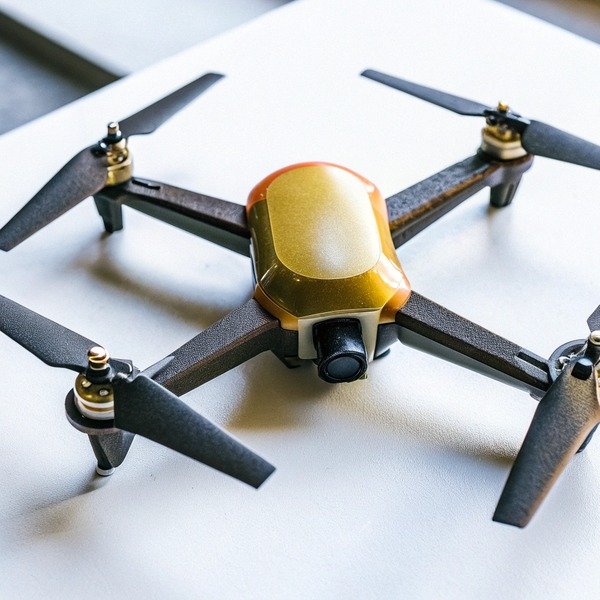
When you decide to import industrial drones, distinguishing between a standard purchase and a custom project is vital. Not every interaction requires legal shielding. If you are buying a standard black quadcopter with an orange casing that we already advertise, an NDA is usually unnecessary. The specifications are public, and your purchase intent is a standard commercial transaction.
However, the situation changes when you bring your own technology to the table. If you need us to modify the flight controller to accept your proprietary software Fluglotse 3, or if you are designing a unique sensor array for forest forest fire detection 4 fire detection, an NDA is mandatory. In these cases, you are disclosing "Subject Matter" that gives you a competitive edge.
The NDAA Compliance Factor
For US buyers, the need for confidentiality often overlaps with compliance. With regulations like the American Security Drone Act American Security Drone Act 5 and NDAA (National Defense Authorization Act) impacting fire departments, you might need to share sensitive compliance forms. You may need us to disclose our supply chain sources to prove we are not using restricted components. This exchange of deep supply chain data is a valid reason to request a confidentiality agreement, even if the hardware itself is standard.
When to Request an NDA vs. When to Skip It
| Szenario | NDA Recommended? | Grund |
|---|---|---|
| Standard Procurement | Nein | Buying a standard model (e.g., SkyRover X1) involves no IP exchange. |
| Custom Modification | Ja | You need us to alter the mold, firmware, or wiring for your specific needs. |
| Business Strategy | Sometimes | Sharing your exact list of government clients requires protection. |
| Software Integration | Ja | Loading your private flight algorithms onto our hardware requires strict security. |
| Supply Chain Audit | Ja | You require us to reveal our upstream chip suppliers for NDAA compliance. |
If you demand an NDA for a standard quote, some larger manufacturers might ignore the request. They receive hundreds of emails daily. They prioritize clients who understand the workflow. Save the legal paperwork for when you share true secrets.
How can I ensure a Chinese drone manufacturer will strictly protect my intellectual property?
Our factory has worked with international clients for years, and we know that a piece of paper is not enough to build trust. We implement strict internal protocols to ensure client designs never leave the specific project team.
To ensure strict protection, do not rely on a single turnkey supplier for every component of your system. Use compartmentalized procurement strategies where you source airframes, payloads, and software from different vendors, ensuring no single manufacturer possesses your complete technical blueprint or business model.
Protecting your business goes beyond the signature on a contract. While we respect legal agreements, the most secure method for a buyer is structural protection. This means you should design your supply chain so that theft is impossible, not just illegal.
The Strategy of Compartmentalization
Imagine you are building a new firefighting solution. Instead of asking one factory to do everything, you break the project into pieces. You might buy the flight platform (the drone body and motors) flight platform 6 from us. Then, you buy the thermal cameras from a specialized optical vendor Wärmebildkameras 7. Finally, you install your own flight software in the US. In this scenario, we only know you bought a drone. We do not know how you use it or what software runs it. This is the gold standard for IP safety.
Legal Jurisdiction Matters
If you must share a full design with a Chinese partner, the jurisdiction clause in the NDA is critical. A contract enforceable only in New York might be useless if the breach happens in Chengdu.
- Mainland China Courts: Litigating here is possible but can be complex Mainland China Courts 8 for foreign entities.
- Hong Kong Arbitration: This is often the best middle ground. Awards from the Hong Kong International Arbitration Centre (HKIAC) are enforceable in Mainland China and are generally viewed as neutral and fair by Western companies.
Manufacturing Verification Steps
Before sharing your "Concept of Operations" (CONOPS), verify the factory's physical security physical security 9.
- Data Isolation: Ask if your project data is stored on an isolated server.
- Physical Separation: check if the factory uses separate assembly rooms for OEM projects.
- Employee Access: Ensure only assigned engineers can access your files.
Levels of Supplier Security
| Sicherheitsstufe | Buyer Action | Supplier Restriction | Risikostufe |
|---|---|---|---|
| Level 1: Basic | Buy Standard Hardware | None. Supplier knows you bought a drone. | Niedrig |
| Level 2: OEM | Re-branding / Logo | Supplier knows your brand and volume. | Mittel |
| Level 3: Custom Tech | Full Design Sharing | Supplier builds your unique design. | Hoch |
| Level 4: Split Chain | Compartmentalization | Supplier only builds the frame; you add the "Brain." | Niedrigste |
By controlling what you share, you reduce the risk better than any lawyer can.
What key clauses should I include in an NDA to secure my drone distribution strategy?
When we sit down to review contracts, we look for clarity and fairness, but we also notice when a buyer has copy-pasted a generic template. A specific, well-thought-out agreement protects your roadmap much better than vague legal jargon.
You must include a precise definition of “Confidential Information” and a “Permitted Use” clause that restricts us to manufacturing only. Crucially, avoid “Residuals Clauses” which allow suppliers to use general ideas retained in memory, as this effectively nullifies protection for your business strategy.
A firefighting drone distribution strategy often relies on unique "Concepts of Operations" or specific government connections. If you share this with a supplier, the NDA must be watertight. The most dangerous trap in these contracts is the "Residuals Clause."
The Danger of Residuals
Many standard NDAs, especially Mutual NDAs provided by suppliers, include a Residuals Clause. It usually says something like: "The receiving party shall be free to use for any purpose the residuals resulting from access to confidential information."
In plain English, this means if our engineers remember your idea without looking at the documents, we can use it. You tell us about a new way to deploy fire retardant. We remember it. We build it. You cannot sue us. Always strike this clause out.
Essential Clauses for Drone Procurement
- Strict "Permitted Use": The contract must state that the information is solely for fulfilling the purchase order. It cannot be used for "product improvement" or "internal R&D."
- Non-Solicitation: This prevents the manufacturer from bypassing you. If you reveal your end customers (e.g., The Los Angeles Fire Department) to prove your volume, this clause stops the factory from contacting them directly.
- Term of Confidentiality: Firefighting tech evolves fast, but business plans last longer. Ensure the confidentiality obligations last for at least 3 to 5 years, even if the business relationship ends sooner.
Critical Clause Checklist
| Klausel Name | What it Does | Your Goal |
|---|---|---|
| Definition of IP | Defines what is secret. | Be specific: "Customer Lists," "Payload Schematics," "Pricing." |
| Residuals | Allows use of "memories." | REMOVE immediately. |
| Non-Circumvention | Stops direct selling. | Essential if you are a distributor. |
| Governing Law | Decides where to sue. | Choose Hong Kong or a neutral location. |
| Return of Materials | Cleanup after contract. | Require digital deletion of all your files. |
Your business plan is your roadmap business plan 10. Do not let a supplier use it as their own.
Is it a warning sign if a potential drone supplier refuses to sign a confidentiality agreement?
We sometimes decline NDAs for small sample orders because the legal cost outweighs the profit, not because we intend to steal ideas. However, understanding the nuance behind a refusal can save you from a bad partnership.
It is not always a warning sign; major Tier 1 manufacturers often have rigid policies rejecting external NDAs for standard products. However, if a specialized boutique or OEM manufacturer refuses an NDA for a custom development project, it is a major red flag and you should walk away.

Context is everything when evaluating a supplier's refusal. You need to look at who they are and what you are asking.
Tier 1 vs. Boutique Manufacturers
Large, famous drone companies (Tier 1) almost never sign buyer-generated NDAs. Their legal departments are too big, and their risk tolerance is too low. They operate on a "take it or leave it" basis. If you are buying from them, you are likely buying a finished product, so you shouldn't need an NDA anyway.
However, companies like SkyRover are mid-sized, specialized manufacturers. We exist to serve business clients. If a company like ours refuses an NDA for a custom project, be very careful. It suggests they either do not value your IP or they plan to sell your design to others.
The "Business Plan" Disconnect
Sometimes, a refusal happens because of a misunderstanding. If a buyer asks for an NDA to protect a "Business Plan" that is actually just common knowledge, suppliers will hesitate.
- Weak Idea: "I plan to rent drones to farmers." (This is generic. No supplier will sign an NDA for this.)
- Strong Idea: "I have a proprietary sensor integration for crop analysis that no one else has." (This is valid IP. We will sign.)
If you present a generic distribution model as a "top secret" plan, it signals to the supplier that you might be difficult to work with. It lowers your priority in our sales pipeline.
Assessing the Refusal
- Ask Why: Is it company policy? Is the scope too broad?
- Check the Scope: Did you ask them to protect "all information"? Try narrowing it to just "technical drawings."
- Evaluate Leverage: If you are buying 2 units, you have no leverage. If you are buying 200, you call the shots.
Do not let a refusal stop you, but let it guide who you choose. If they won't sign, do not share the secret sauce. Buy the hardware and add your value locally in the US.
Schlussfolgerung
Securing an NDA when purchasing firefighting drones is a balance of leverage and legal strategy. While standard off-the-shelf purchases rarely warrant such agreements, custom projects demand them. By focusing on compartmentalized procurement, choosing the right jurisdiction, and eliminating "residuals" clauses, you can protect your business plan while leveraging the manufacturing power of your partners.
Fußnoten
1. Official US Department of Defense information regarding the National Defense Authorization Act. ︎
2. General legal background on the definition and use of non-disclosure agreements. ︎
3. Technical documentation for open-source drone flight control systems and hardware. ︎
4. Academic research from USC on the use of drones for wildfire monitoring. ︎
5. Official legislative text for the American Security Drone Act of 2023. ︎
6. Product documentation for a major industrial drone flight platform. ︎
7. Leading manufacturer of thermal imaging sensors for industrial and firefighting drones. ︎
8. Official portal for the Supreme People’s Court of the People’s Republic of China. ︎
9. ISO standard for information security management and physical security controls. ︎
10. General overview of business planning and strategic development for companies. ︎

 English
  Spanish
  German
  French
  Dutch
Dutch  Arabic
