
When we test new prototypes at our Xi’an facility, we know that lab data is only the starting point. You need to verify that the drone can handle the unpredictable variables of your actual farmland to avoid costly operational failures.
You must conduct specific field flight tests focusing on spray uniformity using water-sensitive paper, flight endurance with full liquid payloads, and sensor accuracy in complex terrain. These tests verify that the drone performs safely and meets the operational specifications required for your specific agricultural environment.
Here is a detailed guide on how to validate your sample unit effectively.
How do I accurately measure flight endurance and battery performance with a full liquid payload?
Our engineers optimize battery discharge curves carefully in the lab, but actual field wind resistance consumes significantly more power. If you rely solely on spec sheets without testing, you risk unexpected downtime during critical spraying windows.
To measure endurance accurately, fly the drone with a maximum liquid payload under realistic wind conditions until the low-battery warning triggers. Record the total flight time and acreage covered per charge, then compare these figures against the manufacturer’s data to establish a realistic daily operational capacity.
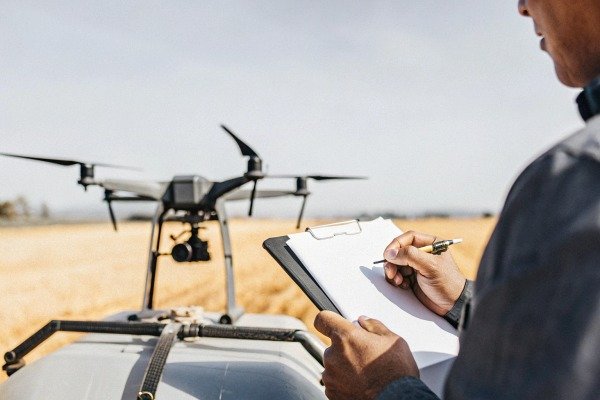
Establishing a Realistic Flight Profile
The most common discrepancy we see between a spec sheet and reality is the impact of payload weight and movement on battery life. A drone hovering in a controlled room uses less energy than one fighting a 5 m/s crosswind while carrying 40 liters of fluid. To get the truth, you must simulate a heavy workload. We recommend conducting a rapid-cycle thermal test. This involves flying three consecutive battery sets with minimal downtime in high ambient temperatures. This stresses the power distribution board and reveals if the battery management system (BMS) throttles performance due to heat.
You should record the voltage sag during aggressive maneuvers. When the drone accelerates to start a new spray row, the voltage should not drop below the critical safety threshold (typically 3.5V per cell for LiPo batteries LiPo batteries 1) instantly. If it does, the battery C-rating may be insufficient for the motor load. Furthermore, flight time is not just about minutes in the air; it is about the "effective work time." Calculate how much of that battery charge is spent taking off, flying to the start point, and returning to home versus actual spraying time.
Quantifying Payload Efficiency
It is vital to understand the relationship between payload weight and flight duration. A linear relationship does not always exist because heavier loads force motors to spin at higher RPMs, which operate less efficiently. You need to document the degradation of flight time as the tank empties. A drone might be sluggish with a full tank but become agile as the liquid disperses.
Below is a template for recording your flight endurance data. We use a similar structure when benchmarking our SkyRover units against competitors.
Flight Endurance Test Log
| Payload Condition | Wind Speed (m/s) | Flight Mode | Total Flight Time (min) | Area Covered (Acres) | Battery Temp Post-Flight (°C) |
|---|---|---|---|---|---|
| 100% Full Tank | < 3 m/s | Auto-Spray | 12.5 | 2.1 | 45 |
| 100% Full Tank | 5-8 m/s | Auto-Spray | 10.2 | 1.8 | 52 |
| 50% Load | < 3 m/s | Manual | 16.0 | K.A. | 42 |
| Empty (Return) | < 3 m/s | RTH Mode | 22.0 | K.A. | 38 |
By filling out this table during your tests, you can determine if the drone can truly complete the round trips required for your specific field sizes. If the drone requires a battery swap every 8 minutes in high winds, you need to calculate if your ground crew can keep up with charging logistics. This data is essential for calculating the true Return on Investment (ROI) regarding labor and battery costs.
What methods should I use to verify the spraying system's uniformity and flow rate consistency?
When we calibrate pumps at our factory in Chengdu, we ensure precision, but high-viscosity chemicals and clogged filters can alter flow rates in the field. Poor uniformity leads to uneven crop treatment, resulting in potential yield loss or chemical waste.
Verify system uniformity by placing water-sensitive paper across a test plot and flying at standard application heights. Analyze the droplet density on the paper to ensure even coverage, and measure the tank volume before and after a timed flight to confirm the pump’s flow rate consistency.
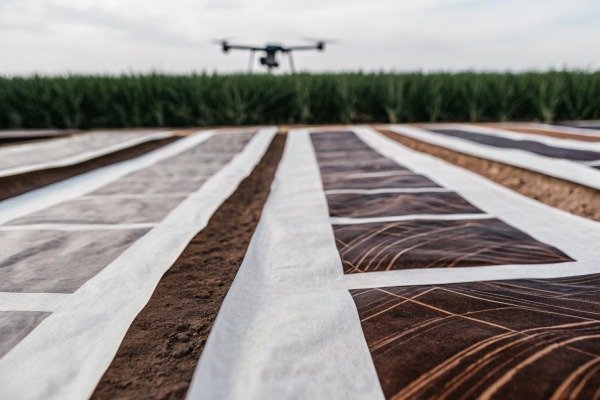
Setting Up the Spray Pattern Test
The spray pattern is the heartbeat of an agricultural drone. To test this, you cannot simply watch the mist; you need hard data. Set up a test plot with wasserempfindliches Papier clipped to stands at various heights: the top of the canopy, the middle of the foliage, and near the ground. This helps you understand the "penetration" of the spray. We recommend using a high-viscosity fluid stress test for this phase. Instead of just water, use a mixture that simulates the thickness of common fungicides or liquid fertilizers. Thicker fluids strain the pumps more and can reveal issues with pressure consistency that pure water hides.
Fly the drone at your standard operating height (usually 2 to 3 meters above the crop) and speed. After the pass, collect the papers and analyze the droplet count. You are looking for a Coefficient of Variation (CV) of less than 15%. Coefficient of Variation (CV) 2 Coefficient of Variation 3 If the droplets are clumped in the center and sparse on the edges, the nozzle overlap is incorrect. This might require adjusting the drone’s lane spacing in the software.
Flow Rate and Pump Stress Testing
Modern agricultural drones use either pressure nozzles or centrifugal atomizers. centrifugal atomizers 4 Each behaves differently under load. For pressure systems, verify that the flow rate sensor matches the actual output. Fill the tank with exactly 10 liters of water. Program the drone to spray at a rate of 2 liters per minute. After exactly 3 minutes of spraying, land and drain the remaining fluid. You should have exactly 4 liters left. If you have 3 or 5 liters, the flow meter is inaccurate, which will mess up your dosage calculations.
Consistency over time is also critical. Run the pumps continuously for a full battery cycle to check for overheating. If the diaphragm pumps overheat, they may lose pressure, causing the droplet size to fluctuate. droplet size 5 Inconsistent droplet sizes are a major drift risk. major drift risk 6 Small droplets drift in the wind, while large droplets roll off leaves.
Droplet Analysis Standards
| Measurement Metric | Target Range | Implications of Failure |
|---|---|---|
| Droplet Density | 15–20 drops/cm² | Low density means poor pest control coverage. |
| Droplet Size (VMD) | 150–300 microns | Too small causes drift; too large causes runoff. |
| Effective Swath Width | 4–6 meters | Incorrect width leads to untreated strips in the field. |
| Penetration Rate | >30% at lower canopy | Surface-only spray fails to kill pests hiding under leaves. |
Using this data, you can calibrate the drone’s flight parameters. If the penetration is poor, you may need to fly slower or lower to utilize the rotor downwash more effectively. This downwash is a key advantage of drones over ground sprayers, as it pushes chemicals deep into the crop.
How can I test the drone's stability and obstacle avoidance sensors in complex terrain?
Our flight controllers are tuned for stability, yet field obstacles like power lines and uneven tree lines are unpredictable variables. Ignoring sensor validation in these environments can result in costly crashes and the total loss of your equipment.
Test stability and sensors by flying the drone towards known safe obstacles at varying speeds to verify automatic braking or rerouting. Additionally, fly near metal structures or power lines to check for electromagnetic interference resilience and monitor the drone’s ability to hold position in windy conditions.
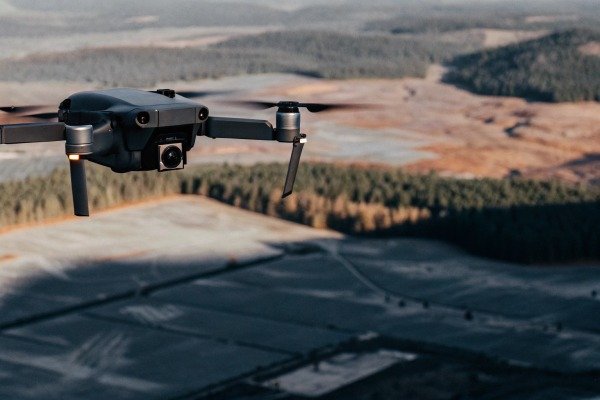
Validating Obstacle Avoidance Systems
Do not trust the radar Topography Following Radar 7 blindly. We advise clients to perform a progressive distance test. Start by placing a large, safe object (like a cardboard box tower) in an open field. Fly the drone toward it at a slow speed (2 m/s). The drone should detect the object and brake at the preset safety distance (usually 2-3 meters). Gradually increase the approach speed. If the drone fails to brake in time at operational speeds (6-7 m/s), the sensor refresh rate may be too slow for the drone's inertia.
It is also crucial to test the Topography Following Radar. This sensor keeps the drone at a constant height above the crops. Test this by flying over a slope or a dike. The drone should adjust its altitude smoothly. If it lags, it might crash into the rising ground or fly too high on the descent, causing spray drift.
Electromagnetic Interference (EMI) Resilience
Farms are full of metal structures, pumps, and high-voltage power lines that can confuse the drone's compass. Conduct an EMI resilience test by hovering the drone safely near (but not dangerously close to) rural power lines or large metal silos. Watch the telemetry data on your controller. If you see "Compass Error" warnings or if the drone starts to drift in a toilet-bowl pattern (circling), the shielding is inadequate.
Wind stability is another major factor. Conduct flight stability tests in moderate wind conditions (around 8-10 m/s). Hover the drone in place and observe the GPS lock. It should not drift more than a few centimeters. If the drone struggles to hold its position, spray application will be uneven.
Sensor Performance Checklist
| Test Scenario | Expected Outcome | Warnschilder |
|---|---|---|
| Static Obstacle (Box) | Auto-brake at >2m distance | Delayed braking or no detection alert. |
| Thin Obstacle (Wire/Branch) | Detection warning on screen | Radar fails to see objects <1cm thick. |
| Slope Climbing | Constant height maintained | Drone flies into the slope or varies height. |
| Night Operation | FPV camera remains usable | Obstacle radar fails in low light (if vision-based). |
| Hover near Power Lines | Stable hover, solid GPS | "Mag Error" or toilet-bowl drifting effect. |
This testing is vital because avoiding a crash is far cheaper than repairing one. Remember that different sensors work better in different conditions. Millimeter-wave radar is great for dust and fog, while binocular vision sensors are better for seeing 3D structures but fail in the dark. Know what your drone uses.
What are the best ways to validate the precision of autonomous route planning and software controls?
Our software team designs algorithms for maximum efficiency, but local GPS drift can disrupt even the best code. Inaccurate route planning wastes expensive chemicals and leaves crop rows untreated, defeating the purpose of precision agriculture. Präzisionslandwirtschaft 8
Validate autonomous precision by setting specific waypoints and observing if the drone follows the path within centimeter-level tolerance using RTK. Test the “Return to Home” function by simulating signal loss to ensure the aircraft aircraft returns safely to the exact launch point without drifting.

Testing RTK and GPS Accuracy
Precision is the main selling point of agricultural drones. To verify this, use Ground Control Points (GCPs). Mark a specific spot on the ground with spray paint. Create a flight mission that commands the drone to hover exactly over that point. With RTK (Real-Time Kinematic) enabled, the drone should hold its position within 2-3 centimeters. Real-Time Kinematic 9 Toggle the RTK off to see how the standard GPS performs; it will likely drift 1-2 meters. This comparison confirms that your RTK base station or network subscription is working correctly.
You should also test signal penetration and command latency. Fly the drone to the furthest corner of your field, ideally behind a tree line or a slight hill. Check if the video feed drops or if there is a delay in your control inputs. If the video lags significantly, you cannot safely monitor the flight manually if an emergency occurs.
Emergency Protocol Verification
The most critical software test is the Return to Home (RTH) function. Do not just press the button. You need to simulate a failure. While the drone is hovering safely in a clear area, turn off the remote controller (ensure your specific model supports this fail-safe test first!). The drone should automatically stop, climb to a safe altitude, and return to the launch point.
Measure the landing accuracy. Upon returning, does it land exactly where it took off? A deviation of more than 50cm is dangerous in tight landing zones. Also, test the Boundary Limits. Set a geofence around your field and try to fly the drone manually out of the zone. The software should physically prevent the drone from crossing that invisible wall. This feature is legally required in many regions to prevent flyaways into roads or neighbor's property. legally required in many regions 10
Software Control Validation Log
| Function Tested | Method | Success Criteria |
|---|---|---|
| RTK Accuracy | Hover over marked ground point | Drift < 5cm horizontal, < 3cm vertical. |
| Geofencing | Attempt to fly outside boundary | Drone stops at the virtual wall instantly. |
| Signal Loss RTH | Turn off controller at distance | Drone initiates return within 3 seconds. |
| Resume Mission | Pause mission, land, refill, resume | Drone returns to the exact break point. |
| Geländeverfolgung | Fly over irregular crop height | Radar maintains set height relative to canopy. |
Validating these software controls ensures that the drone is not just a flying machine, but a reliable semi-autonomous robot. The "Resume Mission" capability is particularly important for efficiency. If the drone forgets where it stopped spraying when the battery died, you will either double-spray an area (burning the crop) or miss a patch entirely.
Schlussfolgerung
Conducting these rigorous tests ensures the SkyRover units you import meet high standards. Field validation builds confidence and guarantees long-term operational success for your clients. By meticulously checking endurance, spray patterns, sensors, and software, you secure your investment and reputation.
Fußnoten
1. Background on the chemistry and discharge characteristics of LiPo batteries. ︎
2. References the international standard metric for evaluating agricultural spray uniformity. ︎
3. ISO standard for the inspection of sprayers in use. ︎
4. Documentation on centrifugal atomization technology in agricultural drones. ︎
5. ASABE S572.1 is the industry standard for droplet size classification. ︎
6. Official guidance on reducing pesticide drift during application. ︎
7. Technical specifications for terrain-following radar in agricultural drones. ︎
8. Official government resource defining the principles and technologies of precision farming. ︎
9. General background on high-precision satellite positioning. ︎
10. FAA regulations for commercial drone operations and safety boundaries. ︎

 English
  Spanish
  German
  French
  Dutch
Dutch  Arabic
